Variance in Microbiology in Double Lumen Catheters Related Sepsis in Diabetic Patients
- Ambreen Naz , FCPS Resident, Department of Internal Medicine, Islamabad Medical and Dental College/Akbar Niazi Teaching Hospital, Islamabad, Pakistan
- Syed Irfan Ahmed , Professor, Department of Medicine, Islamabad Medical and Dental College, Islamabad, Pakistan
Article Information:
Abstract:
Catheter-related bloodstream infections (CRBSIs) have been a significant source of morbidity in hospitalized patients, especially in patients with diabetes mellitus because of poor immunity and the requirement to undergo invasive procedures frequently. There is also the risk of increased infection and antimicrobial resistance in the case of the use of double-lumen catheters, which are widely used in clinical practice. Objective: To determine the frequency of microorganisms causing double-lumen catheter-related bloodstream infections and to evaluate their antibiotic resistance patterns among diabetic patients. Methods: The study was carried out as a cross-sectional study at the Department of Internal Medicine, Islamabad Medical and Dental College, Akbar Niazi Teaching Hospital, and during the months of May to September, 2025. Non-probability consecutive sampling was used to select 168 diabetic patients aged 18-70 years with a clinically and laboratory-confirmed CRBSIs. The processing of catheter tip and blood cultures was done according to standard microbiological procedures. The Kirby-Bauer test and the Minimum Inhibitory Concentation (MIC) were used to perform antimicrobial susceptibility testing. The data was analyzed with the help of SPSS version 27 and associations were evaluated with the help of Chi-square test with p 0.05 the significant value. Results: Gram-negative organisms were the most common isolates (52.4%), followed by Gram-positive bacteria (38.7%) and fungi (8.9%). Klebsiella pneumoniae (19.0%) and Staphylococcus aureus (17.3%) were the predominant pathogens. High resistance was observed against ceftriaxone (62.8%) and ciprofloxacin (54.6%), while lower resistance was noted for colistin (7.7%). MRSA prevalence was 41.4%. Poor glycemic control and prolonged catheter duration were significantly associated with infection (p < 0.05). Conclusion: Gram-negative bacteria predominate in double-lumen CRBSIs among diabetic patients, with a high burden of antimicrobial resistance. Strict infection control practices, optimized glycemic control, and rational antibiotic use are essential to reduce infection rates and improve outcomes.
Keywords:
Article :
INTRODUCTION:
Catheter related blood stream infections (CRBSIs) are a challenge in healthcare in the world, as they increase morbidity, the number of days of hospitalization, and the cost of healthcare. The central venous catheters (especially the double lumen ones) are extensively utilized in the clinical setting in order to deliver medications, total parenteral nutrition, and hemodynamic. Their application, however, is often linked to infectious complications as a result of microbial colonization and biofilm development on the surface of catheters [1-3].
Diabetic patients are more prone to infections because of compromised immunity, lack of glycemic control, and due to greater exposure to invasive procedures. Hyperglycemia negatively influences the neutrophil activity, decreases chemotaxis and impairs phagocytosis and, in this way, predisposes diabetic patients to severe and repeated infections. Catheter-related infections are more common, virulent, and linked with multidrug-resistant organisms in this population [4-6].
Historically, the most frequently reported pathogens in CRBSIs have been Gram-positive organisms, including Staphylococcus aureus and coagulase-negative Staphylococci. Nevertheless, as recent research reports, there seems to be a trend toward Gram-negative bacteria, especially in hospitalized and immunocompromised patients. This dynamic microbial trend combined with the growing resistance to antimicrobials is a significant obstacle in treating these infections [7-9].
Inappropriate use of antibiotics, lengthy hospital stay, and the use of invasive devices have increased global antibiotic resistance in both Gram-positive and Gram-negative species. Methicillin-resistant Staphylococcus aureus (MRSA) and extended-spectrum beta-lactamase (ESBL) producing Gram-negative bacteria are multidrug-resistant organisms that severely reduce the therapeutic choices and are linked to adverse clinical outcomes [10].
Although, CRBSIs are clinically important, the microbiological spectrum and resistance patterns of diabetic patients with the double-lumen catheters is not widely documented locally, especially in the Pakistani healthcare context. Knowledge of the local epidemiology is critical in the process of informing empirical antibiotic therapy and effective infection control measures [11].
Therefore, the present study was conducted to determine the frequency of microorganisms causing double-lumen catheter-related bloodstream infections and to evaluate their antibiotic resistance patterns among diabetic patients.
METHODOLOGY :
This cross-sectional study was conducted in the Department of Internal Medicine at Islamabad Medical and Dental College, Akbar Niazi Teaching Hospital (ANTH), Bharakahu, Islamabad, Pakistan, over a period of five months from May 2025 to September 2025. The study aimed to determine the frequency of microorganisms causing double-lumen catheter-related bloodstream infections (CRBSIs) and to evaluate the antibiotic resistance patterns of isolates among diabetic patients.
Prior to the commencement of the study, ethical approval was obtained from the College of Physicians and Surgeons Pakistan (CPSP), Research Evaluation Unit, vide reference number CPSP/REU/MED-2020-135-16688, dated June 25, 2025. Written informed consent was obtained from all participants in accordance with the principles of the Declaration of Helsinki.
The sample size of 168 patients was calculated using a 95% confidence level, a population proportion of 30.9%, and an absolute precision of 7%, employing a non-probability consecutive sampling technique. The study included adult diabetic patients aged 18–70 years, of either gender, diagnosed with diabetes mellitus (Type 1 or Type 2), who had double-lumen catheters inserted for at least 48 hours, exhibited clinical signs suggestive of sepsis (such as fever >38°C, chills, or hypotension), and had laboratory-confirmed CRBSI based on blood cultures obtained from both the catheter and peripheral vein, and/or catheter tip cultures.
Patients were excluded if they had non-catheter-related infections as the primary source of sepsis, were immunocompromised (including those on chemotherapy or post-transplant), or were receiving long-term antibiotic or antifungal therapy prior to catheter insertion.
Clinical indications such as total parenteral nutrition (TPN), administration of crystalloids and colloids, blood transfusion, medication delivery, and central venous pressure (CVP) were the clinical indications of inserting double-lumen catheters. Catheters were usually kept 7 -10 days and were taken off in case of any suspicion of infection.
In microbiological assessment, the semi-quantitative culture technique was used. Segment of catheters were swabbed on blood agar plates 3-4 times with sterile forceps then inoculated into nutrient broth. The media were both incubated aerobically and at 37 C and observed after 24 hours. In case turbidity was formed in the broth, subcultures were carried out on blood agar and incubated overnight. Standard bacteriological methods were used to identify microorganisms and counts of colonies were counted.
Moreover, histopathological analysis of the segments of catheters was conducted in order to identify fungal or bacterial invasion. When there was a suspicion of fungal infection, special staining techniques were used, such as Periodic Acid-Schiff (PAS) and Gomori methenamine silver stain. The resistance pattern of bacterial and fungal isolates to commonly used antimicrobial agents was determined by performing standard antibiogram test such as Kirby-Bauer disk diffusion method and Minimum Inhibitory Concentration (MIC) testing.
Consistency was used by applying operational definitions. Catheter-related bloodstream infection (CRBSI) was considered to be the occurrence of the identical microorganism found in the tip of the catheter and in at least one peripheral blood culture in a patient with clinical evidence of sepsis. Infection occurring in the catheter was considered catheter-related infection and was determined by a growth of more than 15 colony-forming units (CFU) in a segment of the catheter related to local infection at the site of insertion. Microbial variation was taken to be the differences in the types and proportions of the organisms isolated, such as Gram positive bacteria, Gram negative bacteria, and fungi. Antibiotic resistance was determined as a ratio of the number of isolates resistant to the commonly used antimicrobial agents on the susceptibility test.
IBM SPSS version 27 was used to enter and analyze the data. The continuous variables, which included age, BMI, HbA1c, blood glucose levels, and catheter dwell time, were represented as mean and standard deviation and the categorical variables, including gender, catheter site, indications, clinical features, microbial isolates and resistance patterns as frequencies and percentages. Stratification was used to control effect modifiers which included age, gender, BMI, comorbidities, catheter site, duration of diabetes and catheter dwell time. Chi-square test or Fisher exact test was used to determine associations between variables, p-value of 0.05 was considered to be statistically significant.
RESULTS:
The study involved 168 diabetic patients who had double-lumen catheter-related bloodstream infections (CRBSIs). The average age of the patients was 56.8 with the dominant sex of the patients being males (61.9) with a standard deviation of 10.4. Most of them were Type 2 diabetes (82.7%), with an average of 9.2 years. There was poor glycemic control with a mean HbA1c was 9.1 ± 1.8. The median catheter dwell time was 7.6 ± 2.1 days, which is an indication of long exposure to catheters and is a possible risk factor.
Table 1: Demographic and Clinical Characteristics
|
Variable |
Value |
|
Age (years) |
56.8 ± 10.4 |
|
Gender |
Male: 104 (61.9%) |
|
Female: 64 (38.1%) |
|
|
BMI (kg/m²) |
27.3 ± 3.5 |
|
Type of Diabetes |
Type 1: 29 (17.3%) |
|
Type 2: 139 (82.7%) |
|
|
Duration of Diabetes (years) |
9.2 ± 4.6 |
|
HbA1c (%) |
9.1 ± 1.8 |
|
Random Blood Glucose (mg/dL) |
212 ± 48 |
|
Catheter Dwell Time (days) |
7.6 ± 2.1 |
Internal jugular vein (45.8 percent) was the most frequently used catheter site and subclavian (32.1 percent) came second. The most common presenting symptom (85.1%) was fever, which was a sign of systemic infection. The majority of the catheters were inserted to administer medication (39.9%), and fluid therapy (27.4%).
Table 2: Catheter-Related Characteristics
|
Variable |
Frequency (%) |
|
Catheter Site |
|
|
Internal Jugular |
77 (45.8%) |
|
Subclavian |
54 (32.1%) |
|
Femoral |
37 (22.0%) |
|
Indication |
|
|
Medication |
67 (39.9%) |
|
TPN |
38 (22.6%) |
|
Fluid Therapy |
46 (27.4%) |
|
CVP Monitoring |
17 (10.1%) |
|
Signs of Infection |
|
|
Fever |
143 (85.1%) |
|
Chills |
121 (72.0%) |
|
Hypotension |
49 (29.2%) |
|
Local Infection |
58 (34.5%) |
The most common ones were gram-negative (52.4%), gram-positive (38.7), and fungi (8.9). The most common pathogens were Klebsiella pneumoniae (19.0% and Staphylococcus aureus (17.3%).
Table 3: Microbial Profile (CORE FINDING)
|
Organism |
Frequency (%) |
|
Gram-positive |
|
|
Staphylococcus aureus |
29 (17.3%) |
|
Coagulase-negative Staph |
24 (14.3%) |
|
Enterococcus spp. |
12 (7.1%) |
|
Gram-negative |
|
|
Klebsiella pneumoniae |
32 (19.0%) |
|
E. coli |
21 (12.5%) |
|
Pseudomonas aeruginosa |
19 (11.3%) |
|
Acinetobacter spp. |
16 (9.5%) |
|
Fungi |
|
|
Candida albicans |
9 (5.4%) |
|
Non-albicans Candida |
6 (3.6%) |
There was high degree of antimicrobial resistance. The prevalence of MRSA among gram positive isolates was 41.4 and there was no linezolid resistance. Ceftriaxone was very resistant to gram-negative organisms (62.8%), yet it was sensitive to colistin (92.3%). The resistance of fungal isolates to fluconazole was noted to be 33.3%.
Table 4: Antibiotic Resistance Patterns
|
Antibiotic |
Resistance (%) |
|
Gram-positive |
|
|
Methicillin (MRSA) |
41.4% |
|
Vancomycin |
9.2% |
|
Linezolid |
0% |
|
Clindamycin |
36.8% |
|
Gram-negative |
|
|
Ceftriaxone |
62.8% |
|
Ciprofloxacin |
54.6% |
|
Piperacillin-Tazobactam |
38.2% |
|
Meropenem |
28.5% |
|
Colistin |
7.7% |
|
Fungi |
|
|
Fluconazole |
33.3% |
|
Amphotericin B |
6.7% |
Statistically significant correlation was observed between the type of organism and the catheter dwell time (p = 0.003), where Gram-negative organisms were more common in the prolonged catheter dwell time. Gram-negative infections were significantly related to poor glycemic control (HbA1c > 8%) (p = 0.021).
Table 5: Association of Microbial Type with Clinical Variables
|
Variable |
Gram + |
Gram - |
Fungi |
p-value |
|
HbA1c >8% |
39 |
56 |
11 |
0.021 |
|
Catheter >7 days |
28 |
52 |
9 |
0.003 |
|
Male Gender |
40 |
48 |
8 |
0.412 |
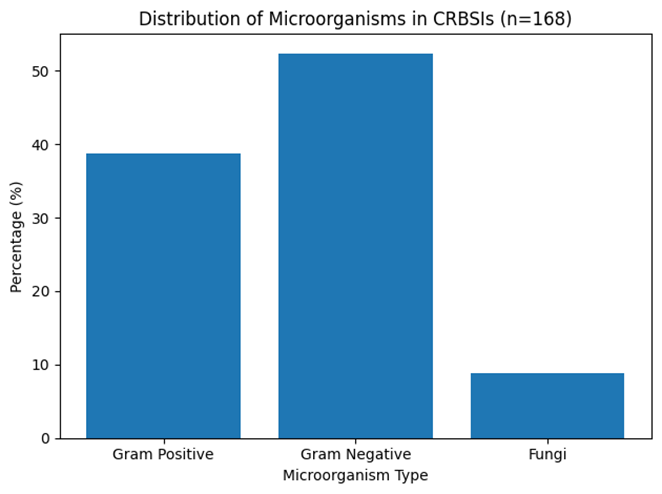
Figure 1: Distribution of Microorganisms in Catheter-Related Bloodstream Infections (n = 168)
The graph illustrates that Gram-negative organisms were the most predominant pathogens, followed by Gram-positive bacteria, while fungal infections constituted the smallest proportion.
DISCUSSION :
The present study evaluated the microbiological spectrum and antibiotic resistance patterns in double-lumen catheter-related bloodstream infections (CRBSIs) among diabetic patients. The findings revealed that Gram-negative organisms were the predominant pathogens, followed by Gram-positive bacteria and a smaller proportion of fungal isolates. This predominance of Gram-negative organisms aligns with recent trends observed in hospital-acquired infections, particularly in developing countries, where increased use of invasive devices and prolonged hospital stays contribute to a shift from traditionally Gram-positive to Gram-negative dominance [12-14].
The most commonly identified pathogens among the isolated ones were Klebsiella pneumoniae and Staphylococcus aureus, which underscores the duality of both a community-associated and a hospital-acquired infection. The use of a large percentage of coagulase-negative Staphylococci (CONS) also highlights the importance of skin flora and catheter handling practices in the pathogenesis of CRBSIs. These results concur with up-to-date research that has recorded such kind of microbial patterns in catheter-related infections, especially in patients with a chronic illness like diabetes mellitus [15-17].
One of the major findings in this work was the extensive antimicrobial resistance, particularly Gram-negative microbes. The level of resistance to widely used antibiotics like ceftriaxone and ciprofloxacin is remarkably high, but comparatively lower resistance to carbapenems and colistin was observed, which means that they could be still regarded as the last-resort therapy. Multidrug-resistant organisms (MDROs) are becoming increasingly more problematic as evidenced by the increasing proportion of Gram-positive isolates resistant to methicillin-resistant Staphylococcus aureus (MRSA). Such results are indicative of the international issue of antimicrobial resistance and the importance of stringent antibiotic stewardship initiatives [18].
It was also revealed in the study that there is a strong relationship between poor glycemic control (HbA1c levels) and higher rate of Gram-negative infections, indicating that uncontrolled diabetes can dispose a patient to more severe and opportunistic infections. Moreover, there was a significant relationship between the length of catheter dwell time and increased infection rates especially of Gram-negative organisms. These results support the significance of the best glycemic control and the appropriate management of catheters in terms of minimizing the risk of CRBSIs [19].
Fungal infections were less common but mostly Candida species with a significant percentage being resistant to fluconazole. Clinical implications of this finding are seen in the fact that it shows the emergence of non-albicans Candida and antifungal resistance, especially in immunocompromised and critically ill diabetic patients [20].
This study has some limitations although it has its strengths. As a single-centre cross-sectional study, the results might not be applicable in other healthcare environments. Also, there was no molecular characterization of resistant strains or long-term clinical follow-up. The research however offers useful data regarding the local microbial profile and resistance trends that play a vital role in informing the empirical therapy.
CONCLUSION :
In conclusion, this study demonstrates that Gram-negative organisms are the leading cause of double-lumen catheter-related bloodstream infections in diabetic patients, with Klebsiella pneumoniae and Staphylococcus aureus being the most commonly isolated pathogens. A high prevalence of antimicrobial resistance, including MRSA and multidrug-resistant Gram-negative organisms, was observed, posing a significant clinical challenge.
Poor glycemic control and prolonged catheter duration were identified as important risk factors associated with infection. These findings highlight the need for strict infection control measures, early catheter removal when indicated, optimized glycemic management, and rational use of antibiotics to reduce the burden of CRBSIs.
Further multicenter studies with advanced microbiological techniques are recommended to better understand evolving resistance patterns and to develop targeted therapeutic strategies.
BIBLIOGRAPHY:
1. Hussain, M., et al., BACTERIAL SPECTRUM AND ANTIMICROBIAL PATTERN OF BLOOD STREAM INFECTIONS ASSOCIATED WITH NON--TUNNELED DOUBLE LUMEN CATHETER IN HEMODIALYSIS PATIENTS. 2021. 71(4).
2. Oumer, Y., et al., Catheter-associated urinary tract infection: incidence, associated factors and drug resistance patterns of bacterial isolates in Southern Ethiopia. 2021: p. 2883-2894.
3. Shahar, S., et al., Catheter‐related bloodstream infections and catheter colonization among haemodialysis patients: Prevalence, risk factors, and outcomes. 2021. 2021(1): p. 5562690.
4. Lafuente Cabrero, E., et al., Risk factors of catheter-associated bloodstream infection: systematic review and meta-analysis. 2023. 18(3): p. e0282290.
5. Devrim, İ., et al., The impact of central line bundles on the timing of catheter-associated bloodstream infections and their microbiological distribution in critically ill children. 2023. 182(10): p. 4625-4632.
6. Ielapi, N., et al., The role of biofilm in central venous catheter related bloodstream infections: evidence-based nursing and review of the literature. 2020. 15(1): p. 22-27.
7. Caldara, M., et al., Environmental, microbiological, and immunological features of bacterial biofilms associated with implanted medical devices. 2022. 35(2): p. e00221-20.
8. Chiang, M.-C., et al., Lactobacillus rhamnosus sepsis associated with probiotic therapy in an extremely preterm infant: Pathogenesis and a review for clinicians. 2021. 54(4): p. 575-580.
9. White, A.N., et al., Catalase activity is critical for Proteus mirabilis biofilm development, extracellular polymeric substance composition, and dissemination during catheter-associated urinary tract infection. 2021. 89(10).
10. Wang, L., L. Jia, and A.J.J.o.I.M.R. Jiang, Pathology of catheter-related complications: what we need to know and what should be discovered. 2022. 50(10): p. 03000605221127890.
11. Gifford, A.H., et al., Complications and practice variation in the use of peripherally inserted central venous catheters in people with cystic fibrosis: the Prospective Study of Peripherally Inserted Venous Catheters in People With Cystic Fibrosis Study. 2023. 164(3): p. 614-624.
12. Chow, K.M., et al., ISPD catheter-related infection recommendations: 2023 update. 2023. 43(3): p. 201-219.
13. Almeida, B.M., et al., Interventions for treating catheter‐related bloodstream infections in people receiving maintenance haemodialysis. 2022(4).
14. Shah, N.J., J. Rathva, and C. Parikh, A Prospective study on central venous catheter related blood stream infections in surgical patients.
15. Maruo, A., et al., Continuous local antibiotic perfusion: a treatment strategy that allows implant retention in fracture-related infections. 2022. 30(2): p. 10225536221111902.
16. Nassiri, A.A., et al., Comparison between vancomycin lock and taurolock solution for the prevention of catheter-related infections in hemodialysis patients, a multicenter study. 2023. 17(4): p. 215.
17. Akbıyık, A., et al., Determination of microbial contamination on the outer surface of needleless connectors before and after disinfection. 2023. 77: p. 103414.
18. Shahar, S., et al., Research Article Catheter-Related Bloodstream Infections and Catheter Colonization among Haemodialysis Patients: Prevalence, Risk Factors, and Outcomes. 2021.
19. Ivanova, A., et al., Sonochemically engineered nano-enabled zinc oxide/amylase coatings prevent the occurrence of catheter-associated urinary tract infections. 2021. 131: p. 112518.
20. Abduzzahra, R.J., et al., BLOOD CULTURE AND MULTIPLEX REAL TIME PCR FOR DETECTION OF MUCORMYCOSIS AMONG PATIENTS ON HEMODIALYSIS. 2022. 22(1).