Pharmacological potential and Enhanced Bio-efficacy of Curcuma Caesia: A Review of an Endangered Medicinal Species
- Preeti Choudhary , Department of Chemistry, Jecrc University, Vidhani, Sitapura Extension, Jaipur-303905.
- Niti Sambyal , Infectious Disease Division CSIR-Indian Institute of Integrative Medicine, Canal Road Jammu-180001, India
- Sanjay K Sharma , Department of Chemistry, Jecrc University, Vidhani, Sitapura Extension, Jaipur-303905
- Sumit G Gandhi , Infectious Disease Division CSIR-Indian Institute of Integrative Medicine, Canal Road Jammu-180001, India
- Lalit Upadhyay , Krishi Vigyan Kendra, Tanda, Reasi-182
Article Information:
Abstract:
Curcuma caesia also known as black turmeric, belongs to the family Zingiberaceae. It is a rare medicinal plant which is currently listed as an endangered species. The rhizomes and leaves of this plant are widely utilised in Ayurveda medicine for the treatment of a wide range of diseases. The plant shows a variety of bioactive compounds that makes it a potential source for pharmaceutical industries. Moreover, the plant is abundant in essential oils. The essential components include camphor, elemene, borneol, 1,8-cineole, bornyl acetate, ar-curcumene, ar-turmerone, ocimene, and curcumene. Despite the limited research on C. caesia, findings have shown that the plant possesses antibacterial, antifungal, antioxidant, anti-inflammatory, anticancer, and anti-diabetic properties. Due to its unavailability and authenticity, certain aspects of this plant have not been explored. This review has put forward an in-depth discussion on the botanical description, phytochemical research, pharmacological activities, its toxicity profile and the conservation status of C. caesia.
Keywords:
Article :
INTRODUCTION:
Nature offers massive reserves of therapeutically active compounds. Medicinal plants have been the backbone of health care for centuries. There are hundreds of plant species that have medicinal significance and show promise in modulating the physiology of the human body. Tropical medicinal floras could serve as a useful source of reliable, safe and novel bioactive compounds with high potential of treating numerous ailments. The medicinal efficacy is mostly due to the occurrence of essential secondary metabolites and the presence of certain phytochemicals (Velu et al., 2018). With the emergence of new diseases, the pharmaceutical industries have also shifted their interest in finding the novel biologically active compounds from plants. Using their expertise of phytomedicine, they are beginning to link the traditional/homoeopathic medicine and modern/allopathic medicine to create novel century drugs. Western nations in addition are showing a growing interest in the investigation of new compounds from plants due to their minimal adverse effects in comparison to the synthetic drugs.
Curcuma is the largest genus of the ginger family “Zingiberaceae” which includes more than 70 species of rhizomatous herbs. With a long history of use, Curcuma apart from being used as a spice and flavouring agent, also stands out as an excellent medicinal herb (Rajkumari & Sanatombi, 2017). C. caesia (commonly known as black turmeric), is a poorly introduced and underutilised species of Curcuma. It is an erect to semi-erect rhizomatous perennial plant, which is widely distributed throughout Myanmar, Java, Northeast and Central India. West Bengal, Uttar Pradesh, Orissa, Chhattisgarh and Madhya Pradesh are among the Indian states where it is most prevalent. Its distribution has also been seen in some parts of Sikkim, Himalayan hills, Arunachal Pradesh and the east-west Godavari rivers (Pathan et al., 2013; Sharma et al., 2011). The plant shows high pharmaceutical importance. It shows potential in the treatment against asthma, leprosy, haemorrhoids, leukoderma, inflammation, piles, cancer, and bronchitis among others. Additionally, this herb offers a defence against conditions like ulcerative colitis, Crohn’s disease as well as Alzheimer.
C. caesia has been declared endangered by the Central Forest department of India due to its lack of seed production, vegetative modes of reproduction, susceptibility of conventional breeding. Therefore, efforts should be made to preserve this species. The full potential of the plant is still unexplored. A detailed analysis could reveal the crucial aspects about their bioactive components and how to use the information to create novel drug formulations.
This article aims to examine the health benefits, phytochemistry, and medicinal applications of C. caesia and to draw attention towards the future research on its potential pharmacological activities which would aid in the development of effective strategies.
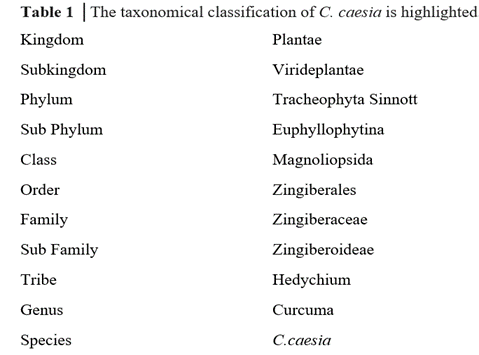
Botanical description of C. caesia and taxonomic classification
C. caesia can be identified by the presence of bluish-black underground rhizomes with a camphoraceous scent. The plant is diploid, mostly erect and can grow in subtropical to temperate regions. It can attain a height of 1.0 to 1.5 m within altitudes of 200 and 1000 m. The plant prefers somewhat acidic (pH ranges 4.5-6.5) and sandy loam soils for cultivation. The plant comprised three parts: (i) underground tuberous rhizome, (ii) reproductive part, (iii) aerial part (shoot with leaves). The leaf and rhizome of C. caesia is a perfect source of essential oils (Borah et al., 2019). The rhizomes are ovoid in shape with an acute tip and tend to be less thick (2-6 cm in diameter) than its other species. Furthermore, the outer surface of rhizome has fibrous adventitious root has nodal and internodal zones, which could be used for vegetative propagation.
C. caesia bears long, glabrous leaves with parallel venation that arises from the underground rhizomes. The leaves grow in groups of 10 to 20 and are distinguished by the presence of an intense violet haze that runs through the midrib. The ivory-coloured petiole wraps around itself to form pseudoaxis. The length of the petiole and sheath matches the length of the blade. Microscopic analysis of thin sections of leaf reveals vascular bundles with oil cavities whereas microscopic view of rhizome shows thin epidermis (single layered) and a cortex with 3-5 layers. The other characteristics include yellow flowers having red outer borders which shows spike inflorescence with long, dense spikes which are roughly 15-30 cm high overall. The flowers are tubular, long and relatively smaller than the bracts. The bracts appear green while coma bracts turn crimson after maturation. The corolla is long, tubular, semi-elliptic and the calyx is about 10-15 mm long. Flowering begins with the beginning of monsoon season (June and July) and the ripening of fruit can be seen by the end of this season (September and October). The crop takes nine months to mature (Donipati & Sreeramulu, 2015; Sahu et al., 2016)
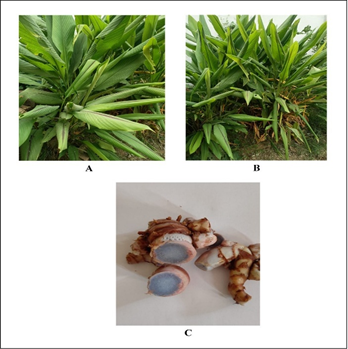
Fig 1 │Leaves (a), the whole plant (b), and the rhizome (c) of Curcuma caesia.
Phytochemical study of C. caesia
To investigate the therapeutic properties of any plant, it is essential to initially comprehend its chemical composition. The specialised metabolites produced by plants contribute to its defence. The information about phytochemicals present in plants could aid in the standardisation of extracts employed for scientific investigations such as antibacterial, antifungal, anti-inflammatory, and antioxidant activities. Phytochemical screening reveals the presence of major phytoconstituents like alkaloids, phenols, sterols, terpenoids, oils and flavonoids. Besides that, C. caesia also shows the presence of curcuminoids, protein, amino acids, and minerals. However, the majority of the investigations are more focussed on the rhizome of C. caesia. Although, studies have revealed the presence of essential oil in both the rhizome as well as the leaf part (Angana et al., 2019).
Phytochemical screening
Phytochemical screening is an important step in identifying the functional groups or the treasured bioactive compounds in the plant sample. Evaluation
of phytochemicals is preferred prior to its isolation and separation to save resources and time. Although, isolating these compounds are quite challenging and necessitates a greater degree of expertise in GCMS (Gas chromatography-mass spectroscopy), HPLC (high-performance liquid chromatography), LCMS (liquid chromatography-mass spectroscopy) and others like NMR (nuclear magnetic resonance). The HPTLC examinations indicated the presence of phenols, sterols, terpenoids and certain other organic compounds. According to a study by Majeed et al., 2019, the HPLC profiles and mass spectrometry indicated the presence of Calebin-A in the rhizome part (Majeed et al., 2019). A number of simple and rapid predetermined tests are also undertaken as a part of a qualitative approach for phytochemical analysis. Previous research shows the extraction of mostly the rhizome part of C. caesia for investigation of phytochemicals. Countless assays were conducted by using different polarity of extraction solvents and the following phytochemical functional groups were examined: alkaloids, glycosides, oxalates, phlobatannins, phenols, saponins, resins, carbohydrates, sterols, steroids, tannins, terpenoids, flavonoids, amino acids, proteins, quinones, oils and fats (Dutta, 2015; Hait et al., 2019; Lawand & Gandhi, 2013; Nayak & Bhatnagar, 2018; Randeep et al., 2011).
The crude extracts were prepared by using Soxhlet extraction method. The properly grinded powder material was extracted individually with different solvents. The solvents used for extraction were aqueous (water), methanol, ethanol, acetone, ethyl acetate, hexane, chloroform, petroleum ether. Studies indicated effective functional group identification with solvents having greater polarity such as water, methanol or ethanol whereas low polarity extraction solvents like hexane or petroleum ether were shown to be less appropriate for phytochemical screening. Methanol, chloroform and aqueous extract provides evidence of quinones, phytosterols, saponins, diterpenes, glycosides, alkaloids, phenols, terpenoids, oils, carbohydrates, starch, amino acids, and resins (Donipati & Sreeramulu, 2015; Ranemma & Reddy, 2017; Yadav & Saravanan, 2019). The presence of phytochemicals such as cardiac glycosides, tannins, emodins, flavonoids, diterpenes, phlobatannin, anthraquinone, carbohydrate, alkaloids, saponins, phytosterol, chalcones and carbohydrates is observed in acetone extract of C. caesia rhizomes (Sawant & Godghate, 2013). The related experiments carried out by researchers collated from standard relevant articles as shown in table 2.
|
(+) *- Present; (-)*- Absent
References: (1)-(Randeep et al., 2011); (2)-(Paliwal et al., 2011); (3)-(Lawand & Gandhi, 2013); (4)-(Jose & Thomas, 2014); (5)-(Dutta, 2015); (6)-(Nayak & Bhatnagar, 2018); (7)-(Hait et al., 2019).
The GCMS and FT-IR analysis of methanol extracted from the rhizome identified few chemical constituents like retinal, alloaromadendrene, ar-turmerone, α-santalol, megastigma-3,7(E),9-triene, 1-(1,5-dimethyl 4-hexenyl)-4-methyl, benzene, 5,8,11,14,17-eicosapentaenoic acid, trans-2,9-anti-9,10, tricyclo [8.6.0.0(2,9)]hexadeca-3,15-diene, and methyl ester at high levels along with some additional chemical compounds at low levels (Pakkirisamy et al., 2017).
Composition of essential oils of C. caesia
Studies have explored essential oils mostly from C. caesia rhizomes. However, certain cases noted oil makeup from its leaves too. According to previous GC-MS analysis, the bioactive compounds revealed in the essential oils of rhizome to date includes camphor, camphene hydrate, ar-curcumene, p-cymene, δ-3-carene, myrcene, ocimene, α-pinene, β-pinene, dihydrocarveol, terpinen-4-ol acetate, terpinolene, borneol, endo-borneol, isoborneol, limonene, eucalyptol, β-eudesmol, elemol, β-elemene, δ-elemene, zingiberene, germacrene B, germacrene D, δ-cadinene, α-cadinol, β-cymene, β-selinene, β-caryophyllene, methyl chavicol, 2-nonanone, α-terpineol, farnesol, p-menth-3-ene, curzerene, caryophyllene, ar-turmerone, humulene, isolongifolene, globulol, cycloisolongifolene, curzerene, caryophyllene oxide, agarospirol, rosifoliol, ledol, β-guainene, γ-gurjunene, β-cubebene, 4-dimethylamino-benoic acid, trans-carveol, 8,9-dehydro-9-formyl, 2,7-dimethyl oxepine, occidentalol, β-gurjunene, 6-isopropylidene-bicyclo, cyclohexanol, L-bornyl acetate, isobornyl acetate, cis-carveol, 1,2-longidione, tropolone, and spathulenol (Kumar & Gautam, 2020; Mukunthan et al., 2014; Paliwal et al., 2011; Singh et al., 2021).
Mukunthan et al. (2014) identified around thirty five bioactive compounds from the essential oil of rhizome. Among which tropolone (15.86%) was found to be the predominant component. The other minor components identified were ledol (3.27%), spathulenol (3.03%), α -bulnesene (3.02%) and β-elemenone (3.02%). According to Paw et al., (2019), the principle essential oil constituents of C. caesia rhizome were eucalyptol (28.55%), camphor (21.73%), and epicurzerenone (19.62%). Camphor, turmingone, elemene, borneol, curcumin, ocimen, curcumen and nerylacetate make up the majority of the oil’s chemical ingredients which accounts for 97% of the oil of C. caesia rhizome (Sahu et al., 2016). The GC-MS results of oil produced by hydro-distillation of rhizomes shown camphor (28.3%) and ar-turmerone (12.3%) as the main constituents while endo-fenchol (2.3%), β-caryophyllene (2.6%), γ-curcumene (2.8%), bornylacetate (3.3%), borneol (4.4%), β-elemene (4.8%), 1,8-cineole (5.3%), ar-curcumene (6.9%), and β-ocimeme (8.2%) as the minor constituents. In contrast, studies conducted by Kumar and Gautam (2020) identified cycloisolongifolene, camphor, 8,9-dehydro-9-formyl, and eucalyptol as the primary compounds. Recent research on analysing the chemical constituents of hydrosol of C. caesia’s rhizome was done by Fatt et al., (2021). The GCMS examination showed components like eicasonic acid, oleic acid, camphor, 1-tridecene, N-[4-bromo-n-butyl]-2-piperidinone, 2,4-bis(1,1-dimenthylethyl)-phenol, n-hexadecanoic acid, 1,3,5-trimethyl-benezene, and 5-octadecene on hydrodistillation at various temperatures (Fatt et al., 2021).
There has not been much research on the essential oils extracted from leaves of C. caesia. The one investigation on C. caesia leaf yielded 0.7% of the essential oil. The GCMS analysis noted thirty two peaks from the leave’s oil. From which, eucalyptol with a percentage of 16.43% leads as the primary component, followed by camphor (11.56%), β-pinene (6.54%), borneol (4.7%), and camphene (3.24%). The rest of the reported compounds were L-linalool, verbenol, trans-carveol, α-pinene, β-elemene, β-farnesene, muurolene, confertin, germacrone, germacrene-D, germacrene-B, aromadendrene, trans-caryophyllene, xanthinin, α-humulene, α-fenchyl acetate, curzerene, nerolidol, δ-elemene, α-eudesmol, phytol, and junipene (Borah et al., 2019).
The essential oil of the rhizomes of C. caesia have been used to identify many biomarkers for post-storage and quality control purposes. The qualitative and quantitative characterization of the markers was done using proton nuclear magnetic resonance (1 H-NMR). The technique analyses four major thermolabile sesquiterpenes (curzerenone, germacrone, furanodiene, and furanodienone). It is possible to analyse various oleoresin profiles of C. caesia by using these chemical markers (Mahanta et al., 2020).
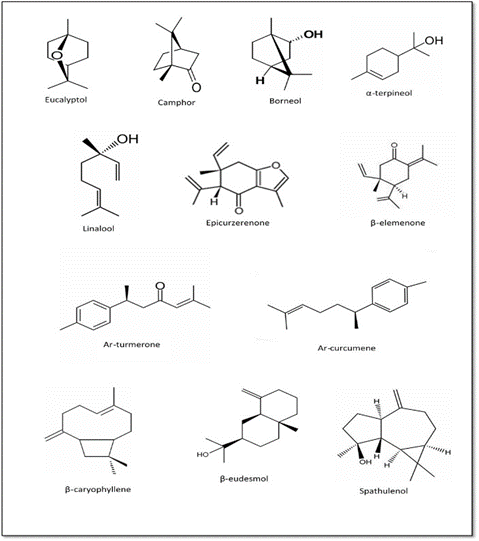
Fig 2 │ Chemical structure of phytoconstituents present in C. caesia.
Pharmacological potential of C. caesia
Different bioactive compounds from C. caesia have been reported to possess numerous medicinal benefits. The plant exerts multiple pharmacological activities such as anticancer, anti-inflammatory, analgesic, antioxidant, antibacterial, CNS depressant, anti-ulcer, antifungal, anti-asthmatic, and anti-diabetic. Former studies have used varying concentrations of crude extracts and essential oil to test the pharmacological effects. Among the phytoconstituents of C. caesia, phenolic and flavonoid compounds have been shown to have a variety of biological effects including free radical scavenging, antioxidant, anti-inflammatory and anti-carcinogenic properties.
Antibacterial activity
Bacterial infections are widespread. The antibacterial effects of this species have been investigated against gram-positive and gram-negative bacteria, in which Bacillus subtilis, staphylococcus aureus, and Escherichia coli were the most employed microbes in the study. According to (Rajamma et al., 2012), the oleoresins extracted from the rhizome of this plant are efficient against Bacillus subtilis, staphylococcus aureus, and Escherichia coli. Among them, Bacillus subtilis showed a large zone of inhibition and was more susceptible to it. In-vitro studies by Jose and Thomas (2014) showed the effect of extracts at varying concentrations of 1.5, 2.5, and 5 mg/ml against Streptococcus haemolyticus, Bacillus cereus, Staphylococcus aureus, Salmonella typhi, Vibrio cholerae, Pseudomonas aeruginosa, Enterobacter aerogenes, and Serratia marcescens. The experiment discovered acetone extract at 5 mg/ml concentration to be the most effective against S. aureus, and S. haemolyticus whereas hexane extract was seen to be efficacious against B. cereus (Jose & Thomas, 2014). The methanol extract from leaves of C. caesia demonstrated an effective antibacterial effect on Streptococcus pyogenes, Micrococcus glutamicum, Diplococcus pneumonia, and Bacillus cereus (Reenu et al., 2015). According to research by Pandey and Gupta (2014), the extracts prepared from rhizomes of C. caesia showed more efficacy than the extracts prepared from leaves and stem with the exception of aqueous extract. The methanol extracted from rhizome produces the highest inhibition zone against S. aureus, B. cereus, staphylococcus epidermidis, and Bacillus subtilis in comparison to chloroform, acetone, aqueous extracts from leaves and stem. In contrast, the chloroform extracted from root showed higher zones of inhibition against gram negative bacteria (Pandey & Gupta, 2014). According to recent research by (Kaur et al., 2018) employing the cup-plate technique, the dichloromethane extracted from rhizome at 200mg/ml concentration was impactful over Streptococcus pyogenes, S. aureus, Escherichia coli, and Pseudomonas aeruginosa. The extracted oil of C. caesia was also tested for antibacterial activity (Munda et al., 2019). The oil was almost effective against Escherichia coli and Bacillus subtilis respectively (Banerjee & Nigam, 1976; Munda et al., 2019).
Antifungal activity
Reports claim that C. caesia has antifungal properties. The extract consists of bioactive substances which are responsible for its antifungal activity. In recent anti-fungal research, the essential oil of C. caesia was tested against four major fungal strains namely Aspergillus fumigatus, Candida albicans, Aspergillus niger, and Saccharomyces cerevisiae. The leaf oil showed minimum inhibitory concentration of 5, 5 and 40 ul against, A. niger, A. fumigatus and S. cerevisiae. On the contrary, Candida albicans showed the lowest inhibitory concentration (Borah et al., 2019). The dried rhizome extracted with dichloromethane and ethanol at a concentration of 100, 150, and 200 mg/ml was tested against Candida albicans and Aspergillus fumigatus. A significant inhibitory zone was observed. The ethanol extract at 200 mg/ml showed the inhibition zone of 25 and 25.66 mm for Candida albicans and Aspergillus fumigatus respectively (Kaur et al., 2018). In another investigation, the isolated compounds from the acetone extract like terpenoid (Z)-7-methoxy-1, 5-dihydrobenzo [c] oxepine was shown to act effectively on Fusarium oxysporum, Rhizopus oryzae, and Botrytis cinerea (Ghosh et al., 2013).
Antioxidant activity
Studying the free radical scavenging properties has revealed the antioxidant activity of C. caesia. Many antioxidant assays were implemented on C. caesia including FRAP (ferric reducing activity), DPPH (2,2-diphenyl-1-picrylhydrazyl), TBARS (thio-barbituric acid reactive species) assay, and total phenolic content assay (Devi et al., 2015; Liu et al., 2013; Mangla et al., 2010). Mangla et al., (2010) investigated the antioxidant properties of the rhizome part of C. caesia and discovered comparable results of methanol extract with the standard “Butylated Hydroxytoluene”. The results showed methanol extract with an IC50 value of 862.35 g for 2 ml of 500 uM DPPH solution. According to Liu et al. (2013), using the DPPH assay, the methanol extracts of C. caesia rhizome were seen to have greater antioxidant activity in comparison to other species of curcuma. When compared to ascorbic acid, and TBHQ (tert-Butylhydroquinone) at 25 g/ml concentration, the methanol extract moderately decreased the lipid peroxidation activity by 43% (Liu et al., 2013). The HRS (hydroxyl radical scavenging) antioxidant assay undertaken by (Nag et al., 2021) showed the highest activity of C. caesia rhizome extract. Studies have shown that the hexane extract of the rhizome has higher overall antioxidant capacity than the methanol extracts (Mukunthan et al., 2014). Rajamma et al. (2012) revealed that the antioxidant activity of oleoresins extracted from the essential oils of C. caesia had an IC50 value of 0.32 mg and related a strong association between phenolic content and antioxidant characteristics. Additionally, the leaf oil is reportedly high in phenols, and flavonoids that reveal its potential for antioxidant effect. The leaf oil showed free radical scavenging activity with an IC50 value of 1.487 ug/ml by DPPH assay which was significantly higher than the control (Borah et al., 2019).
Anti-inflammatory activity
Inflammation can be triggered by a variety of stimuli. Hormones like prostaglandins show a serious involvement in it. These inflammatory disorders could be prevented or postponed by restricting the COX (cyclooxygenase) enzymes which are linked to inflammatory intermediates like prostaglandins and thromboxanes (Liu et al., 2013). The findings showed C. caesia’s pure isolated compounds and extracts mainly hexane and methanol could selectively inhibit COX-2. On the contrary, the results showed weak activity against COX-1 (Liu et al., 2013). Both in-vivo and in-vitro approaches were used to analyse the anti-inflammatory activity of C. caesia. An in-vivo research was conducted by using carrageenan induced paw edema model and cotton pellet induced granuloma model in wistar rats (Sawant et al., 2014). Different concentrations of methanol extracts of C. caesia were analysed onto the models. Extracts at 200 and 400 mg/kg significantly showed the anti-inflammatory activity by decreasing paw edema volume in carrageenan-induced paws and produced the lowest dry weight of granuloma at 400 mg/kg with the highest percentage of inhibition in cotton pellet induced granuloma (Sawant et al., 2014). An in-vitro study was conducted using protein denaturation test (Borah et al., 2019). The leaf oil at concentrations of 50, 100, 150, 200, 250 and 300 g/ml was tested on egg albumin. The findings confirmed that the oil with a concentration of 300 g/ml and IC50 value of 182.5 g/ml exhibit the highest anti-inflammatory action (Borah et al., 2019).
Anti-cancer activity
The limitations of synthetic medications emphasise the critical need for cytotoxic drugs from natural sources including medicinal plants. Few studies investigate the prophylactic and therapeutic effect of C. caesia extracts. Using a mouse model, (Hadem et al., 2015) studied the anticarcinogenic effects of C. caesia in diethylnitrosamine (hepatocarcinogen) induced BALB/c mice by analysing TNF-α levels and NF-κB activity in liver. The observation suggests that the methanol extract might have the ability to revert the structural abnormalities brought on by the exposure of DEN. Another study by (Karmakar et al., 2013), evaluated the antitumor potential of methanol extract of C. caesia rhizome at dosages of 50, 100 mg/kg along with the drug 5-fluorouracil (20 mg/kg) as control in Swiss albino mice. The analysis demonstrated a reduction in tumour weight, volume, and viable cell count while extending lifespan of mice with the application of methanol extract of C. caesia. The antitumor activity of C. caesia has not been explored much yet. The active ingredients responsible for the anticancer effect is unknown and the research is still ongoing.
Anti-diabetic activity
Increased diabetics and obesity cases globally necessitates a comprehensive medical strategy. The shift in focus towards natural products due to the side effects of conventional medicine prompted studies of anti-diabetic properties in medicinal plants. Few in-vivo and in-vitro techniques were employed to assess the anti-diabetic potential of C. caesia. (Majumder et al., 2017) conducted α-amylase and α-glucosidase inhibition assays to validate the anti-diabetic potential of the methanol extract of C. caesia’s rhizome. The IC50 value of methanol extract in α-amylase inhibition assay was found to be 442.9 ± 10.05 µg/ml and in α-glucosidase inhibition assay, the value recorded was 95.4 ± 9.74 µg/ml, both of which were greater than the IC50 value of the standard drug. In the in-vivo investigation on male Wistar rats, methanol extract revealed the capacity to reduce the blood glucose levels (Majumder et al., 2017). Another investigation by (A. Jain et al., 2019) (C. Jain et al., 2019)used α-amylase inhibition test on different extracts of C. caesia rhizome including chloroform, ethanol, methanol, dichloromethane, ethyl acetate, and acetone. The results found the highest percentage inhibition at 97.7 % of the ethyl acetate extract of C. caesia. However, to validate the anti-diabetic activity of C. caesia, additional research and clinical trials must be required.
Toxicity evaluation
Phytochemical analysis of the C. caesia extracts has revealed the presence of certain secondary metabolites. A large variety of which are significant in the field of medicine. As narrated and comprehended in the Vedic science, the effectiveness of herbal medicine in the disease treatment is achieved by the synergistic effect of plant metabolites and their interaction within the cell (C. Jain et al., 2019). The functional parametric assessments like drug efficacy and toxicity profile of the extracts and isolated metabolites of C. caesia are sparsely described. In an experiment by (Karmakar et al., 2013), the toxicity of methanol extract of C. caesia was investigated in male Swiss Albino mice. The results demonstrated no toxicity in mice up to the dosage of 3000 mg/kg body weight per oral administration. In another study by (Sawant et al., 2014), the administration of the methanol extract of C. caesia in albino mice orally at a dosage of 2000 mg/kg body weight per oral administration demonstrated no toxicity symptoms or fatalities. According to current study, the methanol extract of C. caesia also prevents the toxicity caused by chemotherapeutic drugs (Devi & Mazumder, 2016). The study revealed that the methanol extract of C. caesia shows no genotoxicity. However, it reduces the genotoxicity brought on by the application of Cyclophosphamide (chemotherapeutic drug) on Swiss albino mice. Therefore, the prior studies demonstrate that administering C. caesia extracts can be safe for consumption and is unlikely to cause toxicity.
Conservation status of C. caesia
C. caesia has been categorised among the endangered species due to the rapid decline in its native environment. Due to its numerous therapeutic characteristics, pharmaceutical potential and commercial uses, it becomes important to preserve this species. Although, various in vivo and in vitro techniques are being preferred to conserve it. Researchers have described alternative strategies to produce improved genotypes. An attempt made by (Sarma & Deka, 2020) to regenerate shoots on MS media using GA3 and Kn, which under field conditions exhibit 80% survival rate. Approaches such as micropropagation, callus induction, and shoot regeneration have been proposed by various studies for the conservation and mass propagation of C. caesia. According to reports, the population of C. caesia in the natural environment was found to be extremely low. Research done by Mishra. M, (2015) explained the various factors contributing to its population reduction in the tropical forests across central India. The factors explained in his studies were climatic change, special habitat conditions, biotic and abiotic factors, introduction of non-native species, and anthropogenic factors. The study emphasised on plant density and regeneration estimations. Low plant density, over-harvesting, habitat alterations, poor regeneration, and lesser reproductive success was observed in selected habitats (Mishra, 2015). For mass propagation strategies, the explants from C. caesia rhizome and shoots were propagated on MS (Murashige and Skoog) media under controlled conditions. The explants were supplemented with NAA (1-Naphthaleneacetic acid), 2,4-dichlorophenoxy-acetic acid, kinetin or BAP (6-Benzylaminopurine) for its efficient clonal proliferation. Callus regeneration was effectively accomplished with media containing 2.5mg/ml BAP and 0.1mg/ml NAA at 26ºC for 24 h photoperiod (Singh et al., 2015). The cumulative impact of the NAA and BAP considerably increased the shoot growth whereas the mixture of BAP and IAA produced the greatest number of roots in the medium. Another in-vitro plant regeneration approach applied by (Haida et al., 2022) revealed that MSB5 medium yields the highest percentage of shoot induction (100%) followed by MS (93.3%) and WPM (83.3%) medium.
Recent studies are investigating the molecular diversity of C. caesia. Scientific research on molecular diversity aids in further crop improvement and conservation practices. Paw et al., (2021) has demonstrated the viability of using microsatellite markers as a tool to distinguish the genetic makeup of the crop. The analysis was performed using SSR (simple sequence repeat) markers of high essential oil yielding strains of C. caesia and the results showed 53% total polymorphism among the selected strains. The analysis of genetic variability in the oil yielding accessions of C. caesia uncovered a high SDI (Shanon’s diversity index) of 0.38 which was comparatively higher than the diversity indexes of other Curcuma species (Paw et al., 2021). Although there are very few reports on genetic diversity research on endangered species. Much research is needed in order to establish future strategies for the improvement and conservation of this crucial medicinal plant.
CONCLUSION AND FUTURE PERSPECTIVE:
Extensive research on C. caesia has opened the possibilities for researchers to explore the species more. The plant has a broad spectrum of activities which makes it a potential therapeutic herb. The studies reported in this review confirms the value of this plant in the pharmaceutical sector. Due to its possible health benefits, this plant can contribute to the development of plant-based drugs. Plant regeneration and molecular marker approach included in this review highlights the future work for the development of new improved genotypes of C. caesia. The majority of the research included in this review were more focused on the rhizome of C. caesia. However, very few studies included the potential uses of other parts of the plant such as leaves, stem and flowers which can be investigated in future research. The clinical and toxicological portion of this plant is less known. Although some pre-clinical drug trials have confirmed the safety for its consumption. However, more research is recommended to demonstrate its efficacy. The goal of this current review is to draw attention to pharmacological advantages and the future perspective of C. caesia which might open new avenues for further investigation into its biochemical and molecular characterisation.
DECLARATIONS
Data Availability Statement
Data Availability StatementThe data used to support the findings of this study is included within the article “Higher bio-efficacy and Pharmacological potential of the wild endangered species: Curcuma Caesia”. The data includes raw data, figures and tables. Data supporting Figure (1,2,3), Table (1,2) is publicly available.
Conflict of interest The authors declare that they have no conflict of interest.
Ethics approval and consent to participate Not applicable.
BIBLIOGRAPHY:
1. S., Sunita, M., Pandey, S., & Mohan, L. (2019). Chemical composition, antioxidant, anti-inflammatory, anti-microbial and in-vitro cytotoxic efficacy of essential oil of Curcuma caesia Roxb. leaves: an endangered medicinal plant of North East India. Industrial crops and products, 129, 448-454.
2. Banerjee, A., & Nigam, S. (1976). Antifungal activity of the essential oil of Curcuma caesia Roxb. Indian Journal of Medical Research, 64(9), 1318-1321.
3. Borah, A., Paw, M., Gogoi, R., Loying, R., Sarma, N., Munda, S., Pandey, S. K., & Lal, M. (2019). Chemical composition, antioxidant, anti-inflammatory, anti-microbial and in-vitro cytotoxic efficacy of essential oil of Curcuma caesia Roxb. leaves: An endangered medicinal plant of North East India. Industrial crops and products, 129, 448-454.
4. Devi, H. P., Mazumder, P., & Devi, L. P. (2015). Antioxidant and antimutagenic activity of Curcuma caesia Roxb. rhizome extracts. Toxicology Reports, 2, 423-428.
5. Devi, H. P., & Mazumder, P. B. (2016). Methanolic extract of Curcuma caesia Roxb. prevents the toxicity caused by cyclophosphamide to bone marrow cells, liver and kidney of mice. Pharmacognosy research, 8(1), 43.
6. Donipati, P., & Sreeramulu, S. H. (2015). Preliminary phytochemical screening of Curcuma caesia. International Journal of Current Microbiology and Applied Sciences, 4(11), 30-34.
7. Dutta, B. (2015). Study of secondary metabolite constituents and curcumin contents of six different species of genus Curcuma. J. Med. Plants Stud, 3(5), 116-119.
8. Fatt, L., Rahman, N., Aziz, M., & Isa, K. (2021). Identification of the Chemical Constituents of Curcuma caesia (Black Turmeric) Hydrosol Extracted by Hydro-distillation Method. IOP Conference Series: Earth and Environmental Science,
9. Ghosh, A., Ghosh, P., & Chatterjee, P. (2013). Evaluation of Antimicrobial and Antifungal potential of (Z)-7-methoxy-1, 5-dihydrobenzo [c] oxepine, isolated from Curcuma caesia Roxb. Journal of Scientific and Innovative Research, 2(4), 745-750.
10. Hadem, K. L. H., Sharan, R. N., & Kma, L. (2015). Phytochemicals of Aristolochia tagala and Curcuma caesia exert anticancer effect by tumor necrosis factor-α-mediated decrease in nuclear factor kappaB binding activity. Journal of basic and clinical pharmacy, 7(1), 1.
11. Haida, Z., Nakasha, J. J., Sinniah, U. R., & Hakiman, M. (2022). Ethnomedicinal uses, phytochemistry, pharmacological properties and toxicology of Curcuma caesia Roxb.: a review. Advances in Traditional Medicine, 1-17.
12. Hait, M., Bhardwaj, A. K., Kashyap, N. K., & Vaishnav, M. (2019). Physicochemical and phytochemical evaluation on non-areal part of Curcuma caesia. The Pharma Innovation Journal, 8(5), 514-517.
13. Jain, A., Jain, P., & Parihar, D. K. (2019). Comparative study of in-vitro antidiabetic and antibacterial activity of non-conventional curcuma species. Journal of Biologically Active Products from Nature, 9(6), 457-464.
14. Jain, C., Khatana, S., & Vijayvergia, R. (2019). Bioactivity of secondary metabolites of various plants: a review. Int. J. Pharm. Sci. Res, 10(2), 494-504.
15. Jose, S., & Thomas, T. D. (2014). Comparative phytochemical and anti‑bacterial studies of two indigenous medicinal plants Curcuma caesia Roxb. and Curcuma aeruginosa Roxb. International Journal of Green Pharmacy (IJGP), 8(1).
16. Karmakar, I., Dolai, N., Suresh Kumar, R., Kar, B., Roy, S. N., & Haldar, P. K. (2013). Antitumor activity and antioxidant property of Curcuma caesia against Ehrlich’s ascites carcinoma bearing mice. Pharmaceutical biology, 51(6), 753-759.
17. Kaur, R., Kaur, B., Suttee, A., & Kalsi, V. (2018). Comparative assessment of in vitro antimicrobial activity of Curcuma caesia Roxb. and Curcuma amada Roxb. Asian Journal of Pharmaceutical and Clinical Research, 94-97.
18. Kumar, A., & Gautam, S. S. (2020). Volatile constituents of Curcuma caesia Roxb. rhizome from North India. National Academy Science Letters, 1-4.
19. Lawand, R. V., & Gandhi, S. V. (2013). Comparison of Curcuma caesia Roxb. with other commonly used Curcuma species by HPTLC. Journal of Pharmacognosy and Phytochemistry, 2(4), 126-131.
20. Liu, Y., Roy, S. S., Nebie, R. H., Zhang, Y., & Nair, M. G. (2013). Functional food quality of Curcuma caesia, Curcuma zedoaria and Curcuma aeruginosa endemic to Northeastern India. Plant foods for human nutrition, 68, 72-77.
21. Mahanta, B. P., Sut, D., Kemprai, P., Paw, M., Lal, M., & Haldar, S. (2020). A 1H‐NMR spectroscopic method for the analysis of thermolabile chemical markers from the essential oil of black turmeric (Curcuma caesia) rhizome: application in post‐harvest analysis. Phytochemical analysis, 31(1), 28-36.
22. Majeed, A., Majeed, M., Thajuddin, N., Arumugam, S., Ali, F., Beede, K., Adams, S. J., & Gnanamani, M. (2019). Bioconversion of curcumin into calebin-A by the endophytic fungus Ovatospora brasiliensis EPE-10 MTCC 25236 associated with Curcuma caesia. Amb Express, 9, 1-13.
23. Majumder, P., Mazumder, S., Chakraborty, M., Chowdhury, S. G., Karmakar, S., & Haldar, P. K. (2017). Preclinical evaluation of Kali Haldi (Curcuma caesia): a promising herb to treat type-2 diabetes. Oriental Pharmacy and Experimental Medicine, 17, 161-169.
24. Mangla, M., Shuaib, M., Jain, J., & Kashyap, M. (2010). In-vitro evaluation of antioxidant activity of Curcuma caesia Roxb. Int J Pharm Sci Res, 1, 98-102.
25. Mishra, M. (2015). Conservation and management of critically endangered medicinal plant Curcuma caesia in the natural forests of Anuppur and Dindori district, Madhya Pradesh, India. Open Access Journal of Medicinal and Aromatic Plants, 6(2), 28.
26. Mukunthan, K., Anil Kumar, N., Balaji, S., & Trupti, N. (2014). Analysis of essential oil constituents in rhizome of Curcuma caesia Roxb. from South India. Journal of Essential Oil Bearing Plants, 17(4), 647-651.
27. Munda, S., Dutta, S., Pandey, S. K., Sarma, N., & Lal, M. (2019). Antimicrobial activity of essential oils of medicinal and aromatic plants of the North east India: A biodiversity hot spot. Journal of Essential Oil Bearing Plants, 22(1), 105-119.
28. Nag, A., Banerjee, R., Goswami, P., Bandyopadhyay, M., & Mukherjee, A. (2021). Antioxidant and antigenotoxic properties of Alpinia galanga, Curcuma amada, and Curcuma caesia. Asian Pacific Journal of Tropical Biomedicine, 11(8), 363.
29. Nayak, S., & Bhatnagar, S. (2018). Antioxidant, cytotoxic and phytochemical assessment of rhizomes of black turmeric (Curcuma caesia). Int J Agric Innov Res, 7(3), 366-369.
30. Pakkirisamy, M., Kalakandan, S. K., & Ravichandran, K. (2017). Phytochemical screening, GC-MS, FT-IR analysis of methanolic extract of Curcuma caesia Roxb (Black Turmeric). Pharmacognosy Journal, 9(6).
31. Paliwal, P., Pancholi, S., & Patel, R. K. (2011). Pharmacognostic parameters for evaluation of the rhizomes of Curcuma caesia. Journal of advanced pharmaceutical technology & research, 2(1), 56.
32. Pandey, D., & Gupta, A. (2014). Antibacterial efficacy of Curcuma caesia from Bastar district of Chhattisgarh, India. International Journal of Pharmaceutical Sciences and Research, 5(6), 2294.
33. Pathan, A. R., Vadnere, G. P., & Sabu, M. (2013). Curcuma caesia almost untouched drug: An updated ethnopharmacological review. Inventi Rapid: Planta Activa, 4, 1-4.
34. Paw, M., Borah, A., Pandey, S. K., Baruah, J., Begum, T., & Lal, M. (2021). Simple sequence repeat marker based genetic diversity assessment amongst high essential oil yielding lines of Curcuma caesia Roxb. Genetic Resources and Crop Evolution, 68(4), 1345-1358.
35. Rajamma, A. G., Bai, V., & Nambisan, B. (2012). Antioxidant and antibacterial activities of oleoresins isolated from nine Curcuma species. Phytopharmacology, 2(2), 312-317.
36. Rajkumari, S., & Sanatombi, K. (2017). Nutritional value, phytochemical composition, and biological activities of edible Curcuma species: A review. International journal of food properties, 20(sup3), S2668-S2687.
37. Randeep, G., Vandna, K., & Amandeep, S. (2011). Phytochemical investigation and evaluation of anthelmintic activity of Curcuma amada and Curcuma caesia-A comparative study. J Ethnopharmacol, 2, 1-4.
38. Ranemma, M., & Reddy, S. K. (2017). Phytochemical investigation study of Curcuma caesia Roxb different geographical regions (Delhi and Orissa) of India. IOSR Journal of Biotechnology and Biochemistry, 3(1), 23-26.
39. Reenu, J., Azeez, S., & Bhageerathy, C. (2015). In vitro antioxidant potential in sequential extracts of Curcuma caesia Roxb. Rhizomes. Indian Journal of Pharmaceutical Sciences, 77(1), 41.
40. Sahu, B., Kenwat, R., & Chandrakar, S. (2016). Medicinal value of Curcuma cassia Roxb: an overview. Pharmaceutical and Biosciences Journal, 69-74.
41. Sarma, I., & Deka, A. (2020). Conservation of Curcuma caesia Roxb.-A critically endangered species via in vitro plant regeneration from organogenic callus. Asian J. Conserv. Biol, 9, 151-155.
42. Sawant, R., & Godghate, A. (2013). Qualitative phytochemical screening of rhizomes of Curcuma longa Linn. International Journal of Science, Environment and Technology, 2(4), 634-641.
43. Sawant, S. B., Bihani, G., Mohod, S., & Bodhankar, S. (2014). Evaluation of analgesic and anti-inflammatory activity of methanolic extract of curcuma caesia roxb. rhizomes in laboratory animals. Int J Pharm Pharm Sci, 6(2), 243-247.
44. Sharma, G. J., Chirangini, P., & Kishor, R. (2011). Gingers of Manipur: diversity and potentials as bioresources. Genetic Resources and Crop Evolution, 58, 753-767.
45. Singh, S., Sahoo, B. C., Ray, A., Jena, S., Dash, M., Nayak, S., Kar, B., & Sahoo, S. (2021). Intraspecific chemical variability of essential oil of Curcuma caesia (Black Turmeric). Arabian Journal for Science and Engineering, 46, 191-198.
46. Singh, W., Singh, H. B., Devi, S. S., Singh, W. N., Singh, N. M., & Devi, Y. P. (2015). Conservation of Curcuma caesia by in vitro techniques. Helix, 2, 708-713.
47. Velu, G., Palanichamy, V., & Rajan, A. P. (2018). Phytochemical and pharmacological importance of plant secondary metabolites in modern medicine. Bioorganic phase in natural food: an overview, 135-156.
48. Yadav, M., & Saravanan, K. K. (2019). Phytochemical analysis and antioxidant potential of rhizome extracts of Curcuma amada Roxb and Curcuma caesia Roxb. Journal of Drug Delivery and Therapeutics, 9(5), 123-126.