Novel approach to design, development and characterization of Itraconazole bilosomes for solubility enhancement
- Smita Shete , PhD Research scholar, Department of pharmacy, Oriental university, Indore (M.P.)
- Sarita Karole , PhD, 2Research guide,2Department of pharmacy, Oriental university, Indore (M.P.)
Article Information:
Abstract:
This research aim to increase solubility of Itraconazole drug by forming a novel bilosomes. Medication Itraconazole dissolves poorly in water. This antifungal medication is necessary to treat a variety of fungal infections. Bilosomes- a novel modified version of liposomes and neosomes have the advantage of increased absorption and penetration. Bilosomes are the Nano vesicular drug delivery system composed of surfactants and bile salts. Bilosomes consist of bilayers, inner layer is made up of hydrophilic drug and outer layer consist bile salts to improve the penetration power of drug. 8 batches of bilosomes were formulated by using Itraconazole drug and excipients like sodium deoxycholate, cholesterol, span 60 by changing the concentration of drug and excipients. The bilosomal formulations were evaluated for different evaluation tests like appearance, pH, vesicle size, zeta potential, flexibility index, homogenicity testing, entrapment efficiency, antifungal activity, viscosity, sun exposure testing, freeze thaw testing, drug release testing. Bilosomal formulation of Itraconazole drug passed all evaluation parameters and drug release was found to be 92.58% within 6 hours and bilosomal formulation was stable for up to 3 months. Itraconazole bilosomes also passed the antifungal test which was carried out on fungi candida albicans. Candida albicans is a fungus which can grow on human body. In conclusion the Itraconazole bilosomes not only increase penetration power of drug but also formed a stable, superior bilosomal formulation with greater stability.
Keywords:
Article :
INTRODUCTION :
Itraconazole is an FDA-approved antifungal drug that is poorly soluble (1). There are numerous antifungal formulations of this medication available in the market. But there is need to boost solubility of poorly soluble Itraconazole drug for greater penetration in the skin. Because bile salts are present in bilosomes-a novel modified version of liposomes and neosomes. Itraconazole is a type of antifungal drug which are used to treat different types of infections caused by fungus (2). Itraconazole is composed of imidazole. This drug has a limited rate of absorption when taken orally. Itraconazole is class II drug with low permeability. Topical medication administration is preferred to combat this since it stops the drugs first- pass metabolism (10).
Bilosomes have the advantage of increased absorption and penetration. Drugs that are poorly soluble and strongly lipophilic are delivered by bilosomes. Bilosomes are more efficient than neosomes and liposomes. (4). There are many formulations of neosomes and liposomes of various drugs in market but bilosomal formulation contains bile salts like sodium deoxycholate or sodium glycocholate and surfactants which are helpful for better penetration (13). So bilosomes are preferred to deliver poorly soluble drugs. Bilosomes contain a variety of bile salts, such as sodium glycocholate and sodium deoxycholate, because of their amphiphilic nature. The outer layer of bilosomes includes bile salts and hydrophobic drugs, whereas the core layer contains hydrophilic drugs. (13). The drug Itraconazole is effective against a variety of fungus and has fewer adverse effects. However, Itraconazole has a low solubility and penetrating power. The solubility of Itraconazole in water is poor. The purpose of this work was to produce bilosomes, to increase the permeability of Itraconazole topically (15).
MATERIAL AND METHODS:
Materials: Itraconazole drug was purchased from SM chemicals, Nashik. All excipients like Sodium deoxycholate, cholesterol, span 60 were purchased from the local suppliers.
Selection of suitable API and excipients
Itraconazole was selected due to its pharmacological action and Sodium deoxycholate, cholesterol, span 60 these excipients are selected
Analysis of compounds by UV visible spectroscopy: Itraconazole drug is mixed with methanol and analysed under UV visible spectroscopic analysis.
IR Spectroscopy: Itraconazole drug was analysed in IR spectroscopic analysis to determine functional groups.
XRD Analysis of Itraconazole drug: XRD (X-ray Diffraction) is performed on Itraconazole, a poorly water-soluble drug (BCS Class II), primarily to analyse its solid-state form, specifically to confirm the change of crystalline drug type into an amorphous solid dispersion.
Drug excipients compatibility
Physical compatibility test: Drug and excipients were mixed with 1:1 ratio and mixture was placed in glass vial. This mixture was kept aside at room temperature. Samples were evaluated for the appearance after 15 days, and it was found that there was no change in appearance of samples. So, on the basis of these results it is confirmed that drug and excipients passes physical compatibility test.
Preparation of bilosomes: Sodium deoxycholate, cholesterol, span 60, Itraconazole
Bilosomes were prepared using the ultra-sonication process. First, span 60 and medication were combined with sodium deoxycholate and cholesterol. 20 milliliters of distilled water was added, and the mixture was homogenized for five minutes at 5000 rpm. Give it five minutes to probe sonication. To give the vesicles time to mature, keep them in the fridge overnight.
Table 1 : Formulation of 8 batches of bilosomes
|
Ingredients |
F1 |
F2 |
F3 |
F4 |
F5 |
F6 |
F7 |
F8 |
|
Itraconazole (mg) |
40 |
45 |
50 |
50 |
55 |
60 |
65 |
70 |
|
Sodium deoxycholate (mg) |
11 |
12 |
13 |
14 |
15 |
16 |
17 |
18 |
|
Cholesterol (mg) |
60 |
60 |
60 |
60 |
60 |
60 |
60 |
60 |
|
span 60 (mg) |
350 |
350 |
350 |
350 |
350 |
350 |
350 |
350 |
|
Water (ml) |
upto 20ml |
upto 20ml |
upto 20ml |
upto 20ml |
upto 20ml |
upto 20ml |
upto 20ml |
upto 20ml |
Evaluation of bilosomes:
Appearance: Visual observation was done to test the appearance of all 8 batches of bilosomes.
Determination of pH: pH meter was used to check the pH of the all 8 batches. The pH was measured at 1, 30, 60, 90 days to detect if there is any change in pH as per time passes.
Vesicle size: Instrument used is Zetasizer. Sample was prepared by adding 0.1 ml bilosomes and dilute it with 100 time’s double distilled water. The diluted sample was placed in a cuvette and then it was analysed, at temperature 25°C and scattering angle of 90° or 174° C.
Zeta potential: Sample was prepared by adding 0.1 ml bilosomes and dilute it with 10 ml deionized water. Then it is filtered through 0.02 µm membrane for accuracy. Zeta Potential Analyser was set at 25°C. Clean electrophoresis cell and Smoluchowski model was used because it is standard for bilosomes. And then zeta potential was calculated.
Flexibility index: It was calculated by passing the bilosomes through membrane having pores smaller than their diameter. Firsly need to measure initial particle size of bilosomes and then pass the bilosomes in membrane with lower pore size with pressure and then measure the final particle size of bilosomes after passing through this membrane.
Flexibility Index = vesicle size after extrusion x 100
Membrane pore size
Homogenicity testing: Visual observation was done to test the homoenicity of all 8 batches of bilosomes.
Entrapment efficiency: Firstly add 1 ml bilosomes in centrifuge tube and allow to rotate at 20000-40000 rpm for 1 hour at 4° C. and then we have removed the supernatant liquid and the remaining liquid is analysed by UV visible spectrophotometer at 262nm.We have calculated amount of dug using calibration curve.
Entrapment efficiency = Total drug-free drug x100
Total drug
Sun exposure testing: While performing sun exposure evaluation bilosomes were placed in sunlight for the time period of 24 hours and after 24 hours the chnages in bilosomes were observed by the visual observation.
Freeze thaw testing: While performing freeze thaw testing bilosomes were placed in freeze at low temperature and then bilosomes were taken from freeze and placed at room temperature. We need to repeat this cycle for 5 times and then we had observed changes by visual observation of all 8 batches.
Drug release testing: The drug diffusion test of all 8 batches of bilosomes were done by Franz diffusion Cellophane membrane was used. Franz diffusion cell is made up of 2 compartments. In Franz diffusion cell one compartment is donor and other compartment is receiver. Cellophane mebrane was placed in between these 2 compartments.Bilosomes were placed on cellophane membrane and drug release was calculated for total period of 6 hours.
Drug content: 1 ml bilosomes were dissolved in 30 ml methanol. Then stir I continuously for 1 hour. Sonicate the sample. Taken the absorbance of the sample at 262nm and then drug content was calculated.
Stability study: All 8 batches were kept at room temperature for stability study.
Antifungal activity: F4 batch was optimised batch out of 8 batches of bilosomes due to high drug content and high drug release. We have performed antifungal study of F4 batch. Minimum Inhibitory Concentration of drug was calculated firstly against fungus Candida albicans. Agar disc-diffusion assay method was used for antifungal study. Zones of inhibitions were measured and compared with the marketed formulation of drug and pure drug also.
RESULTS AND DISCUSSIONS: :
UV visible spectrum of Itraconazole
By UV visible spectroscopic analysis maximum wavelength of Itraconazole was found to be 255nm.
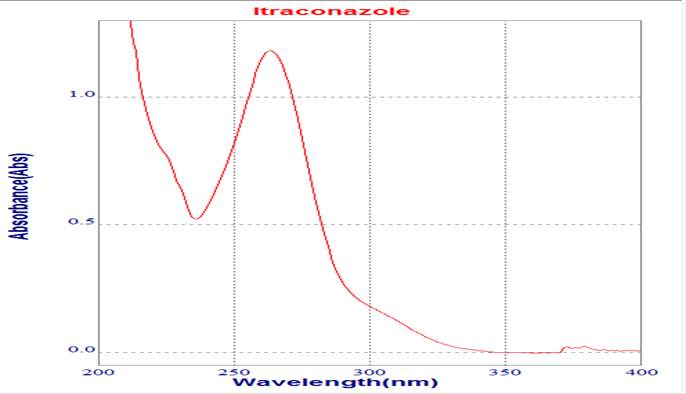
Fig 1. Uultra violet visible spectrum of Itraconazole drug
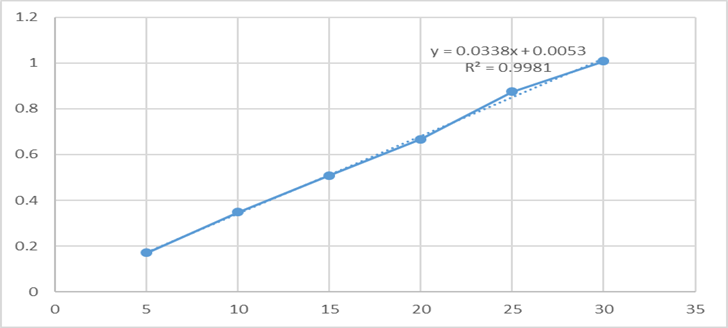
Table 2: Absorbance range of Itraconazole at different concentration
|
Conc.(ug/ml) |
Absorbance of drug |
|
5 |
0.1715 |
|
10 |
0.3593 |
|
15 |
0.5067 |
|
20 |
0.6678 |
|
25 |
0.8739 |
|
30 |
1.0067 |
|
r2 |
0.9981 |
|
slope |
0.0053 |
|
intercept |
0.0337 |
Fig 2.Calibration curve of Itraconazole
IR Spectroscopy:
Fig 3. IR spectra of Itraconazole drug
XRD Analysis of Itraconazole drug
Fig.4. XRD Graph of Itraconazole
Fig.5. Itraconazole peak mark XRD graph
Flexibility Index, Entrapment Efficiency, Drug Release Testing, Drug content:
Table 3: Flexibility Index, Entrapment Efficiency, Drug Release Testing, Drug content of all batches
|
Batch |
Flexibility Index |
Entrapment Efficiency |
Drug content (%) |
Drug Release Testing (%) |
|
F1 |
8 |
65 |
91.58 |
79.15 |
|
F2 |
9 |
59 |
94.35 |
85.69 |
|
F3 |
8 |
70 |
95.45 |
82.6 |
|
F4 |
12 |
85 |
98.65 |
92.58 |
|
F5 |
8 |
66 |
97.46 |
89.5 |
|
F6 |
9 |
67 |
96.99 |
81.94 |
|
F7 |
9 |
69 |
91.48 |
79.15 |
|
F8 |
10 |
55 |
90.58 |
85.69 |
Zeta Potential: Zeta Potential of optimised batch 4 was calculated and it was found to be 28 mv.
Homogenicity Testing: All batches of bilosomes were homogenous by visual observation.
Sun Exposure Testing: In the sun exposure evaluation bilosomes does not show any changes as per visual observation.
Freeze Thaw Testing: In freeze thaw testing bilosomes does not show any changes as per visual observation.
Stability study: All formulations are stable for 3 months at room temperature
Antifungal Activity: MIC of the drug against the Candida albicans was calculated and it was found to be 3.6 ug/ml. And then zones of inhibitions were calculated for drug, bilosomes and marketed formulation of drug.
Table 4: Zone of inhibition of different sample
|
Sample |
Zone of inhibition (mm) |
|
Drug |
12 |
|
Bilosomes |
14 |
|
Marketed formulation |
15 |
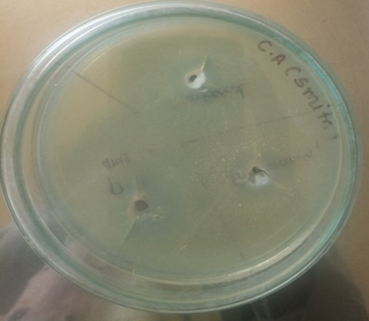
Fig.6. Zone of inhibition of Itraconazole drug, bilosomes and marketed formulation in Candida albicans cultur
CONCLUSION :
Bilosomes of Itraconazole were prepared and evaluated by using sodium deoxyglycolate, span 60 and cholesterol. F4 batch shows higher drug diffusion and higher drug content, so F4 batch was concluded as optimised batch. Itraconazole bilosomes increases drug solubility and penetration capacity of drug in skin. Itraconazole is a poorly souble drug and here we had increased solubility of this drug by forming a novel dosage form bilosomes. Hence this study concluded that F4 was optimized batch which was stable for 3 months and had a higher drug diffusion rate.
BIBLIOGRAPHY:
1. Hashem S.M. Itraconazole-Loaded Ufasomes: Evaluation, Characterization, and Anti-Fungal Activity against Candida albicans, Pharmaceutics, 2022, 15( 1). 1-20,
2. Lamie C. Assessment of antifungal efficacy of itraconazole loaded aspasomal cream:comparative clinical study, Drug Delivery, 2022, 29( 1). 1345–1357.
3. Usman F. Itraconazole Loaded Biosurfactin Micelles with Enhanced Antifungal Activity: Fabrication, Evaluation and Molecular Simulation, Antibiotics, 2023 12( 1). 1-15.
4. Yoshida I.. Intravenous itraconazole compared with liposomal amphotericin B as empirical antifungal therapy in patients with neutropaenia and persistent fever, Mycoses, 2020 63(1), 794–801.
5. Adel S. Fabrication and optimization of itraconazole-loaded zein-based nanoparticles in coated capsules as a promising colon-targeting approach pursuing opportunistic fungal infections, Drug Delivery and Translational Research, 2023, 13 (1) 2982–3002.
6. Poojari C.Cholesterol Reduces Partitioning of Antifungal Drug Itraconazole into Lipid Bilayers, The Journal of Physical Chemistry, 2020, 124(1) 2139−2148,
7. Alyahya E.M. Preparation and Optimization of
8. Itraconazole Transferosomes- Loaded HPMC Hydrogel for Enhancing Its Antifungal Activity: 2ˆ3 Full Factorial Design, Polymers, 2023, 15 (4), 995
9. Kim J. Itraconazole, a Commonly Used Antifungal that Inhibits Hedgehog Pathway Activity and Cancer Growth, Cancer Cell, 2023 17(4)388–399,
10. Adel A. A. Itraconazole, a Commonly Used Antifungal that Inhibits Hedgehog Pathway Activity and Cancer Growth, Cancer Cell, 2019, 161 (4),87-95
11. Abdelhakeem E. Revitalizing Itraconazole: Unleashing its Anticancer Potential through Oral Nanosystems for Liver Targeting and Biodistribution Profiling in an Animal Model using Radiolabeling Technique, Journal of Drug Delivery Science and Technology, 2024, 104 (1), 106463
12. Wagh V. Itraconazole Niosomes Drug Delivery System and Its Antimycotic Activity against Candida albicans, ISRN Pharmaceutics, 2021, 2012(1), 1-7
13. Mahajan H., Serum and sebum pharmacokinetics evaluation of a novel formulation of itraconazole in healthy volunteers, Indian Journal of Drugs in Dermatology, 2022,8(1), 7-14
14. Khudhair A. Preparation and evaluation of topical hydrogel containing ketoconazole-loaded bilosomes, Acta Pharmaceutica Sciencia, 2024, 62(4), 762-777
15. Rukari T. View of Vesicular drug delivery systems for the fungal infections’ treatment through topical application-a systemic review, Journal of current science and technology, 2023 13(2) 501-513
16. Saito A. Efficacy of Intravenous Itraconazole Versus Liposomal Amphotericin B as Empirical Antifungal Therapy in Hematological Malignancy with Persistent Fever and Neutropenia: Study Protocol for a Multicenter, Prospective, Randomized Non- inferiority Trial Edited by tatsuyuki kakuma Study Protocol, Kurume medical journal, 2019 8(2)
17. . 501-513
18. Pace J., Formulation and evaluation of itraconazole liposomes for Hedgehog pathway inhibition, Journal of Liposome Research, 2019,30(3) 305- 311.
19. Spec AMSG-15: Super-Bioavailability Itraconazole Versus Conventional Itraconazole in the Treatment of Endemic Mycoses - A Multicenter, Open-Label, Randomized Comparative Trial, Open Forum Infectious Diseases,2024, 11(3) 1- 8.
20. Rukari T. Vesicular drug delivery systems for the fungal infections’ treatment through topical application-a systemic review, Journal of Current Science and Technology, 2023 13(2).501-517
21. Harousseau J. Itraconazole Oral Solution for Primary Prophylaxis of Fungal Infections in Patients with Hematological Malignancy and Profound Neutropenia: a Randomized, Double-Blind, Double-Placebo, Multicenter Trial Comparing Itraconazole and Amphotericin B, antimicrobial agents and chemotherapy, 2020 44(7) 1887-1893.
22. Sampathi S. preparation and evaluation of liposome entrapped hydrogel complex systems of itraconazole for enhanced transdermal permeation, Journal of Pharmaceutical & Scientific Innovation,2014 (2014), 3(1). 25-29.
23. Curic A. Formulation optimization of itraconazole loaded PEGylated liposomes for parenteral administration by using design of experiments, International Journal of Pharmaceutics, 2013, 448(1) 189-197
24. Wang J. Preparation of itraconazole-loaded liposomes coated by carboxymethyl chitosan and its pharmacokinetics and tissue distribution, Drug Delivery, 2011 18(8). 631-638.
25. Kumar N. Development, characterization and preclinical evaluation of nanosized liposomes of itraconazole for topical application: full factorial design to estimate the relationship between formulation components, Journal of Drug Delivery Science and Technology,2021 66(1) 1-9.
26. Leal A. Antifungal Activity of a Liposomal Itraconazole Formulation in Experimental Aspergillus flavus Keratitis with Endophthalmitis, Mycopathologia, 2015 179(4) 225-229.