PREPARATION AND PHYSICOCHEMICAL EVALUATION OF POLOXAMER 188 STABILIZED FLURBIPROFEN NANOSUSPENSION FOR IMPROVED SOLUBILITY AND IN VITRO DISSOLUTION
- Somnath S. Davkhar , Resaerch Scholar, Oriental University, Indore, India
- Sarita Karole , Resaerch Scholar, Oriental University, Indore, India
Article Information:
Abstract:
Flurbiprofen is a BCS Class II non-steroidal anti-inflammatory drug (NSAID) with poor aqueous solubility, resulting in slow dissolution and variable oral bioavailability. The present study aimed to formulate and optimize flurbiprofen nanosuspension using quasi emulsion solvent diffusion technique employing Poloxamer 188 as steric stabilizer at varying concentrations (0.5–2% w/v). Nanosuspensions were prepared using ethanol as organic solvent followed by homogenization at 5000 rpm for 30 min and controlled solvent evaporation. The prepared formulations were characterized for saturation solubility, particle size, polydispersity index (PDI), zeta potential and in vitro dissolution. Among all batches, FN3 containing 1.5% Poloxamer 188 showed the smallest particle size (184.41 nm), lowest PDI (0.164), and highest zeta potential (−18.6 ± 1.6 mV), indicating optimum stabilization. The optimized batch exhibited 98.26 ± 1.6% drug release within 30 min, significantly higher than pure flurbiprofen (42.84 ± 3.2%). The enhanced dissolution behavior was attributed to reduced particle size, increased surface area, and improved wettability. The findings demonstrate that nanosuspension prepared by quasi emulsion solvent diffusion is an effective strategy for improving the solubility and dissolution of poorly water-soluble flurbiprofen.
Keywords:
Article :
INTRODUCTION :
Congenital melanocytic nevi (CMN) are pigmented Flurbiprofen is a potent NSAID widely used in the management of pain, inflammation, rheumatoid arthritis, and musculoskeletal disorders. However, its poor aqueous solubility limits dissolution and oral absorption, leading to delayed onset of action and reduced bioavailability. [1] Flurbiprofen belongs to BCS Class II, where dissolution is the rate-limiting step in drug absorption. Nanosuspension technology has emerged as one of the most promising strategies to improve the solubility and dissolution of hydrophobic drugs. [2] Nanosuspensions are submicron colloidal dispersions of pure drug particles stabilized by surfactants or polymers. Reduction in particle size into the nanometer range increases saturation solubility and dissolution velocity according to the Noyes–Whitney and Ostwald–Freundlich principles. [3] Among various stabilizers, Poloxamer 188 is widely used due to its excellent steric stabilization, low toxicity, and ability to reduce interfacial tension. The present investigation focuses on the preparation of flurbiprofen nanosuspension using quasi emulsion solvent diffusion technique and optimization of stabilizer concentration.
MATERIALS AND METHODS:
Materials
Flurbiprofen was generously provided as gift sample by Alembic Pharmaceuticals. All other reagents and chemicals utilized in this investigation were of analytical grade.
Method of Preparation Flurbiprofen Nanosuspension
Flurbiprofen nanosuspension was prepared by the quasi emulsion solvent diffusion method. In this method, 100 mg of flurbiprofen was accurately weighed and dissolved completely in 10 mL of ethanol, which served as the organic solvent phase. Simultaneously, the aqueous phase was prepared by dissolving Poloxamer 188 in varying concentrations ranging from 0.5% to 2% w/v in approximately 90 mL of distilled water. The stabilizer solution was stirred until a clear homogeneous phase was obtained. The organic drug solution was then added slowly in a dropwise manner into the aqueous stabilizer solution under continuous magnetic stirring, resulting in the immediate formation of a coarse quasi-emulsion system. This emulsion was subjected to high-shear homogenization at 5000 rpm for 30 minutes, which significantly reduced the droplet size and enhanced the dispersion uniformity. The homogenized system was further stirred continuously for 6–8 hours at room temperature to facilitate the diffusion and complete evaporation of ethanol. As the solvent diffused into the aqueous phase and evaporated, supersaturation of flurbiprofen occurred, leading to rapid precipitation of nanosized drug particles, which were efficiently stabilized by the adsorbed Poloxamer 188 molecules. Finally, the total volume was adjusted to 100 mL with distilled water, producing a nanosuspension equivalent to 1 mg/mL drug concentration. [4,5]
Evaluation of Nanosuspension
Saturation Solubility Study
The saturation solubility of pure flurbiprofen was determined in different dissolution media including distilled water, acetate buffer pH 1.2, phosphate buffer pH 6.8, and phosphate buffer pH 7.4 by the Higuchi and Connors shake flask method. An excess amount of drug was added to 10 mL of each solvent in separate glass vials, followed by continuous shaking in a rotary shaker maintained at 37 ± 0.5°C for 48 hours to achieve equilibrium solubility. The samples were then centrifuged at 3000 rpm for 20 minutes, and the clear supernatant was filtered and analyzed by UV-visible spectrophotometry after suitable dilution. The study was carried out in triplicate. [6,7]
Particle Size, PDI and Zeta Potential
The mean particle size, polydispersity index (PDI), and zeta potential of the prepared nanosuspensions were determined using Dynamic Light Scattering (DLS) and Electrophoretic Light Scattering using a Malvern Zetasizer. The nanosuspension samples were diluted appropriately with deionized water to avoid multiple scattering effects and ensure optimum sample concentration. The diluted samples were transferred into clean cuvettes and equilibrated at 25°C prior to analysis. The DLS technique measured fluctuations in scattered light due to Brownian motion of nanoparticles and converted them into particle size using the Stokes–Einstein equation, while zeta potential was calculated from electrophoretic mobility. [8,9]
In Vitro Dissolution Study
The dissolution behavior of pure flurbiprofen and all nanosuspension batches was evaluated using USP Type II paddle dissolution apparatus. The dissolution medium consisted of 900 mL phosphate buffer pH 6.8, maintained at 37 ± 0.5°C, with paddle rotation at 50 rpm. At predetermined intervals of 5, 10, 15, 20, 25, and 30 minutes, aliquots of 5 mL were withdrawn and replaced with equal volume of fresh dissolution medium. The withdrawn samples were filtered through Whatman filter paper, diluted suitably, and analyzed spectrophotometrically at 247 nm. The cumulative percentage drug release was calculated using the standard calibration curve of flurbiprofen. [10,11,12]
healed satisfactorily with no evidence of infection or recurrence during early follow-up. Dermatology counsel was provided regarding long-term monitoring of the giant congenital nevus due to its lifelong melanoma risk. The baby remained neurologically normal and developmentally appropriate for age.
RESULTS AND DISCUSSION :
Solubility Study
The saturation solubility study confirmed the poor aqueous solubility nature of flurbiprofen. The drug exhibited minimum solubility in distilled water (0.074 ± 0.004 mg/mL), whereas the highest solubility was observed in phosphate buffer pH 7.4 (0.161 ± 0.025 mg/mL). The higher solubility at alkaline pH can be attributed to the weak acidic nature of flurbiprofen, which undergoes enhanced ionization in basic media. This poor solubility in aqueous medium justifies the selection of nanosuspension as an effective formulation strategy for improving dissolution and bioavailability.
Figure 1: Saturaion Solubility of Flurbiprofen In Different Solvent
Particle Size and PDI
The concentration of Poloxamer 188 had a pronounced influence on particle size and size distribution of the flurbiprofen nanosuspension (Table 1). At 0.5% stabilizer concentration (FN1), the particle size was 302.32 nm with a PDI of 0.224, indicating comparatively larger and less uniform particles due to inadequate surface coverage. As the stabilizer concentration increased to 1% (FN2), the particle size reduced to 260.23 nm, demonstrating improved steric stabilization.
Table 1: Mean Particle Size, Polydispersity Index and Zeta Potential of Different Batches of Flurbiprofen Nanosuspension
|
Batch |
Poloxamer 188 (%) |
Particle Size (nm) |
Polydispersity Index (PDI) |
Zeta Potential (mV) |
|
FN1 |
0.5 |
302.32 |
0.224 |
−12.4 ± 1.2 |
|
FN2 |
1.0 |
260.23 |
0.206 |
−15.8 ± 1.4 |
|
FN3 |
1.5 |
184.41 |
0.164 |
−18.6 ± 1.6 |
|
FN4 |
2.0 |
236.51 |
0.191 |
−14.9 ± 1.3 |
The optimized formulation FN3 containing 1.5% Poloxamer 188 showed the smallest particle size of 184.41 nm with the lowest PDI of 0.164, suggesting excellent nanoscale dispersion and highly uniform particle distribution. This significant size reduction may be attributed to optimal interfacial adsorption of the stabilizer, reduction in interfacial tension, and prevention of particle aggregation during nucleation and growth. Interestingly, further increase in stabilizer concentration to 2% (FN4) resulted in particle size increase to 236.51 nm. This may be due to increased viscosity of the dispersion medium, reduced homogenization efficiency, and micellar entrapment of drug molecules, leading to apparent size enlargement during DLS measurement.
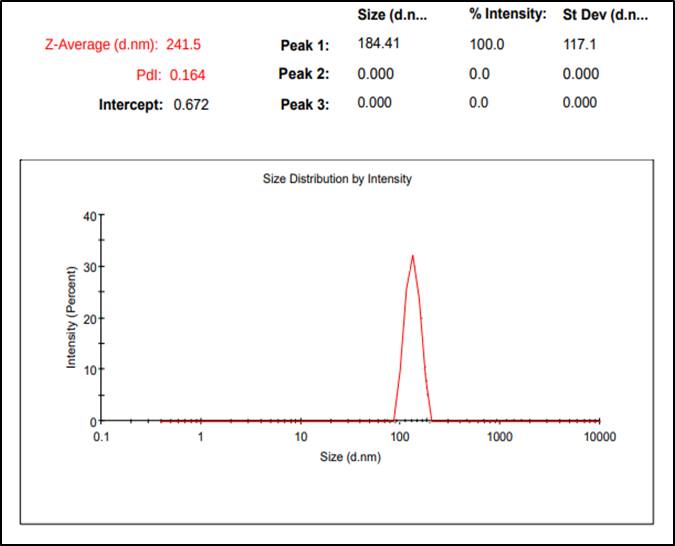
Figure 2: Mean Particle Size (nm) of Optimized Flurbiprofen Nanosuspension (FN3)
Zeta Potential
The zeta potential values of the prepared formulations ranged from −12.4 ± 1.2 mV to −18.6 ± 1.6 mV. The optimized batch FN3 exhibited the highest absolute zeta potential value (−18.6 ± 1.6 mV), indicating superior physical stability among all batches. Although the values were below the conventional ±30 mV threshold, the presence of Poloxamer 188 as a non-ionic steric stabilizer provided strong steric hindrance, which compensated for the lower electrostatic repulsion and effectively prevented particle aggregation. Similar moderate negative zeta potential values are widely accepted for sterically stabilized nanosuspensions prepared with Poloxamer 188. The results are shown in table 1.
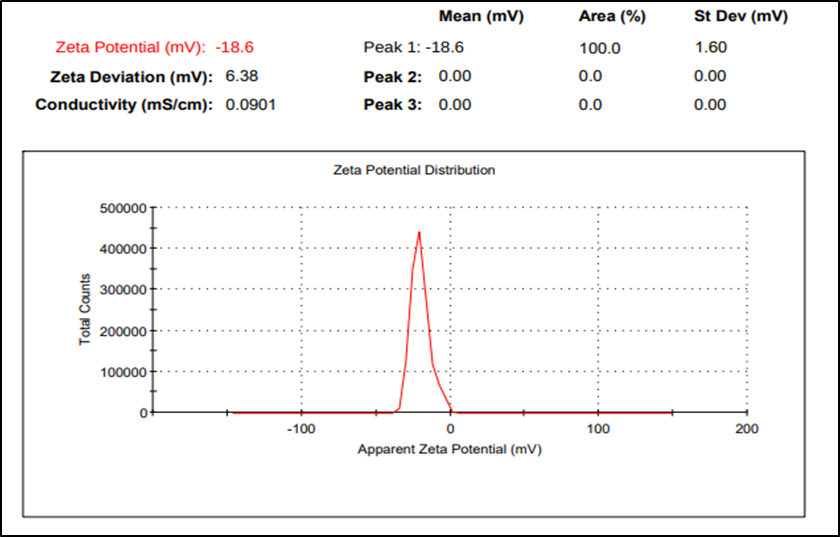
Figure 3: Zeta Potential (mV) of Optimized Flurbiprofen Nanosuspension (FN3)
In Vitro Dissolution
The dissolution study demonstrated a remarkable enhancement in drug release from nanosuspension formulations compared to pure flurbiprofen. The pure drug exhibited only 42.84 ± 3.2% release within 30 minutes, reflecting its poor aqueous solubility and slow dissolution characteristics. In contrast, all nanosuspension batches showed significantly improved dissolution. Among all formulations, FN3 showed the highest drug release of 98.26 ± 1.6% within 30 minutes, which was approximately 2.3-fold higher than the pure drug. The rapid dissolution may be attributed to the marked reduction in particle size, increased surface area, improved wettability, reduced diffusion layer thickness, and partial amorphization of the drug surface during nanonization. The superior dissolution of FN3 directly correlates with its smallest particle size and lowest PDI. Similar dissolution enhancement has been reported in published flurbiprofen nanosuspension studies, where nanonization significantly improved drug release and expected oral absorption. The results are shown in figure 4.
Figure 4: In Vitro Dissolution profile of Pure Flurbiprofen and its Nanosuspension Formulation (FN1 to FN4)
CONCLUSION :
This case reports a rare and complex presentation of a The present study successfully demonstrated that nanosuspension formulation is an effective strategy to overcome the poor aqueous solubility of flurbiprofen. The saturation solubility study confirmed the intrinsic low solubility of the drug in water, thereby justifying the need for a particle size reduction approach to enhance dissolution performance. Flurbiprofen nanosuspensions prepared using Poloxamer 188 as a steric stabilizer showed a significant dependence of particle characteristics on stabilizer concentration. Among all investigated batches, the formulation containing 1.5% Poloxamer 188 (FN3) emerged as the optimized formulation, exhibiting the smallest mean particle size (184.41 nm), narrowest size distribution (PDI 0.164), and the highest absolute zeta potential (−18.6 ± 1.6 mV), indicating excellent nanoscale uniformity and satisfactory physical stability. The improved stability was primarily attributed to effective steric stabilization provided by the non-ionic surfactant, which minimized particle aggregation during and after nanosuspension formation. A substantial enhancement in dissolution behavior was achieved with the optimized nanosuspension, where FN3 released 98.26 ± 1.6% of drug within 30 minutes compared with only 42.84 ± 3.2% from pure flurbiprofen. This nearly 2.3-fold increase in dissolution clearly establishes the strong influence of nanonization on drug release, mainly due to increased surface area, improved wettability, reduced diffusion path length, and possible surface amorphization of the drug particles. Overall, the findings confirm that 1.5% Poloxamer 188 is the optimum stabilizer concentration for flurbiprofen nanosuspension prepared by quasi emulsion solvent diffusion method, providing the best balance of particle size reduction, stability, and dissolution enhancement. The developed nanosuspension system holds significant promise for improving the oral delivery and bioavailability of poorly water-soluble flurbiprofen,
Acknowledgment
Authors greatly appreciated to Alembic Pharmaceuticals, India for donating free flurbiprofen sample for this study.
Conflict of Interest
The authors have no conflict of interest to declare
BIBLIOGRAPHY:
1. Wagh KS, Patil SK, Akarte AK, Baviskar DT; Nanosuspension – a new approach of bioavailability enhancement, International Journal of Pharmaceutical Sciences Review and Research, 2011; 8: 60-62.
2. Lakshmi P, Kumar GA; Nanosuspension technology: a review; International Journal of Pharmacy and Pharmaceutical Sciences, 2010; 2: 35-40.
3. Sarika V. Kandbahale. A Review- Nanosuspension Technology in Drug Delivery System. Asian J. Pharm.Res. 2019; 9(2): 130-138. Doi: 10.5958/2231-5951.2019.00021.2
4. Nemade, L. S., & Patil, M. P. Formulation Development, Optimization, And Evaluation of Lansoprazole Loaded Nanosuspension. International Journal of Applied Pharmaceutics, 2023, 15(3), 208–219. https://doi.org/10.22159/ijap.2023v15i3.47327
5. Andhale MK, Jadhao. U. T., Rathod. D. A., Thoke S. T., Dhembre G. N. Formulation and Evaluation of Nanosuspension of Ambroxol Hyrochloride. Asian Journal of Pharmacy and Technology. 2023; 13(1):4-8. https://doi: 10.52711/2231-5713.2023.00002
6. Alekhya AS, Abbaraju K. Formulation and Evaluation of Letrozole Nanosuspension By Probe Sonication Method using Box-behnken Design. Current Nanomaterials, 2023;8(3)3:266-279(14). https://doi.org/10.2174/2405461507666220831093135
7. Radke R, Jain NK. Enhancement of Solubility and Bioavailability Of Bcs Class-II Ambrisentan: In Vitro, In Vivo And Ex Vivo Analysis. Int J App Pharm. 2022;14(1):67-74.
8. Leung, D.H. Development of Nanosuspension Formulations Compatible with Inkjet Printing for the Convenient and Precise Dispensing of Poorly Soluble Drugs. Pharmaceutics 2022, 14, 449. https://doi.org/10.3390/pharmaceutics14020449
9. Zhang, T.; Li, X.; Xu, J.; Shao, J.; Ding, M.; Shi, S. Preparation, Characterization, and Evaluation of Breviscapine Nanosuspension and Its Freeze-Dried Powder. Pharmaceutics 2022, 14, 923. https://doi.org/10.3390/pharmaceutics14050923.
10. Sahoo CK, Mishra AK, Moharana AK. Formulation and Evaluation of Carbamazepine Nanosuspension with the Help of Cosolvent Technique. International Journal of Drug Delivery Technology. 2022;12(2):472-475. DOI: 10.25258/ijddt.12.2.2
11. Asia Abed Al-Mahmood, Shaimaa N. Abd Alhammid. Preparation and Ex-Vivo Evaluation of Stabilized Cefdinir Nanosuspension. Pakistan Journal of Medical & Health Sciences., 2022; 16(12): 789. DOI: https://doi.org/10.53350/pjmhs20221612789
12. Lalam R., Rao CMMP. Formulation Development and in Vitro Evaluation of the Ritonavir Nanosuspension by Using Antisolvent Section Precipitation-Ultrasonication Method. Eur. Chem. Bull. 2022, 11 (12), 2893 – 2912. DOI: 10.53555/ecb/2022.11.12.239.
13. Hanagandi V, Patil AS, Masareddy RS, Dandagi PM, Bolmal UM. Development and Evaluation of Nanosuspension Incorporated in situ gel of Brimonidine Tartarate for Ocular Drug Delivery. Indian Journal of Pharmaceutical Education and Research, 2022; 56(1):94-102. doi:10.5530/ijper.56.1.12
14. Sharannavar B and Sawant S. Formulation and Evaluation Of Nanosuspension Of Rosuvastatin For Solubility Enhancement By Quality By Design Approach. IJPSR, 2021; Vol. 12(11): 5949-5958. DOI: 10.13040/IJPSR.0975-8232.12(11).5949-58