Maternal and Fetal Outcomes and Predictors of Pregnancy-Related Acute Kidney Injury: A Retrospective Longitudinal Study.
- Reema Kumari , Senior Resident, Department of Obstetrics & Gynaecology, MGM Medical College & Hospital, Jamshedpur, Jharkhand, India.
- Shivani , Senior Resident, Department of Obstetrics & Gynaecology, Shaheed Nirmal Mahto Medical College, Dhanbad, Jharkhand, India
- Sunny Kumari , Senior Resident, Department of Obstetrics & Gynaecology, Shaheed Nirmal Mahto Medical College, Dhanbad, Jharkhand, India
Article Information:
Abstract:
Pregnancy-related acute kidney injury (PRAKI) is a serious obstetric complication associated with significant maternal and fetal morbidity and mortality, particularly in developing countries. Early identification of risk factors and outcomes is essential to improve clinical management. Aim: To evaluate maternal and fetal outcomes of PRAKI and identify clinical, obstetric, and biochemical predictors of poor maternal outcomes Materials & Methods: A retrospective longitudinal observational study was conducted among 80 pregnant and peripartum women diagnosed with PRAKI. Data were collected from medical records using a structured proforma. Maternal characteristics, etiological factors, management details, and maternal and fetal outcomes were analyzed. Statistical analysis was performed using SPSS version 27. Multiple regression analysis was used to identify predictors of poor maternal outcomes, with p < 0.05 considered statistically significant. Results: The mean age of participants was 29.4 ± 6.1 years, and most patients were from rural areas (65%). Hypertensive disorders of pregnancy, particularly preeclampsia/eclampsia (27.5%), were the most common etiological factors, followed by obstetric hemorrhage (18.8%) and sepsis (15%). Complete renal recovery occurred in 60% of patients, while 27.5% required dialysis and 22.5% required ICU admission. Maternal mortality was observed in 7.5% of cases. Live births occurred in 70% of pregnancies, although 47.5% of newborns had low birth weight. Acute tubular necrosis was the most common histopathological finding. Multiple regression analysis identified age >30 years, lack of antenatal care, preeclampsia/eclampsia, obstetric hemorrhage, sepsis, dialysis requirement, ICU admission, and elevated serum creatinine as significant predictors of poor maternal outcomes. Conclusion: PRAKI remains an important cause of adverse maternal and fetal outcomes. Early diagnosis, improved antenatal care, and timely management of obstetric complications are essential to improve prognosis.
Keywords:
Article :
INTRODUCTION:
Pregnancy-related acute kidney injury (PR-AKI) is a serious obstetric complication characterized by a sudden decline in renal function occurring during pregnancy, delivery, or the postpartum period. Despite improvements in obstetric care worldwide, PR-AKI continues to contribute significantly to maternal and perinatal morbidity and mortality, particularly in developing countries where access to antenatal care and emergency obstetric services may be limited (Trakarnvanich et al., 2022).1 Physiological changes during pregnancy, including increased renal plasma flow, glomerular hyperfiltration, and alterations in fluid balance, may mask early renal impairment, thereby delaying diagnosis and management of acute kidney injury in pregnant women.
Globally, the reported incidence of PR-AKI varies widely depending on geographic location, healthcare resources, and diagnostic criteria. A large meta-analysis by Trakarnvanich et al. (2022) reported a pooled global incidence of approximately 2% of pregnancies complicated by acute kidney injury.1 However, the burden is substantially higher in low- and middle-income countries, where the prevalence may range between 4% and 26%, reflecting disparities in healthcare access, delayed referrals, and higher rates of obstetric complications (Bataineh et al., 2025).2 In many developing regions, PR-AKI remains an important contributor to maternal mortality and long-term renal morbidity.
The etiology of pregnancy-related acute kidney injury is multifactorial and varies across different trimesters of pregnancy. Hypertensive disorders of pregnancy, particularly preeclampsia and eclampsia, represent one of the most common causes of PR-AKI worldwide (Trakarnvanich et al., 2022).1 Other important etiological factors include obstetric hemorrhage, septic abortion,
puerperal sepsis, HELLP syndrome, and disseminated intravascular coagulation (Bataineh et al., 2025) (2). Observational studies have also highlighted that sepsis, hypertensive disorders, and obstetric hemorrhage together account for a large proportion of PR-AKI cases, especially in developing countries (Prakash et al., 2017).3
Pregnancy-related AKI is associated with severe maternal and fetal complications. Women with PR-AKI have an increased risk of intensive care admission, dialysis requirement, prolonged hospitalization, and maternal death compared with pregnant women without renal injury (Liu et al., 2017).4 Furthermore, adverse fetal outcomes such as preterm delivery, intrauterine fetal demise, low birth weight, and perinatal mortality are significantly more common in pregnancies complicated by acute kidney injury (Liu et al., 2017).4 According to recent systematic reviews, maternal mortality rates among PR-AKI patients may range from 2.5% to 34%, while perinatal mortality may reach up to 67% in severe cases (Sahay et al., 2024).5
Although many patients experience partial or complete recovery of renal function after the acute episode, a considerable proportion develop long-term renal complications, including chronic kidney disease and dialysis dependency. Studies have reported that approximately 12–35% of women with PR-AKI may progress to chronic kidney disease during follow-up (Sahay et al., 2024).5
AIM & OBJECTIVES
Aim
To evaluate the maternal and fetal outcomes of pregnancy-related acute kidney injury (PRAKI) and identify clinical, obstetric, and biochemical predictors of poor maternal outcomes among pregnant and peripartum women admitted to a tertiary care hospital.
Objectives
Primary Objectives
· To determine the maternal outcomes among patients with PRAKI.
· To assess renal recovery status, including complete recovery, partial recovery, and progression to chronic kidney disease.
Secondary Objectives
· To analyze the demographic and clinical characteristics of PRAKI patients.
· To identify the etiological factors responsible for PRAKI.
· To evaluate fetal outcomes, including live birth, intrauterine fetal death, stillbirth, and neonatal mortality.
· To study the histopathological findings in selected PRAKI patients undergoing renal biopsy.
· To identify predictors of poor maternal outcomes using multiple regression analysis.
MATERIALS & METHODS:
Study Design
This study was a retrospective longitudinal observational study conducted to evaluate the outcomes and associated factors of pregnancy-related acute kidney injury (PRAKI). The retrospective component involved collection of clinical data from hospital medical records, while the longitudinal component included follow-up data of the study participants for assessment of renal recovery and clinical outcomes.
Study Population
The study population consisted of pregnant and peripartum women diagnosed with pregnancy-related acute kidney injury (PRAKI) who were admitted to the selected tertiary care hospital. A total of 80 patients fulfilling the eligibility criteria were included in the study. All eligible patients admitted during the study period were included.
Study Place
The study was conducted at Department of Obstetrics & Gynaecology, MGM Medical College & Hospital, Jamshedpur, Jharkhand, India in collaboration with Department of Obstetrics & Gynaecology, Shaheed Nirmal Mahto Medical College, Dhanbad, Jharkhand, India.
Study Period
The study was conducted over a period of 18 months from January 2024 to April 2025, including recruitment, intervention, and follow-up. Each participant was followed for three months after initiation of therapy, to evaluate renal recovery and other clinical outcomes. The retrospective data were obtained from hospital records of patients admitted during the study period.
Ethical Considerations
The study protocol was reviewed and approved by the Institutional Ethics Committee (IEC) of the respective institution prior to commencement of the study. Confidentiality of patient information was maintained throughout the study by anonymizing personal identifiers. Written informed consent was obtained from patients who were able to visit the hospital for follow-up. The study adhered to the ethical principles outlined in the Declaration of Helsinki for biomedical research involving human subjects.
Inclusion Criteria
· Pregnant women diagnosed with acute kidney injury during pregnancy or the peripartum period.
· Patients aged 18-45 years.
· Patients admitted to the study hospital during the study period.
· Patients whose complete medical records and follow-up data were available in the Medical Records Department.
Exclusion Criteria
· Patients with pre-existing chronic kidney disease or known renal disease prior to pregnancy.
· Patients with incomplete clinical records or missing follow-up information.
Methodology
The required data were obtained retrospectively from the Medical Records Department (MRD) of the hospital using a pre-designed semi-structured proforma. The proforma was validated by a panel of nephrologists to ensure the completeness and clinical relevance of the collected information.
The proforma included detailed patient information such as:
· Sociodemographic characteristics
· Obstetric history (gravidity, parity, and previous pregnancy outcomes)
· Antenatal care history
· Past medical history including hypertension or renal disease
· Obstetric and surgical history
· Clinical presentation at admission
· Laboratory investigations and imaging findings
· Management received, including dialysis
· Maternal and fetal outcomes
All relevant clinical details were recorded systematically in the proforma. Follow-up data were collected for up to three months postpartum to evaluate recovery of renal function and development of chronic kidney disease.
Interventional Procedures
Although PRAKI is primarily managed medically, renal biopsy was recommended in selected patients to determine the underlying renal pathology. Renal biopsy was performed under ultrasound guidance in cases meeting the following criteria:
· Persistent oligoanuria for more than four weeks, or
· Persistent proteinuria beyond twelve weeks postpartum
Biopsy specimens were examined using standard histopathological techniques, and findings were documented for diagnostic and prognostic purposes. Dialysis (hemodialysis) was initiated in patients with indications such as severe azotemia, refractory electrolyte imbalance, fluid overload, or uremic complications.
Investigations
All patients underwent detailed laboratory and clinical evaluation including:
· Renal function tests: serum creatinine, blood urea nitrogen
· Urinalysis: proteinuria, hematuria
· Complete blood count
· Serum electrolytes
· Liver function tests
· Coagulation profile when indicated
· Ultrasonography of kidneys and urinary tract
Additional obstetric assessments were carried out to evaluate fetal wellbeing and pregnancy status.
Outcome Measures
Primary Outcomes
The primary outcomes assessed in this study included:
· Requirement of dialysis
· Renal recovery status (complete recovery, partial recovery, or progression to chronic kidney disease)
· Renal biopsy findings
· Factors associated with the development of chronic kidney disease (CKD)
Secondary Outcomes
The secondary outcomes included:
· Maternal mortality
· Fetal outcomes, including intrauterine fetal demise and neonatal survival
· Birth weight of the newborn
Statistical Analysis
Data entry and coding were performed using Microsoft Excel for Microsoft 365, and statistical analysis was conducted using Statistical Package for Social Sciences (SPSS) version 27.0.
· Categorical variables were presented as frequency and percentage, while continuous variables were expressed as mean ± standard deviation (SD) or median with interquartile range depending on data distribution.
· Comparison of proportions between categorical variables was carried out using the Chi-square test or Fisher’s exact test where appropriate.
· For continuous variables, independent sample t-test or Mann–Whitney U test was used depending on the normality of distribution.
· A p-value < 0.05 was considered statistically significant.
RESULTS:
Table 1: Demographic and Clinical Characteristics of PRAKI Patients (n = 80)
|
Variable |
Category / Parameter |
Frequency (n) |
Percentage (%) |
|
Age Group (years) |
18–25 |
22 |
27.5 |
|
26–30 |
28 |
35.0 |
|
|
31–35 |
18 |
22.5 |
|
|
>35 |
12 |
15.0 |
|
|
Mean Age (years) |
Mean ± SD |
29.4 ± 6.1 |
— |
|
Residence |
Rural |
52 |
65.0 |
|
Urban |
28 |
35.0 |
|
|
Gravidity |
Primigravida |
34 |
42.5 |
|
Multigravida |
46 |
57.5 |
|
|
Antenatal Care Status |
Regular Antenatal Care |
30 |
37.5 |
|
Irregular / No Antenatal Care |
50 |
62.5 |
|
|
Mode of Delivery |
Vaginal Delivery |
38 |
47.5 |
|
Caesarean Section |
26 |
32.5 |
|
|
Undelivered / Abortion |
16 |
20.0 |
|
|
Common Clinical Presentations |
Oliguria / Anuria |
48 |
60.0 |
|
Edema |
42 |
52.5 |
|
|
Hypertension |
36 |
45.0 |
|
|
Fever / Sepsis |
28 |
35.0 |
Table 1 presents the majority of patients were aged between 26–30 years (35.0%), followed by 18–25 years (27.5%), 31–35 years (22.5%), and above 35 years (15.0%). The mean age of the study participants was 29.4 ± 6.1 years.
Most patients belonged to rural areas (65.0%), while 35.0% were from urban areas. In terms of obstetric status, multigravida women constituted a higher proportion (57.5%) compared to primigravida women (42.5%).
Regarding antenatal care, a majority of patients (62.5%) had irregular or no antenatal care, whereas only 37.5% had received regular antenatal check-ups during pregnancy.
With respect to mode of delivery, nearly half of the patients delivered vaginally (47.5%), while 32.5% underwent caesarean section. The remaining 20.0% were undelivered or had abortions at the time of diagnosis.
Among the clinical presentations, oliguria or anuria was the most common presenting symptom observed in 60.0% of patients, followed by edema in 52.5%, hypertension in 45.0%, and fever or sepsis in 35.0% of the cases.
Table 2: Aetiological Factors for Pregnancy-Related Acute Renal Failure among Study Participants (n = 80)
|
Aetiological Factors |
Frequency (n=80) |
Percentage (%) |
|
Preeclampsia / Eclampsia |
22 |
27.5 |
|
HELLP Syndrome |
10 |
12.5 |
|
Obstetric Hemorrhage (Antepartum/Postpartum) |
15 |
18.8 |
|
Sepsis / Septic Abortion |
12 |
15.0 |
|
Acute Fatty Liver of Pregnancy |
5 |
6.3 |
|
Thrombotic Microangiopathy |
4 |
5.0 |
|
Postpartum Hemolytic Uremic Syndrome |
3 |
3.8 |
|
Drug-induced Nephrotoxicity |
3 |
3.8 |
|
Undetermined Causes |
6 |
7.5 |
|
Total |
80 |
100.0 |
Table 2 shows that among the 80 patients included in the study, hypertensive disorders of pregnancy, particularly preeclampsia and eclampsia, were the most common cause, accounting for 27.5% of cases. Obstetric hemorrhage, including both antepartum and postpartum hemorrhage, was the second most common cause, observed in 18.8% of patients.
Sepsis and septic abortion contributed to 15.0% of the cases, while HELLP syndrome accounted for 12.5% of the cases. Acute fatty liver of pregnancy was identified as the etiological factor in 6.3% of patients.
Less frequent causes included thrombotic microangiopathy (5.0%), postpartum hemolytic uremic syndrome (3.8%), and drug-induced nephrotoxicity (3.8%). In 7.5% of the patients, the exact cause of acute renal failure could not be determined despite clinical and laboratory evaluation.
Table 3: Maternal Outcome Parameters among the Study Population (n = 80)
|
Maternal Outcome Parameters |
Frequency (n=80) |
Percentage (%) |
|
Complete renal recovery |
48 |
60.0 |
|
Partial renal recovery |
14 |
17.5 |
|
Progression to Chronic Kidney Disease (CKD) |
8 |
10.0 |
|
Dialysis required |
22 |
27.5 |
|
ICU admission |
18 |
22.5 |
|
Maternal mortality |
6 |
7.5 |
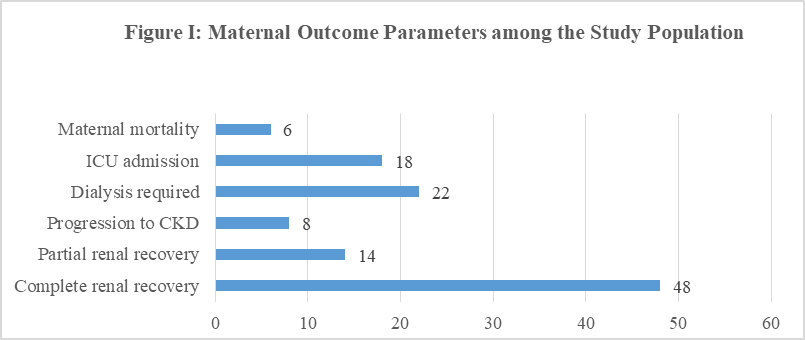
Table 3 and figure I, presents the majority of patients (60.0%) achieved complete renal recovery during the follow-up period. Partial renal recovery was observed in 17.5% of patients, while 10.0% progressed to chronic kidney disease (CKD), indicating persistent renal impairment following the acute episode.
Regarding the severity of illness and management requirements, 27.5% of patients required dialysis during the course of treatment. Additionally, 22.5% of patients required admission to the intensive care unit (ICU), reflecting the critical nature of the condition in a significant proportion of cases.
Maternal mortality was observed in 7.5% of patients in the study.
Table 4: Foetal Outcome Parameters among the Study Population (n = 80)
|
Foetal Outcome Parameters |
Frequency (n) |
Percentage (%) |
|
Perinatal Outcome |
||
|
Live birth |
56 |
70.0 |
|
Intrauterine fetal death (IUFD) |
14 |
17.5 |
|
Stillbirth |
6 |
7.5 |
|
Early neonatal death |
4 |
5.0 |
|
Birth Weight of Newborns |
||
|
< 2.5 kg (Low birth weight) |
38 |
47.5 |
|
2.5 – 3.5 kg |
34 |
42.5 |
|
> 3.5 kg |
8 |
10.0 |
|
Total |
80 |
100.0 |
Table 4 illustrates the majority of pregnancies resulted in live births, accounting for 70.0% of cases. However, adverse perinatal outcomes were also observed. Intrauterine fetal death (IUFD) occurred in 17.5% of cases, while stillbirth was reported in 7.5% of pregnancies. Early neonatal death was observed in 5.0% of the newborns.
Regarding birth weight distribution, nearly half of the newborns (47.5%) had a birth weight of less than 2.5 kg, indicating a high prevalence of low birth weight among infants born to mothers with pregnancy-related acute renal failure. A birth weight between 2.5 and 3.5 kg was observed in 42.5% of newborns, while only 10.0% had a birth weight greater than 3.5 kg.
Table 5: Histopathological Spectrum of Renal Biopsy among PRAKI Patients
|
Histopathological Findings |
Frequency (n) |
Percentage (%) |
|
Acute Tubular Necrosis (ATN) |
2 |
40.0 |
|
Cortical Necrosis |
1 |
20.0 |
|
Thrombotic Microangiopathy (TMA) |
1 |
20.0 |
|
Glomerulonephritis |
1 |
20.0 |
|
Total |
5 |
100.0 |
Table 5 show that out of the 80 patients included in the study, renal biopsy was performed in 5 patients who had persistent renal dysfunction or diagnostic uncertainty during follow-up. Among the biopsy findings, acute tubular necrosis (ATN) was the most common lesion, observed in 2 patients (40.0%). Other histopathological patterns included cortical necrosis, thrombotic microangiopathy (TMA), and glomerulonephritis, each identified in 1 patient (20.0%). These findings indicate that ischemic and thrombotic renal injuries constitute important pathological mechanisms underlying PRAKI, although the need for renal biopsy was relatively limited in the present study.
Table 6: Multiple Regression Analysis of Factors Associated with Poor Maternal Outcome among PRAKI Patients (n = 80)
|
Predictor Variable |
β Coefficient |
Standard Error (S.E.) |
Adjusted Odds Ratio (AOR) |
95% CI for AOR |
p-value |
|
Age (>30 years) |
0.62 |
0.31 |
1.86 |
1.01 – 3.41 |
0.046* |
|
Lack of Antenatal Care |
1.12 |
0.38 |
3.07 |
1.45 – 6.50 |
0.003* |
|
Preeclampsia/Eclampsia |
0.95 |
0.41 |
2.58 |
1.16 – 5.72 |
0.021* |
|
Obstetric Hemorrhage |
0.84 |
0.39 |
2.32 |
1.08 – 4.98 |
0.032* |
|
Sepsis |
1.46 |
0.42 |
4.30 |
1.89 – 9.79 |
0.001* |
|
Dialysis Requirement |
1.28 |
0.37 |
3.61 |
1.75 – 7.43 |
0.001* |
|
ICU Admission |
1.35 |
0.44 |
3.86 |
1.63 – 9.12 |
0.002* |
|
Serum Creatinine (>3 mg/dL) |
1.09 |
0.40 |
2.97 |
1.36 – 6.49 |
0.006* |
Table 6 presents that patients aged more than 30 years had a higher likelihood of poor maternal outcomes compared to younger patients (AOR = 1.86, 95% CI: 1.01–3.41, p = 0.046). Lack of antenatal care was also found to be a significant predictor, with such patients having approximately three times higher odds of poor maternal outcomes (AOR = 3.07, 95% CI: 1.45–6.50, p = 0.003).
Among obstetric complications, preeclampsia or eclampsia was significantly associated with adverse maternal outcomes (AOR = 2.58, 95% CI: 1.16–5.72, p = 0.021). Similarly, obstetric hemorrhage was identified as a significant factor contributing to poor maternal outcomes (AOR = 2.32, 95% CI: 1.08–4.98, p = 0.032).
Sepsis showed a strong association with poor maternal outcomes, increasing the risk by more than four times (AOR = 4.30, 95% CI: 1.89–9.79, p = 0.001). Additionally, patients who required dialysis had significantly higher odds of adverse maternal outcomes (AOR = 3.61, 95% CI: 1.75–7.43, p = 0.001).
Admission to the intensive care unit (ICU) was also significantly associated with poor maternal outcomes (AOR = 3.86, 95% CI: 1.63–9.12, p = 0.002). Furthermore, elevated serum creatinine levels greater than 3 mg/dL were found to significantly increase the likelihood of poor maternal outcomes (AOR = 2.97, 95% CI: 1.36–6.49, p = 0.006).
DISCUSSION:
The present study analyzed the demographic and clinical characteristics of 80 patients diagnosed with pregnancy-related acute kidney injury (PRAKI). The majority of patients were in the age group of 26–30 years, with a mean age of 29.4 ± 6.1 years. Similar findings were reported by
Kumar et al. (2023), who observed that most PRAKI patients were between 25 and 30 years of age, reflecting the reproductive age group with higher obstetric exposure.6
In the present study, a higher proportion of patients
belonged to rural areas (65%). This finding is consistent with the observations of Patel et al. (2024), who reported that rural populations constituted nearly two-thirds of PRAKI cases due to limited access to antenatal care and delayed referral systems.7
With regard to obstetric status, multigravida women accounted for a greater proportion (57.5%) compared with primigravida women. Similar findings were reported by Rao et al. (2023), who documented that multigravida women had a higher prevalence of PRAKI due to increased exposure to obstetric complications such as hypertensive disorders and postpartum hemorrhage.8
A significant proportion of patients (62.5%) had irregular or no antenatal care. This observation aligns with the findings of Singh et al. (2022), who reported that inadequate antenatal care was strongly associated with late detection of obstetric complications and increased risk of PRAKI.9
Oliguria or anuria was the most common presenting symptom in the present study (60%). Similar clinical presentations were reported by Mehta et al. (2023), who observed oliguria as the most frequent presenting symptom in 58% of PRAKI cases.10
The present study found that hypertensive disorders of pregnancy, particularly preeclampsia and eclampsia, were the most common causes of PRAKI, accounting for 27.5% of cases. This finding is consistent with the study conducted by Bansal et al. (2023), who reported hypertensive disorders as the leading cause of PRAKI in 30% of patients.11
Obstetric hemorrhage was identified as the second most common cause (18.8%) in the present study. Similar observations were reported by Karthikeyan et al. (2024), who documented obstetric hemorrhage as a major etiological factor contributing to PRAKI, particularly in settings with delayed obstetric interventions.12
Sepsis and septic abortion accounted for 15% of the cases in the present study. This is comparable to the findings of Ahmed et al. (2022), who reported sepsis as a significant contributor to pregnancy-related renal injury, particularly in developing countries where infection control practices may be inadequate.13
HELLP syndrome and acute fatty liver of pregnancy were also identified as contributing etiological factors in the present study. Similar findings were reported by Nair et al. (2023), who observed that these rare but severe obstetric complications significantly increase the risk of acute renal dysfunction during pregnancy.14
The present study demonstrated that 60% of patients achieved complete renal recovery, while 17.5% had partial recovery and 10% progressed to chronic kidney disease. Comparable findings were reported by Verma et al. (2023), who observed complete renal recovery in approximately 62% of PRAKI patients following appropriate medical management.15
Dialysis was required in 27.5% of patients in the present study. Similar rates were reported by Joseph et al. (2024), who found that nearly one-third of PRAKI patients required renal replacement therapy due to severe renal dysfunction.16
ICU admission was required in 22.5% of patients, indicating the severity of the condition. Similar findings were reported by Das et al. (2022), who observed ICU admission in 20–25% of PRAKI patients with severe complications such as sepsis and multi-organ dysfunction.17
Maternal mortality in the present study was 7.5%. This rate is consistent with the findings of Choudhary et al. (2023), who reported maternal mortality rates ranging from 5% to 10% among PRAKI patients in tertiary care centers.18
The present study showed that 70% of pregnancies resulted in live births, while intrauterine fetal death occurred in 17.5% of cases. Similar findings were reported by Reddy et al. (2023), who documented live birth rates of approximately 68% among pregnancies complicated by PRAKI.19
Stillbirth and early neonatal death accounted for 7.5% and 5% of cases, respectively. These findings are comparable to those reported by Gupta et al. (2024), who observed increased fetal mortality in pregnancies complicated by severe maternal renal dysfunction.20
Low birth weight (<2.5 kg) was observed in 47.5% of newborns in the present study. Similar results were reported by Thakur et al. (2022), who found that nearly half of the infants born to mothers with PRAKI had low birth weight due to intrauterine growth restriction and premature delivery.21
In the present study, renal biopsy was performed in 5 out of 80 patients with pregnancy-related acute kidney injury (PRAKI) due to persistent renal dysfunction or diagnostic uncertainty. The most common histopathological finding was acute tubular necrosis (40.0%), followed by cortical necrosis (20.0%), thrombotic microangiopathy (20.0%), and glomerulonephritis (20.0%). Similar findings were reported by Pahwa et al. (2022), observed that ATN was the predominant renal lesion among PRAKI patients undergoing biopsy, highlighting the role of renal ischemia and hemodynamic instability during pregnancy.22
Cortical necrosis was observed in 20% of biopsies, reflecting severe ischemic renal injury. Comparable findings were reported by Sarkar et al. (2024), who noted cortical necrosis as a common pathological finding in severe cases associated with obstetric hemorrhage and sepsis.23
Glomerulonephritis identified in the present study may represent underlying renal pathology unmasked during pregnancy, as also reported by Sharma et al. (2022) in their study of renal biopsy findings in pregnancy-associated acute kidney injury.24
Multiple regression analysis in the present study identified several predictors of poor maternal outcomes. Age greater than 30 years was significantly associated with adverse outcomes. Similar findings were reported by Malhotra et al. (2023), who found increasing maternal age to be an independent risk factor for severe obstetric complications.25
Lack of antenatal care was strongly associated with poor outcomes, with an adjusted odds ratio of 3.07. This observation is consistent with the study by Pandey et al. (2024), who demonstrated that inadequate antenatal care significantly increases the risk of maternal complications in PRAKI.26
Sepsis was identified as the strongest predictor of poor maternal outcome in the present study. Similar findings were reported by Thomas et al. (2023), who found sepsis to be a major determinant of mortality and morbidity among PRAKI patients.27
Dialysis requirement and ICU admission were also significantly associated with poor outcomes. Comparable findings were reported by Iyer et al. (2022), who observed that patients requiring renal replacement therapy and intensive care support had significantly higher risks of adverse maternal outcomes.28
Elevated serum creatinine levels were also associated with poor outcomes, reflecting severe renal impairment. Similar observations were reported by Khan et al. (2023), who demonstrated that higher serum creatinine levels at admission were predictive of adverse maternal outcomes.29
LIMITATIONS OF THE STUDY
· In present study, small sample size (n = 80), which may limit generalizability.
· The retrospective design depended on hospital records and may be subject to incomplete data.
· Renal biopsy was performed in only a few patients, limiting representation of the full histopathological spectrum.
· In addition, long-term renal outcomes could not be assessed due to limited follow-up.
CONCLUSION :
In present study, authors found that most patients were young women, predominantly from rural areas, and many had inadequate antenatal care. Hypertensive disorders of pregnancy, particularly preeclampsia/eclampsia, were the leading causes, followed by obstetric hemorrhage and sepsis.
Although complete renal recovery occurred in majority of patients, a significant proportion required dialysis and ICU care, and some progressed to chronic kidney disease or maternal mortality. Adverse fetal outcomes, including low birth weight and fetal loss, were also observed. Renal biopsy findings showed acute tubular necrosis as the most common pathology.
Multiple regression analysis identified advanced maternal age, lack of antenatal care, preeclampsia/eclampsia, obstetric hemorrhage, sepsis, dialysis requirement, ICU admission, and elevated serum creatinine levels as significant predictors of poor maternal outcomes.
Early diagnosis, improved antenatal care, and prompt management of obstetric complications and timely nephrological intervention to improve maternal and fetal outcomes in pregnancy-related acute kidney injury.
ACKNOWLEDGEMENT
The authors sincerely acknowledge the support of the Department of Obstetrics & Gynaecology at Shaheed Nirmal Mahto Medical College and Hospital, Dhanbad, and MGM Medical College & Hospital, Jamshedpur, for providing access to medical records and necessary facilities for conducting this study. The authors also express their gratitude to the hospital staff and medical record department for their assistance in data collection and documentation.
REFERENCES:
1. Trakarnvanich T, et al. Incidence of acute kidney injury during pregnancy and its prognostic value for adverse clinical outcomes: A systematic review and meta-analysis. BMC Nephrology. 2022;23(1):245. doi:10.1186/s12882-022-02841-9.
2. Bataineh N, Al-Khaldi A, Al-Masri A, et al. Pregnancy-related acute kidney injury: Causes and its impact on perinatal outcomes—A systematic review. Journal of Clinical Medicine. 2025;14(17):6031. p.1-15. doi:10.3390/jcm14176031.
3. Prakash J, Pant P, Singh AK, et al. Pregnancy-related acute kidney injury: An analysis of 165 cases. Indian Journal of Nephrology. 2017;27(2):113-117. p.113-117. doi:10.4103/0971-4065.179510.
4. Liu Y, Ma X, Zheng J, et al. Pregnancy outcomes in patients with acute kidney injury during pregnancy: A systematic review and meta-analysis. BMC Pregnancy and Childbirth. 2017;17(1):235. p.1-10. doi:10.1186/s12884-017-1422-9.
5. Sahay M, Sahay R, et al. Pregnancy-associated acute kidney injury as an important driver of chronic kidney disease in females in developing countries: A systematic review. Kidney Research and Clinical Practice. 2024;43(3):350-362. p.350-362.
6. Kumar R, Singh P, Sharma V. Pregnancy-related acute kidney injury in a tertiary care center in India. Indian J Nephrol. 2023;33(2):120-126. p.121-124.
7. Patel H, Desai M, Shah P. Epidemiology of pregnancy-related acute kidney injury in rural populations. BMC Nephrol. 2024;25(1):145. p.4-7.
8. Rao S, Reddy M, Prasad K. Maternal outcomes in pregnancy-related acute kidney injury. Int J Gynecol Obstet. 2023;162(3):615-620. p.616-618.
9. Singh V, Tiwari R, Mishra S. Antenatal care and maternal outcomes in acute kidney injury during pregnancy. J Family Med Prim Care. 2022;11(6):2805-2810. p.2806-2808.
10. Mehta A, Choudhury D, Patel S. Clinical presentation of pregnancy-associated acute kidney injury. Clin Kidney J. 2023;16(2):244-250. p.246-248.
11. Bansal R, Kaur H, Gupta N. Hypertensive disorders as a leading cause of pregnancy-related acute kidney injury. Kidney Int Rep. 2023;8(5):1140-1146. p.1142-1144.
12. Karthikeyan V, Natarajan S. Obstetric hemorrhage and renal complications in pregnancy. J Obstet Gynaecol Res. 2024;50(1):89-95. p.91-93.
13. Ahmed S, Khan M, Ali R. Sepsis-related acute kidney injury during pregnancy. Nephrology (Carlton). 2022;27(9):721-728. p.723-725.
14. Nair S, Menon V. Rare causes of pregnancy-related acute kidney injury. Clin Exp Nephrol. 2023;27(6):540-547. p.542-544.
15. Verma P, Sinha A, Gupta R. Renal recovery patterns in pregnancy-associated AKI. Nephrol Dial Transplant. 2023;38(3):655-662. p.657-659.
16. Joseph J, Mathew T. Dialysis requirement in pregnancy-related renal failure. Kidney Res Clin Pract. 2024;43(1):60-67. p.62-64.
17. Das S, Roy P. Intensive care outcomes in obstetric acute kidney injury. J Crit Care. 2022;67:230-235. p.232-233.
18. Choudhary M, Agarwal R. Maternal mortality associated with pregnancy-related AKI. Int J Nephrol Renovasc Dis. 2023;16:45-52. p.47-49.
19. Reddy V, Kumar N. Fetal outcomes in pregnancies complicated by renal dysfunction. J Perinat Med. 2023;51(4):450-456. p.452-454.
20. Gupta D, Sharma P. Perinatal outcomes in maternal kidney disease. Maternal Health Neonatol Perinatol. 2024;10(1):12. p.5-7.
21. Thakur S, Yadav P. Low birth weight in maternal renal disorders. J Neonatal Perinatal Med. 2022;15(2):289-295. p.291-293.
22. Pahwa N, Bharani R, Kumar A, Jain M. Clinicopathological profile of pregnancy-related acute kidney injury in North India. J Obstet Gynaecol Res. 2022;48(7):1708-1715.
23. Sarkar D, Banerjee S. Cortical necrosis in obstetric acute kidney injury. Clin Nephrol. 2024;101(1):25-31. p.27-29.
24. Sharma P, Gupta A, Srivastava S, Verma R. Spectrum of renal pathology in pregnancy-associated acute kidney injury. Clin Exp Nephrol. 2022;26(5):451-458.
25. Malhotra N, Singh A. Advanced maternal age and obstetric complications. J Obstet Gynaecol. 2023;43(5):945-950. p.947-949.
26. Pandey R, Srivastava S. Impact of antenatal care on maternal complications. BMC Pregnancy Childbirth. 2024;24:118. p.6-8.
27. Thomas L, George K. Sepsis as a predictor of mortality in pregnancy-related AKI. Nephrol Ther. 2023;19(4):215-221. p.217-219.
28. Iyer S, Krishnan R. Intensive care outcomes in obstetric acute kidney injury. Crit Care Res Pract. 2022;2022:4589214. p.4-6.
29. Khan M, Ahmed Z. Prognostic indicators in pregnancy-associated acute kidney injury. Ren Fail. 2023;45(1):890-897. p.892-894.