Formulation and Evaluation of Eucalyptus Oil-Based Emulsion for Enhanced Stability and Topical Application
- Nikhil Jayvantrao Salunkhe , Research Scholar, Department of Pharmacy, Oriental University, Indore - 452001, Madhya Pradesh, India.
- Udit Narain Soni , Research Scholar, Department of Pharmacy, Oriental University, Indore - 452001, Madhya Pradesh, India.
Article Information:
Abstract:
This study focuses on the formulation, optimization, and evaluation of a stable emulsion containing Eucalyptus oil, known for its antimicrobial and anti-inflammatory properties. The oil was characterized for its physicochemical parameters, including acid value, saponification value, ester value, iodine value, peroxide value, refractive index, viscosity, and boiling point. The purity and functional groups of the oil were confirmed through FTIR spectroscopy. An emulsion was prepared using Eucalyptus oil, light liquid paraffin, peppermint oil, Span 20, Tween 20, propylene glycol, and preservatives (methyl and propyl parabens). Optimization was achieved by varying emulsifier ratios, with Span 20 and Tween 20 providing maximum stability. The optimized batch (F2) exhibited desirable physicochemical properties: pH 5.28, viscosity 41 cPs, conductivity 188.2 µS, zeta potential +12.70 mV, and droplet size 203 nm (PDI 0.221). Microscopic observation confirmed an oil-in-water (O/W) emulsion type. The absence of phase separation during centrifugation indicated high physical stability. Overall, the formulated emulsion was stable, homogeneous, and suitable for topical application.
Keywords:
Article :
INTRODUCTION :
Eucalyptus oil, a volatile essential oil derived from the leaves of Eucalyptus globulus, is widely recognized for its antimicrobial, antiseptic, and anti-inflammatory properties [1-2]. However, its volatility and poor water solubility limit its direct use in pharmaceutical and cosmetic preparations [3]. Emulsion systems provide an effective solution by enhancing solubility, stability, and bioavailability, as well as improving skin penetration and therapeutic efficacy [4-5].
Emulsions are biphasic systems consisting of two immiscible liquids, one dispersed in the other in the form of small droplets, stabilized by surfactants [6-7]. They can be of the oil-in-water (O/W) or water-in-oil (W/O) type, depending on the nature of the continuous phase [8-9]. The choice of surfactants, particularly those with appropriate Hydrophilic-Lipophilic Balance (HLB) values, plays a critical role in forming and maintaining stable emulsions [10-11].
In this study, an emulsion of Eucalyptus oil was developed using Span 20 (lipophilic) and Tween 20 (hydrophilic) as emulsifiers, with propylene glycol as a co-surfactant. The research included preformulation studies to characterize Eucalyptus oil, optimization of formulation parameters, and evaluation of the physicochemical and stability characteristics of the prepared emulsions. The optimized formulation was assessed for pH, conductivity, viscosity, zeta potential, and droplet size to evaluate its suitability for topical application.
Material & Methods:
Material
The fresh Eucalyptus oil was collected from Waghdole Aushadhalaya (Center for Quality Ayurvedic Medicines), Satara (Maharashtra), India.
Characterization of Eucalyptus oil
Organoleptic Properties
Eucalyptus oil was evaluated for its organoleptic properties such as color, odor, and taste. Determination of acid value
The acid value is a quantity that represents the mg of potassium hydroxide required to neutralize the free acids present in 1 g of a substance.
The sample was carefully weighed and dissolved in 50 ml of a mixture of equal quantities of ethanol (95 percent) and ether, which had been previously neutralized with 0.1 M potassium hydroxide to phenolphthalein solution. Because the sample did not dissolve in the cold solvent, the flask was attached to a reflux condenser and slowly warmed with regular shaking until the sample dissolved. 1 ml phenolphthalein solution was added, and the solution was titrated with 0.1 M potassium hydroxide until it was faintly pink after 30 seconds of shaking. [12]
From the expression, calculate the acid value.
Acid value = 5.61 n/w
Where,
n = the number of ml of 0.1 M potassium hydroxide required;
w = the weight in g of the substance.
Determination of saponification value
The saponification value is the amount milligrams of potassium hydroxide required to neutralize the free acids and saponify the esters in 1 g of the substance.
In this approach, 2 g of the sample was weighed and poured into a 200 ml borosilicate glass flask with a reflux condenser. About 25.0 ml 0.5 M ethanolic potassium hydroxide, plus a pinch of pumice powder, heated for 30 minutes on a water bath under reflux. Titrated with 0.5 M hydrochloric acid (‘a'ml) after adding 1 ml of phenolphthalein solution as an indicator. A blank determination was performed without the chemical under investigation (‘b' ml). [12]
From the expression, calculate the saponification value.
Saponification value = 28.05 (b - a)/w
Where, w = weight, in g of the substance.
Determination of ester value
The ester value is the amount of potassium hydroxide needed to saponify the esters in 1 g of the material. The acid value and saponification value of the material under investigation were determined. [12]
Calculated the ester value from the expression
Ester value = Saponification value - Acid value
Determination of iodine value
The iodine value is a number that expresses in grams the amount of halogen, computed as iodine that is absorbed by 100 g of a substance under the conditions given. In this method, weighed the accurate quantity of the substance was examined, placed in a dry 300 ml iodine flask or which has been rinsed with glacial acetic acid. Added 15 ml of chloroform and dissolved. Added slowly from a burette 25.0 ml of iodine monobromide solution, inserted the stopper, allow standing in the dark for 30 minutes, shaking frequently. 0.1 M sodium thiosulphate was titrated using 10 ml potassium iodide solution and 100 ml water, with a starch solution added at the end of the titration as an indicator. Take note of the needed ml (a). Without the substance under evaluation, repeat the procedure and record the number of ml required (b). [12]
Calculated the iodine value from the expression
Iodine value = 1.269 (b - a)/w
Where, w = weight, in g of the substance.
Determination of peroxide value
The peroxide value is the number of milliequivalents of active oxygen contained in 1000 g of the substance. In this procedure, precisely weighed 5 g of the substance transferred to a 250 ml glass stoppered conical flask, 30 ml of a mixture of 3 volumes glacial acetic acid and 2 volumes chloroform was added, swirled until completely dissolved, and 0.5 ml of saturated potassium iodide solution was added. Allow for 1 minute of standing time with intermittent shaking before adding 30 ml of water and titrating with 0.01 M sodium thiosulphate until the yellow color almost vanishes with continuous and vigorous shaking. Continue the titration by adding 0.5 ml of starch solution and shaking firmly until the blue color fades completely (‘a’ml). Make a blank decision without the substance under investigation (‘b’ml). In the blank determination, the volume of 0.01 M sodium thiosulphate must not exceed 0.1 ml. [12]
From the expression, calculate the peroxide value.
Peroxide value = 10 (a - b)/w
Where, w = weight, in g of the substance.
Boiling point
The boiling point of Eucalyptus oil was determined by micro controlled based melting point apparatus (Chemi Line). The sample was placed in a fusion tube with one end sealed shut. The capillary was then put into a silicone oil bath that was heated in a controlled manner using an electric heating coil. The temperature at which bubble formation occurs was noted as boiling point temperature and compared with the literature value. [13]
Refractive index
An Abbe's type refractometer was used to assess the refractive index of Eucalyptus oil at room temperature. [14]
Viscosity
The viscosity of Eucalyptus oil was determined by using an Ostwald viscometer. Calculated the viscosity from the expression. [14]
Identification of Eucalyptus oil
Infrared spectroscopy
The purpose of the IR investigation was to determine the purity of the medication and to determine which functional groups were present in the oil. A Fourier Transform Infrared spectrophotometer was used to determine it (FTIR, Alpha, Bruker). By scattering the sample, it was scanned over a wavelength range of 4000 to 500 cm-1 with a resolution of 500 cm-1. The spectrum was acquired by placing the pellet in the path of light. [15]
Drug –excipient stability study
Visual observations
Any visual changes in the samples subjected to drug-excipient compatibility trials were examined. Changes in color and nature were detected in the samples.
Infrared spectroscopy
A Fourier Transform infrared spectrophotometer was used to determine the IR (FTIR -410, Jasco, Japan).
Formulation and evaluation of emulsion
Optimization of formulation parameters and process factors
For optimization, the preparation method, selection of stabilizer, type and volume of organic solvent, stirring time, and speeds were changed and the characteristics of the prepared emulsion were evaluated. [16]
Preparation of emulsion
The oil phase of the emulsion was prepared by combining Span 20 with light liquid paraffin and Peppermint oil, as well as Eucalyptus oil. Tween 20 was dissolved in purified water to make the aqueous phase. Because Methylparaben and Propylparaben are hydrophobic, they were dissolved in the oil phase after being dissolved in Propylene glycol and combined with an aqueous phase. Both the oily and aqueous phases were heated to 70 to 80°C separately, then the oily phase was added to the aqueous phase and stirred continuously until the mixture reached room temperature. The emulsion was created and is kept in a tightly sealed airtight container. [17-18]
Table 1: Composition of emulsion
|
Batch/Ingredients |
F1 |
F2 |
F3 |
F4 |
F5 |
F6 |
F7 |
F8 |
|
Eucalyptus oil (a) |
2.1 |
2.1 |
2.1 |
2.1 |
2.1 |
2.1 |
2.1 |
2.1 |
|
Light liquid paraffin (a) |
4.37 |
4.37 |
4.37 |
4.37 |
4.37 |
4.37 |
4.37 |
4.37 |
|
Peppermint oil (a) |
1.05 |
1.05 |
1.05 |
1.05 |
2.1 |
2.1 |
2.1 |
2.1 |
|
Span 20 (a) |
1.4 |
2.8 |
1.4 |
2.8 |
1.4 |
2.8 |
1.4 |
2.8 |
|
Tween 20 (a) |
0.7 |
1.4 |
1.4 |
0.7 |
1.4 |
0.7 |
0.7 |
1.4 |
|
Methyl paraben (b) |
0.003 |
0.003 |
0.003 |
0.003 |
0.003 |
0.003 |
0.003 |
0.003 |
|
Propyl paraben (b) |
0.01 |
0.01 |
0.01 |
0.01 |
0.01 |
0.01 |
0.01 |
0.01 |
|
Propylene glycol (a) |
5 |
5 |
5 |
5 |
5 |
5 |
5 |
5 |
|
Water (a) |
q.s. |
|||||||
|
Where (a) is volume taken in ml and (b) is the weight taken in g. |
||||||||
Evaluation of emulsion
Microscopic study
An optical microscope was used to study and photograph the formulations at a microscopic level to illustrate the specific structure of emulsion systems. This approach detects the kind of emulsion (o/w or w/o).
pH
At 30±1 °C, the pH of the emulsion was measured using a digital pH meter (Systronics ph system 362). The pH of the emulsion must also be measured because changes in pH might impact the zeta potential and, as a result, the product's stability.
Electrical conductivity
A conductivity meter (Systronics conductivity meter 306) was used to measure the electrical conductivity
of formulations at 30±1 °C.
Viscosity
The rheological property of the emulsion was determined by measuring the viscosity. The viscosity of an emulsion is measured with a Brookfield viscometer.
Centrifugation
This metric was determined to assess physical stability. To test for creaming or phase separation, the emulsion is centrifuged at room temperature for 10 minutes at 5000 rpm. The appearance of the system will be examined.
Zeta potential and globule size analysis
For the emulsion, the Nanoplus zeta/nanoparticle analyzer used dynamic light scattering to assess globule size, size distribution, and zeta potential.
Refractive index
An Abbe's refractometer was used to assess the refractive index of Eucalyptus oil at room temperature. [19-21]
Results & Discussion:
Characterization of eucalyptus oil
Organoleptic properties
The Eucalyptus oil was found to be a pale yellow, slightly viscous liquid at room temperature. It possessed an unpleasant odor and a distinctly bitter taste. These organoleptic characteristics are consistent with the typical sensory properties reported for pure Eucalyptus oil.
Table 2: Characterization of eucalyptus oil
|
Test |
Observation |
Literature Standard |
|
Acid value |
1.196± 0.351 |
1.195±0.265 |
|
Saponification value |
249.475± 0.54 |
251.23 ± 0.73 |
|
Ester value |
188.11 |
181.541 |
|
Iodine value |
25.5± 3.95 |
30±3.26 |
|
Peroxide value |
4.4± 0.24 |
4.09 ± 0.16 |
|
Refractive index (at 30 oC) |
1.4659± 0.012 |
1.47 0.003 |
Boiling point
The boiling point of eucalyptus oil was found to be 178 to180°C.
Viscosity
The viscosity of eucalyptus oil was found to be 54.40 cPs at 29°C. While as per the literature standard it is to be 55.5 ± 0.37 cPs at 25°C. All experimental values were in good agreement with official values, it could be concluded that Eucalyptus oil was in a pure state.
Identification of Eucalyptus oil
Infrared spectroscopy
Figure 1: FTIR spectrum of Eucalyptus oil
Table 3: IR interpretation of eucalyptus oil
|
Wave number (cm-1) |
Functional groups |
|
3455.81 |
O-H strech may be present |
|
2925.48 |
(-CH2) asymmetric streching |
|
1643.05 |
C=O strech may be present |
|
1467.56 |
(-CH3) asymmetric deformation |
|
1372.68 |
(-CH3) symmetric deformation |
|
1052.94 |
C-O strech may be present |
|
1030 |
O-H in-plane bending |
The IR spectrum of Eucalyptus oil (Figure 1 & Table 3) showed the presence of functional groups which are present in 1,8-cineole so, it indicated that 1,8-cineole is present in Eucalyptus oil.
Drug- excipient stability study
Visual observation
Visual inspection revealed no significant changes in the sample. There was no visible change in color. It suggested that eucalyptus oil might be compatible with the chosen excipients.
Infrared spectroscopy
FTIR spectrum of the Eucalyptus oil and another excipient like Carbopol 934 were compared with spectra of the formulation. An FTIR spectrum of formulation shows significant peaks of Eucalyptus oil indicating no interaction between Eucalyptus oil and excipient.
|
A |
|
B |
|
C |
Figure 2: IR spectra of (A) Eucalyptus oil, (B) Carbopol 934, (C) Emulgel respectively
Table 4: IR interpretation emulgel
|
Wave number (cm-1) |
Functional groups |
|
3451.96 |
O-H strech may be present |
|
2927.41 |
(-CH2) asymmetric streching |
|
1646.91 |
C=O strech may be present |
|
1467.56 |
(-CH3) asymmetric deformation |
|
1375.00 |
(-CH3) symmetric deformation |
|
1170.58 |
C-O strech may be present |
|
1030 |
O-H in-plane bending |
Emulsion Formulation and evaluation
Selection of emulsifier
The selection of emulsifiers was carried out depending upon their HLB value and their miscibility with the oil. The different combinations of emulsifiers were screened for the formulation of microemulsions such as Span 20 & Tween 60, Span 20 & Tween 80, and Span 20 & Tween 20. The optimization of emulsifier combination was fixed upon visual inspection such as clarity, phase separation, coalescence, and centrifugation. The combinations of Span 20 with Tween 60 and Span 20 with Tween 80 were show instability of emulsion. The combination of Span 20 and Tween 20 was not showing any instability of microemulsion. Hence, this combination was optimized to prepare stable microemulsion.
Optimization of the emulsion formulation
Optimization of the formulation was done based on stability studies. Throughout the trial, all other formulation and processing factors were held constant. Formulation of microemulsion was optimized by observing phase separation, creaming at room temperature. Batch F2 was not shown phase separation, coalescence in the formulation, also it was stable after the centrifugation test therefore batch F2 was selected as optimized formulation as it is stable microemulsion.
Table 5: Composition of optimized Batch F2
|
Quantity taken |
|
|
Eucalyptus oil (a) |
2.1 |
|
Light liquid paraffin (a) |
4.37 |
|
Peppermint oil (a) |
1.05 |
|
Span 20 (a) |
2.8 |
|
Tween 20 (a) |
1.4 |
|
Methylparaben (b) |
0.003 |
|
Propylparaben (b) |
0.01 |
|
Propylene glycol (a) |
5 |
|
Water (a) |
q.s. |
|
Where (a) is volume taken in ml and (b) is the weight taken in g. |
|
Evaluation of Microemulsion
Microscopic observation
Using an optical microscope, the emulsion was studied microscopically and photographs were made. The type of emulsion seen was oil in water (Figure 3).
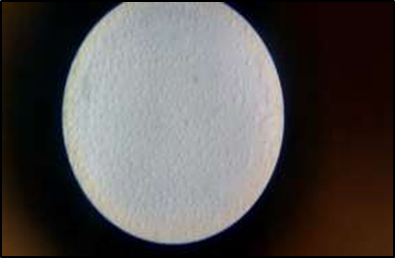
Figure 3: Microscopic observation of emulsion
pH
At 30±1°C, the pH of the emulsion was measured with a digital pH meter (Systronics pH system 362). At 30°C, the pH was observed to be 5.28. The study revealed that concentrations of oils and Tween 20 plays role in changing the pH of a formulation.
Electrical conductivity
The emulsion's electrical conductivity was measured to be 188.2 µs. The existence of strong electrical conductivity in an emulsion indicates that water was the emulsion's continuous phase. As a result, the created emulsion was oil in water emulsion.
Viscosity
The viscosity of emulsion was measured by using Brookfield viscometer (Fungilab) at 100 rpm, at 29°C, it was found to be 41 cPs. The viscosity of emulsion was increased due to the presence of viscosity modifier agents or emulsifiers used. By retarding the inevitable rise of the oil droplets to the top, increased viscosity considerably improved emulsion stability.
Centrifugation
After the centrifugation of emulsion at 5000 rpm for 20 minutes, there was no phase separation or creaming observed. Hence it was concluded that emulsion formulation was stable.
Zeta potential and globule size analysis
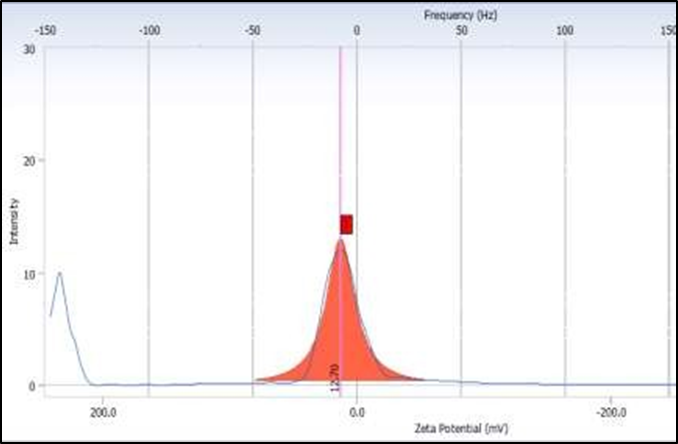
Figure 4: Zeta potential of emulsion.
A highly negative or highly positive zeta potential value indicates good physical stability of the formulation. The zeta potential of the emulsion formulation (F2) was measured by using Zetasizer at 25 ℃, it was found to be +12.70 mV. High zeta potential in turns maximum stability of the emulsion. Ideally zeta potential for stable dispersion should be ±30 mV.
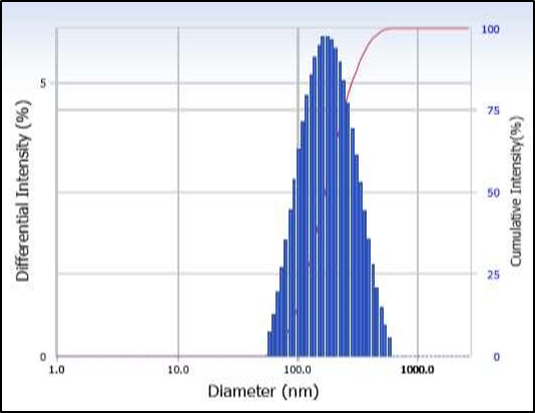
Figure 5: Particle size analysis of emulsion.
Particle size analysis of emulsion was shown in Figure 10.7 Emulsion showed average particle size 203nm.The polydispersity index of the emulsion was found to be 0. 221.The particle size was below 1000 nm; hence it was confirmed that the formed emulsion was microemulsion. The polydispersity index of the emulsion was less than 0.5, this indicated uniformity in particle size of droplets and directly it will affect stability of emulsion.
CONCLUSION:
Eucalyptus oil was successfully formulated into a stable oil-in-water emulsion using Span 20 and Tween 20 as emulsifiers. The selection of these surfactants was based on their suitable Hydrophilic-Lipophilic Balance (HLB) values, which facilitated the formation of a stable and homogeneous dispersion of oil droplets within the aqueous phase. The optimized formulation exhibited excellent physical stability, with nanosized droplets averaging 203 nm in diameter and a narrow polydispersity index, indicating uniform particle size distribution. Such nanoscale droplets are known to enhance the surface area for absorption, improving the penetration of the active ingredient through the skin and ensuring a more consistent therapeutic effect. The viscosity of the formulation was found to be appropriate for topical application, offering smooth spreadability and good patient acceptability. The pH value of the emulsion was within the skin-compatible range, suggesting that the formulation is non-irritant and suitable for dermal use. FTIR spectral analysis confirmed the absence of any significant chemical interaction between Eucalyptus oil and excipients, demonstrating the compatibility and chemical stability of the components. Additionally, centrifugation studies revealed no evidence of phase separation, creaming, or coalescence, further supporting the physical stability of the emulsion over time. Overall, the developed Eucalyptus oil emulsion combines stability, uniformity, and compatibility with desirable physicochemical characteristics, making it a promising carrier system for the topical delivery of Eucalyptus oil. This formulation not only enhances the stability of the volatile oil but also potentially improves its therapeutic efficacy in pharmaceutical and cosmetic applications such as antiseptic, anti-inflammatory, and soothing preparations. Future studies may include long-term stability testing, in vitro drug release, and in vivo skin permeation evaluations to further establish the clinical applicability of the developed formulation.
BIBLIOGRAPHY:
1. adav S, Mishra M, Tiwari A, Shukla A. Emulgel: a new approach for enhanced topical drug delivery. Int J Curr Pharm Res. 2017;9(1):15-19.
2. Singh RP, Parpani S, Narke R, Chavan R. Emulgel: a recent approach for topical drug delivery system. Asian J Pharm Res Dev. 2014;2(2):112-123.
3. Vegunta P, Geetha Priya T, Kumudhavalli S, Monisha S, Mayavathi P. Emulgel – a topical drug delivery system. World J Pharm Res. 2016;5(7):430-451.
4. Prakash D, Singh AP, Katiyar NS, Pathak K. Penetration enhancers: adjuvants in transdermal drug delivery system. World J Pharm Pharm Sci. 2016;5(5):353-376.
5. Phad AR, Nandgude TD, Ganapathy RS. Emulgel: A comprehensive review for topical delivery of hydrophobic drugs. Asian J Pharm. 2018;12(2):382-393.
6. Ashara KC, Paun JS, Soniwala MM, Chavada JR, Mori NM. Micro-emulsion-based emulgel: a novel topical drug delivery system. Asian Pac J Trop Dis. 2014;4(Suppl 1):S27-S32.
7. Avinash S, Gowda DV, Suresh J, Aravind RS, Srivastava A, Osmani RM. Formulation and evaluation of topical gel using Eupatorium glandulosum michx. for wound healing activity. Der Pharm Lett. 2016;8:255-266.
8. Vats A, Sharma P. Formulation and evaluation of topical antiacne formulation of coriander oil. Int J Pharm Pharm Sci Res. 2012;2(3):61-66.
9. Chiller K, Selkin BA, Murakawa GJ. Skin microflora and bacterial infections of the skin. J Invest Dermatol Symp Proc. 2001;6(3):170-174.
10. Lawrence HS, Nopper AJ. Superficial bacterial skin infections and cellulitis. In: Principles and Practice of Pediatric Infectious Diseases. 5th ed. Philadelphia: Elsevier; 2018. p. 436-444.
11. Raymond CR, Paul JS, Owen SC. Handbook of Pharmaceutical Excipients. 5th ed. London: The Pharmaceutical Press; 2006.
12. Government of India. Indian Pharmacopoeia. Vol. I. Ghaziabad: The Indian Pharmacopoeia Commission, Ministry of Health & Family Welfare; 2007. p. 80-89.
13. Solomon G, Aman D, Bachheti RK. Fatty acid, metal composition, nutritional value, and physicochemical parameters of oil collected from Ethiopia. Int Food Res J. 2016;23(2):827.