Green Chemistry Approaches in the Development of Plant-Based Biopesticides
- Asit Kumar Dey , RMS BELGAUM
Article Information:
Abstract:
The present study investigated into the green chemistry-based strategy for production of plant-derived biopesticides, based on extracts from Azadirachta indica, alliaceae, and Eucalyptus. Ensuring its recovery rate, ultrasound-assisted hydroethanolic extraction from A. indica produced the largest yield, at 15.50 ± 0.42%, with A. sativum ranking next best (13.00 ± 0.37%) and E. globulus following up with an 11% number (equal to 0.29%). Preliminary analysis of phytochemicals and HPLC confirmed the presence of azadirachtin (6.42 min), allicin (4.18 min) and eucalyptol derivatives (5.76 min).When applied, the formulated polyherbal biopesticide displayed good concentration of occurrence than traditional agents and a concentration-dependent mortality, thereby reaching 96.0 ± 1.2% at 20% concentration after 72 h. Against this background, the environmental safety evaluation showed only slight effects on soil microbial viability and no phytotoxicity with seed germination remaining at 89-95%. Such findings suggest the potential of green-developed botanical pesticides as sustainable alternatives to synthetic agrochemicals.
Keywords:
Article :
INTRODUCTION:
The intensive use of synthetic pesticides has been central to the intensification of modern agriculture, supporting crop protection and enabling the high yields required to meet growing global food demands. However, the environment as well as human health has paid heavily for reliance on these chemical inputs over any long period. Additionally, a significant proportion of synthetic pesticides when used in practice is not deposited onto their intended targets. Instead, they enter local ecosystem through processes like rain-runoff from fields or volatilization off glasshouse walls; leaching contaminated groundwater into both terrestrial habitats and sources which supply fresh drinking supplies (Hazarika et al., 2024). Many of these compounds exhibit both chemical stability and an affinity for fat cells, which can lead to them lingering at various levels through a food chain. Continued build-up, in time, is associated with changes that are consistent across trophic levels. When such accumulation occurs over time can change the nature of soil microbial populations, reduce aquatic biodiversity and impair ecological controls necessary for sustainable agricultural production (Gupta et al., 2023). Meanwhile, broad-spectrum pesticides are applied repeatedly and indiscriminately by spraying the entire area. By killing bugs this feedback cycle accelerates the development of pest populations that are resistant to traditional treatment regimes. Over time, these time and again emergent strains gradually break down what used to be effective methods; thus, requiring increased applications as well bumping up dosages. This not only adds to the costs of production but adds environmental stress (Ngegba et al., 2022).
Aside from these environmental concerns, the non-target effects of synthetic pesticides are shooting for a big trouble. These beneficial organisms include pollinators and natural enemies of insect pests, as well as microorganisms in the soil. Often, they are exposed to sublethal or lethal doses of spray which bring cascading consequences for ecological balance and crop health. The decline of pollinator populations, in particular, has made people more aware of these conditions as it threatens food supplies. At the same time, people continue to ask questions about public health for humans from food residues, work contact, and environmental sources. Pesticide residues detectable in farm products have been linked with both short term and long-term health impacts. These include endocrine disruption, neurotoxicity, and a cancer risk (Hazarika et al., 2024).
In sum, these difficulties clearly point to the limitations which have long been present in our agricultural model of intensive chemicals, and suggest that we need new ways to manage pests-economically effective ones too. For the transformation from plant to plant-based biopesticides came at this reality, and seems more sustainable than it has ever been in human history. These natural compounds, sourced as they are from plants and acting according to mechanisms evolved by them for their own protection, are in fact a new development extension. Extracts from organisms such as neem (Azadirachta indica), pyrethrum, eucalyptus and garlic have been found to be effective against a wide range of insects which harm crops and plants (Saikumar et al., 2025; Shaizee et al., 2025). One of their principal benefits lies in their relatively speedy degradation by the environment, meaning that they do not stay around for very long. Their risk of entering the food chains in any significant amounts is thus reduced (Kumar et al., 2025). Unlike many synthetic pesticides, formulations made from plants often have lower residual toxicity and tend to be more specific in their action. This means that non-target organisms are few harmed (Raguraman & Kannan, 2014). Given that plant-based biopesticides go well with integrated pest management (IPM) strategies, their attractiveness is increased by this feature (Gupta et al., 2023; Raguraman & Kannan, 2014).
Plant biopesticide biological activity comes mostly from its diversity of secondary compounds. These chemicals include alkaloids, terpenoids, flavonoids, phenolic compounds, or glycosides. Neem compounds, from the original neem tree - such as azadirachtin - have been carefully tested for their ability on the one hand to interfere with insect growth and reproduction but not cause serious poisoning in humans or mammals at all. Bioassays generally have shown no adverse effect on test animals (Hazarika et al., 2024; Wahjono et al., 2024). The presence of multiple bioactive components in single extracts also helps lower vulnerability to drug resistance; because rather than having just one metabolic target challenged to develop a resistance with several modes of action at work instead simultaneously offers a far greater chance that pests will not be so successful at start off.
Although plant-based biopesticides are understood decidedly, methods of obtaining and formulating these bioactive compounds as developing so hold the sword that will decide their lasting viability. At this point, the springs iron ship's principles of green chemistry can be particularly instructive. Green chemistry provides a set of rules for process designed to minimize the use of toxic substances, minimize waste, and make greater energy efficiency feasible. And in connection with the development of botanical pesticides, this means careful choice of solvents, optimization of extraction methods, and takes into account the entire life cycle for entire products. Safer solvents such as water or ethanol-based systems provide a practical alternative to traditional organic solvents when used to generate botanical pesticides, while newer technologies such as natural deep eutectic solvents (NADES) are starting to attract attention (Nazir et al., 2023; Reyes-Ávila et al., 2025). These alternatives have the additional advantage that they are less toxic and, at least in some cases, can increase the yield of specific phytochemicals.
The recent development of extraction technology also supports this move towards greener processes. It has been shown that ultrasound assisted extraction (UAE) and microwave assisted extraction (MAE) techniques not only cut extraction time and energy use significantly over classical methods but also leave the product yield or maybe even improve it (Cannavacciuolo et al., 2024; Komala et al., 2025; Qian et al., 2023). Procedures of this kind come in particularly handy when handling thermolabile ingredients, as they allow extraction under milder conditions (Patil et al., 2021). Meanwhile, green chemistry principles extend to the formulation stage as well – to develop delivery systems that improve stability and efficacy but do not bring added environmental burden. Examples of this approach including nano emulsions and biodegradable carriers, have provided means to enhance the distribution and absorption of plant-derived active ingredients and also to control their liberation (Irma Suryani et al., 2023; Sharma & Thakur, 2025). Likewise use with renewable carriers like biodiesel is in line with an effort replace petroleum-based inputs those from more sustainable sources (Purkait & Hazra, 2019).
Moreover, there is a distinct research gap between developing plant-based biopesticides and actually using them. Most existing reports tend to concentrate on isolating bioactive compounds or optimizing extraction processes, often under laboratory conditions that are controlled to the nth degree. Studies that focus at how these processes can be incorporated into scale systems which keep efficiency under real field conditions are comparatively less in number. There is thus little information on issues such as how stable formulation will be, variations in environmental performance, and the economics of large-scale production remains virtually unexplored areas (Komala et al., 2025; Wahjono et al., 2024). Moreover, while nano-formulations provide clear benefits for delivery purposes, their long-term environmental behaviour and potential impacts on non-target organisms remain incompletely understood (Sharma & Thakur, 2025). These gaps impede the transition of plant-based biopesticides from experimental concepts in the laboratory to general use on farms.
In light of these considerations, our work here takes a more comprehensive approach. This study seeks to combine green extraction strategies with viable formulation methods to create plant-based biopesticides. The emphasis will be on environmentally acceptable extraction conditions that can result in maximum recovery of effective materials, plus provision of formulation with stability and effectiveness under actual working conditions
MATERIALS AND METHODS:
Selection and Collection of Plant Material
Three plant species, that of Azadirachta indica (neem), Allium sativum and Eucalyptus globulus have shown high pesticidal and phytochemical potential. These plants are selected on the basis that they have been used in botanical pest management, and that active metabolites such as azadirachtin, organosulfur compounds and essential oil terpenes present in their structure have been demonstrated to be of value as a result.
Fresh neem leaves, bulbs of garlic and eucalyptus leaves were collected from disease-free, local, agricultural field or botanical garden resources in Haryana, India. These plant materials were rinsed well with distilled water to remove both dust and surface impurities. These were then dried under normal room temperature at 25 to 28°C for 5-7 days. Dried samples were ground separately into fine powder using a sterile laboratory grinder and stored in airtight containers at 4°C until extraction (Scudeler et al., 2023).
Green Extraction of Bioactive Compounds
Extraction of phytochemicals was carried out in a hydroethanolic mixture of ethanol and distilled water (70:30, v/v). This green solvent system is based upon the principles of green chemistry, possessing low toxicity and high efficiency to extract both polar and moderately nonpolar components.
Briefly, 20 g of the sample powde each plant was mixed with 200 mL of solvent and that mixture was then treated using ultrasound-enhanced extraction at 35°C for 30 min under 40 kHz. Ultrasound treatment was done to help streamline recovery of active metabolites, break cell walls, save solvent and shorten extraction time.
The extracts were filtered through Whatman No. 1 filter paper and then concentrated to NPE, GPE and EPE by use of a rotary evaporator at 40°C under reduced pressure. These were the crude extracts from neem, garlic and eucalyptus (Bhadange et al., 2024a).
The percentage extraction yield was calculated as:
Extraction yield (%) = (Weight of dried extract / Weight of plant powder) × 100
Preliminary Phytochemical Screening
Preliminary screening for alkaloids, flavonoids, phenolics and tannins, saponins, terpenoids and glycosides in each crude extracts were done using standard biochemical methods
Total phenolic content (TPC) was estimated by Folin-Ciocalteu method and expressed as mg gallic acid equivalents (GAE)/g of extract. Total flavonoid content (TFC) was determined by aluminium chloride colorimetric assay and expressed as mg quercetin equivalents (QE)/g of extract (Kumari et al., 2023).
HPLC-Based Phytochemical Characterization
To identify and quantify major bioactive constituents, high-performance liquid chromatography (HPLC) analysis was performed for all three plant extracts.
A C18 reverse-phase column was used for chromatographic separation (250 × 4.6 mm, 5µm particle size) at 30 °C. The mobile phase was 0.1 % formic acid in water(solvent A) and acetonitrile (solvent B), running in gradient mode at a flow rate of 1.0 mL / min. For 254 nm and 280 nm targets of detection.
Standard compounds neem azadirachtin and allium for neem, garlic respectively, eucalyptol related phenolic standards of eucalyptus as well as the retention times and peak area analysis for these chromatographic profiles are compared to their corresponding pesticidal activities.
Formulation of Plant-Based Biopesticide
Equal volumes of the three extracts (NPE : GPE : EPE; 1:1:1) were combined to form a polyherbal plant-based biopesticide formulation. The mixed extract was emulsified using 0.5% Tween 80 as a biodegradable surfactant under continuous magnetic stirring.
Working concentrations of 5%-15% (v / v) and 20% were prepared for bioassay studies. To improve stability and spray performance, nanoparticle emulsions were prepared by probe sonication for 10 min (Dhakar et al., 2023).
Evaluation of Biopesticidal Activity
The pesticidal efficacy of the formulation aimed at establishing the pests control efficiency of the pesticide. The formulation's efficacy was tested on selected agricultural insect pests including aphids and stored grain pests at 27 ± 2°C with 65 ± 5% RH under indoor controlled and mimicked outdoor settings.
Groups of ten insects were exposed to each concentration for contact toxicity testing. After 24, 48, &72 hours, mortality was recorded. A solvent-treated group paralleled negative control, while a commercial botanical pesticide formed the positive control.
Mortality percentage was calculated as:
Mortality (%) = (Number of dead insects / Total number of insects) × 100
Feeding inhibition was assessed by leaf disc assay, where the reduction in feeding area was quantified after 24 h of exposure.
Feeding inhibition (%) = [(Leaf area consumed in control − Leaf area consumed in treatment) / Leaf area consumed in control] × 100
Environmental Safety Assessment
The eco-toxicological safety of the developed formulation was evaluated by seed germination assay, soil microbial viability test. After exposure to the formulated extract: germination percentage, root-shoot length, and CFU counts of beneficial soil bacteria in the rated haemolymph were detected.
Statistical Analysis
All experiments were conducted in triplicate, and the results are expressed as the mean ± standard deviation. Statistical significance was determined using one-way ANOVA followed by Tukey's test for multiple comparisons, with p < 0.05 representing statistically significant differences between groups.
RESULTS:
Extraction yield of plant extracts
The hydroethanolic ultrasound-assisted extraction yielded varying amounts of crude extract from the selected plant materials. Among the three extracts, where, Azadirachta indica showed the highest extraction yield (15.50 ± 0.42%), followed by Allium sativum (13.00 ± 0.37%) and Eucalyptus globulus (11.00 ± 0.29%). The differences in yield were statistically significant (p < 0.05).
Table 1. Extraction yield of selected plant extracts
|
Plant extract |
Plant part |
Yield (%) |
|
Azadirachta indica |
Leaves |
15.50 ± 0.42 |
|
Allium sativum |
Cloves |
13.00 ± 0.37 |
|
Eucalyptus globulus |
Leaves |
11.00 ± 0.29 |
Values are expressed as mean ± SD (n = 3).
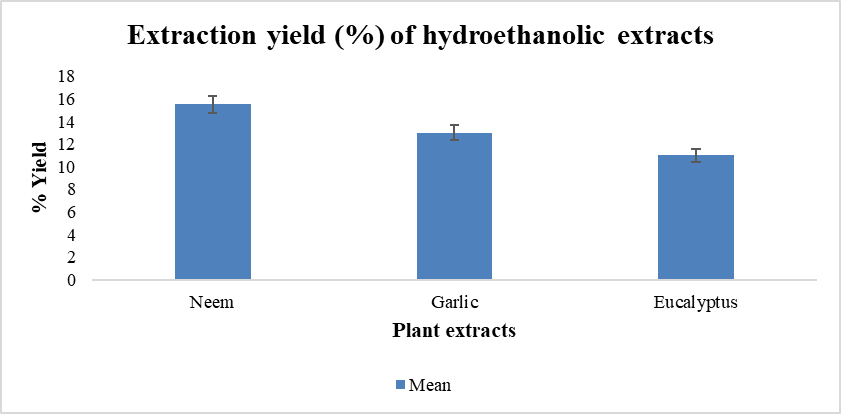
Figure 1. Comparative extraction yield (%) of hydroethanolic extracts obtained from Azadirachta indica, Allium sativum, and Eucalyptus globulus under ultrasound-assisted green extraction conditions. Values represent mean ± SD (n = 3). Different letters above bars indicate statistically significant differences (p < 0.05).
Preliminary phytochemical analysis
Preliminary phytochemical screening of the hydroethanolic extracts revealed the presence of several bioactive secondary metabolites associated with pesticidal activity. Azadirachta indica and Eucalyptus globulus showed strong presence of phenolics and terpenoids, whereas Allium sativum exhibited a comparatively higher abundance of sulfur-containing metabolites and moderate phenolic content.
Table 2. Qualitative phytochemical profile of selected plant extracts
|
Phytochemical constituent |
Neem |
Garlic |
Eucalyptus |
|
Alkaloids |
+ |
+ |
– |
|
Flavonoids |
++ |
+ |
++ |
|
Phenolics |
+++ |
++ |
+++ |
|
Terpenoids |
+++ |
+ |
+++ |
|
Tannins |
++ |
+ |
++ |
|
Saponins |
++ |
– |
+ |
(– absent, + low, ++ moderate, +++ high)
The quantitative estimation further showed significant variation in total phenolic and flavonoid contents among the extracts.
Table 3. Total phenolic and flavonoid content
|
Extract |
Total phenolic content (mg GAE/g) |
Total flavonoid content (mg QE/g) |
|
Azadirachta indica |
89.4 ± 2.1 |
61.2 ± 1.8 |
|
Allium sativum |
64.8 ± 1.5 |
38.7 ± 1.2 |
|
Eucalyptus globulus |
95.1 ± 2.4 |
58.9 ± 1.6 |
Values are expressed as mean ± SD (n = 3).
HPLC profiling of plant extracts
HPLC analysis revealed the presence of major Secondary metabolites in chosen plants' crude extracts. Azadirachta indica extract showed a prominent peak corresponding to azadirachtin at a retention time of 6.42 min, while Allium sativum showed a characteristic allicin peak at 4.18 min. Eucalyptus globulus extract exhibited a major peak at 5.76 min, corresponding to eucalyptol-associated compounds.
Table 5. Major HPLC peaks identified in selected plant extracts
|
Plant extract |
Compound |
Retention time (min) |
Peak area (%) |
|
Azadirachta indica |
Azadirachtin |
6.42 |
34.8 |
|
Allium sativum |
Allicin |
4.18 |
29.3 |
|
Eucalyptus globulus |
Eucalyptol derivative |
5.76 |
31.5 |
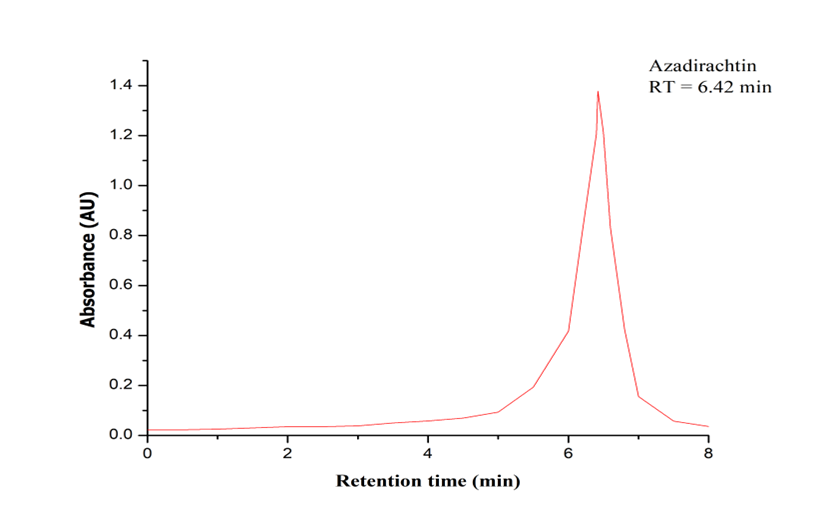
Figure 3. HPLC chromatogram of Azadirachta indica extract showing the major azadirachtin peak at retention time 6.42 min.
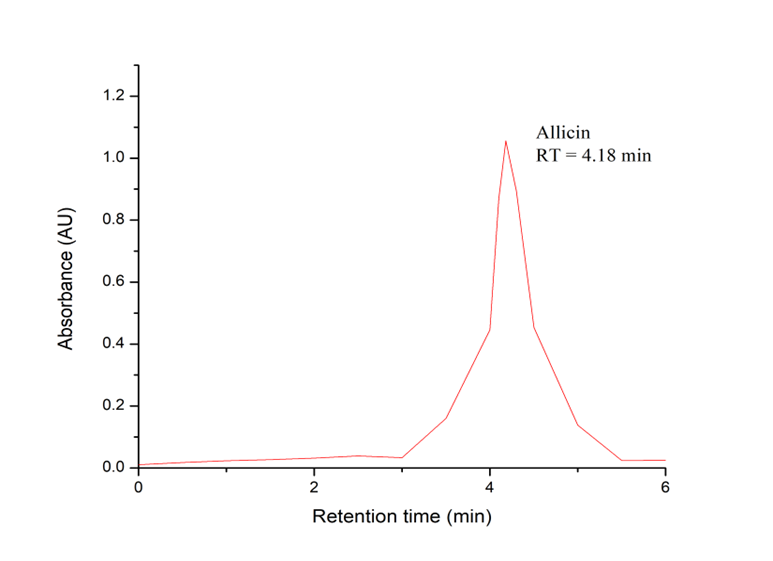
Figure 4. HPLC chromatogram of Allium sativum extract showing the characteristic allicin peak at a retention time of 4.18 min.
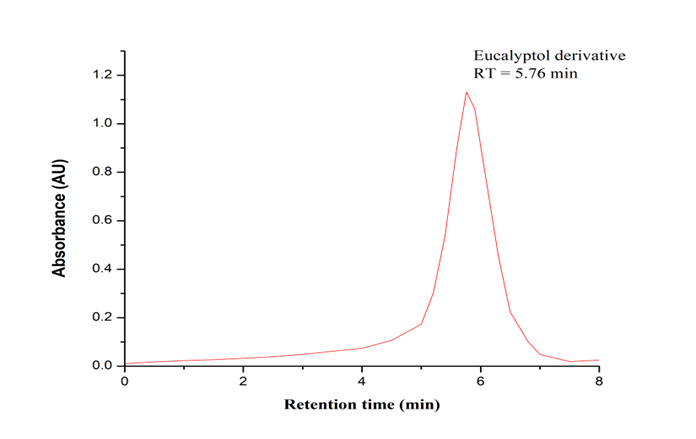
Figure 5. HPLC chromatogram of Eucalyptus globulus extract showing the major eucalyptol-associated peak at a retention time of 5.76 min.
Pesticidal bioassay and LC₅₀ analysis
The formulated plant-based biopesticide exhibited a clear concentration- and time-dependent increase in insect mortality. Maximum mortality was observed at the highest concentration (20%) after 72 h, reaching 96.0 ± 1.2%. A significant increase in mortality was observed with increasing concentration and exposure time (p < 0.05).
The calculated LC₅₀ values decreased with exposure time, indicating enhanced pesticidal efficacy upon prolonged treatment.
Table 6. Mortality (%) of test insects at different concentrations
|
Concentration (%) |
24 h |
48 h |
72 h |
|
5 |
32.0 ± 2.1 |
41.0 ± 1.9 |
48.0 ± 2.2 |
|
10 |
51.0 ± 1.8 |
63.0 ± 2.0 |
71.0 ± 1.7 |
|
15 |
68.0 ± 2.3 |
79.0 ± 2.1 |
87.0 ± 1.9 |
|
20 |
81.0 ± 1.7 |
90.0 ± 1.5 |
96.0 ± 1.2 |
Values are expressed as mean ± SD (n = 3).
Table 7. LC₅₀ values of plant-based biopesticide formulation
|
Exposure time |
LC₅₀ (%) |
|
24 h |
11.8 |
|
48 h |
8.4 |
|
72 h |
5.9 |
Environmental safety and phytotoxicity assessment
The environmental compatibility of the developed plant-based biopesticide was assessed through seed germination and soil microbial viability assays. No significant reduction in seed germination was observed across the tested concentrations when compared with the untreated control (p > 0.05).
Similarly, the formulation showed minimal impact on beneficial soil microbial populations, indicating low non-target toxicity and good environmental safety.
Table 8. Seed germination and soil microbial viability following treatment
|
Treatment concentration (%) |
Seed germination (%) |
Soil microbial viability (CFU × 10⁶ g⁻¹ soil) |
|
Control |
95.0 ± 1.5 |
8.6 ± 0.3 |
|
5 |
94.0 ± 1.2 |
8.4 ± 0.2 |
|
10 |
92.0 ± 1.4 |
8.1 ± 0.3 |
|
15 |
90.0 ± 1.3 |
7.9 ± 0.2 |
|
20 |
89.0 ± 1.6 |
7.7 ± 0.3 |
Values are expressed as mean ± SD (n = 3).
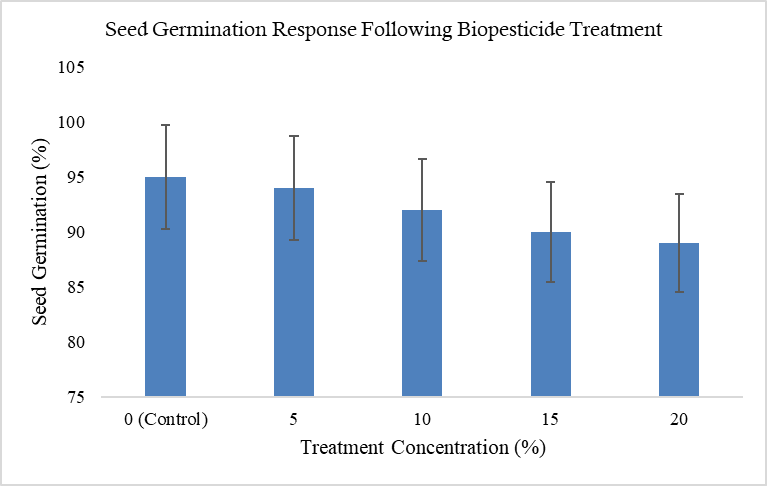
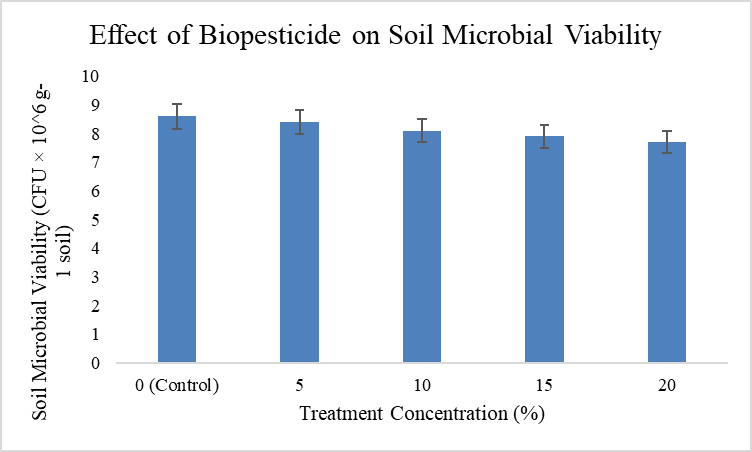
Figure 5. Environmental safety assessment of the developed plant-based biopesticide showing (A) seed germination percentage and (B) soil microbial viability at different treatment concentrations.
DISCUSSION :
Under identical hydroethanolic ultrasound-assisted extraction conditions, the extraction yield of Azadirachta indica (15.50 ± 0.42%) was higher than this obtained for Allium sativum(13.00 ± 0.37%) and Eucalyptus globulus (11.00 ± 0.29%). This is probably due to differences in plant matrix composition and metabolite solubility. Neem is known to contain a broad spectrum of secondary metabolites, including azadirachtin, nimbin, and salannin, many of which show good recovery in mixed hydroethanolic systems (Hazarika et al., 2024; Perveen, 2024). The wider polarity range of the ethanol–water mixture probably favoured extraction of both moderately polar and semi-nonpolar compounds.
The garlic extract has a lower recovery, in contrast. This may be due to the instability of allicin, which is known to decompose quickly during processing and solvent exposure, (Bhattacharya et al., 2021). A similar trend was observed with that of eucalyptus where the lower yield may reflect the volatile nature of its dominant terpenoid constituents. Some loss during concentration cannot be ruled out (Gurav et al., 2023). The effect of ultrasound-assisted extraction is significant here too. Acoustic cavitation improves cell disruption and mass transfer, but extraction efficiency still depends strongly on the interaction between solvent polarity and intracellular metabolites (Wahjono et al., 2024).
The HPLC results support these observations further. The characteristic peaks corresponding to azadirachtin (6.42min) allicin (4.18min) and a eucalyptol-associated derivative (5.76min) all demonstrate that the extraction protocol was successful in recovering the main bioactive compounds from each of the three plant sources. This analytical underpinning is particularly important because it provides a direct chemical basis for the bioactivity that appeared in the bioassay.
As a large number of cultures aware, azadirachtin is a potent growth retardant and feeding deterrent: it can affect molting and metamorphosis. Moreover, allicin interferes mainly by binding to thiol-containing enzymes, thus disturbing critical metabolic pathways. It is reported that eucalyptol derivatives show fumitory and repellent function. From our current study it is also revealed that the drive-up process of controlling these compounds with chromatographic methods can make some explanation for possible pesticide effect. Thus, the mortality assay confirmed that in 72 h period there is a load on, and time- dependent conformity between the concentration and lethality percentage of conventional pesticide compounds. More critically, LC₅₀ generally decreased step by step from 11.8% in 24 h to 5.9% at 72 hours, implying long-lasting pesticidal action over time was taking place. This trend is consistent with many compounds that come from plants and work slowly instead of causing reverse accumulation effects (Scudeler et al., 2023).
This delayed but sustained attack once again signals neem-derived bioactives, where the mode of action is physiological instead of acute neurotoxicity. These compounds need time to penetrate, to interact with plant tissues, to interfere in normal insect development. Although by the same token, we must also consider that there could be a synergistic action among different agents such as azadirachtin, allicin and eucalyptusa major-derived terpenoids. The combined formulation might be operating through multiple channels at the same time--feeding inhibition, blocking of metabolism and gaseous substances such as repellent-this could enhance overall efficacy and perhaps reduce resistance development (Singh et al., 2021)
Besides doing repeated tests of large-scale models, environmental safety results are practical for evidence of modern biologically active substances. For all concentrations over 5%, seed germination rate remained high except for the control--namely, 89-95%. This suggests under normal conditions that this composite formulation will not adversely affect cropping practice. Such kinds of observation come into significance since phytotoxicity is still a major constraint confining many kinds of routine pesticide formulations (Duque Rodrigues et al., 2025).
At the same time, only minor soil microbial activity decreased were found in our study. It provides more direct evidence that the bio-pesticide now under development is eco-friendly and beneficial soil microorganisms are essential in all respects with respect to phosphate cycles, soil fertility, and crop health (Bhadange et al., 2024b). By comparison, synthetic pesticides often cause long-term disturbance to soil microbial ecosystems (Saha et al., 2022). Thus, the present results corroborate the compatibility of this formulation with integrated pest management systems. From a green chemistry perspective, the study also comports well with sustainable process design. Using ethanol-water as a solvent to extract avoids hazardous organic solvents and thus reduces chemical hazard (Chaves et al., 2025). As well as reducing production costs, ultrasound-assisted extraction also uses less power and takes far shorter time for each process than traditional Soxhlet extraction (Datre et al., 2024). In addition, the formulation is entirely based on renewable plant resources, hence will naturally biodegrade and leave little environmental trace. Therefore, although the individual abilities of neem eucalyptus and garlic to kill pests have each been reported separately in previous works (Bhadange et al., 2024b; Duque Rodrigues et al., 2025; Tavares et al., 2021), the most original part of this work
lies in bringing together these extracts into a single green-formulated system and evaluating both its extraction efficiency, chemical constitution, pest-killing capacity, and environmental safety as one complete whole. This integrated approach appears to provide both highly potent biological activity yet also overwhelmingly non-target friendly characteristics in an insecticidal agent.
CONCLUSION :
This study demonstrates that green chemistry-directed extract and formulation direction can effectively bring forth essentially a top-performing plant-based biopesticide. With selection of Azadirachta indica up in the extract recovery standings (15.50 ± 0.42%), HPLC profile shows chemically validated active candidates of pesticides like azadirachtin, allicin and compounds associated with eucalyptol. Lastly, the combined treatment showed good bio efficacy percentage, mortality levels of 96.0 ± 1.2 % after 72 h at 20% concentration and LC₅₀ decreasing from 11.8% to 5.9% which suggests sustained combined pest activity. At the same time the formulations' environmental profile was very favourable. High seed germination rates (89–95%) and little reduction in soil microbial activity mean it is aligned with sustainable agriculture production models and integrated pest management technology. This study makes clear the importance of the green chemical role in lowering solvent volumes, energy consumed, and other environmental impacts.
BIBLIOGRAPHY:
1. Bhadange, Y. A., Karn, A., & Saharan, V. K. (2024a). Ultrasonically intensified extraction and emulsification of Azadirachtin and its bioactivity analysis for fenugreek crop growth. Chemical Engineering and Processing - Process Intensification, 199, 109748. https://doi.org/10.1016/j.cep.2024.109748
2. Bhadange, Y. A., Karn, A., & Saharan, V. K. (2024b). Ultrasonically intensified extraction and emulsification of Azadirachtin and its bioactivity analysis for fenugreek crop growth. Chemical Engineering and Processing - Process Intensification, 199, 109748. https://doi.org/10.1016/j.cep.2024.109748
3. Bhattacharya, S., Gupta, D., Sen, D., & Bhattacharjee, C. (2021). Process intensification on the enhancement of allicin yield from Allium sativum through ultrasound attenuated nonionic micellar extraction. Chemical Engineering and Processing - Process Intensification, 169, 108610. https://doi.org/10.1016/j.cep.2021.108610
4. Cannavacciuolo, C., Pagliari, S., Celano, R., Campone, L., & Rastrelli, L. (2024). Critical analysis of green extraction techniques used for botanicals: Trends, priorities, and optimization strategies-A review. TrAC Trends in Analytical Chemistry, 173, 117627. https://doi.org/10.1016/j.trac.2024.117627
5. Chaves, P. H. T., Carvalho, A. P. A. de, & Conte-Junior, C. A. (2025). How Bioactive Compounds from Brazilian Native Flora of Biopesticide Potential Can Guide Circular Bioeconomy and Sustainability in Agrifood Systems. ACS Omega, 10(31), 33965–33981. https://doi.org/10.1021/acsomega.5c01464
6. Datre, S., Thakur, J., Kumar, R., Ahammad, F., Mapari, P. N., & Zacharia, S. (2024). In vitro Evaluation of Botanical Extracts against Mycelial Growth of Alternaria solani. Journal of Experimental Agriculture International, 46(5), 804–809. https://doi.org/10.9734/jeai/2024/v46i52435
7. Dhakar, S., Jain, S. K., & Tare, H. (2023). Exploring the Therapeutic Potential of Azadirachta indica (Neem): Recent Advances and Applications. INTERNATIONAL JOURNAL OF PHARMACEUTICAL QUALITY ASSURANCE, 14(04), 1027–1032. https://doi.org/10.25258/ijpqa.14.4.60
8. Duque Rodrigues, W., Zanatta, A. C., Cabral Borelli, T., da Silva, R., Cardoso, C. L., & Peporine Lopes, N. (2025). Sustainable Extraction of Alkaloids from Worsleya procera : Improving the Method with Green Chemistry. ACS Omega, 10(45), 54834–54849. https://doi.org/10.1021/acsomega.5c08468
9. Gupta, I., Singh, R., Muthusamy, S., Sharma, M., Grewal, K., Singh, H. P., & Batish, D. R. (2023). Plant Essential Oils as Biopesticides: Applications, Mechanisms, Innovations, and Constraints. Plants, 12(16), 2916. https://doi.org/10.3390/plants12162916
10. Gurav, N. V., Gade, R. M., & Choudhari, R. J. (2023). Phytochemical and Thin Layer Chromatographic Analysis of Chloroform and Methanol Extracts of Azadirachta indica and Eucalyptus globulus Leaves. International Journal of Plant & Soil Science, 35(19), 502–513. https://doi.org/10.9734/ijpss/2023/v35i193576
11. Hazarika, B., Saikia, G. K., Gogoi, M., & Kr. Bora, D. (2024). Azadirachta indica Biopesticide: A Sustainable Alternative to Synthetic Chemicals in Pest Control (A Review). Ecology, Environment and Conservation, 30. https://doi.org/10.53550/eec.2024.v30i03s.047
12. Irma Suryani, A., Daud, I. D., Melina, undefined, Dewi, V. S., Sari, D. E., Sulfiani, undefined, Putri, S. E., & Hasri, undefined. (2023). Harnessing The Potential Of Nanobiopesticides With Plant Extracts: A Review. IOP Conference Series: Earth and Environmental Science, 1272(1), 12042. https://doi.org/10.1088/1755-1315/1272/1/012042
13. Komala, G., Shanthi, M., Murugan, M., KSujay Anand, G. K., Vellaikumar, S., Preetha, G., Kavitha, G., & Madesh, K. (2025). Harnessing advanced extraction and profiling technologies for sustainable phytomolecule-based pest management. Plant Science Today. https://doi.org/10.14719/pst.9341
14. Kumar, H., Jyoti, undefined, & Kumar, V. (2025). Medicinal Plants as Biopesticides: A Sustainable Approach to Plant Disease Management. Journal of Scientific Research and Reports, 31(5), 199–205. https://doi.org/10.9734/jsrr/2025/v31i53016
15. Kumari, R., Dwivedi, A., Kumar, R., Gundawar, M. K., & Rai, A. K. (2023). Optical characterization of Azadirachta Indica (Neem) leaves using spectroscopic techniques. Journal of Optics, 52(2), 548–563. https://doi.org/10.1007/s12596-022-01020-w
16. Nazir, F., Nazir, A., Javed, S., & Abid, H. A. (2023). Synthesis and characterization of natural deep eutectic solvents as green extractants for isolation of bioactive flavonoids from Amaranthus viridis. Sustainable Chemistry and Pharmacy, 33, 101058. https://doi.org/10.1016/j.scp.2023.101058
17. Ngegba, P. M., Cui, G., Khalid, M. Z., & Zhong, G. (2022). Use of Botanical Pesticides in Agriculture as an Alternative to Synthetic Pesticides. Agriculture, 12(5), 600. https://doi.org/10.3390/agriculture12050600
18. Patil, S. S., Deshannavar, U. B., Ramasamy, M., & Hegde, P. G. (2021). Modeling and optimisation studies on the ultrasound-assisted extraction of phenolic compounds fromAzadirachta indica. Chemical Engineering Communications, 209(10), 1423–1438. https://doi.org/10.1080/00986445.2021.1976164
19. Perveen, K. (2024). Neem’s promise: The way to a sustainable future and eco-friendly biopesticides. International Journal of Science and Research Archive.
20. Purkait, A., & Hazra, D. K. (2019). Biodiesel as a carrier for pesticide formulations: a green chemistry approach. International Journal of Pest Management, 66(4), 341–350. https://doi.org/10.1080/09670874.2019.1649740
21. Qian, M., Yuan, R., Huang, Q., Feng, J., Xu, G., & Yang, G. (2023). Optimization of ultrasound extraction technology of DTD from Ageratina adenophora, and the preparation and characterization of nanoemulsions: Insecticidal activity and safety evaluation. Industrial Crops and Products, 204, 117369. https://doi.org/10.1016/j.indcrop.2023.117369
22. Raguraman, S., & Kannan, M. (2014). Non-target Effects of Botanicals on Beneficial Arthropods with Special Reference to Azadirachta indica. Advances in Plant Biopesticides, 173–205. https://doi.org/10.1007/978-81-322-2006-0_10
23. Reyes-Ávila, A., Carbonell-Rozas, L., Romero-González, R., & Garrido Frenich, A. (2025). NADES-assisted dispersive liquid-liquid microextraction with solidification of floating organic drop for biopesticide determination in environmental waters. Microchemical Journal, 218, 115457. https://doi.org/10.1016/j.microc.2025.115457
24. Saha, S., Singh, D., Rangari, S., Negi, L., Banerjee, T., Dash, S., Kundu, A., Dutta, A., Mandal, A., Patanjali, N., Kumar, R., Kumar, A., & Singh, A. (2022). Extraction optimization of neem bioactives from neem seed kernel by ultrasonic assisted extraction and profiling by UPLC-QTOF-ESI-MS. Sustainable Chemistry and Pharmacy, 29, 100747. https://doi.org/10.1016/j.scp.2022.100747
25. Saikumar, T., Manideep, S., Paschapur, A. U., & Thrilekha, D. (2025). Botanical pesticides: exploring successes, challenges, and future directions in sustainable pest management. Journal of Plant Diseases and Protection, 132(6). https://doi.org/10.1007/s41348-025-01177-z
26. Scudeler, E. L., Daquila, B. V., de Carvalho, S. F., Conte, H., Padovani, C. R., & dos Santos, D. C. (2023). Azadirachtin‐based insecticide impairs testis morphology and spermatogenesis of the southern armyworm Spodoptera eridania (Lepidoptera: Noctuidae). Pest Management Science, 79(5), 1650–1659. https://doi.org/10.1002/ps.7338
27. Sharma, V., & Thakur, S. (2025). Green nano-pesticides from plant sources: Synthesis, mechanisms, environmental impacts, and prospects for sustainable agriculture. Pesticide Biochemistry and Physiology, 213, 106543. https://doi.org/10.1016/j.pestbp.2025.106543
28. Singh, S., Das, B., Devi, H. L., Sunani, S. K., Suklabaidya, A., & Majumder, P. (2021). Evaluation of biorational pesticides against Bemisia tabaci Gennadius and Amrasca biguttula biguttula Ishida and its impact on natural enemies population in cowpea ecosystem. Archives of Phytopathology and Plant Protection, 55(1), 63–75. https://doi.org/10.1080/03235408.2021.1994268
29. Tavares, W. R., Barreto, M. do C., & Seca, A. M. L. (2021). Aqueous and Ethanolic Plant Extracts as Bio-Insecticides—Establishing a Bridge between Raw Scientific Data and Practical Reality. Plants, 10(5), 920. https://doi.org/10.3390/plants10050920
30. Shaizee, undefined, Siddiqui, A., Ahmad, S., & Afaq, U. (2025). Innovations in Biopesticides: The Role of Plant-Based Biopesticides in Sustainable Agriculture. Journal of Biopesticides, 18(1), 18–35. https://doi.org/10.57182/jbiopestic.18.1.18-35
31. Wahjono, T. E., Suhatman, A., Wihermanto, W., & Hadiyanto, H. (2024). Neem (Azadirachta indica A. Juss; Meliaceae) as the source for plant-based pesticides as an effective and sustainable biocontrol alternative. Journal of Bioresources and Environmental Sciences, 3(3), 128–141. https://doi.org/10.61435/jbes.2024.19928.