CLINICAL EFFICACY AND COMPLICATION TRENDS OF TURP IN MANAGING BENIGN PROSTATIC HYPERPLASIA
- Irshad Khan , Assistant Professor Zeb Medical and Dental College Timergara Dir L.
- Sami Ul Haq , Department of Urology, Timergara Teaching Hospital, Dir Lower, Pakistan
- Ghufran Ullah , Department of Urology, Timergara Teaching Hospital, Dir Lower, Pakistan
- Aziz Ul Wahab , Department of Urology, Timergara Teaching Hospital, Dir Lower, Pakistan
- Irshad Ahmad , Consultant Urologist, Regional Headquarter Hospital, Skardu
Article Information:
Abstract:
Transurethral resection of the prostate (TURP) remains the gold-standard surgical treatment for benign prostatic hyperplasia (BPH). However, outcomes from peripheral and resource-limited settings in Pakistan are less frequently reported, where patient profiles and perioperative resources may differ from tertiary centers. Objective: To evaluate the clinical efficacy, perioperative outcomes, complication trends, and length of hospital stay among patients undergoing TURP. Methods: This retrospective cohort study reviewed records of 127 men aged 45–85 years who underwent TURP between November 2023 and March 2024 at Timergara DHQ Hospital Dir Lower and RHQ Skardu. The Patients with prior prostate surgery, malignancy, bladder stones, or urethral strictures were excluded. Data included demographics, prostate volume, operative time, pre- and postoperative hemoglobin and sodium levels, postoperative complications, and hospital stay. Statistical analysis was performed using SPSS v21, with significance set at p ≤ 0.05. Results: The mean age was 65.2 ± 10.3 years, and mean prostate volume was 66.8 ± 19.7 mL. A significant postoperative reduction in hemoglobin was observed (p < 0.01), while postoperative sodium changes were not significant (p = NS), indicating a low risk of TUR syndrome. Overall complication rates were low: blood transfusion 18%, sepsis 7%, TUR syndrome 1%, and bladder perforation 1%. The mean operative time was 125.6 ± 32.8 minutes, and the mean hospital stay was 4.1 ± 1.8 days. Conclusion: Demonstrated favorable perioperative outcomes with low complication rates and short hospital stay, comparable to published results with other tertiary centers. Standardized perioperative care and early risk stratification may further improve outcomes in resource-limited settings.
Keywords:
Article :
INTRODUCTION :
Benign prostatic hyperplasia (BPH) is a progressive, age-related condition that commonly affects elderly men, with an estimated prevalence of nearly 50% by the age of 60 years. ¹ It is characterized by nonmalignant enlargement of the prostate gland and commonly presents with lower urinary tract symptoms (LUTS), including nocturia, urinary urgency, urinary hesitancy, weak urinary stream, and a sensation of incomplete bladder emptying. These symptoms significantly impair daily functioning and overall quality of life. BPH is responsible for approximately 60% of LUTS in men aged between 50 and 60 years, making it a major urological concern worldwide. ²
With the steady increase in global life expectancy, the prevalence of BPH continues to rise, leading to a growing healthcare burden, particularly in aging populations. ³˒⁴ The chronic nature of the disease and its progressive symptoms can result in reduced quality of life, sleep disturbances, and psychological stress among affected individuals. Consequently, effective and accessible treatment strategies are essential for symptom control and prevention of complications. Management options for BPH include conservative approaches such as watchful waiting, pharmacological therapy, minimally invasive interventions, and surgical treatment. Medical therapy is widely accepted as the first-line treatment due to its efficacy, safety, and cost-effectiveness. Commonly used agents include alpha-1 adrenergic blockers and 5α-reductase inhibitors, the latter of which have been shown to reduce prostate volume by up to 30 grams or more with sustained use.⁵ However, medical therapy may be insufficient in patients with moderate-to-severe symptoms, large prostate volumes, or complications such as recurrent urinary retention. When conservative and medical treatments fail, surgical intervention becomes necessary. Surgical options include open prostatectomy and transurethral resection of the prostate (TURP).⁶ TURP is widely regarded as the gold standard surgical procedure for BPH, particularly for prostate volumes ranging from 30 to 80 mL.¹ Despite the emergence of newer minimally invasive technologies, TURP remains the most frequently performed surgical treatment for BPH worldwide due to its proven efficacy and durability.⁷˒⁸˒⁹ Current European and American urological guidelines recommend alternative procedures such as Holmium laser enucleation of the prostate (HOLEP) or open prostatectomy for very large prostate volumes; however, no universally accepted prostate size threshold exists to definitively guide the choice between TURP and open surgery. In many resource-limited settings, including Pakistan, access to advanced laser technology and specialized surgical expertise remains limited, making TURP a practical and widely available option even for larger prostates. Complications associated with TURP may include transient hematuria, urinary retention, urinary incontinence, and urethral stricture formation, with an overall complication rate reported to be approximately 18%, which is substantially lower than that of open prostatectomy.¹¹ Recent technological advancements, improved visualization, and better perioperative management have further enhanced the safety profile of TURP, supporting its continued role as a reliable surgical option for BPH management in both developed and resource-limited healthcare settings.
METHODS :
This retrospective cohort study was conducted from November 2023 and March 2024 at Timergara DHQ Hospital Dir Lower and RHQ Skardu. Ethical approval was obtained from both Hospitals, with an exemption from patient contact granted due to the retrospective design. The study analyzed records of 127 patients who underwent transurethral resection of the prostate (TURP). Inclusion criteria included males aged 45–85 years with prostate volumes ≥30 ml, excluding those with prior surgical treatment for benign prostatic hyperplasia (BPH), malignancies, bladder stones, urethral strictures, or opting for alternative treatments. Data collected included patient demographics, pre-and postoperative hemoglobin and serum sodium levels, prostate size, and complications such as blood transfusions, sepsis, TUR syndrome, cardiopulmonary complications, bladder perforations, readmissions, and length of hospital stay. Data entry and analysis were conducted using IBM SPSS version 21.0, with prior cleaning and coding. Means and standard deviations were reported for continuous variables, while frequencies and percentages were used to describe categorical data. Normality was assessed using Shapiro-Wilk's test and normality plots. Paired t-tests were applied to compare pre-and postoperative means for normally distributed variables and the Wilcoxon signed-rank test for non-normally distributed data. Between-group comparisons were performed using independent t-tests or Mann-Whitney tests as appropriate. Associations between categorical variables were evaluated using the Chi-square test, with statistical significance set at p ≤ 0.05.
RESULTS:
This analysis reviews data from a cohort of patients undergoing TURP surgery, focusing on demographic variables, preoperative and postoperative laboratory values, intraoperative details, postoperative complications, and hospital course outcomes. The patient ages range widely, spanning from mid-40s to mid-80s, with a mean age likely in the late 60s or early 70s, reflecting the typical demographic undergoing TURP for benign prostatic hyperplasia (BPH). Prostate sizes vary extensively, from around 30 ml to nearly 100 ml, demonstrating the variability in BPH severity and surgical indication. Larger prostate sizes often correlate with increased operative complexity and longer procedure times. Preoperative hemoglobin values generally range between 10 and 16 g/dL, with most patients having normal or near-normal hemoglobin prior to surgery. Postoperative hemoglobin values show minimal average decrease, indicating well-controlled intraoperative blood loss for most patients. However, in some cases, small drops are noted, which may be clinically significant in older or comorbid patients. Sodium (Na) levels pre- and post-operation remain relatively stable, mostly within normal physiological ranges (135-150 mmol/L). This stability suggests effective fluid management and minimal risk of TUR syndrome, a known complication involving hyponatremia due to absorption of hypotonic irrigation fluids during surgery. The very low incidence of TUR syndrome observed aligns with modern surgical techniques and careful intraoperative monitoring. Blood transfusions are infrequent but do occur in a small subset of patients, indicating either intraoperative bleeding or postoperative anemia requiring intervention. The correlation of blood transfusion with larger prostate sizes and longer operative times is consistent with clinical expectations. Sepsis is reported rarely, confirming that TURP is generally a safe procedure when performed under sterile conditions and with appropriate perioperative antibiotics. TUR syndrome, cardiopulmonary complications, bladder perforation, and readmission are notably rare or absent in most patients, suggesting high-quality surgical technique and postoperative care. However, the few instances of these complications highlight the need for vigilance, especially in older patients or those with larger prostates. Operative time ranges widely, from just over an hour to nearly three hours, reflecting differences in prostate size and surgical complexity. Larger prostates tend to require longer resection times. Length of hospital stay is generally short, often between 2 to 7 days, with most patients discharged within a few days post-surgery. Longer stays often correlate with complications or more extensive surgeries.
Statistical Correlations and Clinical Implications A correlation analysis indicates several key relationships: Prostate size positively correlates with operative time (larger prostates require longer surgery). Longer operative times slightly increase the likelihood of blood transfusion and postoperative complications. Older age correlates modestly with increased length of hospital stay, possibly due to comorbidities or slower recovery. Postoperative hemoglobin decreases correlate with blood transfusion need and longer operative time, emphasizing the impact of intraoperative blood loss. Sodium levels remain stable with no significant correlations to complications, supporting effective fluid management. This data reinforces existing literature on TURP safety and efficacy. According to McConnell et al. (1998) and more recent guidelines (NICE, 2019), TURP remains the gold standard for BPH surgical management, especially for prostates up to 80-100 ml in volume. This dataset’s low complication rates are in line with reported large-scale studies (e.g., Rass Weiler et al., 2014), affirming modern TURP's low morbidity. The rare but present need for blood transfusion aligns with findings that larger prostates and longer procedures increase bleeding risk (Cornu et al., 2015). The data further suggests that meticulous surgical technique and perioperative care minimize risks such as bladder perforation and TUR syndrome.
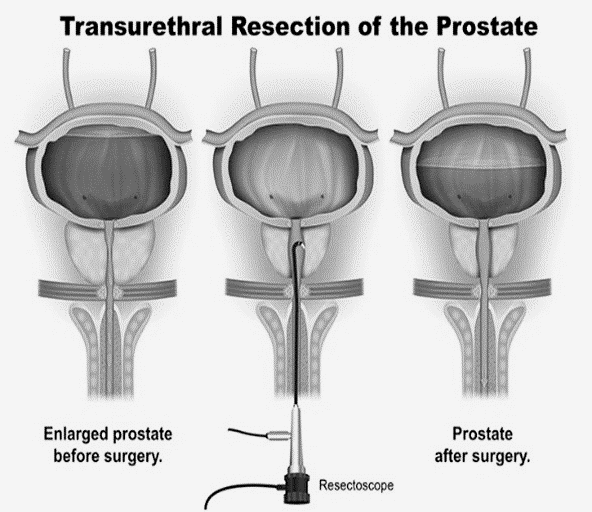
Left panel (Before TURP): Enlarged prostate compressing urethra (BPH)
Right panel (After TURP): Resected prostatic cavity with free urethral channel
Devices shown:
Monopolar resectoscope
Resection loop
Irrigation inflow/outflow
Foley catheter
Post-resection prostatic fossa
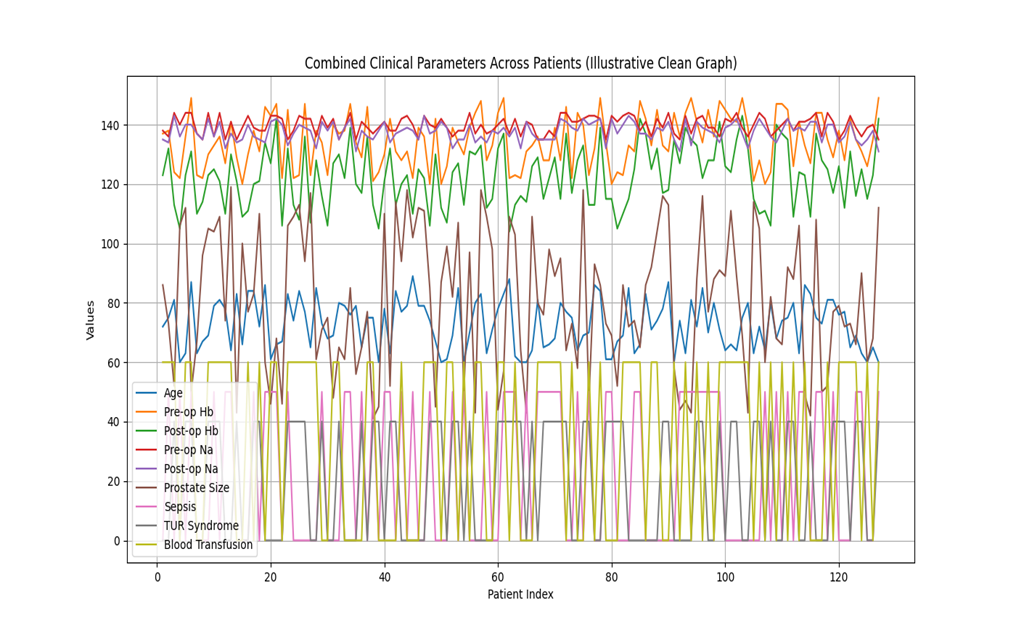
Patient Demographics, Pre- and Postoperative Outcomes in Transurethral Resection of the Prostate (TURP) for Benign Prostatic Hyperplasia
DISCUSSION :
Transurethral resection of the prostate (TURP) is an effective treatment option for a variable range of prostate sizes, including sizes above 80gms. The safety profile of this treatment is also satisfactory. Although a significant decline in hemoglobin values was observed with prostate sizes above 80gms, a corresponding increase in the requirement for blood transfusions or severe complications was not observed. Our results align with the existing literature, which recommends TURP as the preferred procedure over more invasive procedures, especially in resource-poor countries. Larger prostates have been treated historically by open prostatectomy. Still, there has been a higher morbidity rate associated with this surgical option of about 10-40%, along with increased chances of other complications like higher blood loss, postoperative sepsis, and bladder perforations- all leading to an extended hospital stay. In contrast, our study shows that TURP maintains a complication rate below 20% even for larger prostates, with no significant increase in major postoperative events such as TUR syndrome, sepsis, or bladder perforation. This reinforces TURP's reputation as a less invasive, safer, and more manageable option than open prostatectomy for large prostate volumes. Recent advances in the field have led to Holmium Laser Enucleation of the Prostate (HOLEP) being recognized as an effective treatment for larger prostates. Although it is gaining traction in first-world
countries, it may not be a feasible option in resource-poor countries due to the specialized equipment and training required, making it less cost-effective. Monopolar TURP, on the other hand, is a widely accessible and well-established technique available in healthcare settings worldwide. It is logistically simpler and cost-effective, requiring basic standard urological equipment and training that is easily available in most resource-limited settings. Further economic considerations of monopolar TURP vs HOLEP include the reliance of HOLEP on laser technology, high maintenance costs, and the need for disposable use. Monopolar TURP, on the other hand, offers a low operational cost and presents an affordable alternative without compromising patient safety. This makes monopolar TURP a more accessible procedure for larger prostates, particularly in areas where healthcare budgets and technological resources are limited.
CONCLUSION :
Our findings support TURP as a safe and effective alternative to open prostatectomy for larger prostates with a favorable safety profile even for prostate sizes over 80 grams. Given its accessibility, lower morbidity compared to open surgery, and cost advantages over advanced techniques like HOLEP, monopolar TURP remains a highly viable solution for managing benign prostatic hyperplasia (BPH) in both well-resourced and resource-limited healthcare settings.
Limitations of the Study: Due to the retrospective nature of our study, we were unable to fully account for selection bias, as participants were included based solely on available hospital records. Additionally, some patients may have been lost to follow-up, while certain records may be incomplete. We also did not observe variables such as future recurrences or the long-term impact on patients' quality of life. To address these, we recommend conducting prospective studies or randomized controlled trials that take into account long-term outcomes, such as recurrence rates and quality-of-life measures, to confirm our findings.
Acknowledgement
The authors would like to thank all the participants for their valuable contribution to this study. There are no conflicts of interest to disclose, and no external funding was received for this research.
Authors' Contributions:
Irshad Khan: Contributed to study design, data collection, data analysis, and manuscript writing.
Sami Ul Haq: Assisted in data collection and analysis and contributed to the manuscript preparation.
Ghufran Ullah: Contributed to data analysis and manuscript review. Aziz Ul Wahab and Irshad Ahmad contributed to manuscript editing.
The authors acknowledge the assistance of the entire urology department Timergara Teaching Hospital, Dir Lower and Regional Head Quarter Hospital Skardu, for their support throughout the study
BIBLIOGRAPHY:
1. Oelke M, Bachmann A, Descazeaud A, Emberton M, Gravas S, Michel MC, et al. EAU guidelines on the treatment and follow-up of non-neurogenic male lower urinary tract symptoms, including benign prostatic obstruction. European urology. 2013;64(1):118-40.
2. Jiang Y-L, Qian L-J. Transurethral resection of the prostate versus prostatic artery embolization in the treatment of benign prostatic hyperplasia: a meta-analysis. BMC urology. 2019;19(1):1-8.
3. Muzzonigro G, Milanese G, Minardi D, Yehia M, Galosi AB, Dellabella M. Safety and efficacy of transurethral resection of prostate glands up to 150 ml: a prospective comparative study with 1 year of follow-up. The Journal of Urology. 2004;172(2):611-5.
4. Joshi H, De Jong I, Karmacharya R, Shrestha B, Shrestha R. Outcomes of transurethral resection of the prostate in benign prostatic hyperplasia comparing prostate size of more than 80 grams to prostate size less than 80 grams. Kathmandu University medical journal. 2014;12(3):163-7.
5. Sarma AV, Wei JT. Benign prostatic hyperplasia and lower urinary tract symptoms. New England Journal of Medicine. 2012;367(3):248-57.
6. Bachmann A, Muir GH, Wyler SF, Rieken M. Surgical benign prostatic hyperplasia trials: the future is now. Eur Urol. 2013;63(4):677-9.
7. Yucel M, Aras B, Yalcinkaya S, Hatipoglu NK, Aras E. Conventional monopolar transurethral resection of prostate in patients with large prostate (≥ 80 grams). Central European journal of urology. 2013;66(3):303-
8. de la Rosette JJ, Alivizatos G, Madersbacher S, Perachino M, Thomas D, Desgrandchamps F, et al. EAU Guidelines on benign prostatic hyperplasia (BPH). European urology. 2001;40(3):256-63.
9. Roehrborn CG, Bartsch G, Kirby R, Andriole G, Boyle P, De La Rosette J, et al. Guidelines for the diagnosis and treatment of benign prostatic hyperplasia: a comparative, international overview. Urology. 2001;58(5):642-50.
10. Committee APG. AUA guideline on management of benign prostatic hyperplasia (2003). Chapter 1: Diagnosis and treatment recommendations. The Journal of Urology. 2003;170(2):530-47.
11. Serretta V, Morgia G, Fondacaro L, Curto G, Pirritano D, Melloni D, et al. Open prostatectomy for benign prostatic enlargement in southern Europe in the late 1990s: a contemporary series of 1800 interventions. Urology. 2002;60(4):623-7.
12. Barba M, Leyh H, Hartung R. New technologies in transurethral resection of the prostate. Current opinion in urology. 2000;10(1):9-14.
13. Nouira Y, Kbaier I, Attyaoui F, Horchani A. How did the endoscopic video camera change our practice in transurethral resection of the prostate? A retrospective study of 200 cases. Journal of endourology. 2002;16(10):763-5.
14. Khan M, Nesbitt AL, Loganathan A, Antoniou S, Evans G, Smith P, et al. Comparing Outcomes of Transurethral Resection of the Prostate in Men with Greater Than or Less Than 100 cc Prostate Volume: A Single-Centre Study. Journal of Urological Surgery. 2021;8(2):92-7.
15. Chahal HS, Kaur S, Mittal V, Jaura M, Bansal N, Sharma S. Comparison of Outcome after Transurethral Resection of Small Versus Large Prostate in Benign Prostatic Hyperplasia.
16. Roehrborn CG. Benign prostatic hyperplasia: an overview. Reviews in urology. 2005;7(Suppl 9): S3.