Dermatoglyphics in Focus: Unraveling Fingerprint Pattern Relationships with Demographics, Genetics and Urban-Rural Variations in Medical Students of LUMHS, Jamshoro
- Nadia Aslam , Assistant Professor, Department of Forensic Medicine & Toxicology, Liaquat University of Medical and Health Sciences, Jamshoro, Sindh Pakistan.
- Aisha Khalid , Associate Professor, Department of Forensic Medicine & Toxicology, Liaquat University of Medical and Health Sciences, Jamshoro, Sindh Pakistan.
- Rizwana Khanzada , Medical Technologist, Department of Forensic Medicine & Toxicology, Liaquat University of Medical and Health Sciences, Jamshoro, Sindh Pakistan.
- Ishrat Bibi , Associate Professor, Department of Forensic Medicine & Toxicology, Liaquat University of Medical and Health Sciences, Jamshoro, Sindh Pakistan.
- Naseem Akhter , Senior Lecturer, Department of Forensic Medicine & Toxicology, Sindh Medical Karachi, Jinnah Sindh Medical University, Karachi, Sindh, Pakistan.
- Abdul Samad , Associate Professor, Department of Forensic Medicine & Toxicology, Liaquat University of Medical and Health Sciences, Jamshoro, Sindh Pakistan.
- Marvi , Associate Professor, Department of Pharmacology, Faculty of Pharmacy and Health Sciences, University of Baluchistan, Quetta, Pakistan
Article Information:
Abstract:
Background of the study: Dermatoglyphics deals with the study of epidermal ridge patterns on fingers and palms that are formed during fetal life and remain unchanged throughout life. As these patterns are genetically determined, they are widely used in population studies, forensic identification and genetic research. Aims of the study: To evaluate the distribution of fingerprint patterns among undergraduate medical students and to assess their association with demographic factors, genetic background and urban–rural residence. Methodology: A cross-sectional analytical study was conducted from April 2025 to September 2025, among 500 MBBS students at Liaquat University of Medical and Health Sciences (LUMHS), Jamshoro. Fingerprints from all ten digits (5,000 fingerprints) were collected using the ink method and classified into loop, whorl, arch and composite patterns. Data were analyzed using SPSS v22 and results were expressed as frequencies and percentages. Results: Loop patterns were the most frequent (59.16%), followed by whorls (34.30%), arches (4.26%) and composite patterns (2.24%). The predominance of loop patterns was consistent across gender, age, ethnicity and area of residence, with only minor demographic variations observed. Conclusion: Loop fingerprint pattern is most frequent among medical students of LUMHS, showing strong genetic stability of dermatoglyphic traits. Demographic and urban/rural factors showed minimal effect, supporting the usefulness of dermatoglyphics as a non-invasive tool for population and genetic studies.
Keywords:
Article :
INTRODUCTION:
Fingerprint patterns are mainly formed by the growth of the ridges on the skin. This fingerprint pattern, which is particular to each individual, is permanently recorded in the dermis of our fingers, palms, toes and soles during early fetal growth between 13 and 19 weeks of pregnancy [1-3]. The fingerprint pattern is an inherited characteristic, does not change remarkably after birth and is not influenced by environmental factors experienced after birth but is affected genetically. As a result, the field of dermatoglyphics (the study of fingerprints) has an accepted history of use as a tool in anthropology, forensic science, genetics and biomedical research [4].
The three major types of fingerprints are Loop, Whorl and Arch. Each has several subcategories as well. These variations have been associated with genetic inheritance, chromosomal aberrances and specific medical conditions [5,6]. Many researches have established associations between dermatoglyphic patterns and conditions/diseases such as diabetes or high blood pressure, schizophrenia, congenital heart diseases and Down syndrome, thus showing the usefulness of dermatoglyphics as a non-invasive screening/predictive tool.
In addition to physical characteristics such as age and sex, demographic factors such as gender and ethnicity also effect the distribution of fingerprints [7]. Moreover, most dermatoglyphic traits are ultimately due to the genes we inherit from our ancestors through family and genealogical research and fingerprint patterns in families tend to be similar. Environmental factors also play an indirect role in the distribution of fingerprints and methodology of demographic factors due to the effects of genetic pooling, population structure and lifestyle related to geographic differences [8-10].
Countries that have experienced rising interest in studies of their family histories; yet little is known about how much homogeneity there due to geographic regions across all members of particular families (individuals) who reside within these areas [11].
There is currently only little knowledge regarding the extent to which physical variations between countries affect individuals who do share common ancestry [12-14]; however, developing this understanding has remarkable implications for population profiling, genetic research and predicting future health risks among populations that effect these patterns.
This study is used to evaluate the relationships between dermatoglyphics and demographics, genetics and geographic location by examining the associations in these areas based on my student (MBBS) background in order to provide useful insight into both the physical characteristics of patterns and their relevance at the population level.
OBJECTIVES:
The main objective of the study is to establish a comprehensive analysis of dermatoglyphic fingerprint patterns in respect of their association with demographic factors, with regard to age, gender, occupation and ethnicity and to give baseline data for the future estimation of dermatoglyphic fingerprints as predictors of dermatoglyphics and ultimately produce future data for the purpose of genetic research/forensics.
METHODOLOGY::
A cross-sectional analytical study was conducted from April 2025 to September 2025, to evaluate the association between dermatoglyphics, demographic, urban/rural and genetic variables. The participants in this study were 500 MBBS students (Selected using a Non-Probability Convenience Sampling Method) who attended Liaquat University of Medical and Health Sciences in Jamshoro, Pakistan. Dermatoglyphics give a good indication of an individual’s genetics. Participants (Male and Female) of all ages were eligible for this study who signed the informed consent form and did not have any abnormalities or damaged digits.
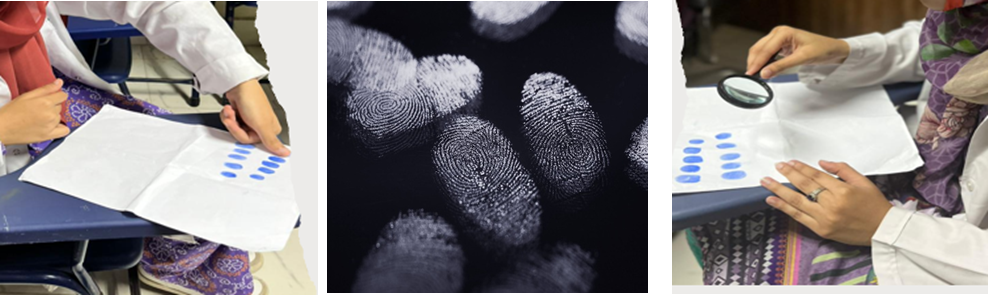
Data was collected by a structured questionnaire to collect the demographic characteristics of the participants. Data was collected on many variables i.e. Age, Sex, Ethnicity, Occupation and the area of residence (Urban vs. Rural). Data was taken on their family Background (ancestors) to reflect possible genetic Influences. Ten digits were collected for every participant using an Ink Method of collecting and taking fingerprints. After collection, the data was analyzed by applying the general guidelines for classifying fingerprints as per recognized dermatoglyphic classifications.
STATISTICAL ANALYSIS:
SPSS V22 was used to analyze information that was collected through MS Excel. Descriptive statistics were summarized for demographic data and distributions of fingerprint types. Comparative analyses of fingerprint types were performed to determine variations by gender and place of residence
(urban/rural). Results of the analyses are presented using either graphical or tabular formats. A p-value < 0.05 was taken as statistical significance.
RESULTS:
The results showed the dermatoglyphic patterns among 500 undergraduate medical students at Liaquat University of Medical and Health Sciences (LUMHS), Jamshoro. Five thousand (5,000) fingerprints were collected for this study. The majority of the participants in the study were aged between 18 to 20 years, followed by those aged between 21 to 23 years and between 24 to 26 years old. Males outnumbered females in the total sample (51.8%).
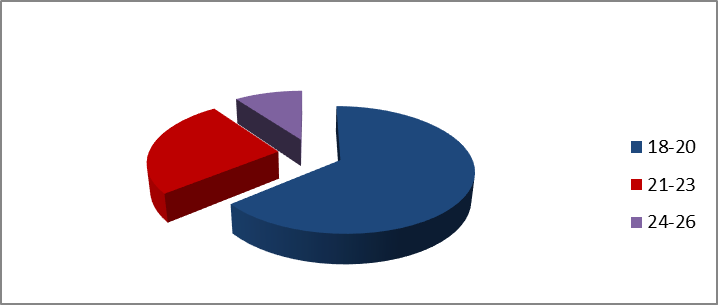
Figure-1: Showed the age wise distribution of the participants no intra-abdominal extension (Fig 2).
The sample has diverse ethnic representation of the overall medical student population among LUMHS, Jamshoro. Most of the participants had an urban background than rural Descriptive statistics were applied to summarize demographic variables and fingerprint pattern distribution.
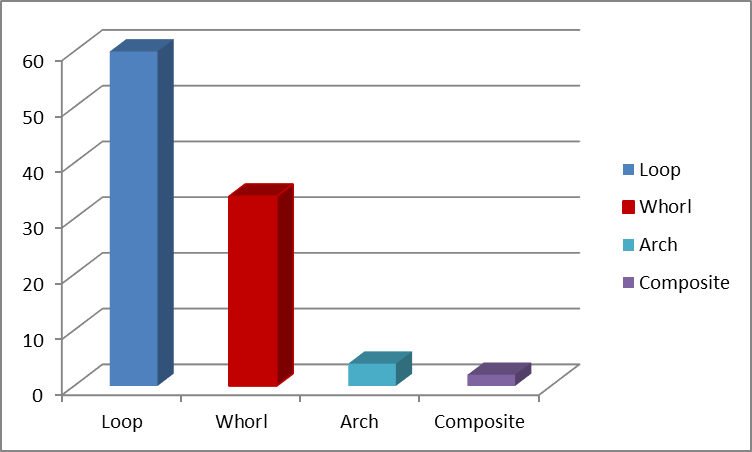
Figure-2: Showed the finger prints type of the participants
In this study, loop patterns of fingerprints occurred much more frequently than arch or composite patterns. The analysis of gender continued to show a very pronounced predominance of loop patterns in both men and women medical students although males had more frequency of whorl patterns as compared to females, who were again predominately looped. Touching on arch and composite patterns, there was very less difference between the two genders, indicating that gender have little effect on these two types of fingerprints.
As far as area of residence, loop patterning continued to be the most common type for both rural and urban youth. While urban students have little increase of whorl patterned fingers, the rural students showed a consequential increase in arch or composite patterning. It indicates that area of residence has a limited effect on the fingerprint characteristics of the students obtained in this study.
Table-1: Showed the distribution of fingerprint patterns according to area of residence (n = 5,000 fingerprints)
|
Fingerprint Pattern |
Urban Participants n (%) |
Rural Participants n (%) |
Overall Observation |
|
Loop |
Predominant |
Predominant |
Higher frequency in urban population |
|
Whorl |
Second most common |
Second most common |
More frequent in urban participants |
|
Arch |
Less frequent |
Slightly higher |
Marginally increased in rural population |
|
Composite |
Least common |
Least common |
Minimal variation between groups |
Fingerprint patterns of different ethnic origins have the same predominant type of loops, regardless of ethnicity and the second most common pattern type of whorls, and the third type of arches and the fourth type of composites. The patterns for whorls and arches showed minor inter-ethnic variations. Moreover, the overall distribution of the dermatoglyphics remains the same; establishing that fingerprints are genetically determined by ethnicity and showed unique population characteristics.
DISCUSSION :
The present study evaluated the distribution of dermatoglyphic fingerprint patterns and their link with demographic characteristics, genetic background and urban–rural residence. The findings showed a clear predominance of loop patterns, followed by whorls, while arches and composite patterns were least frequent. This overall distribution aligns with classical dermatoglyphic literature, which consistently reports loops as the most common fingerprint pattern
among different populations worldwide [15,16]. Many researches have documented that loop patterns in approximately 60–70% of fingerprints, supporting the results of the current study [17-19].
Gender-wise analysis showed that loop patterns were the most common among both males and females, with whorl patterns occurring more frequently in males. Similar observations have been reported in another study conducted in South Asian and Middle Eastern populations, where males exhibited a higher tendency toward whorl patterns, reflecting sex-linked genetic influences on ridge formation [20]. On the other side, arches and composite patterns exhibited minimal gender variation, suggesting that these patterns may be less influenced by sex-related genetic factors.
In many researches, loops are the predominant type but whorls were found to be more frequent among urban participants, while arches were found to be slightly more frequent among rural participants [21,22]. Differences such as these have previously observed in previous research which evaluated that demographic structure, genetic mixing and marriage practices cause demographic distinctions between urban and rural caused more likelihood that specific genetic factors will influence variation in dermatoglyphic traits [23]. The influence that genetic background and ethnic background both showed
differences in the frequency of different ethnic groups. Numerous previous studies have shown that families are clustered together having similar patterns
indicating the low probability of random events causing clustering of families having similar dermatoglyphic patterns [24, 25]
These findings add to the body of evidence that fingerprint patterns are absolutely s related to both Demographic Factors and Genetic Factors but that there may also be secondary modifying Environmental Factors that influence such as Urban/Rural residence.
This study contributes additional information on a regional basis to the growing body of literature demonstrating that dermatoglyphics can be used as a non-invasive, inexpensive tool for Population studies and great addition to future Predictive Health Research.
CONCLUSION :
This research demonstrated that dermatoglyphics can give an important biological marker of the demographic characteristics and genetic ancestry of human beings. The most frequently occurring fingerprints were loops; then whorls, arches and composites. In general, all groups had similar design and frequencies of the various types of fingerprints. Significant differences were showed in the relationship between fingerprints and gender, race and genetic background; this is due to strong genetic contribution to the patterns found on fingerprints. Small differences in frequency pattern between urban and rural populations showed that the effects of population structure and geographical residence are relatively small.
BIBLIOGRAPHY:
1. Balazs I, Baird M, Clyne M, Meade E. Human population genetic studies of five hypervariable DNA loci. Am J Hum Genet. 1989;39:182–190.
2. Blangero J, Williams JT, Almasy L, Williams-Blangero S. Mapping genes influencing human quantitative trait variation. In: Crawford MH, editor. Anthropological genetics. New York: Cambridge University Press; 2007. p. 306–334.
3. Chakraborty R, Deka R, Jin L, Budowle B. Allele sharing at six VNTR loci and genetic:;: distances among three ethnically defined human populations. Am J Hum Biol. 1992;4:387–397.
4. Crawford MH. The use of genetic markers of the blood in the study of the evolution of human populations. In: Crawford MH, Workman PL, editors. Methods and theories of anthropological genetics. Albuquerque: University of New Mexico Press; 1973. p. 19–38.
5. Zariwala R, Garg S, Khakhkhar T. A study of co-relationship among dactylography and blood groups among second-year undergraduate students: a pilot project. J Forensic Med Toxicol. 2022;39(1):31–36. doi:10.5958/0974-4568.2022.00007.
6. Kalyan Varma R, Anand VS, Suresh AV. A study on relationship between sex and patterns of fingerprints and distribution of fingerprint patterns among GITAM medical students. Int J Acad Med Pharm. 2023;5(4):1514–1517. doi:10.47009/jamp.2023.5-301.
7. Aamir Y, Masood R, Irshad N, Malik R, Farid N, Shahab MA. Relationship between pattern of fingerprints and blood groups. Pak J Med Health Sci. 2022;16(9):698–700. doi:10.53350/pjmhs22169698.
8. Kukadiya U, Trivedi P, Rathva A, Lakhani C. Study of fingerprint patterns in relation to blood group and gender in Saurashtra region. Int J Anat Res. 2020;8(2):7564–7567.
9. Sarfraz NJ. Adermatoglyphia: barriers to biometric identification and the need for a standardized alternative. Cureus. 2019;11(2):e4040.
10. Rastogi A, Bashar MDA, Sheikh NA. Relation of primary fingerprint patterns with gender and blood group: a dermatoglyphic study from a tertiary care institute in Eastern India. Cureus. 2023;15(5):e38459.
11. Temaj G. Application of dermatoglyphic traits in population variation study. Acta Morphol Anthropol. 2021;28(3–4):123–129.
12. Shrivastava M, Jain AP, Agarwal R, Vishwakarma AK. Dermatoglyphic pattern in relation to ABO and Rh blood group among medical students. J Forensic Med Toxicol. 2023;40(1):49–52.
13. Aziz MA, Dine FMMBE, Saeed NMM. Cheiloscopy and dactylography in relation to ABO blood groups: Egyptian vs Malay populations. Int J Bus Hum Soc Sci. 2019;13(2):135–140.
14. Crawford MH, Workman PL, editors. Current developments in anthropological genetics. Albuquerque: University of New Mexico Press; 1973.
15. Deka R, Deroo S, Yu LM, Ferrell RE. Variable number of tandem repeat (VNTR) polymorphism at locus D17S5 (YNZ22) in four ethnically defined human populations. Hum Genet. 1992;90:86–90.
16. Jeffreys AJ, Wilson V, Thein SL. Individual-specific “fingerprints” of human DNA. Nature. 1985;316:76–80.
17. Shrestha S, Malla BK. Study of fingerprint patterns in population of a community. J Nepal Med Assoc. 2019;57(219):293–296.
18. Patel P, Christian N, Chauhan DJ, Varadiya A. Evaluation of correlation between blood group system and fingerprint classification system in both female and male. Int J Creat Res Thoughts. 2021;9(4):2320–2882.
19. Ekanem AU, Abubakar H, Dibal NI. A study of fingerprints in relation to gender and blood group among residents of Maiduguri, Nigeria. IOSR J Dent Med Sci. 2014;13(8):18–20.
20. Aziz I, Tanoli AA, Rasheed A, Ullah F, Irshad N, Samad A. Assessing the relationship between fingerprints and lip print patterns with gender and blood group at a tertiary care hospital. Ann Punjab Med Coll. 2023;17(4):558–561.
21. Cummins H, Midlo C. Palmar and plantar epidermal ridge configurations (dermatoglyphics) in European-Americans. Am J Phys Anthropol. 1926;9(4):471–502.
22. Gowri SR, Venkatesh G. To assess the relation between fingerprint pattern and blood groups. Indian J Clin Anat Physiol. 2019;6(4):488–491.
23. Fayrouz INE, Farida N, Irshad AH. Relation between fingerprints and different blood groups. J Forensic Leg Med. 2012;19(1):18–21.
24. Cummins H, Midlo C. Fingerprints, palms and soles: an introduction to dermatoglyphics. Philadelphia: Blakiston Company; 1943.
25. Holt SB. The genetics of dermal ridges. Springfield (IL): Charles C Thomas; 1968.