Relation of Fingerprint Patterns with Gender, Ethnicity and Blood Groups: A Dermatoglyphic Study in Medical Students of LUMHS, Jamshoro
- Abdul Samad , Associate Professor, Department of Forensic Medicine & Toxicology, Liaquat University of Medical and Health Sciences, Jamshoro, Pakistan
- Arjun , Undergraduate Student, Department of Forensic Medicine & Toxicology, Liaquat University of Medical and Health Sciences, Jamshoro, Pakistan.
- Tayaba Noor , Undergraduate Student, Department of Forensic Medicine & Toxicology, Liaquat University of Medical and Health Sciences, Jamshoro, Pakistan.
- Sundas , Undergraduate Student, Department of Forensic Medicine & Toxicology, Liaquat University of Medical and Health Sciences, Jamshoro, Pakistan.
- Iftikhar Lakho , Undergraduate Student, Department of Forensic Medicine & Toxicology, Liaquat University of Medical and Health Sciences, Jamshoro, Pakistan.
- Muhammad Ali , Undergraduate Student, Department of Forensic Medicine & Toxicology, Liaquat University of Medical and Health Sciences, Jamshoro, Pakistan.
Article Information:
Abstract:
Background: Dermatoglyphics is the information of ridge patterns on the fingers and palm that produce a permanent mark throughout life. These ridge patterns are genetically determined as they develop during fetal development. Because of these unique characteristics of fingerprints pattern are used for personal identification, population studies and in the discipline of anthropology. Objectives: This study examine the distribution of fingerprint patterns of undergraduate medical students and the possible relationship between those patterns and the two demographic variables of gender, age, residence and ethnicity. Methodology: A cross-sectional analysis was conducted including 500 undergraduate medical students involved in this. The study conducted from 12.08.2025 to 11.11.2025. Each participant's five fingerprints from each hand (a total of 2500) were collected and analyzed. Four standard ridge pattern types i.e. loop (70 percent), whorls (20 percent), arches (6 percent) and composites (4 percent) were included. Data were analyzed and the frequency of each pattern type included found in the study. Results: Loop patterns were the commonest (59.16%), followed by whorls (34.30%), arches (4.26%) and composite patterns (2.24%), with least variation across demographic groups. Conclusion: Loop fingerprints predominated in the study population and dermatoglyphic patterns demonstrated genetic stability with no significant influence of demographic or educational factors.
Keywords:
Article :
INTRODUCTION:
Dermatoglyphics is the scientific study of the ridges on your fingers and palms form and it is still an essential aspect of criminal investigations and showed person's identity through their fingerprints [1,2]. The ridges that your fingerprints are mainly made of are created before birth and do not change over entire life, so they are very consistent forms of identifying anyone. The four main types of fingerprints include loops, whorls, arches and a very little number of composite patterns [3]. While genetics showed the main role in how your fingerprints develop, there can also be very little environmental effects on fingerprint’s pattern [4-6].
Many researchers who studied dermatoglyphics have begun to study other potential correlations between fingerprints and biological characteristics such as sex, ABO and Rh blood type and ethnicity, but researchers have evaluated inconsistent findings [7]. However, there are still many literature gaps in this topic on the distribution of fingerprints from ethnic groups within the medical student population in Pakistan [8-10]. Although these contributions have been included in the literature, there is still a large amount of missing data about the distribution of fingerprint patterns of various types based on ethnicity, especially in the medical student population in Pakistan [11-13]. This missing data becomes apparent when looking at Liaquat University of Medical and Health Sciences (LUMHS), Jamshoro, as the medical undergraduates came from a vast variety of different ethnic groups from Sindh. The interdisciplinary significance of dermatoglyphics, such as their relation to genetics, forensic identification and population anthropology showed that regionally and ethnically relevant data must be available.
This study investigated the different fingerprint pattern types and their relationships with gender, self-reported ethnicity and ABO/Rh blood group types in medical students at LUMHS Jamshoro. This study is also demonstrated the unique forensic and biometric reference data by evaluating the understanding of variations in dermatoglyphics throughout the entire population of Pakistan.
Objectives
The main objective of this study is to determine different types of primary fingerprint patterns i.e. loops, whorls, arches and composite occurred in medical students from Liaquat University of Medical and Health Sciences (LUMHS) in Jamshoro and to evaluate any differences in pattern mainly on sex, self-reported ethnicity and ABO/Rh blood group. the study is used to establish whether a combination of demographic and biological variables (especially ethnicity and blood group) give additional predictive value when looking for specific characteristics associated with fingerprint patterns. Thus, the study is used to provide region-based dermatoglyphic data that can be used for forensic identification and biometric research.
METHODOLOGY:
The is a cross-sectional study that take place at Liaquat University of Medical and Health Sciences (LUMHS) in Jamshoro and has mainly MBBS students who are currently enrolled. The study conducted from 12.08.2025 to 11.11.2025 and has 500 participants in total and stratified random sampling was used to select participants within each stratum using a simple random sampling approach. Inclusion criteria for eligible participants who are enrolled in an MBBS program, between 18 and 26 years of age have their ABO and Rh blood types known (recorded or determined during the study) and present no, injuries or medical problem that affect their ability to produce unique ridge patterns. Participants after study enrollment, including but not limited to age, gender, self-reported ethnicity. The demographic information of the participant’s fingerprints was collected using the standard ink method and digital fingerprint collection devices. After collecting the fingerprints, the examiner evaluated each fingerprint’s patterns (loops, whorls, arches and composites) according to standard dermatoglyphic criteria.
Ethical Considerations
The study was approved by the Research Ethics Committee (REC) of Liaquat University of Medical and Health Sciences (LUMHS), Jamshoro.
Statistical Analysis
Data was analyzed utilizing statistical software programs SPSS 22. Descriptive statistics showed an overview of demographic characteristics and their association with fingerprint patterns. Chi-square test was used to compare fingerprint pattern types with the mentioned categorical variables (gender, ethnicity, ABO blood group and Rh factor). Multivariable logistic regression was applied to establish independent predictors of fingerprint pattern types, while also controlling for possible confounding variables. A p-value of less than 0.05 will be used to indicate statistical significance.
RESULTS:
In total, 500 participants were included in the study. Of these, 265 (53%) were male and 235 (47%) were female, showing balanced distribution of males versus females. The 21–23 years age group for the most participants included in the analysis, with 330 persons (66%), followed by the 18–20 years age group, with 143 participants (28.6%). Finally, only 27 participants (5.4%) were in the 24–26 years age group. Most of the participants included in this were undergraduate medical students, who were recruited from various years and of both urban and rural origin.
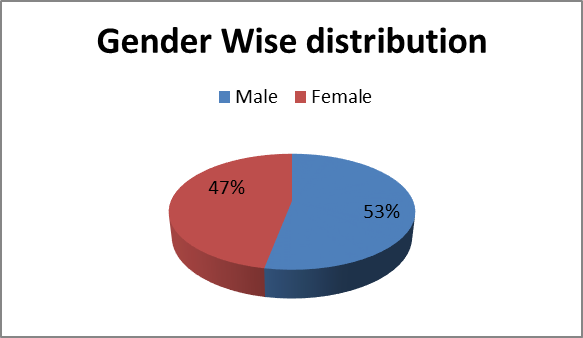
Figure 1: Showed the Gender Wise Distribution of the Participants
In the study, there were 5,000 total fingerprints added for pattern distribution (10 digits per participant). The analysis showed that loop patterns was the most significant number of fingerprints (i.e., 2,958 = 59.16% of all fingerprints). The second most significant was whorl patterns (i.e., 1,715 = 34.3%). Arch patterns were the third most common (i.e., 213 = 4.26%), while the least common number of patterns composite patterns were the composite patterns (i.e., 112 = 2.24%).
Table 1: Showed the Overall Distribution of Fingerprint Patterns (N = 5,000 Fingerprints)
|
Fingerprint Pattern |
Number of Fingerprints |
Percentage (%) |
|
Loop |
2,958 |
59.16 |
|
Whorl |
1,715 |
34.30 |
|
Arch |
213 |
4.26 |
|
Composite |
112 |
2.24 |
|
Total |
5,000 |
100 |
The predominance of loop patterns was consistent in both hands and all digits. In contrast, whorl patterns demonstrated moderate distribution in all digits; while arch and composite patterns had limited occurrence.
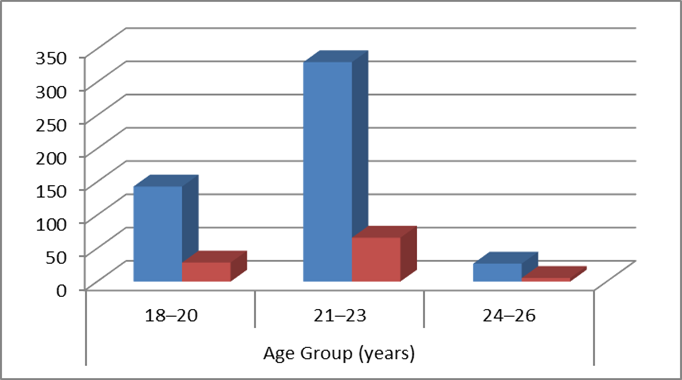
Figure 2: Showed the Age Wise Distribution of the Participants
When comparing the patterns of fingerprints by gender, loop fingerprints were commonest in both genders than any other pattern type; however, males had a higher pattern of whorl fingerprints and females had a higher percentage of loop fingerprints.
Table 2: Showed the Gender-Wise Distribution of Fingerprint Patterns
|
Fingerprint Pattern |
Males |
Females |
Observations |
|
Loop |
Common |
More common |
Higher proportion in females |
|
Whorl |
More frequent |
Less frequent |
Slight male predominance |
|
Arch |
Rare |
Rare |
No significant difference |
|
Composite |
Least common |
Least common |
Minimal variation |
In terms of geographic location, individuals who lived in urban locations showed a greater frequency of loop and whorl fingerprint patterns than those who lived in rural locations who had a slightly greater prevalence of arch fingerprint patterns; however, the difference was not notably large. Similarly, comparisons of populations by ethnicity resulted in similar overall trends across groups; all ethnic groups had a predominance of loops in their fingerprint patterns, which suggests that ethnicity does not appreciably affect the distribution of basic fingerprint patterns.
Table 3: Showed the Distribution of Fingerprint Patterns According To Area of Residence (N = 5,000 Fingerprints)
|
Fingerprint Pattern |
Urban Participants n (%) |
Rural Participants n (%) |
Overall Observation |
|
Loop |
Predominant |
Predominant |
Higher frequency in urban population |
|
Whorl |
Second most common |
Second most common |
More frequent in urban participants |
|
Arch |
Less frequent |
Slightly higher |
Marginally increased in rural population |
|
Composite |
Least common |
Least common |
Minimal variation between groups |
There was no statistically significant association between fingerprint patterns and the occupation of the person or student’s year of study. The overall consistency of the dermatoglyphics pattern between different demographic variables validates genetic stability of fingerprint characteristics.
DISCUSSION:
This research provides detail examination of dermatoglyphics in 500 undergraduate medical students, adding important information about the distribution of fingertip patterns according to various demographic factors, including age, sex, place of residence and race [14-16]. The results also confirm prior studies that show that fingertip patterns develop according to genetic influences are stable over time and will show little variation due to either environmental factors or the educational experience of individuals.
Within this sample, when examining individual digits, it showed that individuals have a majority of loops followed by whorls, while very few had either arches or composite patterns. This finding suggested that like many previous dermatoglyphic studies; the majority of the population are typically possessing one dominant fingerprint type on most digits [17]. This type of consistency showed the influence of genetics on ridge pattern formation during embryo development
These results with regard to variation of fingerprint patterns between males and females revealed that males and females have the majority of loops per gender; however, males were more dominant with respect to whorls while females have a greater quantity of loops [18-19]. These gender-based differences do not provide substantial evidence regarding sexual dimorphism in fingerprints and therefore do not imply effect of gender on the presence or absence of a specific fingerprint.
Data compiled based on place of residency demonstrated significant differences between the two groups from urban and rural areas. Urban participants had more loops and whorls, while rural participants had more arches. These variations were minimal with previous studies of rural and urban populations have showed these differences due to ethnicity and it was attributed to population heterogeneity [20-24]. Because the pattern of ridge type (epidermal status) forms during fetal life and does not change after birth, environmental differences after birth (such as education, lifestyle, or residence) did not have a major influence on fingerprint ridge types.
With respect to ethnicity, the pattern of fingerprint patterns was similar within groups of each ethnic background, with most of the dominant patterns being loops in each of the ethnic groups, which supports prior research demonstrating that only small differences exist from one ethnic group to another regarding fingerprint sub type and that loops, whorls and arches are found evenly distributed throughout the study [25,26]. Also, since there is no correlation between fingerprint ridge pattern and either the year of study or the occupation of individuals studied, it can be inferred that the development of dermatoglyphics is biologically stable and that educational experience did not affect the development of fingerprint’s type.
The consistent distribution of fingerprint patterns regardless of demographics demonstrated the power of dermatoglyphics in both forensic identification as well as anthropological research. However, the predominance of loop patterns with greater than 90% of all fingerprints, together with least effect of sex, geographic location, ethnicity or education on these trends supported the genetic basis and long-lasting nature of fingerprint features. These results showed that dermatoglyphic analysis can mainly be useful for population studies and biometric purposes where uniformity of features is critical [27-29].
The study demonstrated that fingerprints are a genetically based, biological marker that has the potential for population-based relationships. Moreover, dermatoglyphics is not as much reliable to replace established methods of forensic or serological identification, the overall results of this study support it as reliable noninvasive methods of forensic identification and anthropological research
CONCLUSION:
The present study demonstrates that the most of our participants had loop fingerprints, which were followed by whorls. There were very little cases of either arches or composites as well. The data evaluated the same results over all 10 fingers and among most of our subjects, showed that there is a common trend in the population for these fingerprint types. There were no statistically significant associations found between fingerprint type with any of the year of exam, occupation, or race/ethnicity. The fingerprint results from our group were consistent, thus showing evidence that fingerprints are reliable biological markers. This indicate that dermatoglyphic studies has valuable evidence for use in forensic investigation, anthropology and biometrics.
BIBLIOGRAPHY:
1. Zariwala R, Garg S, Khakhkhar T. Astudy of co-relationship among dactylography and blood groups among second year undergraduate students–A pilot project. Journal of Forensic Medicine and Toxicology. 2022 Aug; 39(1): 31-6. doi: 10.5958/0974-4568.2022.0 0007.
2. Kalyan Varma R, Anand VS, Suresh AV. A study on relationship between the sex and patterns of finger prints and distribution of patterns of fingerprints among gitam medical students. International Journal of Academic Medicine and Pharmacy. 2023 Sep; 5(4): 1514-7. doi: 10.47009/jamp. 2023.5-301
3. Aamir Y, Masood R, Irshad N, Malik R, Farid N, Shahab MA. Relationship between Pattern of Fingerprints and Blood Groups. Pakistan Journal of Medical & Health Sciences. 2022Nov; 16(09):698-700.doi: 10.53350/pjmhs22169698.
4. Králík M, Polcerová L, Čuta M. Sex differences in frequencies of dermatoglyphic patterns by individual [1][2][3][4] References Iqbal F et al., DOI: https://doi.org/10.54393/pjhs.v5i06.1667Fingerprint patterns and gender association
5. PJHS VOL. 5 Issue. 6 June 2024 Copyright © 2024. PJHS, Published by Crosslinks International Publishers117ngers. Annals of human biology. 2019 Apr; 46(3): 231-45.
6. Kukadiya U, Trivedi P, Rathva A, Lakhani C. Study of fingerprint patterns in relationship with blood group and gender in saurashtra region. International Journal of Anatomy and Research. 2020 Apr 1; 8(2): 7564–7.
7. Sarfraz NJC. Adermatoglyphia: barriers to biometric identification and the need for a standardized alternative. 2019 Feb; 11(2): e4040.
8. A.Rastogi, M. D. A. Bashar, and N. A. Sheikh, “Relation of Primary Fingerprint Patterns With Gender and Blood Group: A Dermatoglyphic Study From a Tertiary Care Institute in Eastern India,” Cureus 15, no. 5 (2023): e38459.
9. Temaj G. Application of dermatoglyphics traits of population variation study. Actamorphologicaet anthropologica. 2021; 28(3-4):123-9.
10. Shrivastava M, Jain AP, Agarwal R, Vishwakarma AK. Dermatoglyphic pattern in relation to ABO, RH blood group among medical students. Journal of Forensic Medicine and Toxicology. 2023 May; 40(1):49-52.
11. Aziz MA, Dine FMMBE, Saeed NMM. Cheiloscopy and Dactylographyinrelation to ABO blood groups: Egyptian vs. Malay Populations. International Journal of Business, Human and Social Sciences. 2019; 13(2): 135-40.
12. Magaji H, Musa M, Badamasi I. Relationship between nger print patterns with blood group and genotype among basic medical science, students of Bayero University, Kano. Bayero Journal of Pure and Applied Sciences. 2020 Dec; 12(2): 182-90.
13. Abbasi MH, Mengal MA, Muhammad Akhtar Khan RMA, Habib H, Bhatti YA. Comparative study of dactylography among the students of Avicenna Medical College Lahore. Pakistan Journal of Medical and Health Sciences. 2012 Jun; 6(2): 362-265.
14. Eboh DE. Fingerprint patterns in relation to gender and blood group among students of Delta State University, Abraka, Nigeria. Journal of experimental and clinical Anatomy. 2013 Jul; 12(2): 82-6.
15. Galbally J, Cepilovs A, Blanco Gonzalo R, et al. A large scale operational study of fingerprint quality and demographics. arXiv. 2024 Sep ; 2409. 19992.
16. Rastogi A, Bashar MA, Sheikh NA. Relation of primary fingerprint patterns with gender and blood group: a dermatoglyphic study from AIIMS Patna. Cureus. 2021
17. Altayar MA, Alqaraleh M, Alzboon MS, Almagharbeh WT. AI Driven fingerprint blood group correlation study. arXiv. 2025 Jun; 2506.01069.
18. Buzdar ZA, Murad T, Ali M, Hammad M. An effort to ascertain blood group types from fingerprint patterns and gender. BMC J Med Sci. 2025;6(1):84 88.
19. Iqbal F, Alam N, Yasmin RS, Khattak MA, Farid N, Aziz I. Pattern of fingerprints and its association with gender among medical students at Peshawar Medical College. Pak J Health Sci. 2024;5(6):114 117.
20. Ansari H, Ansari MF, Das M. Dermatoglyphics and blood group relationship in Pakistani medical students. Asian J Med Sci. 2023;14(12):82 85. \
21. B. T. Johnson and J. A. J. M. Riemen, “Digital Capture of Fingerprints in a Disaster Victim Identification Setting,” Forensic Sciences Research 4, no. 4 (2019): 293–302.
22. H. Cummins and C. Midlo, “Palmar and Plantar Epidermal Ridge Configurations (Dermatoglyphics) in European-Americans,” American Journal of Physical Anthropology 9, no. 4 (1926): 471–502.
23. M. Gowri S R and V. G, “To Assess the Relation Between Finger Print Pattern and Blood Groups,” Indian Journal of Clinical Anatomy and Physiology 6, no. 4 (2019): 488–491.\
24. I.N. E. Fayrouz, N. Farida, and A. H. Irshad, “Relation Between Fingerprints and Different Blood Groups,” Journal of Forensic and Legal Medicine 19, no. 1 (2012): 18–21.
25. I. Shrestha and B. K. Malla, “Study of Fingerprint Patterns in Population of a Community,” Journal of Nepal Medical Association 57, no. 219 (2019): 293–296.
26. P. Patel, N. Christian, D. J. Chauhan, and A. Varadiya, “Evaluation of Correlation Between Blood Group System and Fingerprint Classification System In both Female and Male,” International Journal of Creative Research Thoughts (IJCRT) 9, no. 4 (2021): 2320–2882.
27. A. U. Ekanem, H. Abubakar, and N. I. Dibal, “A Study of Fingerprints in Relation to Gender and Blood Group among Residents of Maiduguri, Nigeria,” IOSR Journal of Dental and Medical Sciences 13, no. 8 (2014): 18–20.
28. I.Aziz, A. A. Tanoli, A. Rasheed, F. Ullah, N. Irshad, and A. Samad, “Assessing the Relationship Between Fingerprints and Lip Prints Patterns With Gender and Blood Group at a Tertiary Care Hospital,” Annals of Punjab Medical College 17, no. 4 (2023): 558–561.