A Comparative Study of Dental Implant Survival Rates and Complications in Smokers, Smokeless Tobacco Users, and Non-Tobacco Users
- Noor ul Wahab , Professor / HOD Oral and Maxillofacial Surgery, Ziauddin University Karachi, Pakistan
- Saira Lone , Ex-House Officer, Department of Oral Surgery, Punjab Medical College, Faisalabad, Pakistan
- Irfan Qureshi , Prosthodontist, Diplomate, American Board of Oral Implantology/Implant Dentistry, Dr Irfan Qureshi’s Team of Professionals, Karachi Pakista
- Mehak Anis , Assistant Professor Department of Oral and Maxillofacial Surgery, Baqai Dental College Karachi
- Faisal Asghar , Assistant Professor Oral Medicine, Multan Medical and Dental College, Multan, Pakistan
- Rabail Khero , Lecturer, MD Resident Oral Pathology, Liaquat College of Medicine and Dentistry, Karachi, Pakistan
Article Information:
Abstract:
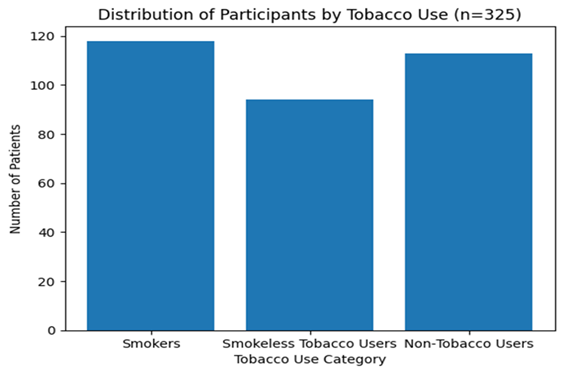
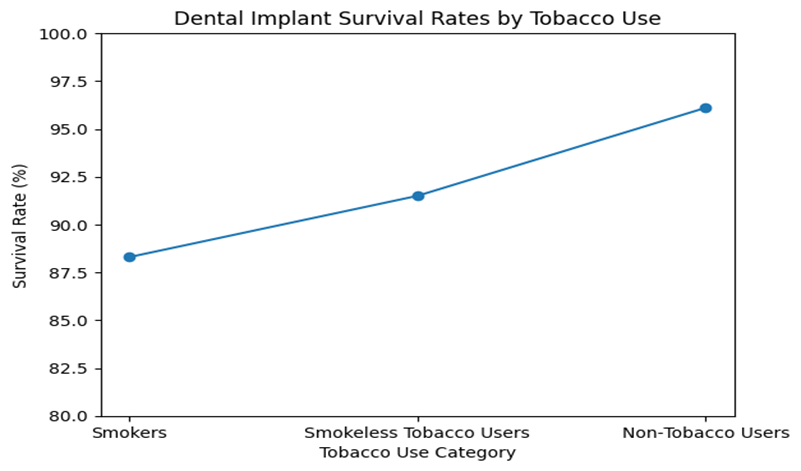
To evaluate dental implant survival rates and postoperative complications among smokers, smokeless tobacco users, and non-tobacco users, and to determine the impact of different forms of tobacco consumption on implant outcomes. Study Design: Observational comparative study. Place and Duration of Study: Conducted at Ziauddin Hospital Karachi from March 2023 to September 2025. Methodology: A total of 325 patients who underwent dental implant placement were included in the study. Participants were categorized into three groups based on tobacco use: smokers (n = 118), smokeless tobacco users (n = 94), and non-tobacco users (n = 113). Demographic characteristics, implant survival, peri-implant complications, and marginal bone loss were evaluated. Results: The mean age of participants was 46.9 ± 11.8 years, with males comprising 60.9% of the sample. Implant survival rates were highest among non-tobacco users (96.1%), followed by smokeless tobacco users (91.5%) and smokers (88.3%) (p = 0.032). Peri-implant mucositis occurred in 30.5% of smokers, 25.5% of smokeless tobacco users, and 15.9% of non-tobacco users (p = 0.041), while peri-implantitis was observed in 14.4%, 10.6%, and 5.3% of patients respectively (p = 0.038). Mean marginal bone loss was significantly greater in smokers (1.9 ± 0.7 mm) compared with smokeless tobacco users (1.5 ± 0.6 mm) and non-tobacco users (1.1 ± 0.5 mm) (p = 0.027). Conclusion: Tobacco use adversely affects dental implant outcomes, with smokers showing lower implant survival rates and higher peri-implant complications. Non-tobacco users demonstrated the most favorable implant outcomes, emphasizing the importance of tobacco cessation and careful patient counseling prior to implant therapy.
Keywords:
Article :
INTRODUCTION :
Dental implants are among the most dependable and acceptable treatment modalities for replacing missing teeth and restoring oral function and appearance [1]. Over the last several decades, there has been an impressive improvement in surgical methods, implant surface treatments, and the restoration of prosthetic bodies, leading to higher long-term survival rates. Vast clinical research has documented survival of implants up to 90-95% in five to ten years, and dental implants are therefore an optimal alternative to traditional dentures and fixed dental prostheses [2]. Though these are positive results, a number of patient-related and environmental factors could determine the success and survival of dental implants [3]. The process of implantation relies heavily on osseointegration, the direct structural and functional relationship between the implant surface and its environment. This process can be disrupted by a range of systemic and local factors, which may increase the risk of implant failure or complications. These include bad oral health, unmanaged systemic conditions like diabetes mellitus, periodontal conditions, poor bone mass and damaging lifestyle practices [4]. Preminent among them has been the tobacco use, which has been recognised to be one of the most important modifiable risk factors when it comes to dental implant success. The use of tobacco is one of the key areas of concern in the global population and has been linked with many negative outcomes for both oral and systemic health [5]. Smoking and the use of tobacco as snuff, chewing tobacco, gutka, naswar, and betel quid in various forms have been proven to have detrimental effects on the oral tissues. Tobacco has numerous toxic chemicals and nicotine that can cause debilitation of the blood, slow wound healing and immune response [6]. These effects may interfere with the healing process following the implant placement and expose the individual to complications [7]. There is a considerable amount of research on the effect of smoking on the results of dental implants. Several research studies have shown that the chances of implant failure among smokers are higher than those among non-smokers. Nicotine-induced vasoconstriction decreases blood flow to the surgical area, thereby restricting oxygen and nutrient delivery to the bones needed for normal healing and osseo-integration [8]. Moreover, smoking has been linked to enhanced marginal bone loss of implants, retarded soft tissue healing and higher rates of peri-implant inflammatory diseases that include peri-implant mucositis and peri-implantitis. Such complications may eventually reduce implant stability and lead to implant loss [9]. Moreover, smoking of tobacco may have deleterious effects on immune response and predispose to bacterial colonisation on the implant surfaces. Pathogenic bacteria with compromised host defence mechanisms can also contribute to the faster development of peri-implant disease [10]. Research has also indicated that smokers are more prone to accumulate more plaque and lack in oral hygiene behaviours, which also lead to the complications associated with implants. The adverse impact of smoking on the survivability of implants seems to be dose-dependent, as heavier smokers seem to have a much higher rate of failures in comparison to lightly smoking people[11-13].
Objective
To evaluate dental implant survival rates and postoperative complications among smokers, smokeless tobacco users, and non-tobacco users, and to determine the impact of different forms of tobacco consumption on implant outcomes.
METHODOLOGY:
This was a comparative observational study conducted at Ziauddin Hospital Karachi from March 2023 to September 2025. A total of 325 patients who had received dental implants were included in the study. Patients were recruited using a non-probability consecutive sampling technique. Patients aged 18 years and above who had received one or more dental implants for the replacement of missing teeth were included in the study. Patients with complete clinical records and a minimum follow-up period of six months after implant placement were also included. Patients with uncontrolled systemic diseases such as uncontrolled diabetes mellitus, immunocompromised conditions, or metabolic bone diseases were excluded. Patients with a history of head and neck radiotherapy, severe periodontal disease, or incomplete follow-up data were also excluded from the study.
Data collection
After obtaining ethical approval, patient data were collected from clinical records and through direct patient interviews. The demographic factors, such as gender and age, were captured. Data about tobacco use in terms of the form of tobacco used, the duration of use, and the frequency of use were recorded. The registered patients were grouped into three groups regarding their habits of tobacco use. The former group was made of cigarette smokers, the second category was smokeless tobacco users, including those who took gutka, naswar, or chewing tobacco, and the third category was non-tobacco users who had never smoked tobacco. Clinical parameters such as the number of implantations, implant location, bone quality, and implant follow-up period were also documented. The estimated survival rate of implants was determined based on clinical stability, pain-free, immobile, and peri-implant infection-free analyses. Implant failure was the movement of implants, chronic infection, and removal of implants. They also reported postoperative complications, which were peri-implant mucositis, peri-implantitis, marginal bone loss and delayed healing. The health and bone levels of the peri-implant tissues were assessed using clinical examination and radiographic evaluation. The major study finding was the survival rate of implants in smokers, smokeless tobacco users and non-tobacco users. The secondary outcomes were the rate of implant-related complications, such as peri-implant mucositis, peri-implantitis, loss of marginal bone, and implant failure.
Data Analysis
Data were entered and analyzed using Statistical Package for Social Sciences (SPSS) version 25. Continuous variables, such as age, were reported as mean ± standard deviation. Categorical variables including tobacco use category, implant survival, and complications were presented as frequencies and percentages. The association between tobacco use and implant outcomes was assessed using chi-square test for categorical variables. A p-value of ≤0.05 was considered statistically significant.
RESULTS :
Data were collected from 325 patients, mean age of participants was 46.9 ± 11.8 years. The largest proportion of patients belonged to the 46–60 years age group, accounting for 108 (33.2%) individuals, followed by 31–45 years with 102 (31.4%). Patients aged over 60 years constituted 61 (18.8%), while the youngest age group of 18–30 years included 54 (16.6%) participants. Regarding gender distribution, males were more prevalent with 198 (60.9%) participants, whereas females accounted for 127 (39.1%).
Table 1. Demographic Characteristics of Patients Undergoing Dental Implant Placement (n = 325)
|
Variable |
Category |
n (%) / Mean ± SD |
|
Age (years) |
— |
46.9 ± 11.8 |
|
Age Group |
18–30 years |
54 (16.6) |
|
31–45 years |
102 (31.4) |
|
|
46–60 years |
108 (33.2) |
|
|
>60 years |
61 (18.8) |
|
|
Gender |
Male |
198 (60.9) |
|
Female |
127 (39.1) |
|
|
Tobacco Use |
Smokers |
118 (36.3) |
|
Smokeless tobacco users |
94 (28.9) |
|
|
Non-tobacco users |
113 (34.8) |
Among smokers, 146 implants were evaluated, of which 129 (88.3%) survived and 17 (11.7%) failed. In smokeless tobacco users, 118 implants were assessed, showing a survival rate of 108 (91.5%) and failure in 10 (8.5%). The highest survival rate was observed among non-tobacco users, where 142 (96.1%) implants survived and only 6 (3.9%) failed out of 148 implants evaluated.
Table 2. Dental Implant Survival Rates According to Tobacco Use (n = 325)
|
Tobacco Group |
Implants Evaluated |
Implant Survival n (%) |
Implant Failure n (%) |
p-value |
|
Smokers |
146 |
129 (88.3) |
17 (11.7) |
|
|
Smokeless tobacco users |
118 |
108 (91.5) |
10 (8.5) |
|
|
Non-tobacco users |
148 |
142 (96.1) |
6 (3.9) |
0.032 |
Peri-implant mucositis was most frequent among smokers, affecting 36 (30.5%) patients, compared to 24 (25.5%) among smokeless tobacco users and 18 (15.9%) among non-tobacco users, with a statistically significant difference (p = 0.041). Similarly, peri-implantitis was more common in smokers with 17 (14.4%) cases, followed by smokeless tobacco users with 10 (10.6%) and non-tobacco users with 6 (5.3%), also showing a significant association (p = 0.038). Marginal bone loss around implants was highest among smokers with a mean of 1.9 ± 0.7 mm, followed by smokeless tobacco users with 1.5 ± 0.6 mm, while non-tobacco users exhibited the lowest bone loss at 1.1 ± 0.5 mm.
Table 3. Peri-Implant Complications and Marginal Bone Loss According to Tobacco Use (n = 325)
|
Variable |
Smokers n (%) / Mean ± SD |
Smokeless Tobacco Users n (%) / Mean ± SD |
Non-Tobacco Users n (%) / Mean ± SD |
p-value |
|
Peri-implant mucositis |
36 (30.5) |
24 (25.5) |
18 (15.9) |
0.041 |
|
Peri-implantitis |
17 (14.4) |
10 (10.6) |
6 (5.3) |
0.038 |
|
Marginal bone loss (mm) |
1.9 ± 0.7 |
1.5 ± 0.6 |
1.1 ± 0.5 |
0.027 |
DISCUSSION :
The current research tested the dental implant survival and complications of both smokers, smokeless tobacco users, and non-tobacco users in a group of 325 patients. The results showed that tobacco consumption was related to a decreased survival rate of the implants and an increased rate of peri-implant complications in tobacco smokers than in non-smokers. The general rates of implant survival in the present study showed the highest rates were among non-tobacco users (96.1%), followed by smokeless tobacco users (91.5%) and smokers (88.3%). These data emphasise the adverse effect of smoking on the implant osseointegration and the stability of the long-term implant. Smoking has been widely known to be the prime risk factor in the outcome of dental implants. In tobacco smoke, there are a lot of toxic substances, including nicotine, carbon monoxide and hydrogen cyanide, that hamper the healing of tissues and decrease blood flow to the peri-implant tissues. Nicotine itself leads to vasoconstriction and deoxygenation of tissues, which may impair bone regeneration and repair after implantation [14]. This biological process is the reason why in the current study, the smokers had the lowest implant survival rates and the largest marginal bone loss than any other group. The other studies have also found that the success rate of the implants is low in smokers because of poor bone metabolism and slow wound healing [15].
In addition to implant survival, peri-implant complications were also assessed in the current study. The findings indicated that peri-implant mucositis in smokers, smokeless tobacco users and non-tobacco users were 30.5, 25.5 and 15.9%, respectively. In the same manner, peri-implantitis was more prevalent amongst smokers ( 14.4%) than smokeless tobacco users ( 10.6 per cent) and non-tobacco users (5.3%). These results indicate that tobacco consumption is a major cause of peri-implant inflammatory conditions [16]. Exposure to tobacco encourages bacterial proliferation, suppresses the immune system, and distorts the microbial flora of the appendage of the oral cavity that may predispose a patient to peri-implant disease. Past reports have given similar reports on the association between tobacco use and the condition of peri-implant mucositis and peri-implantitis. Another important outcome measured in this study was marginal bone loss around implants [17]. Smokers had the greatest mean marginal bone loss (1.9±0.7 mm), followed by smokeless tobacco users (1.5±0.6 mm), and non-tobacco users had the least bone loss (1.1±0.5 mm). The findings could be related to the prior research that tobacco consumption has adverse bone remodelling in the structures surrounding the implants. Nicotine and other tobacco components may suppress the osteoblast activity and encourage osteoclast activity, leading to enhanced bone resorption. As a result, cigarette smokers are more likely to show increased loss of marginal bone that can eventually undermine the stability of implants in the long run [18]. The results of the current research have significant clinical implications for dental practitioners. Tobacco-smoking patients need to be considered when middle and high-risk factors are related to the predisposition of implant complications and failure. Tobacco quitting counselling at the pre-operative stage should therefore be a major consideration in the planning of the implant treatment. Promoting patients to quit tobacco consumption before implant placement can help increase the healing process and increase the success of implants in the long-term [19]. Moreover, tobacco users can be monitored and more closely controlled in their postoperative observation and an increased number of visits to maintain and control peri-implant disease at an early stage [20,21]. This research also has several limitations that must be considered when interpreting the results. To begin with, the research was done in one center where a small sample size of 325 patients was used, making it difficult to extrapolate the findings to larger groups. Second, the evaluation of tobacco consumption was mostly based on self-reporting of patients, and this could introduce bias of remembrance or underreporting of tobacco use. Third, time and severity of tobacco exposure, i.e., the number of cigarettes smoked/day or the frequency of smoking/using smokeless tobacco, were not measured in detail, which can affect the outcomes of the implant. Other confounding factors, such as oral hygiene practices, general health conditions, and implant variables (type of implant, implant surface, and surgical procedure), were not fully controlled for in the analysis. Lastly, the implant evaluation follow-up time was comparatively short, potentially underestimating long-term complications and rates of implant failure. The results of these studies should be validated by further multicenter research with longer follow-up and more intensive analysis of risk factors.
CONCLUSION :
It is concluded that tobacco use significantly affects dental implant outcomes, with smokers demonstrating lower implant survival rates and higher peri-implant complications compared with smokeless tobacco users and non-tobacco users. Non-tobacco users showed the most favorable outcomes, including higher implant survival and lower marginal bone loss. These findings highlight the importance of tobacco cessation and careful risk assessment prior to implant therapy to improve long-term implant success and reduce postoperative complications.
BIBLIOGRAPHY:
1. Mustapha AD, Salame Z, Chrcanovic BR. Smoking and Dental Implants: A Systematic Review and Meta-Analysis. Medicina (Kaunas). 2021 Dec 27;58(1):39. doi: 10.3390/medicina58010039. PMID: 35056347; PMCID: PMC8780868.
2. Mohsin KA, Ghaffar MA, Hassan G, Ahsen MI, Rashid MW, Hameed M. The Impact of Smoking on Dental Implant Success, Peri-Implantitis, and Marginal Bone Loss: A Systematic Review. Pak J Med Dent. 2025 September ;14(4): A-B. Doi: https://doi.org/10.36283/ziun-pjmd14-4/092.
3. Elena, C., Stefano, C., Marina, D., Pinar, E. and Nikolaos, D. (2026), Tobacco Smoking and Smoke-Free Products as Risk Factors for Dental Implants: A Systematic Review. Clin Oral Impl Res, 37: 262-286. https://doi.org/10.1111/clr.70108
4. Cavalcanti R, Oreglia F, Manfredonia MF, Gianserra R, Esposito M. The influence of smoking on the survival of dental implants: a 5-year pragmatic multicentre retrospective cohort study of 1727 patients. European Journal of Oral Implantology. 2011;4:39–45.
5. Alazmi SO, Almutairi FJ, Alresheedi BA. Comparison of peri-implant clinicoradiographic parameters among non-smokers and individuals using electronic nicotine delivery systems at 8 years of follow-up. Oral Health & Preventive Dentistry. 2021;19:511–516. https://doi.org/10.3290/j.ohpd.b2082123
6. Bardis D, Agop-Forna D, Pelekanos S, et al. Assessment of various risk factors for biological and mechanical complications in fixed implant prosthetic therapy: a retrospective study. Diagnostics. 2023;13:13142341. https://doi.org/10.3390/diagnostics13142341
7. Al Amri MD, Kellesarian SV, Abduljabbar TS, Al Rifaiy MQ, Al Baker AM, Al-Kheraif AA. Comparison of peri-implant soft tissue parameters and crestal bone loss around immediately loaded and delayed loaded implants in smokers and non-smokers: 5-year follow-up results. Journal of Periodontology. 2017;88:3–9. https://doi.org/10.1902/jop.2016.160427
8. Fan YY, Li S, Cai YJ, Wei T, Ye P. Smoking in relation to early dental implant failure: a systematic review and meta-analysis. Journal of Dentistry. 2024;151:105396. https://doi.org/10.1016/j.jdent.2024.105396
9. Alghamdi O, Alrabiah M, Al-Hamoudi N, AlKindi M, Vohra F, Abduljabbar T. Peri-implant soft tissue status and crestal bone loss around immediately-loaded narrow-diameter implants placed in cigarette-smokers: 6-year follow-up results. Clinical Implant Dentistry and Related Research. 2020;22:220–225. https://doi.org/10.1111/cid.12893
10. Benowitz NL, Bernert JT, Foulds J, et al. Biochemical verification of tobacco use and abstinence: 2019 update. Nicotine & Tobacco Research. 2020;22:1086–1097. https://doi.org/10.1093/ntr/ntz132
11. Alsaadi G, Quirynen M, Komárek A, Van Steenberghe D. Impact of local and systemic factors on the incidence of late oral implant loss. Clinical Oral Implants Research. 2008;19:670–676. https://doi.org/10.1111/j.1600-0501.2008.01534.x
12. Chatzopoulos GS, Wolff LF. Retrospective analysis of 50,333 implants on implant failure and associated patient-related factors. Journal of Stomatology, Oral and Maxillofacial Surgery. 2023;124:101555. https://doi.org/10.1016/j.jormas.2023.101555
13. Alfadda SA. Current evidence on dental implants outcomes in smokers and nonsmokers: a systematic review and meta-analysis. Journal of Oral Implantology. 2018;44:390–399. https://doi.org/10.1563/aaid-joi-D-17-00313
14. Costa FO, Lages EJP, Cortelli SC, et al. Association between cumulative smoking exposure, span since smoking cessation, and peri-implantitis: a cross-sectional study. Clinical Oral Investigations. 2022;26:4835–4846. https://doi.org/10.1007/s00784-022-04451-8
15. Brizuela-Velasco A, Álvarez-Arenal Á, Pérez-Pevida E, et al. Logistic regression analysis of the factors involved in the failure of osseointegration and survival of dental implants. BioMed Research International. 2021;2021:9684511. https://doi.org/10.1155/2021/9684511
16. Alahmari F, Javed F, Ahmed ZU, Romanos GE, Al-Kheraif AA. Soft tissue status and crestal bone loss around conventionally-loaded dental implants placed in cigarette- and waterpipe smokers: 8-year follow-up results. Clinical Implant Dentistry and Related Research. 2019;21:873–878. https://doi.org/10.1111/cid.12746
17. Chrcanovic BR, Albrektsson T, Wennerberg A. Smoking and dental implants: a systematic review and meta-analysis. Journal of Dentistry. 2015;43:487–498. https://doi.org/10.1016/j.jdent.2015.03.003
18. Bornstein MM, Cionca N, Mombelli A. Systemic conditions and treatments as risks for implant therapy. International Journal of Oral & Maxillofacial Implants. 2009;24(Suppl):12–27.
19. Akram Z, Javed F, Vohra F. Effect of waterpipe smoking on peri-implant health: a systematic review and meta-analysis. Journal of Investigative and Clinical Dentistry. 2019;10:e12403. https://doi.org/10.1111/jicd.12403
20. Balaguer J, Ata-Ali J, Peñarrocha-Oltra D, García B, Peñarrocha-Diago M. Long-term survival rates of implants supporting overdentures. Journal of Oral Implantology. 2015;41:173–177. https://doi.org/10.1563/AAID-JOI-D-12-00178
21. Castellanos-Cosano L, Carrasco-García A, Corcuera-Flores JR, Silvestre-Rangil J, Torres-Lagares D, Machuca-Portillo G. Evaluation of peri-implant marginal bone loss according to implant type, surgical technique and prosthetic rehabilitation. Odontology. 2021;109:649–660. https://doi.org/10.1007/s10266-020-00587-9