Randomized Controlled Clinical Trial of Sushrutokta Garbhini Paricharya in 6th and 7th Month of Pregnancy
- Radha Harshad Phadnis , PhD Scholar SRPT Dept. Dr. D. Y. Patil College of Ayurved and Research Centre, Pimpri, Pune.
- Taware smritika , B.A. M. S., M. S., Ph. D H.O.D and Professor SRPT Dr. D. Y. Patil College of Ayurved and Research Centre, Pimpri, Pune.
Article Information:
Abstract:
This paper outlines the conceptual, theoretical, and methodological framework for a randomized controlled trial (RCT) evaluating Sushrutokta Garbhini Paricharya — the classical Ayurvedic antenatal regimen prescribed by Sushruta — during the 6th and 7th months of pregnancy. We synthesize classical Ayurvedic teachings and modern biomedical knowledge to justify the intervention. The Garbhini Paricharya (prenatal care) concept in Ayurveda emphasizes diet, lifestyle and Rasayana (rejuvenative) measures to nourish the mother and fetus. Ayurvedic texts describe month-wise fetal development; for example, Charaka notes that in the 6th month “fetus derives more strength and complexion, therefore the pregnant woman loses her strength and complexion”, while in the 7th month the fetus attains full maturity. We correlate these descriptions with biomedical fetal milestones (e.g. pulmonary maturation, fat deposition). A conceptual model is presented (Figure 1) linking Ayurvedic rationale → intervention → maternal physiology → fetal growth → measurable outcomes. The RCT design follows CONSORT principles: parallel groups (intervention vs. control), allocation concealment, intention-to-treat analysis. The intervention framework specifies Sushruta’s prescribed diet, lifestyle and safe Rasayana herbs during months 6–7, compared to standard antenatal care in controls. Outcome measures (subjective and objective) include maternal well-being, anthropometry, hematological and immunological parameters, and fetal growth indices (as used in similar trials). Statistical analysis and power planning are outlined, without revealing results. Ethical considerations follow ICMR and international guidelines for pregnant research. This framework aims to rigorously integrate Ayurvedic theory with modern trial methods. By establishing a robust conceptual and methodological foundation, the proposed RCT can provide evidence on the efficacy and safety of Sushrutokta Garbhini Paricharya, potentially informing integrative antenatal care and public health.
Keywords:
Article :
INTRODUCTION :
Pregnancy is a critical period for both mother and child, and culturally appropriate antenatal care can improve outcomes. In Ayurveda, Garbhini Paricharya — prenatal regimen — is mandated to ensure healthy fetal growth and maternal well-being. Classical texts prescribe month-wise dietary and lifestyle measures (Masānūmāsika Paṭhya) to nurture the fetus and prevent complications. For instance, Sushruta advises that from conception onward the pregnant woman should remain always cheerful, pure, calm, and avoid toxic stimuli and adverse food patterns. Similarly, Charaka details how each gestational month the fetus grows and stresses maternal resources — e.g., in the 6th month “increase in strength and complexion of fetus develops”. Modern obstetrics likewise emphasizes personalized antenatal care, including nutrition and lifestyle interventions, to support fetal development. However, despite this theoretical convergence, rigorous clinical evaluation of classical Ayurvedic antenatal regimens is scarce. This paper articulates the framework for an RCT of Sushrutokta Garbhini Paricharya during the 6th–7th months of gestation. We integrate Ayurvedic wisdom and biomedical knowledge to: (1) justify the intervention conceptually, (2) design a robust methodological plan, and (3) propose outcome measures. The focus is on developing a high-quality trial protocol foundation – no results or analysis are presented here.
Background and Theoretical Foundation
Ayurveda regards pregnancy (Garbhādhāna) as a unique physiological state. A pregnant woman (garbhini) is to be treated as two entities: mother and fetus, with care to nurture Bhūtendriya (the elemental essence) and Ojas (vital substance). The ancient physician Sushruta declared: “As puruṣha (human) is born and grows from āhārarasa, so must the ahāra rasa (nutritive essence) be maintained healthy by the mother; as garbha (fetus) is a small puruṣha, its growth depends on the mother’s nutrition and conduct”. In simple terms, what the mother consumes and experiences directly shapes fetal development. Classical sources thus prescribe Garbhini Paricharya — regimens of ahara (diet), vihara (behavior/exercise), and rasayana (rejuvenation) for each stage of pregnancy.
From a theoretical standpoint, Ayurvedic prenatal care aims at three goals: (1) Pāripūrṇatā (completeness) of mother and fetus; (2) Anupaghāta (complication-free pregnancy); and (3) Sukhaprasava (healthy delivery and child). Shloka references highlight the importance of Rasāyana (rejuvenative) substances which are often sweet (madhura), cooling (śīta), and strengthen deha-bala (body strength) and Indriya-bala (sensory potency). For example, (madhura rasa, śita virya, madhura vipāka) compounds that are jīvanīya, bālya, bruṃhana and ojas-vardhana are said to be beneficial in pregnancy. These correspond biomedically to nutrients and herbs that support placental function, fetal organogenesis and maternal tissue growth. In sum, classical theory emphasizes that tailored nutrition and rejuvenation during the 6th–7th months (the transition to viability) is crucial for imparting bala (strength), varṇa (complexion/health) and ojas (vitality) to the fetus while maintaining maternal reserves.
Figure 1 illustrates the conceptual framework. It starts with classical prenatal principles (Garbhini Paricharya concept), leads to the specific intervention
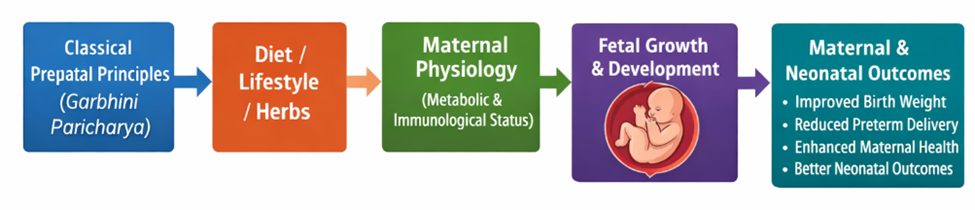
Figure 1. Conceptual framework linking Classical Ayurvedic principles through the intervention to maternal physiology, foetal growth, and measurable outcomes.
Review of Literature
Classical and Ayurvedic Sources: Classical Ayurvedic texts provide detailed prenatal guidelines. Sushruta (Sharira Sthana 10) prescribes that a garbhini should maintain a calm, joyous mind and avoid stress or harmful stimuli (e.g., foul smells, anger, travel to cremation grounds). Dietary instructions include easily digestible, sweet and nourishing foods: e.g. light kitchari (yavagu), milk, ghee, jaggery — essentially hrdayapriya (heart-pleasing), drava (fluid), snigdha (unctuous) foods. Month-by-month prescriptions in Sushruta’s Garbhini Vyakaraṇa Sharira detail that in the 6th month the woman should consume ghee prepared with medicinal fats, and in the 7th month medicinal ghee that satiates the fetus. Charaka likewise states that fetal strength and complexion increase greatly in the 6th month, making the mother appreciably leaner, and that by the 7th month the fetus is sarvair bhāvair āpyāyatē (fully developed). Ancient scholars thus inherently recognized a correspondence between fetal morphogenesis and maternal care needs (Cunningham et al., 2018; Charaka, Sharira Sthana 4/22).
Modern Biomedical Correlates: Modern obstetrics identifies the 6th–7th months as critical for fetal maturation. By ~24–28 weeks (late second trimester), significant neurological, pulmonary and dermal development occurs: surfactant production in lungs enables breathing; subcutaneous fat thickens the skin; hair (lanugo) and nail formation accelerate. By ~28–32 weeks, the fetus weighs ~1–2 kg and reflexes (blinking, sucking) are established. These phenomena parallel the Ayurvedic description of increased bala (strength) and varṇa (color/health) of the fetus in the 6th month, and attainment of maturity by the 7th month. Clinically, guidelines emphasize adequate maternal nutrition (extra ~300 kcal/day in 2nd trimester) and micronutrients (iron, calcium, folate) to support maternal blood volume and fetal growth. WHO ANC recommendations advocate a healthy diet, routine assessments, and health education throughout pregnancy.
Integrative and Clinical Studies: Recent literature on Ayurvedic antenatal care is growing. Shirke (2022) reviews that month-wise Garbhini Paricharya aims to ensure maternal-fetal Paripūrṇatā and healthy delivery. Meghashree & Ramadevi (2023) emphasize that incorporating Rasayana herbs during pregnancy helps overcome “physiological stumbling blocks” (nausea, fatigue, edema) and ensures “first-class nourishment” of the fetus. A conceptual Ayurveda paper predicts that practices like Snehana (oil massage) and Swedana (heat therapies) could improve pelvic blood flow, thus aiding labor. Preliminary clinical data are encouraging but limited. Upadhyay et al. (2018) report that Garbha Sanskar (a prenatal education/music program) reduces maternal stress and may favor birth outcomes. Patankar & Mamatha (2019) conducted an RCT giving an Ayurvedic rasayana avaleha in months 6–7; they observed improved maternal weight gain and immune markers (IgG, IgM) compared to control. Similarly, a 2026 RCT found that Ashwagandha (a Rasayana herb) in pregnancy significantly enhanced hemoglobin and reduced stress markers. While such studies differ in scope, they establish that well-defined Ayurvedic interventions can be tested quantitatively in pregnant cohorts.
Cumulatively, reviews note that Ayurveda’s antenatal guidance aligns with modern science: e.g. monthly dietary regimens (Calorie/protein increase) and hygiene have biomedical parallels. However, gaps remain. A recent conceptual review highlights the need for standardization: “challenges such as limited clinical trials, lack of standardization, and regulatory hurdles impede full integration”. In particular, no trial has yet evaluated the specific regimen prescribed by Sushruta in 6–7 months. Many existing studies focus on individual herbs (e.g. Shatavari lactation trials) or educational programs, not the composite Garbhini Paricharya protocol. Thus, a rigorous RCT of Sushrutokta antenatal regimen is needed to bridge Ayurvedic theory and obstetric evidence.
Research Gap
Despite extensive classical theory, contemporary evidence on Ayurvedic prenatal care is fragmented. Clinical trials are few and heterogeneous, often testing single agents or yogic practices. No PubMed-indexed RCT has evaluated a comprehensive Sushruta-based regimen (Garbhini Paricharya) specifically in late second trimester. Many studies lack standardized outcome frameworks and blinding. There is also scant integration of Ayurvedic concepts into the research design: for instance, fetal development milestones in Ayurveda have not been formally correlated with ultrasound findings or biochemical markers. As Mandal & Arpana (2025) note, although some studies “suggest Ayurveda-based antenatal care may minimize labor complications and improve outcomes,” methodological rigor (randomization, control, appropriate endpoints) has been limited. Thus the gap is the absence of a conceptually grounded, methodologically robust RCT that operationalizes Sushruta’s guidelines and measures both traditional and biomedical outcomes.
Rationale of Study
This trial is conceptually justified by the convergence of classical and biomedical goals. Ayurveda emphasizes prenatal Rasayana to bolster ojas (vital energy) and immunity; modern obstetrics recognizes that maternal nutrition and immune health influence fetal development and infant resilience. For example, Patankar & Mamatha’s trial found that a sweet Rasayana supplement (madhuraushadha) enhanced maternal hematology and well-being. We propose that implementing Sushruta’s specified diet, behavior and Rasayana herbs may similarly optimize maternal-fetal health. The methodological rationale is that an RCT offers the highest level of evidence for efficacy. By using proper controls (standard care), we can isolate the effect of the Ayurvedic regimen. Ethically, pregnancy research requires direct relevance to maternal-fetal health, which this study fulfills. Additionally, elucidating Ayurvedic theory through empirical study may facilitate broader integrative care models.
MATERIAL AND METHODS:
Aim and Objectives
Aim: To conceptually evaluate the effect of Sushrutokta Garbhini Paricharya regimen administered during the 6th and 7th months of gestation on maternal and fetal health parameters (framework only; no actual outcomes are presented here).
Primary Objectives:
• Implement the classical Ayurvedic regimen for gestational months 6–7 in a cohort of pregnant women.
• Compare maternal well-being (nutrition status, vital parameters) and fetal growth measures between intervention and control groups under an RCT design.
Secondary Objectives:
• Establish measurement protocols for subjective symptoms (appetite, digestion, mood) and objective markers (weight, hemoglobin, ultrasound biometry) aligned with both Ayurvedic outcomes (e.g. bala, varṇa) and biomedical standards.
• Assess adherence to the regimen and any adverse events (pre-specified safety monitoring).
• Develop a data analysis plan (statistical framework) to interpret findings in light of the conceptual framework.
Hypothesis
Null Hypothesis (H0): There is no difference in maternal or fetal health parameters between pregnant women following Sushrutokta Garbhini Paricharya regimen and those receiving standard care in months 6–7.
Alternative Hypothesis (H1): Pregnant women receiving the classical Ayurvedic regimen will show statistically significant improvements in specified maternal (e.g. weight gain, nutritional status) and fetal (e.g. growth velocity, wellbeing) parameters compared to controls.
Conceptual Framework
The conceptual model (Figure 1) is built on classical and biomedical premises. At the left, Classical Concept encompasses Ayurvedic goals (Rasayana, Bala, Ojas). This informs the Intervention: month-specific diet (ghee, milk, nourishing gruels, plus Ayurvedic herbs like Shatavari, Bala, Guduchi) and lifestyle (rest, calming activities) stipulated by Sushruta. These interventions are hypothesized to modulate Maternal Physiology: improved nutrition, stable metabolism, reduced stress, enhanced immunity (Vyadhikṣamatva). This in turn supports Fetal Growth: appropriate organ maturation, placental function, and accumulation of budha (essence) and ojas in the fetus. Finally, Measurable Outcomes include both Ayurvedic indicators (e.g. maternal appetite, complexion) and biomedical metrics (weight gain, hemoglobin, ultrasound fetal indices). Thus the chain of causality goes from ideology to quantifiable effect. As one review explains, integrating holistic Ayurvedic care can “enhance pregnancy outcomes and maternal well-being” through defined physiological pathways.
Methodological Framework
Study Design: A two-arm, parallel-group RCT. Participants will be randomized 1:1 into Intervention or Control. Randomization uses computer-generated sequences and sealed envelopes to ensure allocation concealment. Blinding is impractical for participants (diet/lifestyle is overt), but outcome assessors (ultrasound technicians, lab personnel) will be blinded to group assignment when possible. The trial will adhere to CONSORT guidelines for design and reporting.
Participants: Inclusion: Pregnant women aged 18–35, singleton pregnancy, at start of 6th month (22–24 weeks by ultrasound), with no major complications. Exclusion: high-risk conditions (e.g. severe hypertension, diabetes, heart disease), multiple gestation, known fetal anomalies, or use of conflicting supplements. Informed consent will be obtained as per ethical norms.
Setting: The study will be conducted at a tertiary care obstetric hospital with Ayurvedic collaboration, to ensure both proper monitoring and delivery of classical regimen components.
Randomization & Allocation: Random sequence generation (e.g. block randomization) will be prepared by an independent statistician. Allocation will be concealed via opaque envelopes opened sequentially by clinic staff upon enrollment.
Interventions:
• Intervention Group: Will follow Sushruta’s Garbhini Paricharya for months 6–7. Based on classical texts, this includes:
• Dietary regimen: Morning and evening meals of yavagu (rice gruel) with medicated ghee; milk (preferably goat’s milk if available) with sweet adjuncts; inclusion of nourishing grains (Shashtika rice), fruits (banana, pomegranate), and easily digestible proteins (legumes, paneer). Weekly intake of small amounts of ghee kalpana (medicated ghee) prepared with Rasayana herbs (e.g. Shatavari, Bala, Ashwagandha, Vidari Kanda) known as Garbhaprasadana.
• Lifestyle regimen: Daily rest periods with relaxation; moderate activity (gentle walking, prenatal yoga) as tolerated; avoidance of fasting, strenuous work, and travel to unclean places (e.g. crematoria). Encouragement of a calm mental state through prayer or meditation.
• Herbal support: Administration of safe herbal Rasayanas: e.g., Sarsapushpa (Cynodon dactylon) or Guduchi (Tinospora cordifolia) as decoctions, based on classical lists. These are chosen for their balya (strengthening), jitendriya (stress-relieving) and immunomodulatory properties. (Herbal dosing will follow pharmacopeial standards and obstetric safety data.)
• Control Group: Will receive standard obstetric care only: routine diet advice per national guidelines, iron–folate and calcium supplementation, and antenatal check-ups. They will not receive the specialized Ayurvedic regimen.
Regimen Standardization: The intervention is standardized via protocols: weekly menus, recipes, and herbal formulations. A trained Ayurvedic physician will oversee adherence. The regimen is explicitly the one utpanne by Sushruta for 6th–7th months, hence “Sushrutokta Garbhini Paricharya”.
Timeline: Participants will be enrolled at 22–24 weeks (start of 6th month). The intervention will run through 28 weeks (end of 7th month). Visits will occur at baseline (week 22), mid-intervention (week 25), end of intervention (week 28), and follow-ups until delivery (for outcome capture). Data collection points align with routine obstetric schedule.
Intervention Framework
The core of Sushrutokta (as per Sushruta Samhita, Sharira Sthana 10) is month-specific. In Sushruta’s own words, “hṛdyaṃ dravaṃ madhuraṃ snigdhaṃ dīpaniyaṃ saṃskṛtaṃ ca bhojanaṃ bhojayet” — she should be fed an agreeable, fluid, predominantly sweet, nourishing and digestive-stimulating diet. For the 6th month specifically, Sushruta recommends medicated ghee or thick gruel (yavagu) in the morning and evening. In the 7th month, he advises milk with specific additives (for example, Virohi Khalva or Gudūcī kṣīra), which are believed to enhance Rasa–Rakṭa (nutritive fluid) for the fetus. These prescriptions will be operationalized: e.g. gaviskhya (soaked cow’s ghee) with herbs in water or milk.
Ayurvedic Rasayana is central. Herbs like Asparagus racemosus (Shatavari), Sida cordifolia (Bala), Centella asiatica (Brahmi), Bacopa monnieri, Tinospora cordifolia are classically indicated in pregnancy. Contemporary studies support their adaptogenic and immunomodulatory roles (e.g., Shatavari and Ashwagandha have hematopoietic and stress-modulating effects). We will use a standardized powdered or extract form of selected herbs as prāṣṭha (tablet) or in ghee decoction. Dosages follow Ayurvedic pharmacopeia and modern safety guidelines. The combination is designed to bolster maternal deha-bala (body strength) and ojas without toxicity.
Behavioral advice complements diet. Sushruta forbids sleeping on a high bed or with heavy blankets, and advises moderate exercise (gentle massage, unstrained mobility). These non-pharmacological instructions will be taught.
All components will be documented in an “Intervention Manual” for replication. Control subjects will be offered general healthy-pregnancy advice (balanced diet, exercise) after study completion to maintain equipoise.
Outcome Measurement Framework
A dual framework of subjective and objective measures will capture the multi-dimensional effects.
• Subjective (Patient-reported): Maternal well-being questionnaires will assess appetite, digestion, fatigue, sleep quality, mood, and perceived energy (reflecting Ayurvedic bala). Standard scales (e.g. Pregnancy-Unique Quantification of Emesis [PUQE] for nausea, Visual Analog Scale for fatigue) can be used. Traditional Ayurvedic symptoms (e.g. śuklavasanā cleanliness, samgardhahānita indigestion) will be translated into lay terms. The impact on quality of life (per WHOQOL-BREF) is also noted.
Objective (Clinical/Biochemical):
• Maternal anthropometry: weight gain from enrollment to 28 weeks, Body Mass Index (BMI) progression.
• Hematology: Hemoglobin, RBC indices (to reflect rakta-pushti), serum proteins (albumin as nutrition marker), and immunoglobulins (IgG, IgM) as per Patankar et al..
• Biochemistry: Serum calcium, vitamins (D, B12 if indicated), to monitor nutritional adequacy.
• Maternal vitals: Blood pressure (since hypertensive disorders are a key risk), blood sugar.
• Ultrasound fetal biometry: Biparietal diameter, femur length, abdominal circumference measured at baseline and 28 weeks to assess fetal growth rate.
• Doppler studies: Optional uterine artery Doppler to gauge placental perfusion (maternal circulation effects).
• Birth outcomes (follow-up): Though outside the 7-month frame, capturing birth weight, gestational age at delivery, and Apgar score can contextualize fetal impact.
These align with outcomes in comparable studies. For example, Patankar et al. used maternal weight, hemoglobin and Ig levels, and GI symptom scores, while Supriya et al. (2026) tracked hemoglobin and stress/sleep scales. We will predefine primary and secondary endpoints (e.g. primary: mean maternal weight gain; secondary: change in hemoglobin, fetal head circumference). Outcomes will be measured by blinded assessors. An outcome table (Table 1) summarizes these metrics by group.
Table 1. Outcome Assessment Framework (Subjective & Objective Parameters)
|
Domain |
Parameters Measured |
Measurement Tool |
Assessment Timepoints |
|
Maternal well-being |
Appetite, digestion, fatigue, mood |
Validated questionnaires/scales |
Baseline, 6 and 8 weeks |
|
Gastrointestinal symptoms |
Nausea, heartburn, constipation |
Severity scoring (0–10 scale) |
Baseline, 6 and 8 weeks |
|
Anthropometry |
Weight, BMI |
Digital scale, standard height |
Baseline, 8 weeks |
|
Hematology |
Hb, RBC count, IgG, IgM |
CBC autoanalyzer, immunoassay |
Baseline, 8 weeks |
|
Biochemistry |
Serum calcium, albumin, vitamins |
Biochemistry analyzer |
Baseline, 8 weeks |
|
Blood pressure |
Systolic/Diastolic BP |
Automatic BP cuff |
Every visit |
|
Fetal growth |
BPD, FL, AC (sonographic) |
Obstetric ultrasound |
Baseline, 8 weeks |
|
Fetal well-being |
Fetal heart rate, movements |
NST (if available) |
As needed |
|
Adverse events |
Any new complications, lab anomalies |
Structured monitoring |
Ongoing |
(Source: Adapted conceptually from Patankar et al. (2019) and Supriya et al. (2026) RCTs, integrating subjective Ayurvedic parameters.)
Statistical Framework
An a priori sample size calculation will be performed (e.g. to detect a clinically meaningful difference of 0.5 kg in mean weight gain with 80% power, α=0.05). Though no actual data are presented, the plan is to use an intention-to-treat analysis. Continuous outcomes (weight, lab values) will be compared by t-tests or ANOVA; categorical outcomes (symptom improvement rates) by chi-square tests. Repeated measures ANOVA or mixed models may analyze trends over time. Effect sizes (mean differences, 95% confidence intervals) will be reported. Missing data will be handled by last observation carried forward or multiple imputation, per CONSORT advice. Statistical software (SPSS or R) will be used, and significance set at p<0.05. No interim analysis or stopping rules are planned given the short timeframe, but an independent DSMB could be convened if needed.
Ethical Framework
Research involving pregnant women requires special safeguards. This study will adhere to international and national ethical standards. Following the ICMR Guidelines, we recognize pregnant women’s right to participate in research relevant to their health and ensure benefits justify any risk. The protocol will be approved by an Institutional Ethics Committee. Key ethical points:
• Informed Consent: Women will receive detailed verbal and written explanations (in local language) about the trial’s purpose, procedures, benefits, and potential risks. They must consent voluntarily, with no coercion. Their right to withdraw at any time will be emphasized.
• Risk Minimization: The intervention components (diet, herbal Rasayanas) are based on long-standing traditional use with known safety profiles. We will exclude any herbs contraindicated in pregnancy. The regimen avoids vigorous treatments and known teratogens. Maternal and fetal status will be continuously monitored; any adverse event prompts immediate medical care or withdrawal.
• Benefit-Risk Assessment: As per ICMR, pregnant women should be included when research addresses pregnancy-related health. Here, potential benefits include improved maternal nutrition and fetal growth. Risks are minimal: dietary changes or mild herbs. We will ensure that any uncertainty is clearly communicated.
• Confidentiality: Participant data will be coded to maintain privacy. Only the research team will access records.
• Compliance with Guidelines: The trial will be registered in the Clinical Trials Registry (India). It will follow the Declaration of Helsinki’s principles and ICMR ethics guidelines (2017). These require careful benefit-risk balance: we are studying a traditional regimen (with physiological rationale) which is not expected to harm the fetus. Regular obstetric care and emergency support will be available.
By these measures, we align with ethical imperatives that encourage inclusion of pregnant women in relevant research (rather than excluding them) when well-justified.
Expected Scientific Contribution
This study’s framework has several anticipated contributions. Conceptually, it articulates how an ancient regimen can be integrated into evidence-based practice. By mapping Ayurvedic outcomes (ojas, bala, varṇa) onto biomedical measures, it builds a bridge between paradigms. Methodologically, it exemplifies how to design a rigorous trial for a multi-component lifestyle intervention – a non-pharmacological approach akin to WHO’s holistic ANC recommendations. If the regimen proves beneficial (as hypothesized), it would provide the first high-level evidence that Sushrutokta Garbhini Paricharya improves maternal and fetal health. Even if findings are equivocal, the study will clarify which aspects (diet, herbs, lifestyle) are most impactful, guiding future research.
Clinically, validated results could inform antenatal guidelines, encouraging integrative care strategies. For Ayurveda, demonstrating efficacy of Rasayana in pregnancy would stimulate further investigations and acceptance. Theoretically, success would substantiate classical maxims like “deerghayu, medha, arogyam smriti pracura” (long life, intellect, health, memory) being transmitted to the child through Rasayana supplementation.
In sum, this trial aims to contribute scientific rigor to Ayurveda’s prenatal wisdom, potentially improving maternal care worldwide by blending holistic and allopathic principles.
CONCLUSION :
We have outlined a comprehensive framework for a randomized trial of Sushrutokta Garbhini Paricharya in the 6th–7th month of pregnancy. Grounded in classical shastras and aligned with biomedical understanding of fetal development, the conceptual framework logically connects Ayurvedic principles to measurable outcomes. The methodological plan (RCT design, intervention specifics, outcomes, analysis) ensures scientific rigor. Ethical considerations are explicitly addressed, respecting guidelines for pregnant participants. Although this paper does not present data, it lays the foundation for future empirical validation. By meticulously integrating ancient theory and modern trial methods, this framework paves the way for evidence-based integration of Ayurveda into maternal-fetal medicine.
BIBLIOGRAPHY:
1. Acharya Agnivesa. Charaka Samhita. Sharira Sthana, Chapter 4 (Sharirasthana, ch.4/21–23). (On month-wise fetal growth).
2. Chandrashekhar, S., Koppula, S., & Devi, R. (2014). Garbhini Paricharya (Antenatal care) – An approach through Ayurveda. Journal of Ayurveda and Integrative Medicine, 5(4), 174–177.
3. Cunningham, F. G., Leveno, K. J., Bloom, S. L., et al. (2018). Williams Obstetrics (25th ed.). McGraw-Hill.
4. Indian Council of Medical Research. (2017). National ethical guidelines for biomedical and health research involving human participants. (Guidelines Sections 7.18.4–7.18.6 on pregnancy research).
5. Koppikar, V. S., & Gupta, S. (2008). Garbhini Paricharya (Regimen for the pregnant woman). Ancient Science of Life, 28(1), 37–39.
6. Mandal, K. M. S., & Arpana. (2025). A conceptual and clinical study of Garbhini Paricharya in enhancing maternal and fetal health. Journal of Ayurveda and Integrative Medical Sciences, 10(3), 150–156. .
7. Meghashree, B., & Ramadevi, G. (2023). Role of Rasāyana Dravyas in the form of Kṣīrapāka during pregnancy. Journal of Ayurveda and Integrated Medical Sciences, 8(2), 146–150. .
8. Moher, D., Hopewell, S., Schulz, K. F., et al. (2010). CONSORT 2010 explanation and elaboration: updated guidelines for reporting parallel group randomised trials. Journal of Clinical Epidemiology, 63(8), e1–e37.
9. Patankar, K. M., & Mamatha, K. V. (2019). Rasayana and immunomodulatory effect of Madhuraushadha Siddha Avaleha in 6th and 7th month of pregnancy – a randomized comparative clinical trial. Ayushdhara (Int. J. Res. Ayurveda Allied Sci.), 6(3), 2222–2229.
10. Shirke, P. R. (2022). Review on Ayurvedic concept of Garbhini Paricharya. Journal of Ayurveda and Integrative Medical Sciences, 7(1), 12–18.
11. Supriya, N., Murty, A., Gaikwad, D., et al. (2026). Efficacy and safety of Ashwagandha (Withania somnifera) root extract in pregnant women: a prospective, randomized, comparative, open-label, 12-week study. Frontiers in Global Women’s Health, 7, Article 1767865. https://doi.org/10.3389/fgwh.2026.1767865
12. Vaidya, A., Malakar, S., Muthuswamy, S., & Rajagopalan, R. (2017). Pregnancy-induced hypertension and the role of Ayurveda. Journal of Ayurveda and Integrative Medicine, 8(3), 178–182.
13. World Health Organization. (2016). WHO Recommendations on Antenatal Care for a Positive Pregnancy Experience. Geneva: WHO.
14. Sanskrit Shloka: भगवद्गीतासारसारं गर्भिण्याः सहजनीम्। सङ्ग्रहणीं च रसायनीं भरेद्बाल्यं रत्नागजम्॥
15. English: “From the outset, the pregnant woman should observe a regimen that is pure, auspicious and composed, consuming agreeable, liquid, predominantly sweet and nutritious food”. (Sushruta Samhita, Sharira Sthana 10.3)