Cervical Cancer Prevention: Knowledge, Screening Practices, and HPV Vaccine Awareness among Women in Hyderabad Region, Pakistan
- Saira Dars , Department of Obstetrics & Gynecology, Liaquat University of Medical & Health Sciences (LUMHS), Jamshoro, Pakistan
- Tazeen Shah , Department of Physiology, Liaquat University of Medical & Health Sciences (LUMHS), Jamshoro, Pakistan
- Saima Naz Shaikh , Department of Physiology, Liaquat University of Medical & Health Sciences (LUMHS), Jamshoro, Pakistan
- Moomal Tagar , Department of Physiology, Liaquat University of Medical & Health Sciences (LUMHS), Jamshoro, Pakistan
- Aqsa Memon , Department of Physiology, Liaquat University of Medical & Health Sciences (LUMHS), Jamshoro, Pakistan
- Rabia Bughio , Department of Anatomy, Liaquat University of Medical & Health Sciences (LUMHS), Jamshoro, Pakistan
Article Information:
Abstract:
Background: Cervical cancer remains a leading cause of morbidity and mortality among women in low- and middle-income countries. In Pakistan, limited awareness and low vaccination uptake hinder effective prevention. This study assessed women’s knowledge, attitudes, screening practices, and HPV vaccine awareness in the Hyderabad–Jamshoro region of Sindh. Methods: A descriptive cross-sectional survey was conducted among 420 women aged 21–55 years attending gynecology outpatient departments at Liaquat University of Medical & Health Sciences. A structured questionnaire assessed sociodemographic characteristics, cervical cancer and HPV knowledge, Pap smear screening practices, vaccine awareness, and attitudes. Descriptive statistics, chi-square tests, and logistic regression analyses were performed using SPSS 26. Statistical significance was set at p<0.05. Results: Only 19.8% had heard of cervical cancer, 21.4% of Pap smear testing, and 12.9% were aware of HPV vaccination. Good knowledge (score ≥5) was observed in 13.1% of respondents. Self-reported vaccination uptake was 2.4%, though 91.0% expressed willingness to receive the vaccine if free or low-cost. Education, income, and urban residence were strong predictors of knowledge and vaccine awareness. Social media (72.8%) and healthcare providers (18.5%) were the preferred awareness channels. Conclusion: Knowledge of cervical cancer and HPV vaccination in the Hyderabad region is alarmingly low, but willingness to adopt preventive measures is high. Integrating HPV vaccination into national programs, strengthening screening services, and implementing targeted educational interventions are essential to bridge awareness gaps and improve prevention efforts.
Keywords:
Article :
INTRODUCTION:
Cervical cancer remains one of the most preventable malignancies, yet it continues to impose a substantial burden on women’s health worldwide. In 2020, approximately 604,000 new cases and 342,000 deaths were attributed to cervical cancer globally, making it the fourth most common cancer among women and a leading cause of female cancer mortality in low- and middle-income countries (LMICs) (1). 90% of these deaths occur in LMICs, reflecting deep inequalities in access to screening, timely treatment, and preventive vaccination services (2). Recognizing this, the World Health Organization (WHO) launched its Global Strategy for Cervical Cancer Elimination in 2020, targeting 90% HPV vaccination coverage, 70% screening coverage, and 90% treatment coverage by 2030—the so-called “90-70-90” targets (3). Achieving these benchmarks, however, requires regionally contextualized efforts to address knowledge gaps, socio-cultural barriers, and healthcare access limitations that vary across populations.
In Pakistan, cervical cancer ranks as the second most common cancer among women aged 15–44 years, with an estimated 11,000 new cases and over 7,000 deaths annually (4). Recent data indicate an upward trend in incidence over the past decade, transitioning from a low-risk to a moderate-risk country profile (5). A major driver of this burden is the persistent low uptake of cervical cancer screening and HPV vaccination, due to limited awareness, cultural taboos surrounding reproductive health, economic barriers, and the absence of HPV vaccination from the national Expanded Programme on Immunization (EPI) (6,7). Despite the availability of effective preventive measures, knowledge and attitudes towards cervical cancer and its prevention remain suboptimal, particularly in non-urban and underserved populations (8,9).
Studies from urban tertiary centers, including recent KAP surveys conducted in Islamabad, have highlighted profound deficits in awareness, with over 80% of women unaware of Pap smear testing and only 8–10% aware of HPV vaccination (10). Encouragingly, more than 95% of respondents expressed willingness to receive vaccination if provided free of cost, suggesting that low coverage stems more from information and access gaps rather than outright hesitancy (10,11). However, these findings may not fully reflect the diversity of contexts across Pakistan. The Hyderabad–Jamshoro region of Sindh represents a unique sociocultural setting, characterized by a mix of urban and rural populations, lower female literacy rates compared to major metropolitan centers, and varying degrees of access to gynecological services (12). Yet data from this region are absent, particularly regarding HPV vaccine awareness and vaccination status among women of reproductive age.
Understanding local knowledge, attitudes, practices, and vaccination patterns is critical for designing targeted interventions that can support national elimination efforts. Evidence from similar LMIC settings shows that socio-demographic determinants such as education, income, and urban residence strongly influence cervical cancer awareness and preventive health-seeking behavior (13–15). Moreover, studies highlight that the integration of vaccination campaigns with routine gynecological care, along with leveraging community health workers and digital media, can significantly enhance vaccination uptake in culturally sensitive environments (16,17).
Within this context, tertiary institutions such as the Liaquat University of Medical & Health Sciences (LUMHS), Hyderabad, play a pivotal role. As a major referral center for a large catchment population spanning urban Hyderabad and rural Jamshoro districts, LUMHS gynecology clinics provide an opportunity to assess existing gaps and develop region-specific awareness strategies. A structured evaluation of women’s knowledge, attitudes, practices, and HPV vaccine awareness in this setting can inform public health programming, community outreach, and policy advocacy to improve preventive coverage.
Therefore, this study aims to assess the knowledge, attitudes, and practices regarding cervical cancer screening, and to evaluate HPV vaccine awareness and vaccination status among women attending gynecology clinics in the Hyderabad region. By identifying sociodemographic predictors of awareness and vaccine uptake, and exploring preferred channels for health communication, this work seeks to generate actionable evidence to support context-specific strategies for advancing cervical cancer prevention in Sindh and Pakistan more broadly.
MATERIALS AND METHODS:
This descriptive cross-sectional study was conducted to evaluate the knowledge, attitudes, and practices regarding cervical cancer screening, along with HPV vaccine awareness and vaccination status, among women attending gynecology outpatient clinics at Liaquat University of Medical & Health Sciences (LUMHS), Hyderabad. The university hospital serves as a major tertiary referral center for both urban and rural populations of the Hyderabad–Jamshoro region, providing a representative setting to explore regional gaps in awareness and preventive behaviors.
Women aged 21 to 55 years visiting the gynecology outpatient department for routine consultations or minor gynecological issues were invited to participate. Inclusion criteria encompassed married, unmarried, divorced, or widowed women with intact uteri who were able and willing to provide informed consent. Pregnant women, those with prior hysterectomy, individuals outside the age range, and those unable to provide reliable information were excluded. The selected age range corresponds to WHO recommendations for cervical cancer screening and HPV vaccination target groups, ensuring relevance to national and international preventive strategies (1,2).
Sample size was calculated using the standard single proportion formula with a 95% confidence level, an assumed prevalence of 50% due to the absence of local data, and a 5% margin of error. This yielded a sample size of 384, which was increased to 420 participants to account for potential non-response. A purposive sampling strategy was employed to recruit eligible women during regular clinic hours, allowing inclusion of diverse sociodemographic groups from both urban and rural areas.
Data were collected using a structured, interviewer-administered questionnaire, adapted from previously validated instruments used in Pakistan and other low- and middle-income countries (3–6). The tool was translated into Urdu and pilot-tested on 20 women to ensure cultural appropriateness. Modifications were made based on feedback, including the addition of a comprehensive section on HPV vaccine awareness and vaccination status, which was not present in earlier national surveys.
The final questionnaire comprised sections on sociodemographic characteristics, knowledge of cervical cancer, HPV and Pap smear screening, awareness and vaccination status for HPV, attitudes based on the Health Belief Model (HBM), preventive practices, and preferred awareness channels. Knowledge was assessed through seven structured questions, with each correct answer awarded one point; a total score of five or above denoted good knowledge, while scores below five indicated poor knowledge (3). The vaccine component assessed participants’ awareness of HPV vaccine availability and its preventive role, vaccination history, willingness to vaccinate themselves or their daughters, and perceived barriers such as cost, cultural concerns, or misinformation. Attitudes were explored through a five-point Likert scale assessing perceived susceptibility, perceived benefits and barriers, and cues to action, as informed by the HBM framework (7,8). Internal consistency for the attitude items was evaluated using Cronbach’s alpha. Preventive practices were explored through questions on Pap smear testing, condom use, health-seeking behavior, and decision-making within households.
Interviews were conducted face-to-face by trained female data collectors fluent in Urdu and Sindhi to ensure accessibility for participants with varying literacy levels. Each interview lasted 15–20 minutes and was conducted in a private space to maintain confidentiality. Ethical approval for the study was obtained from the Ethical Review Committee of LUMHS, Jamshoro (ERC No. [Insert Number]). Written informed consent was secured from all participants, and the study adhered to the ethical principles of the Declaration of Helsinki (9).
Data was entered and analyzed using IBM SPSS Statistics Version 26. Descriptive statistics were used to summarize sociodemographic variables, knowledge scores, vaccine awareness, and vaccination uptake. Associations between knowledge or vaccine awareness and demographic factors such as age, education, income, and place of residence were examined using Chi-square tests. Logistic regression models were then fitted to identify independent predictors of good knowledge, vaccine awareness, and vaccination uptake. Variables with a p-value <0.2 in bivariate analysis were included in multivariable models, and statistical significance was set at p<0.05.
RESULTS :
A total of 420 women participated in the study, yielding a response rate of 97.2%. All participants completed the knowledge, vaccine awareness, and practice components of the questionnaire.
The mean age of participants was 33.8 ± 8.6 years, ranging from 21 to 55 years. Two-thirds (65.2%) were between 21 and 35 years of age, 25.5% were between 36 and 45 years, and 9.3% were older than 45 years. The majority were married (90.2%), while 5.5% were unmarried and 4.3% were widowed or divorced. About 80.5% of respondents identified as Muslim, and 19.5% as Christian. Most women were housewives (86.4%), with 7.1% engaged in professional work and 6.4% students or in informal occupations.
Educational attainment varied considerably: 28.6% had no formal education, 40.5% had completed primary or secondary education, and 30.9% had attained tertiary education (bachelor’s or higher). More than half of the households (56.7%) reported a monthly income below PKR 20,000. Urban residents comprised 74.0%, whereas 26.0% were from rural settings.
Table 1 summarizes the sociodemographic characteristics of the participants.
Table 1. Sociodemographic Characteristics of Participants (n = 420)
|
Variable |
n (%) |
|
Age (years) |
|
|
21–35 |
274 (65.2) |
|
36–45 |
107 (25.5) |
|
>45 |
39 (9.3) |
|
Marital status |
|
|
Married |
379 (90.2) |
|
Unmarried |
23 (5.5) |
|
Widow/Divorced |
18 (4.3) |
|
Education |
|
|
None |
120 (28.6) |
|
Primary/Secondary |
170 (40.5) |
|
Bachelor’s and above |
130 (30.9) |
|
Occupation |
|
|
Housewife |
363 (86.4) |
|
Professional |
30 (7.1) |
|
Student/Informal |
27 (6.4) |
|
Household income (PKR) |
|
|
≤ 20,000 |
238 (56.7) |
|
20,001–40,000 |
121 (28.8) |
|
>40,000 |
61 (14.5) |
|
Place of residence |
|
|
Urban |
311 (74.0) |
|
Rural |
109 (26.0) |
Almost all respondents (98.8%) were familiar with the term “cancer,” yet only 19.8% (n=83) had ever heard of cervical cancer, and 16.2% were aware of HPV as its causal agent. Awareness of Pap smear testing was particularly low, with only 21.4% reporting familiarity with the test. Knowledge of symptoms and risk factors was limited to 17.1% and 15.7% of participants, respectively.
Overall knowledge scores ranged from 0 to 7, with a mean score of 1.43 ± 2.0. Only 13.1% (n=55) achieved scores indicating good knowledge (≥5), whereas 86.9% demonstrated poor knowledge. Knowledge levels were significantly higher among women with tertiary education (29.2%) compared to those with primary/secondary education (10.6%) and no formal education (4.2%) (p<0.001). Urban residents and those with higher incomes also had significantly better knowledge scores than rural and low-income groups (p=0.015 and p<0.001, respectively).
Table 2 shows participants’ responses to key knowledge items.
Table 2. Awareness of Cervical Cancer, HPV, and Pap Smear among Participants (n = 420)
|
Item |
Yes n (%) |
No n (%) |
|
Heard of cervical cancer |
83 (19.8) |
337 (80.2) |
|
Heard of HPV |
68 (16.2) |
352 (83.8) |
|
Heard of Pap smear |
90 (21.4) |
330 (78.6) |
|
Know any symptoms of cervical cancer |
72 (17.1) |
348 (82.9) |
|
Know any risk factors |
66 (15.7) |
354 (84.3) |
|
Aware that early screening can prevent disease |
78 (18.6) |
342 (81.4) |
|
Aware that HPV vaccination prevents cervical cancer |
54 (12.9) |
366 (87.1) |
A total of 420 women participated in the study, yielding a response rate of 97.2%. All participants completed the knowledge, vaccine awareness, and practice components of the questionnaire.
The mean age of participants was 33.8 ± 8.6 years, ranging from 21 to 55 years. Two-thirds (65.2%) were between 21 and 35 years of age, 25.5% were between 36 and 45 years, and 9.3% were older than 45 years. The majority were married (90.2%), while 5.5% were unmarried and 4.3% were widowed or divorced. About 80.5% of respondents identified as Muslim, and 19.5% as Christian. Most women were housewives (86.4%), with 7.1% engaged in professional work and 6.4% students or in informal occupations.
Educational attainment varied considerably: 28.6% had no formal education, 40.5% had completed primary or secondary education, and 30.9% had attained tertiary education (bachelor’s or higher). More than half of the households (56.7%) reported a monthly income below PKR 20,000. Urban residents comprised 74.0%, whereas 26.0% were from rural settings.
Table 1 summarizes the sociodemographic characteristics of the participants.
Table 1. Sociodemographic Characteristics of Participants (n = 420)
|
Variable |
n (%) |
|
Age (years) |
|
|
21–35 |
274 (65.2) |
|
36–45 |
107 (25.5) |
|
>45 |
39 (9.3) |
|
Marital status |
|
|
Married |
379 (90.2) |
|
Unmarried |
23 (5.5) |
|
Widow/Divorced |
18 (4.3) |
|
Education |
|
|
None |
120 (28.6) |
|
Primary/Secondary |
170 (40.5) |
|
Bachelor’s and above |
130 (30.9) |
|
Occupation |
|
|
Housewife |
363 (86.4) |
|
Professional |
30 (7.1) |
|
Student/Informal |
27 (6.4) |
|
Household income (PKR) |
|
|
≤ 20,000 |
238 (56.7) |
|
20,001–40,000 |
121 (28.8) |
|
>40,000 |
61 (14.5) |
|
Place of residence |
|
|
Urban |
311 (74.0) |
|
Rural |
109 (26.0) |
Almost all respondents (98.8%) were familiar with the term “cancer,” yet only 19.8% (n=83) had ever heard of cervical cancer, and 16.2% were aware of HPV as its causal agent. Awareness of Pap smear testing was particularly low, with only 21.4% reporting familiarity with the test. Knowledge of symptoms and risk factors was limited to 17.1% and 15.7% of participants, respectively.
Overall knowledge scores ranged from 0 to 7, with a mean score of 1.43 ± 2.0. Only 13.1% (n=55) achieved scores indicating good knowledge (≥5), whereas 86.9% demonstrated poor knowledge. Knowledge levels were significantly higher among women with tertiary education (29.2%) compared to those with primary/secondary education (10.6%) and no formal education (4.2%) (p<0.001). Urban residents and those with higher incomes also had significantly better knowledge scores than rural and low-income groups (p=0.015 and p<0.001, respectively).
Table 2 shows participants’ responses to key knowledge items.
Table 2. Awareness of Cervical Cancer, HPV, and Pap Smear among Participants (n = 420)
|
Item |
Yes n (%) |
No n (%) |
|
Heard of cervical cancer |
83 (19.8) |
337 (80.2) |
|
Heard of HPV |
68 (16.2) |
352 (83.8) |
|
Heard of Pap smear |
90 (21.4) |
330 (78.6) |
|
Know any symptoms of cervical cancer |
72 (17.1) |
348 (82.9) |
|
Know any risk factors |
66 (15.7) |
354 (84.3) |
|
Aware that early screening can prevent disease |
78 (18.6) |
342 (81.4) |
|
Aware that HPV vaccination prevents cervical cancer |
54 (12.9) |
366 (87.1) |
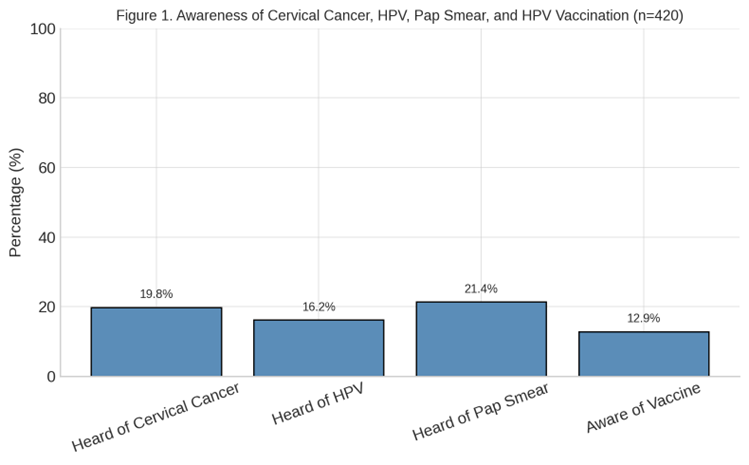
Only 12.9% (n=54) of respondents were aware of the existence of the HPV vaccine and its preventive role. Awareness was highest among women with tertiary education (30%) and urban residence (16.7%), compared to 5.8% among rural women (p<0.001).
Self-reported vaccination uptake was extremely low at 2.4% (n=10). Among these, five had received all recommended doses, while the remainder had received only one. The most common sources of vaccination were private hospitals and NGOs. A majority (91.0%) expressed willingness to receive the vaccine if provided free or at low cost, and 87.6% were willing to vaccinate their daughters in the future.
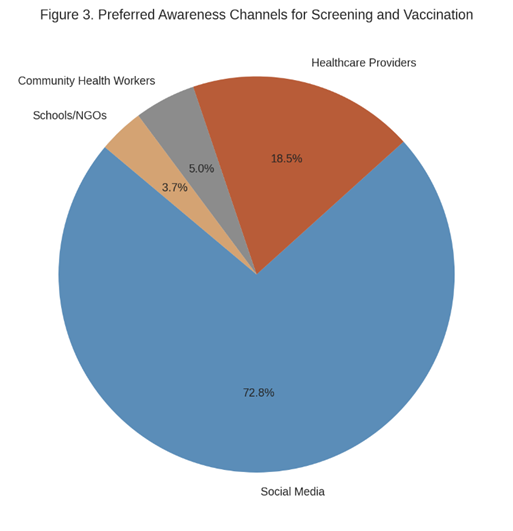
Key barriers to vaccination included lack of information (41.9%), cost (28.3%), unavailability at public facilities (16.4%), and cultural or familial disapproval (13.4%). Social media and healthcare providers were identified as the preferred channels for receiving information about vaccination and screening by 72.8% and 18.5% of respondents, respectively.
Despite low knowledge levels, 95.2% of women agreed that cervical cancer is preventable through early screening and vaccination. However, only 11.9% had undergone a Pap smear, most commonly during antenatal check-ups or opportunistically when advised by a healthcare provider. Condom use as a preventive practice was reported by 23.1% of women, but only one-third of these recognized its role in HPV prevention.
Health-seeking behavior was strongly associated with education and income; women with tertiary education and higher household income were significantly more likely to visit qualified health providers for preventive care (p<0.001).
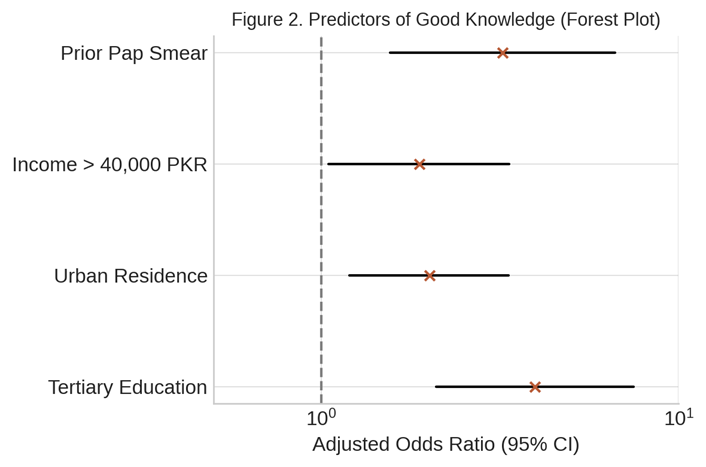
In multivariable logistic regression models, higher education, urban residence, and prior Pap smear testing were significant predictors of good knowledge. For vaccine awareness, education, income, and urban residence were significant, while age and marital status were not. Women with tertiary education were 4.5 times more likely to be aware of HPV vaccination compared to those with no formal education (aOR 4.5, 95% CI 2.2–9.0, p<0.001). Similarly, those residing in urban areas had 2.3 times higher odds of awareness (aOR 2.3, 95% CI 1.4–3.8, p=0.002).
Table 3 summarizes the predictors of good knowledge and HPV vaccine awareness.
Table 3. Predictors of Good Knowledge and HPV Vaccine Awareness
|
Variable |
Good Knowledge aOR (95% CI) |
p-value |
Vaccine Awareness aOR (95% CI) |
p-value |
|
Age >45 years |
0.91 (0.50–1.64) |
0.754 |
0.88 (0.44–1.74) |
0.710 |
|
Tertiary education |
3.96 (2.10–7.49) |
<0.001 |
4.50 (2.24–9.03) |
<0.001 |
|
Urban residence |
2.01 (1.20–3.34) |
0.008 |
2.32 (1.39–3.85) |
0.002 |
|
Income > 40,000 PKR |
1.88 (1.05–3.35) |
0.033 |
2.41 (1.23–4.74) |
0.010 |
|
Prior Pap smear |
3.22 (1.56–6.63) |
0.002 |
1.74 (0.81–3.74) |
0.152 |
DISCUSSION:
This cross-sectional study provides critical insights into the knowledge, attitudes, practices, and HPV vaccine awareness related to cervical cancer prevention among women attending gynecology clinics in the Hyderabad–Jamshoro region of Sindh, Pakistan. The findings reveal significant gaps in disease awareness, screening knowledge, and vaccine uptake, alongside clear sociodemographic disparities that mirror patterns observed both nationally and globally. Importantly, the high levels of willingness to receive vaccination and engage in preventive practices underscore a latent potential for targeted interventions if structural and informational barriers are addressed.
Consistent with previous studies conducted in Pakistan’s major urban centers, such as Islamabad and Karachi, this study found low overall knowledge regarding cervical cancer, HPV, and Pap smear screening, with only 13% of participants demonstrating good knowledge. Awareness of cervical cancer and Pap smear testing stood at 19.8% and 21.4%, respectively, while knowledge of HPV and vaccination was particularly poor at 16.2% and 12.9%. These findings align closely with recent data from Islamabad, where 84.7% of women had poor knowledge and only 8.4% were aware of the HPV vaccine (20). Similarly, a study from Karachi reported that only 14–16% of women were aware of Pap smear testing and HPV as the causative agent (21). This persistent knowledge deficit indicates that national-level health education and outreach efforts have not adequately penetrated beyond limited urban pockets, leaving peripheral urban and semi-rural regions like Hyderabad underserved.
The low awareness of HPV vaccination is particularly concerning in the context of Pakistan’s moderate-risk status for cervical cancer and the absence of HPV vaccine in the national Expanded Programme on Immunization (EPI). While HPV vaccination has been globally recognized as a cornerstone of cervical cancer elimination strategies, Pakistan has yet to implement nationwide immunization for adolescent girls, relying instead on sporadic private sector or NGO initiatives (22,23). In this study, only 2.4% of women reported having received the vaccine, all through private or NGO channels, echoing findings from other South Asian LMICs such as Nepal and India, where coverage outside pilot programs remains below 5% (24,25).
Importantly, despite these low levels of awareness and uptake, 91% of participants expressed willingness to receive HPV vaccination if offered free or at low cost, and 88% were willing to vaccinate their daughters. This mirrors the “acceptance gap” phenomenon described in LMIC literature—where willingness is high but actual uptake remains minimal due to information deficits, economic barriers, and structural gaps in service delivery (26). Similar trends have been reported in Uganda, Nigeria, and Bangladesh, where public awareness campaigns coupled with subsidized vaccination significantly increased uptake within short periods (27–29). This suggests that with appropriately designed outreach programs, vaccine acceptance in Pakistan could be rapidly translated into actual coverage.
Education, income, and place of residence emerged as strong independent predictors of both knowledge and vaccine awareness in this study. Women with tertiary education were four times more likely to possess good knowledge and over four times more likely to be aware of the vaccine compared to those with no formal education. Urban residence and higher income also significantly predicted awareness, consistent with the findings of Hirani et al. (21) and Shamsi et al. (23) in Pakistan, and with international evidence from Nepal and sub-Saharan Africa (24,27,30). This reflects broader social determinants of health, where educational attainment and economic capacity shape both information access and preventive health behaviors. These disparities highlight the urgent need for context-specific strategies that focus on women with low education and from rural or peri-urban communities, rather than relying on passive information dissemination.
Attitudinal data were encouraging over 95% of participants agreed that cervical cancer is preventable, and willingness to undergo screening or vaccination was high. However, preventive practices lagged attitudes, with only 11.9% having ever undergone Pap smear testing. This is in line with previous national studies, where Pap smear uptake has consistently been below 15% (20,21). Barriers identified—such as lack of physician recommendation, limited-service availability in public facilities, and cultural sensitivities—mirror those documented across South Asia (31,32). Notably, physician recommendation remains one of the strongest determinants of screening uptake; thus, training gynecology and primary care providers to proactively counsel patients could have substantial impact.
An important contribution of this study is the regional perspective from Hyderabad–Jamshoro, a semi-urban area often overshadowed by studies from Islamabad, Lahore, and Karachi. The findings demonstrate that even within urbanized areas, significant pockets of unawareness persist, particularly among lower-income, less educated groups. This underscores that cervical cancer prevention strategies in Pakistan cannot rely on urban averages; rather, provincial, and district-level implementation frameworks are essential to achieve equity.
From a health systems perspective, the preference for social media (72.8%) and healthcare providers (18.5%) as channels for awareness provides actionable insight. Digital platforms are increasingly recognized as effective vehicles for health education in Pakistan, especially among younger women (33). Leveraging these platforms through culturally appropriate campaigns, potentially co-designed with Lady Health Workers (LHWs) for rural extension—could help overcome the information gap. Simultaneously, integrating HPV vaccination with routine reproductive health services in tertiary and secondary care hospitals, such as LUMHS, offers a pragmatic pathway to improve coverage, especially for mothers and their adolescent daughters.
The strengths of this study include its large and diverse sample, its focus on an under-represented region, and the inclusion of both screening and vaccination components within a single KAP framework. It provides baseline data for designing targeted interventions and could inform provincial-level policy in Sindh. However, certain limitations must be acknowledged. First, the use of purposive sampling limits the generalizability of findings, although the large sample size and inclusion of both urban and rural respondents partially mitigate this. Second, the reliance on self-reported vaccination status may have introduced recall bias, though given the very low reported rates, any misclassification is minimal. Finally, cross-sectional design precludes causal inference, but the associations observed are consistent with prior longitudinal studies.
Overall, the results highlight a significant and addressable gap between cervical cancer prevention goals and on-ground realities in the Hyderabad region. Achieving the WHO 90-70-90 targets by 2030 requires multi-pronged strategies: integrating HPV vaccination into EPI, strengthening screening services at primary and tertiary levels, enhancing physician engagement, and implementing culturally tailored awareness campaigns focusing on lower education and income groups. LUMHS and other tertiary institutions in Sindh can play a pivotal role by serving as hubs for vaccination and education, working in partnership with local communities and public health authorities.
CONCLUSION:
This study highlights significant and persistent gaps in women’s knowledge, attitudes, and practices regarding cervical cancer prevention, particularly in relation to HPV vaccination, within the Hyderabad–Jamshoro region of Sindh. While awareness of cervical cancer and Pap smear screening remains low, knowledge of HPV and its vaccine is even more limited, and vaccination uptake is negligible. Importantly, a large majority of women expressed willingness to undergo screening and accept vaccination if these services were accessible and affordable. Sociodemographic determinants, especially education, income, and urban residence, play a critical role in shaping awareness and preventive behaviors. These findings emphasize that national cervical cancer control strategies must address local context, bridging the gap between knowledge and practice through targeted, culturally appropriate interventions.
Recommendations
1. Integrate HPV Vaccination into the National EPI Program: Prioritize HPV vaccine inclusion for adolescent girls, with subsidized or free provision for women, in line with WHO 90-70-90 targets.
2. Strengthen Opportunistic Screening: Institutionalize Pap smear screening in tertiary and secondary hospitals, including LUMHS, as part of routine gynecological consultations.
3. Leverage Digital Platforms for Awareness: Develop structured, multilingual social media campaigns tailored to local literacy levels, complemented by Lady Health Workers (LHWs) for rural outreach.
4. Enhance Provider Engagement: Train gynecologists and primary care physicians to proactively counsel patients about screening and vaccination.
5. Target Vulnerable Groups: Design community-based educational programs focused on women with low education and income, especially in rural and peri-urban settings.
6. Provincial Implementation: Establish provincial cervical cancer prevention units in Sindh to coordinate screening, vaccination, and monitoring at district level, ensuring coverage beyond metropolitan areas.
Limitations
This study has several limitations. First, the use of purposive sampling restricts the generalizability of findings to the broader population, although the diverse sample from both urban and rural areas provides valuable regional insights. Second, self-reported data on vaccination and screening may be subject to recall and social desirability biases, although the extremely low uptake reduces the likelihood of substantial misclassification. Third, the cross-sectional design precludes causal inference; however, the associations observed are consistent with prior longitudinal evidence. Lastly, the study was conducted in tertiary care settings, which may not fully capture the perspectives of women who lack access to health facilities.
REFERENCES:
1. Sung H, Ferlay J, Siegel RL, Laversanne M, Soerjomataram I, Jemal A, et al. Global Cancer Statistics 2020: GLOBOCAN estimates of incidence and mortality worldwide for 36 cancers in 185 countries. CA Cancer J Clin. 2021;71(3):209–49.
2. Arbyn M, Weiderpass E, Bruni L, de Sanjosé S, Saraiya M, Ferlay J, et al. Estimates of incidence and mortality of cervical cancer in 2020: a worldwide analysis. Lancet Glob Health. 2021;9(2):e191–203.
3. World Health Organization. Global strategy to accelerate the elimination of cervical cancer as a public health problem. Geneva: WHO; 2020.
4. ICO/IARC HPV Information Centre. Pakistan: Human Papillomavirus and Related Cancers, Fact Sheet 2023. [Accessed July 2025].
5. Awan UA, Khattak AA. Has Pakistan failed to roll back HPV? Lancet Oncol. 2022;23(5):e204.
6. Burney A, Zafar R. HPV vaccination as a mode of cervical cancer prevention in Pakistan. South Asian J Cancer. 2023;12(1):51–2.
7. Shamsi U, Zahid F, Abdul Jabbar AB, Musharraf MD, Gauhar F, Akbar I, et al. Human papillomavirus vaccine awareness, and acceptability for primary prevention of cervical cancer in Pakistan: a cross-sectional study. Asian Pac J Cancer Prev. 2024;25(3):813–20.
8. Khan GJ, Naeem HS, Khan S, Jamshaid T, Sajid MI, Bashir I, et al. Understanding and responsiveness level about cervical cancer and its avoidance among young women of Pakistan. Asian Pac J Cancer Prev. 2014;15(12):4877–83. [Older baseline evidence]
9. Hirani S, Khan S, Akram S, Virji SN, Shaikh PA, Naeem E, et al. Knowledge, awareness, and practices of cervical cancer, its risk factors, screening, and prevention among women in Karachi, Pakistan. Eur J Cancer Prev. 2021;30(1):97–102.
10. Khan FZ, Mazhar SB, Itua I. Knowledge, Attitudes and Practices of Cervical Cancer Screening among Women Attending Gynecology Clinics at Tertiary Care Hospitals in the Capital City of Pakistan: A Cross-Sectional Survey. Asian Pac J Cancer Prev. 2025;26(8):2819–25.
11. Raychaudhuri S, Mandal S. Socio-demographic and behavioural risk factors for cervical cancer and knowledge, attitude, and practice in rural and urban areas of North Bengal, India. Asian Pac J Cancer Prev. 2021;22(4):1093–6.
12. Pakistan Bureau of Statistics. District Census Report of Hyderabad and Jamshoro. 2023.
13. Adedimeji A, Ajeh R, Pierz A, Nkeng R, Ndenkeh JJ, Fuhngwa N, et al. Challenges and opportunities associated with cervical cancer screening programs in a low income, high HIV prevalence context. BMC Womens Health. 2021;21(1):74.
14. Farajimakin O. Barriers to cervical cancer screening: A systematic review. Cureus. 2024;16(7):e65555.
15. Hyacinth HI, Adekeye OA, Ibeh JN, Osoba T. Cervical cancer and Pap smear awareness and utilization among federal civil servants in North Central Nigeria. PLoS One. 2021;16(10):e46583.
16. Black E, Richmond R. Prevention of cervical cancer in sub-Saharan Africa: the advantages and challenges of HPV vaccination. Vaccines (Basel). 2022;10(4):539.
17. Nabirye J, Okal J, Namukwaya Z, Kemigisa M, Kisakye A, Ario AR, et al. Uptake of HPV vaccination in low-resource settings: lessons from Uganda. BMC Public Health. 2023;23:215.
18. World Health Organization. Global strategy to accelerate the elimination of cervical cancer as a public health problem. Geneva: WHO; 2020.
19. Arbyn M, Weiderpass E, Bruni L, de Sanjosé S, Saraiya M, Ferlay J, et al. Estimates of incidence and mortality of cervical cancer in 2020: a worldwide analysis. Lancet Glob Health. 2021;9(2):e191–203.
20. Khan FZ, Mazhar SB, Itua I. Knowledge, Attitudes and Practices of Cervical Cancer Screening among Women Attending Gynecology Clinics at Tertiary Care Hospitals in the Capital City of Pakistan: A Cross-Sectional Survey. Asian Pac J Cancer Prev. 2025;26(8):2819–25.
21. Hirani S, Khan S, Akram S, Virji SN, Shaikh PA, Naeem E, et al. Knowledge, awareness, and practices of cervical cancer, its risk factors, screening, and prevention among women in Karachi, Pakistan. Eur J Cancer Prev. 2021;30(1):97–102.
22. Shamsi U, Zahid F, Abdul Jabbar AB, Musharraf MD, Gauhar F, Akbar I, et al. Human papillomavirus vaccine awareness, and acceptability for primary prevention of cervical cancer in Pakistan: a cross-sectional study. Asian Pac J Cancer Prev. 2024;25(3):813–20.
23. Burney A, Zafar R. HPV vaccination as a mode of cervical cancer prevention in Pakistan. South Asian J Cancer. 2023;12(1):51–2.
24. Janz NK, Becker MH. The Health Belief Model: a decade later. Health Educ Q. 1984;11(1):1–47.
25. Rosenstock IM, Strecher VJ, Becker MH. Social learning theory and the Health Belief Model. Health Educ Q. 1988;15(2):175–83.
26. World Medical Association. Declaration of Helsinki – Ethical Principles for Medical Research Involving Human Subjects. 2013.
27. Shrestha J, Shakya S, Saha R. Awareness, and acceptance of human papillomavirus vaccination among women attending gynaecological clinics in Nepal. PLOS One. 2021;16(3):e0248808.
28. Nabirye J, Okal J, Namukwaya Z, Kemigisa M, Kisakye A, Ario AR, et al. Uptake of HPV vaccination in low-resource settings: lessons from Uganda. BMC Public Health. 2023;23:215.
29. Obiri-Yeboah D, Adu-Sarkodie Y, Djigma F, Hayfron-Benjamin A, Simpore J, Mayaud P. Barriers to cervical cancer screening and HPV vaccination in sub-Saharan Africa. BMC Womens Health. 2021;21(1):44.
30. Hyacinth HI, Adekeye OA, Ibeh JN, Osoba T. Cervical cancer and Pap smear awareness and utilization among federal civil servants in North Central Nigeria. PLoS One. 2021;16(10):e46583.
31. Farajimakin O. Barriers to cervical cancer screening: A systematic review. Cureus. 2024;16(7):e65555.
32. Khan T, Shamsi U, Zahid F, et al. Determinants of cervical cancer screening practices among Pakistani women: a systematic review. Asian Pac J Cancer Prev. 2022;23(12):4017–26.
33. Hussain S, Khokhar A, Tahir S, Ahmed A. social media as a tool for cervical cancer awareness in Pakistan: opportunities and challenges. J Pak Med Assoc. 2023;73(5):1015–20.