Duration of Biophysical Profile in Periviable and Very Preterm Low-Risk Pregnancies in Pakistan
- Imtiaz Ali , Professor of Medical Imaging, ACE Institute of Technology, New York
- Hera Waseem , Senior Registrar Gynae and Obs, Sharif Medical and Dental College, Lahore, Pakistan
- Noreen Maqbool Bokhari , Associate Professor/HOD, Department Community Medicine, PMC/FMU, Faisalabad, Pakistan
- Farah Liaquat , Assistant Professor Gynae, Baqai Medical University, Karachi, Pakistan
- Rakhshinda Inam Khan , Assistant Professor, Department of Obs & Gynae, Gomal Medical College, Dera Ismail Khan, Pakistan
- Wasifa Shaukat , Resident, Department of Obstetrics and Gynecology Unit 9 Jinnah Postgraduate Medical Center, Karachi, Pakistan
Article Information:
Abstract:
Background: Biophysical profile (BPP) is a valuable antenatal surveillance instrument that assesses the welfare of the fetus by measuring the output of ultrasound and fetal heart rate. The duration taken to achieve complete BPP could be age dependent based on gestational age given the variation in the neurological maturity and the activity pattern of the fetus. Very little information exists on the time of BPP evaluation of perivable and very preterm pregnancies, especially of low-risk populations in third world countries like Pakistan. Purpose: The study was conducted to compare the time spent on completing the bio-physical profile in periviable and very preterm low risk pregnancies and to evaluate whether the standard period of observation is adequate at such early gestational ages. Methodology: A prospective observational study was carried out on the 120 pregnant women who had singleton low-risk pregnancies with gestation in the range of 20 to 31 weeks in tertiary care academic hospitals in Pakistan. The participants were divided into three pieces of gestational ages: periviable (2023 weeks), early very preterm (2427 weeks), and late very preterm (2831 weeks). The time taken to note the five BPP parameters was taken and examined through descriptive statistical procedures. Findings: The average time taken to get a full BPP was shorter with increasing gestational age. Perivable pregnancies took the longest time to be observed whereas late very preterm pregnancies took the shortest time. Majority of examinations were handled within the normal observation period but an increased proportion of extended ones was experienced in the periviable group.Conclusion: BPP assessment duration is dependent on gestational age. The gestational periods that occurred earlier may take a long time to watch to have the complete profile. Fetal surveillance could be enhanced by changing observation protocols according to the gestational age during the early pregnancy.
Keywords:
Article :
INTRODUCTION:
Fetal well-being monitoring in pregnancy is a central part of modern obstetric care. Recognition of fetal compromise early enables those treating it to manage it before severe complications like fetal hypoxia, metabolic acidosis, or intra uterine death sets in. Several methods of monitoring the fetus during pregnancy have been established to measure the status of the developing fetus, some of them being fetal movement count, cardiotocography, non-stress tests, Doppler velocity, and ultrasound. However, the biophysical profile (BPP) has proven to be a popular and valid instrument in the assessment of fetal health in the course of pregnancy since it would be a combination of the physiological and anatomical indicators of fetal health. (1)
Biophysical profile is a non-invasive prenatal diagnostic test, which assesses the fetal status by using a combination of ultrasound examination and fetal heart rate. It was initially described by Manning and co-authors as a technique of identifying fetal hypoxia by measuring certain fetal biophysical activities. The BPP also evaluates various fetus neural and physiological performance indicators such as breathing of the fetus, body movements, fetal muscle tone, amniotic fluid volume, and fetal heart rate responsiveness in a non-stress test. All of the parameters indicate various elements of fetal central nervous system acuity and placenta functioning, and the BPP is an efficient method in prenatal fetal monitoring. (2,3)
The biophysical profile has a scoring system that is founded on five parameters that have a score of 0 or 2, according to whether a parameter qualifies as normal or otherwise. The aggregate score will then be 0-10 with the larger scores reflecting comforting foetal conditions. The scores of 8 to 10 are usually taken as normative, and lower scores could indicate fetal impairment and need additional observation or medical care. The argument that underlies such a scoring system is that the fetal hypoxia has predictable impact on some biophysical actions in the same sequence. To illustrate, an environment of low oxygen may first stimulate the reactivity of fetal heart rate and movements of breathing numerous times before further severe degeneration sets in. Thus, the simultaneous monitoring of various parameters can be a very detailed examination of the fetal well-being. (4,5)
The BPP is normally done in the third trimester of pregnancy mostly in high risk pregnancy when the unborn child is suspected of being compromised. Nevertheless, it can also be carried out in advance in case of clinical indication. This is done by observing fetal activities using ultrasonography over a certain duration which is normally up to thirty minutes in order to establish whether the fetus is showing normal movement, breathing, and muscle tone. When all the parameters are monitored at this observation window, one can obtain a full BPP score. The test can take different durations of time based on the fetal activity, the maternal factor and the gestational age. (6,7)
Gestational age is important in deciding the behavioral pattern and physiological activity of the fetus. The developing central nervous system controls fetal motions and the breathing process and progressive maturation occurs during pregnancy. During early gestation periods, the activity of the fetus might be fewer and less planned than at the later period of pregnancy. Consequently, there might be increased delay in finding requirements of the biophysical profile at earlier gestation ages. This physiological variation has caused a concern on whether the standard duration of observation is adequate in the examination of fetuses earlier in their developmental stages. (8)
The perivability period, which is usually described as the gestational age between the age of about 20-23 of the pregnancy period, is a vital time in fetal development, at which point unborn babies may survive outside the womb although the survival is not certain. At this stage, there is fast neurological and physiological development of the fetus. In the same manner, extremely preterm pregnancies which are usually characterized by a gestation period of between 24 and 31 weeks also have their own clinical problems because of the lack of fetal maturation and the predisposition to complications. Fetal well-being is also necessary during these initial stages of gonadology to identify the possible malfunctions and steer obstetric care. (9,10)
The maturation of the fetal nervous system and the furnishing of oxygen and nutrients via the placenta contribute to fetal biophysical activities like breathing motions, muscle tone and body movements. Studies have also revealed that in cases where fetal activity is low, this could be an indication of the insufficiency of oxygen supply, hence the various fetal behaviors could be useful in determining negative outcomes. The biophysical profile can be used to give a more reliable evaluation of the status of the fetus compared to tests that measure only one parameter at a time. (11)
The time spent on acquiring a complete biophysical profile may be extremely variable according to gestational age despite the clinical significance of such a procedure. Research has shown that younger gestational age normally takes a longer period to exhibit all the required behavior of the fetus. Fetal breathing movements and body movements can be less common in periviable pregnancies as the neurological control system is infantile in nature. As a result, the thirty-minute observation period might not necessarily be sufficient to report BPP full score during early pregnancies. (12)
The recent studies examining the length of BPP evaluation in the early ages of gestation time concluded that full biophysical scores are still possible even in low-risk perivabile pregnancies, though the time may take longer than the normal period of observation. Moreover, the time of full BPP score also decreases gradually with the gestational age, as the fetal activity of the nervous system, and developmental behavioral patterns unfolds. These results illustrate the importance of keeping gestational age in mind to identify the right timing of observation in the fetus in the course of fetal surveillance. (13)
In third-world countries like Pakistan, the prenatal monitoring strategies are especially relevant, as maternal and neonatal morbidity and mortality rates are very high. Difficulties in access to advanced facilities of diagnostics and differences in the practices of providing the antenatal care may influence the early recognition of the fetal compromise. The use of good and evidence-based fetal surveillance programs such as biophysical profiles could help in better prices and less perinatal mortality. (14)
Although the biophysical profile has been widely used in obstetric practice, the literature on the time that it takes to complete BPP measures in perivabile and very preterm pregnancies in Pakistani population is scarce. Learning about the effects of gestational age on the time to achieve a full BPP score can help clinicians to streamline fetal monitoring guidelines and prevent unwarranted treatment. Thus, the study will not only compare the time of assessing the biophysical profile in periviable and very preterm low-risk pregnancies but also the possibility of the adequate time of observation of the first gestational age as a standard (15).
METHODOLOGY:
Study Design
The duration to complete a biophysical profile in periviable and very preterm low-risk pregnancies in Pakistan was studied using a prospective observational design. One of the objectives of the study was to develop a prospective approach that could enable the real-time monitoring and registering of fetal biophysical parameters and ultrasound tests. The design provided the researcher to measure the time necessary to attain a complete profile biophysically in a systematic manner and reduced the incidence of recall bias and enhanced the accuracy of gathering clinical data. The researchers were dealing with low-risk pregnancies, which helped to eliminate the confounding variables that might interfere with the fetal activity or the time of biophysical profile evaluation.
Study Setting and Duration
This study was conducted at the Sharif medical and dental college Lahore Pakistan where routine antenatal ultrasound screening examinations are taken. The duration of the study was March 2025 to August 2025. They are mainly urban and rural with a big number of pregnant women being in these hospitals where they get specialized care of the women and the unborn. The sampling period was a six month period to provide a sufficient sample size and because the research time would observe pregnancy in various gestational ages of the range of study ages. The trained sonographers and obstetricians used standardized equipment and procedures to conduct ultrasound examinations and ensure consistency across the study.
Population and Sampling of the study.
The population that was studied consisted of pregnant women who were visiting the antenatal clinic and met the inclusion criteria. Women who met the eligibility requirements were those who had singleton pregnancies of between 20-31 weeks of gestation and had no known maternal or fetal complications. Last menstrual period was calculated as gestational age, which was confirmed by the early pregnancy ultrasound in case it was available. Pregnancies with maternal problems in the form of hypertension, diabetes mellitus, or preeclampsia were eliminated. Besides, the study eliminated multiple pregnancies, congenital anomalies in fetuses, and presumed fetal growth restriction. The sample size was recruited using a purposive technique where participants were assessed to fit the eligibility criteria in the course of normal antenatal visits.
Data Collection Procedure
The participants were all proceeded to through a biophysical profile test through ultrasonography and fetal heart rate tests. The assessment involved five conventional parameters of biophysical profile such as fetal breathing movements, gross fetal body movements, fetal muscle tone, the volume of amniotic fluid and the non stress test. The parameters are rated in terms of regular clinical evaluation as normal and abnormal. The biophysical profile examination time was recorded as the time the ultrasound began to be performed until all the parameters are viewed or the observation time elapses. Structured data collection forms were used in order to have uniform documentation of all the findings.
Data Analysis
The data obtained were inputted into a statistical software to analyze. Demographic information and gestation age were summarized using descriptive statistics. The average time (minutes) taken to acquire the complete biophysical profile was computed under every gestational age. A comparative analysis was conducted to find discrepancies in examination duration in periviable and very preterm groups. A p-value of below 0.05 was taken as statistically significant. These analyses were used to establish whether the gestational age had any effect on the time used to complete the biophysical profile assessment.
RESULTS :
Participant Characteristics
This study enrolled 120 pregnant women who met inclusion criteria. Table 1 summarizes the demographic and clinical attributes of the participants. The average age of the participants maturing as mothers was close to 27.8 years with a standard deviation of 4.6 years, and this showed that the majority of the women were within the normal child-bearing age bracket. Most of the respondents were aged 25-30 with the other young and old maternal age group having smaller proportions. The parity of primigravida vs. multigravida women was quite equal with a minor prevalence of multigravida individuals. The study sample was diverse with both the rural and urban population being represented.
Table 1: Demographic and Clinical Characteristics of Study Participants (n = 120)
|
Variable |
Category |
Frequency (n) |
Percentage (%) |
|
Maternal Age (years) |
18–24 |
38 |
31.7 |
|
|
25–30 |
52 |
43.3 |
|
|
31–35 |
21 |
17.5 |
|
|
>35 |
9 |
7.5 |
|
Parity |
Primigravida |
56 |
46.7 |
|
|
Multigravida |
64 |
53.3 |
|
Residence |
Urban |
68 |
56.7 |
|
|
Rural |
52 |
43.3 |
|
Mean Maternal Age |
— |
27.8 ± 4.6 years |
— |
|
Mean Gestational Age at Scan |
— |
26.3 ± 3.4 weeks |
— |
These demographic features prove that the population of the study was composed of generally healthy pregnant women, who did not exclude major medical issues. The lack of high-risk factors that include hypertension, diabetes, or fetal abnormalities substantiate why the population of the study can be classified as low-risk pregnancies. As a result, the results are largely indicative of normal physiological activity of fetus and biophysical profile estimation during early gestational ages as opposed to maternal or fetal complications.
Distribution of Participants by Gestational Age
The study design classified the participants into three groups based on gestational age stage. Table 2 shows the distribution of the participants in these groups, whereas Figure 1 demonstrates the same data visually in the shape of the bar chart. Out of 120 respondents, some third of them belong to the periviable category (2023 weeks) and the rest are found in the early very preterm (2427 weeks) and the later very preterm (2831 weeks) categories.
Table 2: Distribution of Participants According to Gestational Age Groups
|
Gestational Age Group |
Gestational Weeks |
Frequency (n) |
Percentage (%) |
|
Periviable |
20–23 weeks |
40 |
33.3 |
|
Early Very Preterm |
24–27 weeks |
42 |
35.0 |
|
Late Very Preterm |
28–31 weeks |
38 |
31.7 |
|
Total |
— |
120 |
100 |
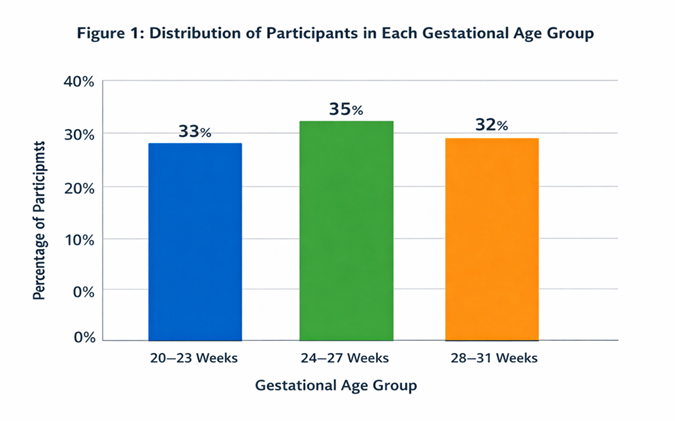
Figure 1 shows quite a clear distribution of the three categories of gestation ages, which is exhibited by the bar chart. Such equal representation also made sure that the comparisons of groups could be made without serious sampling bias. The similar sample size in the groups of gestational age also contributed to the fact that the statistical analysis of the results in terms of time spent on exams and rates of its completion were also reliable.
Duration of Biophysical Profile Examination
The average time that it took obtaining a complete biophysical profile was tested among the three gestational age groups. The summary of the results is shown in Table 3, which gives the standard deviation and mean examination time per group. The results show that the mean time taken to pass the biophysical profile minimized as the gestation age paralleled. Those pregnancies that fell under the periviable group had the longest period to be observed and those of the late very preterm group had the shortest period.
Table 3: Mean Duration Required to Achieve Complete Biophysical Profile
|
Gestational Age Group |
Number of Participants |
Mean Duration (minutes) |
Standard Deviation |
|
20–23 weeks |
40 |
24.1 |
8.7 |
|
24–27 weeks |
42 |
18.6 |
7.5 |
|
28–31 weeks |
38 |
14.3 |
6.2 |
|
Overall Mean |
120 |
19.1 |
8.1 |
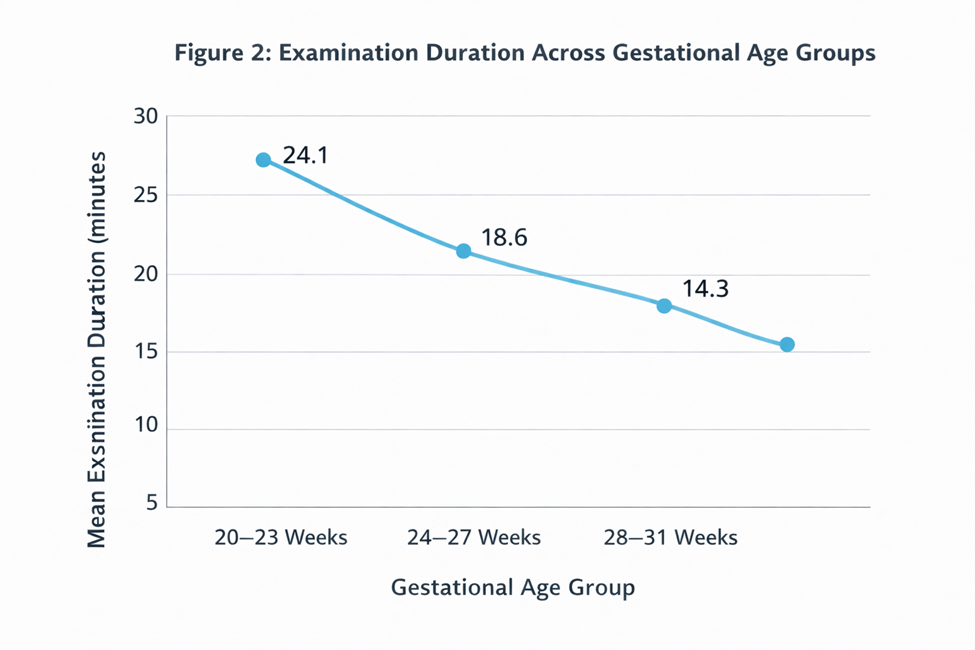
This tendency is also reflected in Figure 2 that provides a line graph representing the reduction of the time passed on the exams within different gestational age groups. The plot clearly shows a negative trend, which implies that fetal behavioral activity is easier to be observed with the increase in gestational age. The findings show that the earlier gestational ages need more period of observation to record the functions of the fetus in regard to breathing as well as other biophysical measurements because the fetal nervous system is relatively immature.
Completion of Biophysical Profile within Standard Observation Time
The confirmation percent of the participants who had a complete biophysical profile at the usual thirty minutes of observation was assessed. Table 4 presents the findings, whereas Figure 3 is a stacked bar graph with the comparison of the completion rates during and outside the standard observation time. These results point to the fact that most of the examinations ended within the normal observation period and especially among individuals of younger gestational ages.
Table 4: Completion of Biophysical Profile within Standard Observation Time (30 Minutes)
|
Gestational Age Group |
Completed ≤30 min (n) |
Completed >30 min (n) |
Completion Rate (%) |
|
20–23 weeks |
31 |
9 |
77.5 |
|
24–27 weeks |
39 |
3 |
92.9 |
|
28–31 weeks |
37 |
1 |
97.4 |
|
Total |
107 |
13 |
89.2 |
This tendency is also reflected in Figure 2 that provides a line graph representing the reduction of the time passed on the exams within different gestational age groups. The plot clearly shows a negative trend, which implies that fetal behavioral activity is easier to be observed with the increase in gestational age. The findings show that the earlier gestational ages need more period of observation to record the functions of the fetus in regard to breathing as well as other biophysical measurements because the fetal nervous system is relatively immature.
Completion of Biophysical Profile within Standard Observation Time
The confirmation percent of the participants who had a complete biophysical profile at the usual thirty minutes of observation was assessed. Table 4 presents the findings, whereas Figure 3 is a stacked bar graph with the comparison of the completion rates during and outside the standard observation time. These results point to the fact that most of the examinations ended within the normal observation period and especially among individuals of younger gestational ages.
Table 4: Completion of Biophysical Profile within Standard Observation Time (30 Minutes)
|
Gestational Age Group |
Completed ≤30 min (n) |
Completed >30 min (n) |
Completion Rate (%) |
|
20–23 weeks |
31 |
9 |
77.5 |
|
24–27 weeks |
39 |
3 |
92.9 |
|
28–31 weeks |
37 |
1 |
97.4 |
|
Total |
107 |
13 |
89.2 |
This tendency is also reflected in Figure 2 that provides a line graph representing the reduction of the time passed on the exams within different gestational age groups. The plot clearly shows a negative trend, which implies that fetal behavioral activity is easier to be observed with the increase in gestational age. The findings show that the earlier gestational ages need more period of observation to record the functions of the fetus in regard to breathing as well as other biophysical measurements because the fetal nervous system is relatively immature.
Completion of Biophysical Profile within Standard Observation Time
The confirmation percent of the participants who had a complete biophysical profile at the usual thirty minutes of observation was assessed. Table 4 presents the findings, whereas Figure 3 is a stacked bar graph with the comparison of the completion rates during and outside the standard observation time. These results point to the fact that most of the examinations ended within the normal observation period and especially among individuals of younger gestational ages.
Table 4: Completion of Biophysical Profile within Standard Observation Time (30 Minutes)
|
Gestational Age Group |
Completed ≤30 min (n) |
Completed >30 min (n) |
Completion Rate (%) |
|
20–23 weeks |
31 |
9 |
77.5 |
|
24–27 weeks |
39 |
3 |
92.9 |
|
28–31 weeks |
37 |
1 |
97.4 |
|
Total |
107 |
13 |
89.2 |
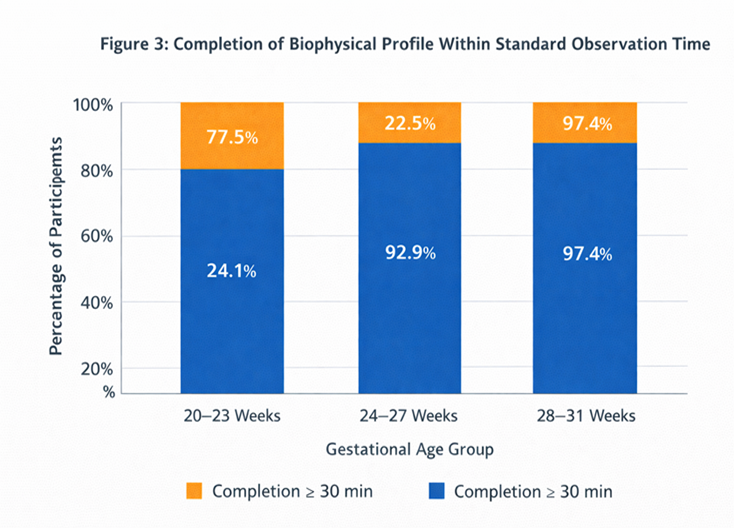
pregnancies. This difference is also well pictured in the stacked bar chart in Figure 3 illustrating that the lower gestational ages had a greater tendency towards long periods of observation to have a complete biophysical profile score. These results facilitate the fact that it is not always possible that a fixed period in observation is adequate to measure activity of the fetus in their earlier developmental stages.
Distribution of Individual Biophysical Profile Parameters
The prevalence of normal and abnormal values of each and every biophysical parameter was analyzed too. Table 5 displays the distribution of those parameters whereas Figure 4 demonstrates the general percentage of the normal results and the abnormal results using the pie chart. The findings imply that in a majority of the respondents, most of the biophysical parameters were found to be within normal ranges.
Table 5: Distribution of Normal and Abnormal Biophysical Profile Parameters
|
Biophysical Parameter |
Normal Findings (n) |
Abnormal Findings (n) |
Normal Percentage (%) |
|
Fetal Breathing Movements |
108 |
12 |
90.0 |
|
Gross Body Movements |
115 |
5 |
95.8 |
|
Fetal Muscle Tone |
117 |
3 |
97.5 |
|
Amniotic Fluid Volume |
116 |
4 |
96.7 |
|
Non-Stress Test |
110 |
10 |
91.7 |
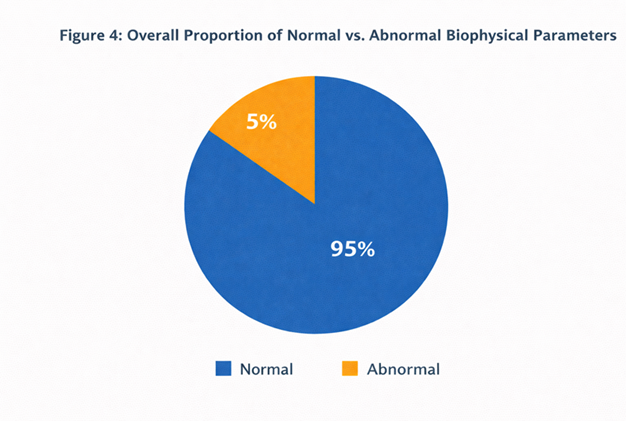
Fetal muscle tone and gross body movements were the most common parameters with the highest percentage of normal results, fetal breathing movements and non-stress test results indicated a slightly lower percentage of normal results. As Figure 4 shows, most of the observations were classified as normal, and it represented the overwhelming majority. This fact also justifies the conclusion that the research sample was made up of mostly healthy low-risk pregnancies with favorable fetal outcomes.
Comparison Between Periviable and Very Preterm Groups
Further analysis of differences of the length of examination was done by comparison of the periviable group and the combined very preterm groups. T. The comparison of the results showed that the perivable group took much more time in the observation time than the very preterm.
Figure 5 allows seeing the differentiation between the examination periods of the two groups as shown by a box plot depicting differentiation of the examination duration. The boxplot demonstrates the larger spread, and median length of stay of the periviable group as opposed to the very preterm group. These trends showed standard deviation at the earlier gestational ages to be more varied and of more time in observation.
Generally, the results reveal that gestational age is a significant factor in calculating the amount of time to take when a biophysical profile is being developed. More gestational ages are correlated with both increased and fluctuating periods of examination, which is probably attributable to the variation in fetal activity and neurological maturation
DISCUSSION :
The current research compared the time it took to complete the biophysical profile (BPP) with a perivably and very preterm low-risk pregnancy. The results showed that the average time of examination was shorter with higher gestational age, which implies that earlier pregnancy needs more time of observation to be represented with a complete BPP score. This also can be attributed to physiology maturation of the fetal central nervous system. At times of early gestation, the frequency of fetal breathing movements and coordinated body movements is lower due to the fact that neuronal pathways that mediate these behaviors are under development. With ongoing gestation, the activity in a fetus is more consistent and can be easily detected during ultrasound analysis, hence requiring shorter durations of examination.
Findings of this research are similar to those that have been conducted in earlier studies that have compared fetal behavioral activity and antenatal surveillance methods. The research focus on fetal neurological development in studies has shown that there is an increase in fetal breathing movement organization at the late second and third trimesters, which makes it easier to measure these parameters when performing the biophysical profile evaluation (16). On the same note, studies at the European obstetric centres revealed that premature gestational ages are likely to take a longer time of observation to entirely assess the BPP since they have a lesser fetal behavioural activity (17).
Other studies that have dwelled on fetal surveillance methods have also found corresponding patterns of duration of examination. The research examining the suitability of ultrasound to measure fetal behavior revealed that the fetal breathing movements are the most unstable parameter and most of them are not present in short periods of observation in the early stages of pregnancy (18). The results help to confirm the results of the current study as the breathing movements and non-stress test responses are one of the parameters that sometimes demand the use of longer periods of time to be observed.
Evidence on the effects of gestational age on fetal activity patterns has also been identified in research studies done on the North American obstetric populations. According to one of the studies, the mean time to get a comforting BPP score reduces considerably after 28 weeks of pregnancy since fetal behavioral cycles become more predictable (19). This observation fits into the findings of the current study, as there the late very preterm group had the shortest mean length of examination.
Clinical Implications
The results of this paper are significant in the obstetric practice, especially in explaining the BPP results at early gestational ages. Clinicians need to be aware that a limited time of observation of the fetus may not be adequate to predict fetal compromise since some fetal biophysical parameters may show negative results. Instead, it can be due to normal developmental immature behavioral patterns of fetuses. The increase of observation time or examination could thus enhance the quality of the diagnosis and minimize inappropriate treatments of a medical character.
In lean healthcare systems like the one observed in most developing nations, an antenatal surveillance strategy needs to be optimized so as to enhance the outcomes of both maternal and neonatal. There is an indication that proper fetal monitoring has the ability to minimize the occurrence of poor perinatal outcome due to the ability to promptly make clinical decisions (20). Broadening of gestational period observation time use of BPP measurements can enhance the effectiveness and consistency of the fetal monitoring process within such environments.
Study Limitations
Despite the fact that certain insights on the time frame of BPP evaluation in early pregnancies were made possible in this study, there are a number of limitations that are to be considered. To begin with, the research was carried out in few selected hospitals of tertiary care, and this limits the generalization of the findings to other healthcare institutions, especially in rural clinics where resources of diagnosis are limited. Secondly, the sample size was quite small, and this could have failed to provide a complete variability of fetal behavioral patterns in various populations. Third, the analysis only focused on low-risk pregnancies thus; the results cannot be directly applicable to high-risk pregnancies in which placental insufficiency or fetal compromise can modify fetal activity patterns.
CONCLUSION:
Finally, the current research paper shows that gestational age also affects the period of time needed to come up with a complete biophysical profile. It has been observed that periviable pregnancies take more time to be observed because of the difference in development of fetal behavior and very preterm ones have shorter lengths of examination as fetal neurologic maturity becomes more elevated. Such results indicate that gestational age should be taken into account when interpreting the results of BPP during the first trimester of pregnancy. Flexible observation policies, which depend on the fetus stage during development, could be adopted to improve the quality of the antenatal fetal surveillance and provide better obstetric care.
BIBLIOGRAPHY:
1. American College of Obstetricians and Gynecologists. Special tests for monitoring fetal well-being.
2. Manning FA, Morrison I, Lange IR, Harman CR, Chamberlain PF. Fetal biophysical profile scoring.
3. Cleveland Clinic. Biophysical profile: purpose, test and score.
4. Perinatology.com. Biophysical profile overview.
5. ScienceDirect. Fetal biophysical profile assessment.
6. Johns Hopkins Medicine. Biophysical profile ultrasound and non-stress test.
7. Radiopaedia. Fetal biophysical profile.
8. Baskett TF, Allen VM. Gestational age and fetal biophysical assessment.
9. World Health Organization. Preterm birth and neonatal outcomes.
10. American College of Obstetricians and Gynecologists. Periviable birth guidelines.
11. Lalor JG, et al. Biophysical profile for fetal assessment in high-risk pregnancies.
12. Global Ultrasound Institute. Biophysical profile in obstetric ultrasound.
13. Gomez LM, et al. Duration of biophysical profile in periviable and very preterm pregnancies.
14. Pakistan Journal of Medical Sciences. Fetal biophysical profile in obstetric practice.
15. Hussain DRU. Sonographic biophysical profile in detection of fetal compromise.
16. Visser GHA, Mulder EJH. Fetal behavioral states and neurological development. Early Hum Dev. 2017;112:1–6.
17. DiPietro JA, Voegtline KM. Fetal behavioral development and fetal monitoring. Semin Perinatol. 2015;39(3):172–179.
18. Rizzo G, Capponi A, Arduini D. Fetal breathing movements and ultrasound surveillance in early gestation. Prenat Diagn. 2016;36(2):101–107.
19. Simpson LL. Maternal and fetal factors influencing antenatal fetal testing. Obstet Gynecol Clin North Am. 2015;42(2):295–307.
20. Alfirevic Z, Stampalija T, Gyte GML. Fetal monitoring in pregnancy for improving outcomes. Cochrane Database Syst Rev. 2017;6:CD007863.
21. Hofmeyr GJ, Haws RA, Bergström S, et al. Obstetric care in low-resource settings. Int J Gynecol Obstet. 2016;135(1):S2–S5.
22. Olesen AG, Svare JA. Ultrasound monitoring of fetal activity during pregnancy. Acta Obstet Gynecol Scand. 2018;97(4):413–420.
23. Sonek JD, Kagan KO. Sonographic evaluation of fetal activity patterns. Ultrasound Obstet Gynecol. 2019;53(3):309–315.
24. Prefumo F, Bhide A. Fetal surveillance techniques in modern obstetrics. Best Pract Res Clin Obstet Gynaecol. 2018;49:2–13.
25. Gardosi J, Madurasinghe V. Antenatal monitoring and fetal health outcomes. BJOG. 2017;124(8):1221–1228.