Digital Leadership Competencies and Their Impact on Organizational Change Management Success
- Susmita Saha , MBA National University, Bangladesh Email:susmitasaha9727@gmail.com
- Rasheda Yasmin , Masters in Mathematics ,Chittagong University rashedasumicu@gmail.com
- Md. Shakil , LL.B,LL.MPremier university ,Chittagong ,Bangladesh advocateshakil@gmail .com
- Zakaria Ferdous , MBA International Islamic University of Chittagong Email- shishirferdous@gamil.com
- Anik Chanda , MBA in Supply Chain Management, Bangladesh University of Professionals anikchanda.ac@gmail.com
- Mohammad Mohibul Alam , MSc in International Business with Data Analytics with Advance Practice Ulster University of London London, UK Email-mohammadmohibulalam9@gmail.com
Article Information:
Abstract:
In the fast changing digital environment of the present day, proper leadership is essential in the accomplishment of organizational change programs. Digital leadership skills, including the strategic vision, technological proficiency, innovation orientation, and relational skills are important in leading organizations through transformational change. This paper focuses on exploring the role of digital leadership competencies in organizational change management (OCM) effectiveness by relying on theoretical approaches to change leadership including transformational leadership, adaptive leadership, and the technology-organization-environment framework. The article combines both empirical data and theoretical understandings in its quest to unravel the impacts of digital leaders on the engagement of employees, organizational culture and the process of change adoption. The results indicate that leaders who have strong digital competencies can help to implement the changes more easily, increase the commitment of the employees, and sustain the organizational performance. Also, the paper identifies possible obstacles, such as the unwillingness to undergo digital transformation, the lack of technological infrastructure, and the leadership development gaps. The combination of theory and practice makes this research a part of the well-rounded picture of how digital leadership can be used to facilitate effective change management which can provide valuable insights to managers, HR practitioners, and policymakers.
Keywords:
Article :
INTRODUCTION :
The rapid rate of the digital transformation has fundamentally changed the way organizations are run, compete and manage change. The development of digital technologies, including artificial intelligence, data analytics, cloud applications, remote collaboration tools, and predictive models designed to anticipate market behaviors [27], utilized to reduce information asymmetry and gain competitive advantage [28], has forced organizations to keep changing their structures, processes, and business models. The effectiveness of organizational change programs in this dynamic environment is more and more being pegged on leadership skills, which go beyond the conventional management skills into digital vision, technological savvy, and responsive decision-making [2], [15].
Digital leadership has been introduced as a key construct of navigating change within a digitally-driven environment. Compared to traditional leadership methods, digital leadership focuses on the capacity to use digital technologies in strategic ways, promote innovation, work in virtual and hybrid working conditions, and lead employees through the complicated change processes [1], [6], [23]. As per empirical studies, digital leaders are core towards shaping organizational digital capabilities, alignment of technological initiatives to strategic objectives and staff preparedness to change [2], [7].
Organization change management (OCM) can be defined as the planned process that organizations follow in transforming individuals, teams, and systems to achieve a desired future state out of the existing state. Effective communication, employee involvement, low resistance and long-term improvement of performance are some of the characteristics of successful change management [10], [13]. Nonetheless, most change projects fail because of the lack of strong leadership, absence of effective alignment between technology and human beings, and lack of consideration to psychological and behavioral processes involved in adopting change [9], [11].
The current studies emphasize the increased significance of leadership competences in influencing the results of the change process, especially in digital transformation initiatives. Stakeholders who are highly digital enable them to address uncertainty, facilitate knowledge exchange, and establish resilience in times of disruption [16], [25]. Moreover, digital leadership affects motivation and perceived organizational support among employees which is vital in successful implementation of change and long term sustainability [8], [9].
Even though the issue of digital leadership is gaining more academic interest, more holistic picture is still required regarding the role of particular digital leadership skills in the successful management of organizational change. Previous researchers tend to analyze digital transformation, innovation, or performance results in isolation without comprehensively describing the processes of how leadership capabilities are turned into successful change processes [15], [23]. This is the gap that should be addressed especially because it is evident that organizations are constantly grappling with rapid technological changes, remote work-related issues, and the changing expectations of stakeholders [1], [19].
Thus, this study aims to discuss how digital leadership skills influence the success of change management in organizations. This paper will attempt to create a holistic view of the channels that digital leaders can use to affect change outcomes by synthesizing the findings of leadership, digital transformation, and organizational change literature. The research provides practical value to the field as well as theory through the provision of an organized framework that outlines important competencies, mediating mechanisms, and contextual issues that ensure successful change in the digital age.
MATERIAL AND METHODS:
Literature Review
Digital Leadership
The term digital leadership has become more popular as organizations are turning more and more to digital technologies to survive and to be competitive. It can be defined as the capacity of the leader to use digital means, information and technology to define organizational strategy, spur innovation, and lead employees through digital transformation efforts [15], [23]. Digital leadership, in contrast to the traditional one, is a complex of technological competence and strategy, with the ability to act, and with interpersonal skills [2], [7].
Recent works spell out that digital leaders can be seen as facilitators of organizational digital change through matching technology uptake to business goals and change processes [16], [24]. Albannai et al. [2] emphasize the importance of digital leadership in creating digital dynamic capabilities through which firms can sense, seize, and reconfigure resources in changing environments fast. On the same note, Tigre et al. [23] theorize digital leadership as a multi-dimensional and emerging construct that involves digital mindset, innovation orientation, and collaborative capability.
Remote and hybrid work is increasing in size and is amplifying the use of digital leadership. This has necessitated leaders to operate virtual teams, move beyond physical and psychological distance, and performance and engagement in digitally mediated settings [1], [6]. Efficient digital leadership in those situations consists of digital communication skills, trust, as well as the capacity to promote collaboration within technological platforms [1].
Digital Leader Capabilities.
The digital leadership competencies are the more specific knowledge, skills, and abilities that allow leaders to lead the organization through the digital change effectively. Such competencies tend to be digital literacy, strategic thinking, innovation capability, adaptability, and interpersonal effectiveness [15], [23]. According to Lin [15], the leaders need to be not only digital literate but also have the cognitive and behavioral skills to convert the opportunities of digital opportunities into organizational value.
The strategic vision and innovation orientation are strategic digital leadership competencies that have been found by empirical research to be of great importance. Leaders who are capable of formulating an inspiring digital vision and foster a culture of experimentation are better placed to lead a change and minimize employee resistance [16], [22]. There are also communication, emotional intelligence, and employee empowerment competencies that are necessary to maintain motivation and engagement in the transformation processes [8], [25].
Multi-level capabilities are also supported by leadership competency models in different contexts. As an example, Al-Ayed et al. [1] show that e-leadership competencies are one of the key factors to drive the performance of virtual teams, and Lin et al. [14] highlight the importance of organized competency models in leading the performance of digital teams. These results indicate that digital leadership skills are found on individual, team, and organizational levels, and define the success of change programs. Success in organizational change management is a factor evaluated by the organization during the application of this change. 2 cm soft-tissue lesion restricted to the skin and subcutaneous plane, showing low-velocity monophasic flow on Doppler with no intra-abdominal extension (Fig 2).
Table 1: Key digital leadership competencies identified in prior studies
|
Digital Leadership Competency |
Description |
|
Strategic Digital Vision |
Ability to align digital initiatives with organizational strategy |
|
Digital Literacy |
Understanding and effective use of digital technologies |
|
Innovation Orientation |
Encouraging experimentation and new digital solutions |
|
Adaptability and Agility |
Responding effectively to rapid technological change |
|
Relational and Communication Skills |
Leading, motivating, and engaging employees digitally |
Organizational Change Management Success
This is an aspect that the organization considers when implementing this change. The term organizational change management success can be defined as to what degree the change initiatives can meet the intended goals, be embraced by the employees, and lead to the long-term performance gains [10], [13]. The change is not only successful when it is implemented with the help of technology, but also when it is accepted in terms of the behavior, when it is psychologically prepared and integrated into the organizational practices over the long term [9], [11].
The studies point out that one of the most significant factors of change success is leadership. According to Korac et al. [10], leadership commitment, quality of communication, and employee involvement are some of the predictors of positive change outcomes. Likewise, Krajcsak and Bakacsi [11] put forward that an effective change takes place at various levels such as individual, organizational, and strategic levels whereby leaders must deal with complexity and alignment.
The psychological aspect of change has also been given more attention. Employee motivation, perceived organizational support and trust in leadership have a great impact on change acceptance and maintenance [8], [9]. These dynamics are further increased by the initiatives of digital transformation, especially because of the higher levels of uncertainty, skills requirements, and changing work practices [12], [19].
Digital Leadership and Organizational Change Management.
The syncretic point of digital leadership and organization change management is an emerging field of research attention. Digital leaders impact the outcomes of change by establishing organizational culture, creating knowledge sharing, and creating resilience during disruption [7], [25]. Malik et al. [16] show that digital leadership is very instrumental in driving change in organisations by combining the elements of business model change with technological innovation.
In addition, digital leadership capabilities increase the flexibility of organizations to change through the agility of the workforce and technological adaptation [18], [17]. Those leaders that foster inspiration, teamwork, and experimentation are in a better place to minimize resistance and maintain change initiatives [9], [22]. In a period of crisis-related changes, including the one that took place during the COVID-19 pandemic, the concept of digital leadership has been demonstrated to enhance organizational resilience and adaptability [19], [25].
In spite of such insights, the available literature tends to explore digital leadership or change management separately. Integrative frameworks are required in the manner in which certain digital leadership competencies can be converted into effective change outcomes under various organizational settings [15], [23]. This gap needs to be resolved in order to promote the development of theoretical knowledge and practice of digital leadership in change management.
Table 2: Organizational change management success factors and leadership influence
|
Change Success Factor |
Role of Digital Leadership |
|
Employee Commitment |
Enhances motivation and reduces resistance |
|
Knowledge Sharing |
Promotes collaboration and learning |
|
Communication Effectiveness |
Ensures clarity and alignment during change |
|
Organizational Readiness |
Builds confidence and capability for change |
|
Sustainability of Change |
Reinforces long-term adoption and resilience |
The liver, kidneys, spleen, pancreas, gallbladder, and urinary bladder were normal. No ascites or lymphadenopathy was present. MRI of the abdomen and back further delineated a large, homogeneous, pedunculated soft-tissue mass arising from the right posterior-lateral abdominal wall. The lesion exhibited intermediate T1/T2 signal intensity, lacked cystic components, and showed no connection with the vertebral canal, spinal cord, or intra-abdominal cavity (Fig 3). There was no evidence of spinal dysraphism, neural tube defect, teratoma, or solid-organ involvement.
3. Conceptual Model and theoretical Framework.
The discussion of the impact that digital leadership competencies can have on the effectiveness of managing change in organizations cannot be made without a substantial theoretical framework based on leadership, motivation, and change perspectives. This paper has had recourse to several complementary theories to elucidate how digital leaders influence the effects of change in organizations that are being digitized.
3.1 Theoretical Foundations
Transformational leadership theory has offered a theoretical basis upon which digital leadership in context of change can be analysed. Transformational leaders encourage their followers by providing them with vision, intellectual stimulation, and personalized attention that are needed in confusing and changing time [16], [25]. In the digital world, these qualities are supplemented by the leaders being able to use technology to promote vision, inspire innovation, and facilitate teamwork [23].
The self-determination theory also describes the motivational processes of successful adoption of changes. Employees tend to be more accepting of organizational change in case they feel that they are in charge, competent, and related [8]. Intrinsic motivation can be increased and change resistance diminished by digital leaders who promote learning amongst employees, foster their involvement, and supply them with technological resources [9].
Organizational change theory reiterates that successful change is a multi-level process that entails individual behavior, organization systems and strategic alignment [11], [13]. Leaders are given the core role in aligning the digital initiatives with organizational goals coordinating these levels with managing stakeholder expectations and enforcing the intended behavior across the change process [10].
3.2 Conceptual Framework
According to the analysed literature, the proposed study develops a conceptual framework where digital leadership competencies are the key antecedent of organizational change management success. Digital leadership skills include strategic digital vision, technological skills, orientation to innovations, adaptive decisions, and relational skills [15], [23].
According to the framework, change management success is directly and indirectly affected by the digital leadership competencies. The mediating mechanisms through which the indirect effects take place are employee motivation, knowledge sharing and organizational readiness to change [8], [9], [18]. Leaders with high levels of digital competencies provide supportive conditions that contribute to more confidence and readiness of the employees to take part in the change initiatives [25].
Also, contextual moderators influence the correlation between digital leadership competencies and change management success. The effectiveness of digital leadership in the change processes can be enhanced or diminished by such factors as the organizational culture, technological infrastructure, and workforce agility [7], [17], [18]. Digital leadership competencies in digitally mature organizations have a higher chance of producing successful and sustainable change outcomes.
3.3 Research Propositions
Based on theoretical framework, propositions are put forward as follows:
· P1: The impact of the digital leadership competencies on the success of the organizational change management is positive.
· P2: Employee motivation is the intermediate variable between digital leadership competencies and the success of management of organizational change.
· P3: Organizational change readiness mediates the association of digital leadership competencies and organizational change management success.
· P4: Digital leadership competencies are moderated by organizational culture and technological readiness to influence organizational change management success.
These propositions offer systematic ground on the study of the effects of digital leadership on change outcomes and draw conclusions on what should be done in the empirical research in the future.
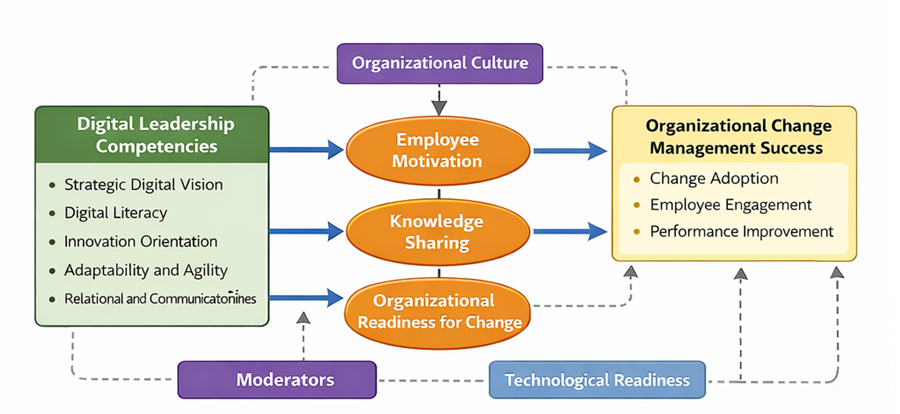
Fig. 1. Conceptual framework of digital leadership competencies and organizational change management success.
Research Methodology
This research design has a conceptual research design that is backed by an integrative review of the available literature on digital leadership, leadership competencies and leadership management of change in organizations. The conceptual approach would be suitable due to the dynamism of digital leadership and the necessity to integrate fragmented results in the field of leadership and digital transformation and change management [15], [23].
Research Design
The selected research design relies upon the systematic review and synthesis of peer-reviewed journal articles, scholarly books, and conference publications covering the topics of digital leadership competencies and organizational change outcomes. The research focuses on more recent empirical and theoretical developments to ascertain that research is relevant to the current issues of digital transformation [2], [7], [16]. Through an intellectual synthesis, the research results in a broad conceptual framework on how digital leadership competencies can affect the success of change management.
Data Sources and Selection criteria.
The sources of literature employed in this research were chosen based on the high-quality academic sources on digital leadership, leadership skills, organizational change, as well as digital transformation. Preference was made on the studies published in the credible journals and academic publishers that offer empirical evidence or theoretical perspectives of the leadership-spurred change processes [1], [6], [15].
In general, the selection criteria were relevancy to digital leadership competencies, explicit discussion of organizational change or transformation, and methodological rigor. Research papers that touched on remote working, virtual leadership, managing crises and change with technology were also brought to capture various organizational situations [19], [25].
Data Analysis and Synthesis
The analysis of the chosen literature was based on a thematic synthesis. The most important themes in connection with the digital leadership competency, change mechanisms, and success factors were determined and classified. The process allowed merging the findings of studies and developing the conceptual framework and research propositions [9], [11].
Relationships and patterns between variables, including leadership competencies, employee motivation, organizational readiness and change outcomes, were tested to establish common mechanisms and situational effects [8], [18]. This method of analysis will increase the internal consistency of the framework and facilitate the theory-building in the literature of digital leadership and change management.
Ethical Considerations
Since it is a conceptual research based on secondary data in published sources only, no human subjects or primary data collection are involved in the research. Academic integrity, application of suitable citation and prevention of plagiarism were ethical standards that were highly considered during the research.The liver, spleen, pancreas, kidneys, bowel loops, urinary bladder, uterus, and major abdominal vessels were normal in appearance. No lymphadenopathy, ascites, or pleural effusion was noted.
DISCUSSION:
The results of the present research demonstrate the high importance of the digital leadership competencies in defining the effectiveness of the organizational change management efforts. With organisations becoming more and more dependent on digital technologies in their effort to navigate through the complex and uncertain environment, the ability to combine technological skills with the strategic and relation skills in leadership becomes more critical [15], [23]. The suggested model supports the perception that digital leadership is not limited to technical expertise, but it entails vision, flexibility, communication, and human dynamics management during change procedures [2], [7].
The second main lesson of this paper is the mediating contribution of employee motivation and organizational preparedness to the conversion of digital leadership competencies into effective change delivery. In line with the self-determination theory, employees tend to endorse and maintain a change when the leaders promote autonomy, competence, and perceived organizational support [8], [9]. Online executives fostering education, knowledge exchange as well as experimentation contribute to resistance and increase workforce dedication to change initiatives [18], [25].
Another aspect raised during the discussion is the role of leadership in facilitating the psychological and behavioral aspects of change. Organizational change is not merely a structural or technological process, but is fundamentally human and leaders need to deal with uncertainty, stress and identity changes among organizational employees [9], [13]. Emotional intelligence, open communication, and trust-building are some of the digital leadership skills that stand out as central in ensuring engagement and performance in transformation endeavors [6], [16].
Moreover, organizational culture and technological infrastructure are some of the contextual factors that determine the efficiency of digital leadership in change management. Digital leadership competencies are strong and effective in changing success when supported by strong cultures that endorse innovativeness, collaboration, and lifelong learning [7], [17]. On the other hand, strict organization and a lack of digital preparedness can only limit the capacity of leaders to adopt and maintain change despite having well-developed leadership skills [12], [19].
The research is also relevant to the current issue on leadership in crisis and post crisis situations. Research evidence on the pandemic indicates that digital leadership can be used to increase organizational resilience, including through quick decision-making, virtual coordination, and adaptive change plans [19], [25]. These results support the applicability of digital leadership competencies in both planned and emergent and disruptive change situations.
In general, the discussion confirms the fact that the digital leadership competencies are a key facilitator of the successful management of change in the organization. The combination of leadership, motivation, and change theories has allowed this study to have a holistic view of the role of digital leaders in facilitating change processes and achievement in modern organizations.
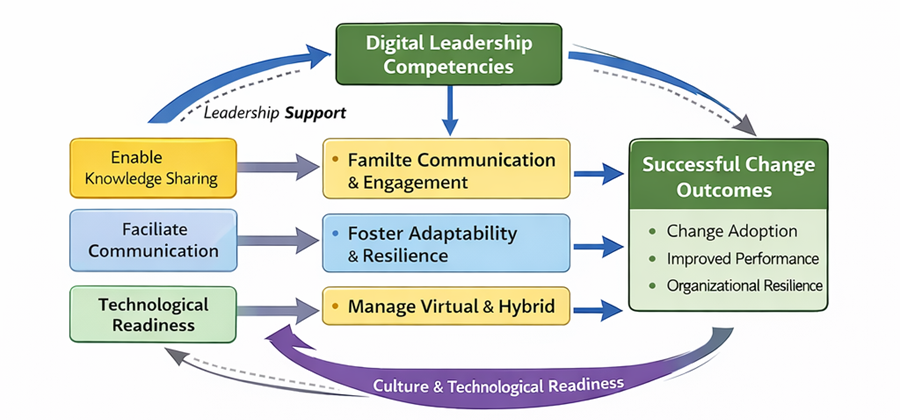
Mechanisms linking digital leadership competencies to organizational change outcomes.
Pain and Itch Obstacles to Change Having Digital Leadership.
Although the need to focus on the digital leadership competencies is acknowledged to enable the successful management of the process of organizational change, companies are prone to many challenges and obstacles which in turn render the successful implementation of the change management process. These barriers are both at an individual, organizational, and technological level and may greatly compromise the change results in case they are not mitigated.
Psychological Barriers and Resistance to Change.
Employee resistance is one of the most lasting challenges in the organizational change. Digital transformation programs tend to alter the usual habits, roles, and hierarchies creating uncertainty and fear in staff members [9], [13]. When employees feel that there is no support, there is poor communication or a weak involvement of the leaders in the change processes, resistance is also increased [8]. Although the digital leaders might be exceptionally competent in technical skills, their inability to consider emotional and psychological issues might undermine the change adoption and sustainability.
Digital Leadership Competencies Gaps.
The other important obstacle is the lack of uniformity in the acquisition of digital leadership skills in organizations. Whereas with others, leaders have high levels of digital vision/innovation orientation, others are not even digital literate or able to merge technology with strategy and human factors [15], [23]. This is a competency gap that constrains the ability of the leaders to drive organizations through multifaceted change processes especially in organizations that have a high rate of technological change and diversification [2], [14].
Organization Culture and Structural Constraints.
The organizational culture is the decisive factor of effectiveness of digital leadership in change. Risk-averse cultures, hierarchical cultures, and cultures that resist learning may limit the actions of leaders that facilitate innovation and agility [7], [11]. Structural rigidities, e.g. siloed departments and rigid processes, further hamper collaboration and slacken decision-making, decreasing the chances of a successful change implementation [17], [18].
Technological and Resource Limitations.
Lack of technological setup and insufficient resources are another significant hurdle, especially for small and medium-sized businesses where digital adaptation is often dictated by governmental leadership and regulatory frameworks rather than internal strategy [26]. Poor digital systems, data disintegration and insufficiency of investment in digital tools can limit the capability of leaders to realize change plans [12], [21]. These weaknesses are usually compounded by the lack of skills and the lack of training opportunities, which do not help employees to prepare to digital transformation [18].
6.5 Change Management in Hybrid and Virtual Workplaces.
Remote and hybrid work has brought forth additional complications to change management. Virtual environments may escalate communication divide, break social cohesion and erode trust when not well managed [1], [6]. Through change initiatives, digital leaders need to break virtual distance and sustain performance, engagement, and alignment, which is very difficult without high-level communication, coordination, and relationship skills [6].
CONCLUSION :
This paper has explored the importance of digital leadership competencies in determining the success of organizational change management in the face of the current digital transformation. The capacity of leaders to combine digital capabilities with strategic perspective, responsive decision formulation, and interpersonal skills has become a decisive factor of effective change implementation as organizations become more technologically driven and uncertain in their operational context [15], [23].
The results indicate that digital leadership competencies have a direct and an indirect effect on ensuring the success of change management. Leaders with high digital aptitudes promote employee engagement, organizational preparedness, and sharing of knowledge -processes that are crucial in defeating resistance and maintaining change programs [8], [9], [18]. Additionally, digital leadership empowers organizations to operate in a complex environment, cope with virtual and hybrid job setups and react to instances of disruption to establish resilience and long-term flexibility [1], [19], [25].
The significance of contextual factors in changing processes, including the organizational culture and technological infrastructure, is also highlighted in this study as the factors that influence the success of digital leadership. Favorable cultures and sufficient digital infrastructure magnify the benefits of leadership skills, whereas structural inflexibility and technological limitations may hamper even a properly developed change process [7], [12], [17]. These lessons support the idea of a comprehensive vision of digital transformation that synchronizes the development of leadership, the organization, and investments in technologies.
To sum up, digital leadership competencies can be described as a critical organizational resource that can be used to successfully manage change in the digital age. This study can help to fill the increasing literature on digital leadership and organizational change and offer important recommendations to practitioners aiming to successfully and sustainably implement changes. The proposed framework should be empirically tested in various organizational settings in the future and new leadership skills that may be needed in an environment that is more data-driven and AI-enabled studied [15], [23]..
BIBLIOGRAPHY:
1. Al-Ayed, S. I., Al-Tit, A. A., Alqahtani, M. M., AlThuwaini, S., Al-shanableh, N., Haija, A. A. A., ... & Al-Momani, A. A. M. (2025). E-leadership competencies and virtual team performance: a study in the age of remote work. In Intelligence-Driven Circular Economy: Regeneration Towards Sustainability and Social Responsibility–Volume 1 (pp. 155-168). Cham: Springer Nature Switzerland. https://doi.org/10.1007/978-3-031-73899-9_13
2. Albannai, N. A., Raziq, M. M., Malik, M., Scott-Kennel, J., & Igoe, J. (2025). Unraveling the role of digital leadership in developing digital dynamic capabilities for the digital transformation of firms. Benchmarking: An International Journal, 32(6), 2250-2275. https://doi.org/10.1108/BIJ-10-2023-0756
3. Baiyere, A., Salmela, H., Nieminen, H., & Kankainen, T. (2025). Assessing digital capabilities for digital transformation—The MIND framework. Information Systems Journal, 35(1), 6-38. https://doi.org/10.1111/isj.12519
4. Bilderback, S., & Thompson, C. B. (2025). Developing global leadership competence: redefining higher education for interconnected economies. Higher Education, Skills and Work-Based Learning. https://doi.org/10.1108/HESWBL-10-2024-0301
5. Bird, A., & Liu, L. A. (2025). Mapping the content domain of global leadership competencies. In Global leadership (pp. 125-151). Routledge. https://doi.org/10.4324/9781003541752-6
6. Bravo-Duarte, F., Tordera, N., & Rodríguez, I. (2025). Overcoming virtual distance: a systematic review of leadership competencies for managing performance in telework. Frontiers in Organizational Psychology, 2, 1499248. https://doi.org/10.3389/forgp.2024.1499248
7. Hariyani, D., Hariyani, P., & Mishra, S. (2025). The role of leadership in sustainable digital transformation of the organization. Sustainable Futures, 10, 101130. https://doi.org/10.1016/j.sftr.2025.101130
8. Huang, R. T. (2025). Exploring the roles of self-determined motivation and perceived organizational support in organizational change. European Journal of Management and Business Economics, 34(2), 193-210. https://doi.org/10.1108/EJMBE-03-2022-0056
9. Kamarova, S., Gagné, M., Holtrop, D., & Dunlop, P. D. (2025). Integrating behavior and organizational change literatures to uncover crucial psychological mechanisms underlying the adoption and maintenance of organizational change. Journal of Organizational Behavior, 46(2), 263-287. https://doi.org/10.1002/job.2832
10. Korac, S., Moser-Plautz, B., Müller, S., & Saliterer, I. (2025). Predictors of change outcomes in mandated change: unpacking the outcome triangle. Public Management Review, 27(6), 1533-1562. https://doi.org/10.1080/14719037.2023.2299931
11. Krajcsák, Z., & Bakacsi, G. (2025). The three levels of organizational change to build future potential organizations. International Journal of Innovation Science, 17(3), 630-649. https://doi.org/10.1108/IJIS-08-2023-0173
12. Lemos, S. I., Ferreira, F. A., Zopounidis, C., Galariotis, E., & Ferreira, N. C. (2025). Artificial intelligence and change management in small and medium-sized enterprises: an analysis of dynamics within adaptation initiatives. Annals of Operations Research, 353(1), 197-223. https://doi.org/10.1007/s10479-022-05159-4
13. Lewis, L. (2025). Organizational change. In Origins, Traditions, and Trends of Organizational Communication (pp. 415-436). Routledge. https://doi.org/10.4324/9781003484639-24
14. Lin, C., Bingwei, L., Sicheng, H., Yuchi, Z., Nan, L., Jiaqi, Z., ... & Yanqing, W. (2025). Construction of leadership competency model for civil aviation flight cadets: An empirical study from China. Scientific Reports, 15(1), 12739. https://doi.org/10.1038/s41598-025-93713-y
15. Lin, Q. (2025). Digital leadership: a systematic literature review and future research agenda. European Journal of Innovation Management, 28(6), 2469-2488. https://doi.org/10.1108/EJIM-07-2023-0522
16. Malik, M., Raziq, M. M., Sarwar, N., & Tariq, A. (2025). Digital leadership, business model innovation and organizational change: role of leader in steering digital transformation. Benchmarking: An International Journal, 32(5), 1632-1662. https://doi.org/10.1108/BIJ-04-2023-0283
17. Meier, A., Eller, R., & Peters, M. (2025). Creating competitiveness in incumbent small-and medium-sized enterprises: A revised perspective on digital transformation. Journal of Business Research, 186, 115028. https://doi.org/10.1016/j.jbusres.2024.115028
18. Muduli, A., & Choudhury, A. (2025). Exploring the role of workforce agility on digital transformation: a systematic literature review. Benchmarking: An International Journal, 32(2), 492-512. https://doi.org/10.1108/BIJ-02-2023-0108
19. Müller, M., Vaseková, V., Kročil, O., & Kosina, D. (2025). COVID-19 as an advantage or a disaster? Crisis and change management strategies of Hong Kong social entrepreneurs during the pandemic. Journal of Organizational Change Management, 38(1), 25-58. https://doi.org/10.1108/JOCM-02-2024-0101
20. Sipahioglu, M. (2025). Effective leadership strategies for enhancing student success in higher education: insights for administrators, faculty, and policymakers. In Navigating Leadership and Policy Management in Education (pp. 169-202). IGI Global.
21. Somayajula, S. K. (2025). Enterprise Data Migration Success Patterns: Lessons from Large-Scale Transformations. Technology (IJRCAIT), 8(1).
22. Tian, H., Han, J., Sun, M., & Lv, X. (2025). Keeping pace with the times: research on the impact of digital leadership on radical green innovation of manufacturing enterprises. European Journal of Innovation Management, 28(3), 900-927. https://doi.org/10.1108/EJIM-11-2022-0647
23. Tigre, F. B., Henriques, P. L., & Curado, C. (2025). The digital leadership emerging construct: a multi-method approach. Management Review Quarterly, 75(1), 789-836. https://doi.org/10.1007/s11301-023-00395-9
24. Wang, S., & Zhang, H. (2025). Enhancing SMEs sustainable innovation and performance through digital transformation: Insights from strategic technology, organizational dynamics, and environmental adaptation. Socio-Economic Planning Sciences, 98, 102124. https://doi.org/10.1016/j.seps.2024.102124
25. Yacoubian, L. J. (2025). Fiscal burden dynamics and administrative resilience in Argentina’s monotributo regime: Evidence from 2019 to 2025. Financial and Credit Activity Problems of Theory and Practice, 5(64), 40–52. https://doi.org/10.55643/fcaptp.5.64.2025.4880
26. Yacoubian, L. J. (2025). The predictive power of social media sentiment on stock market returns. International Journal for Multidisciplinary Research, 7(3), Art. 46689. https://doi.org/10.36948/ijfmr.2025.v07i03.46689
27. Yacoubian, L. J., Garcia, D. S. P., & Carvalho, G. H. F. de. (2025). Assimetria de informação e vantagem competitiva em finanças baseadas em dados: Um estudo abrangente sobre a transformação do setor financeiro na era da informação (Vol. 1). Repositório Acadêmico – Editora Acadêmica Aluz. https://doi.org/10.51473/ed.al.aiv
28. Yang, Z., Dong, M., Guo, H., & Peng, W. (2025). Empowering resilience through digital transformation intentions: synergizing knowledge sharing and transformational leadership amid COVID-19. Journal of Organizational Change Management, 38(1), 59-81. https://doi.org/10.1108/JOCM-07-2023-0303