PERCEIVED JOB READINESS IN TERMS OF SELF-CONFIDENCE, WORKPLACE ATTITUDE, AND SOFT SKILLS AMONG NURSING STUDENTS
- Farha Usmani , Associate Professor, Dept. of Community Health Nursing, Teerthanker Mahaveer University, Moradabad, Uttar Pradesh, India.
- Ayman Fatima , Associate Professor, Dept. of Obstetrics and Gynecological Nursing, Bora Institute of Allied Health Sciences, Uttar Pradesh, India.
- Gazala Parveen , Nursing Tutor, Dept. of Medical Surgical Nursing, New India institute of Nursing Studies, Purnia, Bihar, India.
- Shakeel Ahmad , Principal, Dept. of Community Health Nursing, Global nursing school, Sawai Madhopur, Rajasthan, India.
- Sumbul Nisha , Assistant Professor, Dept. of Child Health Nursing, GS University, Pilkhuwa, Uttar Pradesh
- Priyanka Rawat , PG Tutor, Dept. of Community Health Nursing, Teerthanker Mahaveer University, Moradabad, Uttar Pradesh, India.
Article Information:
Abstract:
Perceived job readiness is essential for the smooth transition of nursing students from academic learning to professional practice. It includes self-confidence, workplace attitude, and soft skills.Objective:To assess perceived job readiness and its components among final-year nursing students and to determine the association between job readiness and selected demographic variables.Methods:A descriptive cross-sectional study was conducted among 50 final-year nursing students at GS College of Nursing, Pilkhuwa, Uttar Pradesh, selected using purposive sampling. Data were collected using a validated, self-structured 5-point Likert scale questionnaire assessing self-confidence, workplace attitude, and soft skills. Descriptive and inferential statistics were used.Results:High job readiness was reported by 78% of students. High levels of self-confidence (76%), positive workplace attitude (80%), and adequate soft skills (82%) were observed. No statistically significant association was found between demographic variables and job readiness (p > 0.05).Conclusion: Most final-year nursing students perceived themselves as job-ready. Continued emphasis on confidence building and soft skill development is recommended.
Keywords:
Article :
INTRODUCTION:
Perceived readiness for professional practice is a central concern in nursing education, as it significantly influences how newly graduated nurses adapt to clinical roles and deliver safe, competent care. Readiness is a multifaceted concept that includes technical and clinical competencies as well as personal attributes such as self-confidence, communication skills, and professional attitude (Lee et al., 2023). Multiple systematic reviews and empirical studies have highlighted that nursing students’ preparedness is shaped by educational experiences, personal factors, and psychological characteristics, emphasizing that readiness goes beyond knowledge acquisition to encompass readiness to engage in complex clinical environments effectively.
Self-confidence is one of the foundational elements of perceived readiness among nursing students. Confidence influences students’ willingness to perform clinical tasks independently, take initiative, and respond appropriately to unpredictable healthcare situations (Porter et al., 2013). Porter and colleagues’ research showed that clinical placement experiences significantly affect students’ confidence, with repeated exposure and skills practice enhancing self-perceived preparedness for high-acuity clinical situations.
Communication and interpersonal skills also form core components of readiness for practice. Concept analyses of clinical readiness identify communication skills as essential attributes that nursing students must develop to work effectively with patients, families, and interdisciplinary healthcare teams (Konlan et al., 2024). These competencies promote not only technical performance but also patient safety, therapeutic engagement, and professional collaboration.
A systematic review of factors related to nursing students’ readiness for practice reported that readiness is influenced by an interplay of personal characteristics (e.g., age, self-efficacy), educational factors (e.g., quality of clinical learning environments), cognitive abilities, and psychological traits (Lee et al., 2023). This review synthesized evidence showing that clinical placements, mentorship quality, and reflective learning strategies are among the key educational elements that enhance students’ readiness through the development of both practical skills and professional confidence.
Contemporary research also emphasizes the link between readiness and students’ satisfaction with clinical preparation programs. For instance, recent cross‐sectional evidence indicates that structured short-term preparatory courses significantly improve nursing students’ self-confidence and satisfaction prior to clinical placements, suggesting that targeted educational interventions can positively shape perceptions of readiness.
Despite international research on readiness, there remains a gap in context-specific knowledge about how final-year nursing students in India perceive their readiness in terms of self-confidence, workplace attitude, and soft skills collectively. Most existing studies have focused on technical competencies or broad clinical skills, without adequately integrating psychosocial and behavioral dimensions that are equally critical for professional practice. Reviews of nursing student readiness further demonstrate that although students may possess sufficient technical knowledge, variations exist in how confidently they can apply this knowledge in real clinical scenarios, indicating the need for comprehensive assessment frameworks.
Therefore, the present study aimed to assess perceived job readiness among final-year nursing students at a selected nursing college in Pilkhuwa, Uttar Pradesh, with particular emphasis on self-confidence, workplace attitude, and soft skills. Understanding these perceptions can inform curriculum development, enhance clinical training strategies, and support educational interventions that prepare students for the complex realities of professional nursing practice.
METHODOLOGY:
.1 Study Design
A quantitative, descriptive cross-sectional research design was adopted to assess perceived job readiness in terms of self-confidence, workplace attitude, and soft skills among final-year nursing students.
2.2 Study Setting
The study was conducted at G.S. College of Nursing, Pilkhuwa, District Hapur, Uttar Pradesh, India. The institution was selected based on feasibility, accessibility, administrative permission, and availability of eligible participants.
2.3 Study Population
The study population comprised final-year B.Sc Nursing and GNM students enrolled at G.S. College of Nursing.
2.4 Sample Size and Sampling Technique
A total of 50 final-year nursing students (B.Sc Nursing and GNM) were included in the study. Participants were selected using a non-probability purposive sampling technique.
2.5 Inclusion Criteria and Exclusion Criteria
Students who were in their final year, willing to participate, and present during the period of data collection were included in the study. Students who were absent or unwilling to participate were excluded.
2.6 Instrument for Data Collection
Data were collected using a self-structured Perceived Job Readiness Scale developed after an extensive review of literature and consultation with subject experts. The instrument consisted of two sections. The first section included demographic characteristics such as age, gender, religion, marital status, mother’s educational qualification, and type of nursing program. The second section consisted of 30 items designed to assess perceived job readiness across three domains, namely self-confidence, workplace attitude, and soft skills.
Each item was rated on a five-point Likert scale ranging from strongly disagree (1) to strongly agree (5). The total possible score ranged from 30 to 150, with higher scores indicating greater perceived job readiness. Based on the total score obtained, perceived job readiness was categorized as high (120–150), moderate (90–119), and low (30–89). Domain-wise categorization was performed according to predetermined score ranges.
2.7 Content Validity
Content validity of the instrument was established through evaluation by seven experts from nursing education and clinical practice. The experts assessed the items for relevance, clarity, and appropriateness. Necessary modifications were incorporated based on their recommendations
2.8 Reliability of the Tool
Internal consistency reliability was assessed using Cronbach’s alpha coefficient. The overall reliability of the 30-item Perceived Job Readiness Scale was found to be α = 0.71, indicating acceptable internal consistency for a newly developed tool used in exploratory descriptive research.
2.9 Pilot Study
A pilot study was conducted prior to the main data collection to assess the feasibility of the study, clarity of the instrument, time required for completion, and procedural flow. Participants involved in the pilot study were not included in the final analysis. Necessary modifications were made to enhance clarity and comprehensibility of the items.
2.10 Data Collection Procedure
Formal permission to conduct the study was obtained from the Principal of G.S. College of Nursing. Data were collected between 10th July and 24th July 2025. The purpose of the study was explained to the participants, and written informed consent was obtained prior to data collection. Confidentiality and anonymity were assured. The questionnaire was administered using a paper-and-pencil method, and each participant required approximately 20 to 25 minutes to complete the instrument.
2.11 Ethical Considerations
Ethical principles were strictly adhered to throughout the study. Institutional administrative approval was obtained prior to data collection. Participation was voluntary, informed consent was secured from each participant, and confidentiality of the information was maintained. Participants were informed of their right to withdraw from the study at any time without any consequences.
2.12 Statistical Analysis
Data were coded and entered into Microsoft Excel. Descriptive statistics were used to summarize demographic characteristics and perceived job readiness levels. The Chi-square test was used to determine the association between perceived job readiness and selected demographic characteristics. A p-value of < 0.05 was considered statistically significant.
RESULT :
.1 Socio-Demographic Characteristics of Participants
Table-3. 1: Frequency and percentage of Socio-Demographic Characteristics of Participants
n =50
|
S.NO |
Sample characteristics |
Frequency |
Percentage (%)
|
|
a) |
Age in year 20-23 24-27 |
41 9 |
82 18 |
|
b) |
Gender Male Female |
21 29 |
42 58 |
|
c) |
Religion Hindu Muslim Christian Sikh |
35 12 2 1 |
70 24 4 2
|
|
d) |
Marital Status Unmarried Married |
41 9 |
82 18
|
|
e) |
Mother’s Qualification Uneducated Primary High School Intermediate Graduation |
8 10 16 9 7 |
16 20 32 18 14 |
|
f) |
Father’s Qualification Uneducated Primary High School Intermediate Graduation Above |
4 1 20 10 15 1 |
8 2 40 20 30 2 |
|
g) |
Nursing Program GNM B.sc Nursing
|
26 24 |
52 48
|
A total of 50 final-year nursing students participated in the study. The majority of participants (82%) were aged between 20–23 years, while 18% belonged to the 24–27 years age group, indicating that most students were within the expected academic age range.
In terms of gender distribution, 58% of the participants were female and 42% were male, reflecting a higher representation of female students in the nursing cohort.
With regard to religion, 70% of the participants were Hindu, followed by 24% Muslim, 4% Christian, and 2% Sikh, representing the predominant religious composition of the study setting.
The majority of students (82%) were unmarried, whereas 18% were married, suggesting that most final-year nursing students were not yet married at the time of data collection.
Regarding mother’s educational qualification, 32% had completed high school education, 20% had primary education, 18% had intermediate education, 16% were uneducated, and 14% were graduates. This indicates that most mothers had attained at least secondary-level education.
Similarly, in relation to father’s educational qualification, 40% had completed high school education, 30% were graduates, and 20% had intermediate education. A smaller proportion of fathers were uneducated (8%), had primary education (2%), or had education above graduation level (2%). This reflects a moderate to high educational background among fathers of the participants.
With respect to the nursing program, 52% of the students were enrolled in the General Nursing and Midwifery (GNM) program, while 48% were pursuing B.Sc Nursing, showing nearly equal representation from both academic streams.
Overall, the sample predominantly comprised young, unmarried students, with a slightly higher proportion of females, and representation from both GNM and B.Sc Nursing programs.
3.2 Level of Perceived Self-Confidence Among Final-Year Nursing Students
Table 3.2: Frequency and percentage of Level of Perceived Self-Confidence Among Final-Year Nursing Students
n =50
|
Self confidence |
Range of self-confidence score |
Frequency |
Percentage (%) |
|
High self-confidence
|
32-40 |
38 |
76 % |
|
Moderate self-confidence
|
24-31 |
11 |
22% |
|
Low self-confidence |
8-23 |
1 |
2% |
The distribution of participants according to levels of perceived self-confidence is presented in Table 3.2. The findings revealed that the majority of final-year nursing students demonstrated high perceived self-confidence. Specifically, 76% of the students scored within the range of 32–40, indicating high self-confidence.
In contrast, 22% of the participants had moderate perceived self-confidence, with scores ranging between 24–31. Only 2% of the students fell into the low self-confidence category, scoring between 8–23.
These findings suggest that most final-year nursing students perceived themselves as confident in their abilities to perform professional responsibilities, make clinical decisions, and adapt to workplace demands. The very small proportion of students with low self-confidence indicates that confidence levels were generally satisfactory within the study population.
3.3 Level of Perceived Workplace Attitude Among Final-Year Nursing Students
Table-3.3 Frequency and percentage of Level of Perceived Workplace Attitude Among Final-Year Nursing Students
n=50
|
Workplace attitude |
Range of work place attitude |
Frequency |
Percentage (%) |
|
Positive workplace attitude |
32-40 |
40 |
80 |
|
Neutral workplace attitude |
24-31 |
8 |
16 |
|
Negative workplace attitude |
8-23 |
2 |
4 |
The distribution of final-year nursing students according to their perceived workplace attitude is presented in Table 3.3 The findings indicate that a substantial majority of the participants demonstrated a positive workplace attitude. Specifically, 80% of the students scored within the range of 32–40, reflecting a positive perception toward workplace responsibilities, teamwork, professional ethics, and organizational commitment.
A smaller proportion of students (16%) exhibited a neutral workplace attitude, with scores ranging between 24–31. Meanwhile, only 4% of the participants were categorized as having a negative workplace attitude, scoring between 8–23.
These results suggest that most final-year nursing students possess a constructive and professional attitude toward workplace environments, which is essential for smooth transition into clinical practice and effective collaboration within healthcare teams.
3.4 Level of Perceived Soft Skills Among Final-Year Nursing Students
Table-3.4: Frequency and percentage of Level of Perceived Soft Skills Among Final-Year Nursing Students
|
Soft skills |
Range of soft skills score |
Frequency |
Percentage (%) |
|
Adequate Soft Skills |
60-75 |
41 |
82 |
|
Moderate Soft Skills |
45-59 |
8 |
16 |
|
Weak Soft Skills |
15-44 |
1 |
2 |
The distribution of participants according to their perceived soft skills is presented in Table 3.4The findings revealed that a majority of the final-year nursing students demonstrated adequate soft skills. Specifically, 82% of the participants scored within the range of 60–75, indicating adequate competency in communication, interpersonal interaction, teamwork, and professional behavior.
A smaller proportion of students (16%) were categorized as having moderate soft skills, with scores ranging from 45–59. Only 2% of the participants fell into the weak soft skills category, scoring between 15–44.
These findings suggest that most final-year nursing students perceived themselves as adequately equipped with essential soft skills required for professional practice. The minimal percentage of students with weak soft skills indicates an overall satisfactory level of preparedness in non-technical competencies, which are crucial for effective patient care and workplace integration.
3.5 Overall Perceived Job Readiness Among Final-Year Nursing Students
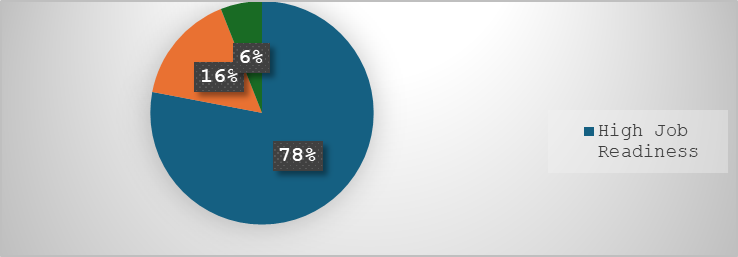
Figure 3.5: Pie diagram showing frequency percentage distribution of overall job readiness among final year nursing students through Liker Scale.
The overall perceived job readiness of final-year nursing students was assessed using a structured Likert scale, and the distribution is presented in figure 3.5. The findings indicate that the majority of participants demonstrated high perceived job readiness. Specifically, 78% of the students scored within the range of 20–25, reflecting a high level of perceived readiness to enter professional nursing practice.
A smaller proportion of students (16%) were categorized as having moderate job readiness, with scores ranging from 15–19. Meanwhile, 6% of the participants fell into the low job readiness category, scoring between 5–14.
These findings suggest that most final-year nursing students perceived themselves as well-prepared to transition from academic training to professional clinical roles. However, the presence of a small proportion of students with moderate to low job readiness highlights the need for continued strengthening of preparatory programs, mentorship, and skill-enhancement initiatives within nursing education.
DISCUSSION:
readiness among final-year nursing students in terms of self-confidence, workplace attitude, soft skills, and overall readiness. The findings revealed that a substantial proportion of students demonstrated high levels of perceived readiness across domains, suggesting positive preparation for transition into professional practice.
In this study, 76% of participants reported high perceived self-confidence. Self-confidence is widely recognized as a key component of clinical readiness and professional competence. Similar findings were reported by Konlan et al. (2024), who identified self-confidence as a defining attribute of clinical readiness among nursing students, emphasizing its role in decision-making and independent practice. Furthermore, a systematic review by Labrague and de Los Santos (2020) highlighted that enhanced clinical exposure and structured educational strategies significantly improve self-confidence among graduating nursing students. These findings support the present study’s observation that the majority of students perceived themselves as confident in handling professional responsibilities.
Regarding workplace attitude, 80% of students demonstrated a positive workplace attitude. Professional attitude plays a crucial role in teamwork, ethical practice, and organizational integration. Similar observations were reported by Walker et al. (2019), who found that nursing students with positive professional attitudes demonstrated better role adaptation and smoother transition into clinical settings. Additionally, Kaihlanen et al. (2019) emphasized that readiness for professional practice is strongly influenced by students’ attitudes toward collaboration and workplace engagement. The findings of the present study are consistent with this evidence, suggesting that most participants possessed constructive workplace perceptions.
With respect to soft skills, 82% of students demonstrated adequate competency. Soft skills such as communication, interpersonal relationships, teamwork, and adaptability are increasingly recognized as essential in nursing education. A systematic review by Hurrell (2016) emphasized that soft skills significantly influence employability and professional integration in healthcare professions. More recently, Succi and Canovi (2020) reported that higher education institutions play a critical role in developing students’ soft skills to enhance job readiness. The comparatively high level of adequate soft skills observed in this study may reflect exposure to clinical postings, seminars, presentations, and patient interactions during training.
Overall, 78% of students in the present study demonstrated high perceived job readiness. These findings align with the work of Missen et al. (2016), who reported that final-year nursing students often perceive themselves as moderately to highly prepared for professional roles, particularly when clinical training is robust. However, the literature also acknowledges the phenomenon of “transition shock,” described by Duchscher (2009), where newly graduated nurses may experience stress despite perceiving readiness at the end of training. This suggests that perceived readiness does not always fully equate to real-world preparedness.
Although the majority of participants reported high readiness, a small proportion demonstrated moderate to low levels, indicating potential gaps in preparation. Similar concerns were raised by Phillips et al. (2021), who emphasized the need for structured transition programs and mentorship support to strengthen early career adaptation among newly qualified nurses.
CONCLUSION:
The present study assessed perceived job readiness among final-year B.Sc Nursing and GNM students in terms of self-confidence, workplace attitude, and soft skills. The findings revealed that the majority of students demonstrated high levels of perceived self-confidence, positive workplace attitude, adequate soft skills, and overall high perceived job readiness. These results indicate that most final-year nursing students perceive themselves as prepared to transition into professional nursing roles. However, a small proportion of students reported moderate to low levels of readiness, suggesting that certain areas of preparation may require further strengthening. Although perceived readiness was generally high, the complexity of real-world clinical environments necessitates continued support to ensure smooth transition from student to professional nurse. Overall, the study highlights the importance of structured academic preparation, clinical exposure, and skill development in enhancing job readiness among nursing graduates.
REFERENCES:
1. Alhejaili, A. A., Alshahrani, B., Muslihi, A., Garcia, P. R. B., Roque, M. Y., Alharbi, R. S., & Fadlalmola, H. A. (2025). Nursing students’ satisfaction and self-confidence after short-term clinical preparation: A cross-sectional study. Nursing Reports, 15(9), 317. https://doi.org/10.3390/nursrep15090317
2. Duchscher, J. B. (2009). Transition shock: The initial stage of role adaptation for newly graduated registered nurses. Journal of Advanced Nursing, 65(5), 1103–1113. https://doi.org/10.1111/j.1365-2648.2008.04898.x
3. Hurrell, S. A. (2016). Rethinking the soft skills deficit blame game: Employers, skills withdrawal and the reporting of soft skills gaps. Human Relations, 69(3), 605–628. https://doi.org/10.1177/0018726715591636
4. Kaihlanen, A. M., Lakanmaa, R. L., & Salminen, L. (2019). The transition from nursing student to registered nurse: The mentor’s possibilities to act as a supporter. Nurse Education in Practice, 37, 1–8. https://doi.org/10.1016/j.nepr.2019.04.004
5. Konlan, K. D., et al. (2024). Clinical readiness among nursing students: Attributes and contributing factors. BMC Nursing, 23, Article number pending.
6. Konlan, K. D., Ji, Y., Ji, H., Damiran, D., & Lee, T. (2023). Factors related to readiness for practice among undergraduate nursing students: A systematic review. Nurse Education in Practice. https://doi.org/10.1016/j.nepr.2023.103614
7. Labrague, L. J., & de Los Santos, J. A. A. (2020). COVID-19 anxiety among frontline nurses: Predictive role of organizational support, personal resilience and social support. Journal of Nursing Management, 28(7), 1653–1661. https://doi.org/10.1111/jonm.13121
8. Missen, K., McKenna, L., & Beauchamp, A. (2016). Graduate nurse program coordinators’ perceptions of role transition for new graduate nurses. Nurse Education Today, 37, 126–131. https://doi.org/10.1016/j.nedt.2015.11.012
9. Nurumal, M. S., et al. (2025). The readiness of final-year nursing students’ clinical competency and intention to work in clinical settings: A systematic review. International Journal of Clinical Studies, 8(2), 454.
10. Phillips, C., Esterman, A., & Kenny, A. (2021). The theory of organisational socialisation and its potential for improving transition experiences for new graduate nurses. Nurse Education Today, 96, 104626. https://doi.org/10.1016/j.nedt.2020.104626
11. Porter, J., Morphet, J., Missen, K., & Raymond, A. (2013). Preparation for high-acuity clinical placement: Confidence levels of final-year nursing students. Advances in Medical Education and Practice, 4, 83–89.
12. Succi, C., & Canovi, M. (2020). Soft skills to enhance graduate employability: Comparing students and employers’ perceptions. Studies in Higher Education, 45(9), 1834–1847. https://doi.org/10.1080/03075079.2019.1585420
13. Walker, A., Earl, C., Costa, B., & Cuddihy, L. (2019). Graduate nurses’ transition and integration into the workplace: A qualitative comparison of graduate nurses’ and nurse unit managers’ perspectives. Nurse Education Today, 73, 91–96. https://doi.org/10.1016/j.nedt.2018.11.006