Biochemical Assessment of Diabetic Nephropathy in Newly Diagnosed Diabetes Mellitus Patients in Pakistan
- Imtiaz Ali , Professor of Medical Imaging, ACE Institute of Technology, New York
- Muhammad Riaz , Senior Registrar, Department of Nephrology, Rai Foundation Teaching Hospital, Sargodha, Pakistan
- Fahad Mehmood , Registrar, Department Nephrology, University Hospital Limerick, Ireland
- Hafiz Furqan Ahmad , Assistant Professor, Department of Nephrology, HBS Medical and Dental College, Islamabad, Pakistan
- Mohsina Hamid , Assistant Professor, Department of Biochemistry, Independent Medical College, Faisalabad, Pakistan
- Pervaiz Azam Malik , Assistant Professor, Pathology Department, Rai Medical College, Sargodha, Pakistan
Article Information:
Abstract:
Diabetic nephropathy is a very severe and one of the most ancient microvascular sequelae of diabetes mellitus, and usually it starts silently, before the clinical manifestation. The identification of early biochemistry in patients with newly diagnosed diabetes is crucial to prevent the development of chronic renal disease and end stage renal failure, especially in developing countries where the incidence of diabetes is on the increase. Objective: To evaluate early biochemical indicators of diabetic nephropathy among newly diagnosed diabetes mellitus patients. Methodology: This analytical study based on cross-section was carried out in January 2024 January 2025 at Rai foundation teaching hospital Sargodha. Those patients who were newly diagnosed with diabetes mellitus were included in the study by use of non-probability consecutive sampling (n=72). They were demographic information, glycemic indices, renal function analysis, and urinary albumin-creatinine ratio. Analysis was done on serum creatinine, estimated glomerular filtration rate (eGFR), blood urea, HbA1c, fasting plasma glucose and urine microalbumin. Data analysis was done by use of SPSS 26. Independent t -test, Pearson correlation test, and Chi-square test were used with p 0.05 being treated as significant. Results: Microalbuminuria was detected in 33.3% patients at diagnosis. Patients with HbA1c ≥ 8% showed significantly higher urinary albumin-creatinine ratio and lower eGFR (p < 0.001). Serum creatinine and blood urea demonstrated a moderate positive correlation with HbA1c levels. Conclusion: Biochemical evidence of early nephropathy is present in a considerable proportion of newly diagnosed diabetes patients. Screening using urine albumin-creatinine ratio and eGFR at diagnosis can facilitate early intervention and prevent long-term renal complications
Keywords:
Article :
INTRODUCTION:
non-communicable diseases in the entire world and it affects hundreds of millions of people and creates a significant burden on healthcare systems. The chronic hyperglycemia results in the development of both the microvascular and macrovascular complications with diabetic nephropathy being one of the most important as it is the most frequent cause of chronic kidney disease and reliance on dialysis in the world. It is common to develop early renal damage many years prior to the manifestation of symptomatology and therefore biochemical screening is crucial in intervening in time [1-3].
The urbanization, sedentary lifestyle, changes in diet and genetic predisposition are growing at an alarming rate in South Asia, particularly in Pakistan, leading to a rising level of diabetes prevalence in it. According to local epidemiological reports, a huge percentage of patients arrive late, and often with already developed complications at the moment of diagnosis. Relative ignorance and lack of access to periodic screening initiatives also help widen the diagnosis of renal involvement [4-6].
Clinically, diabetic nephropathy starts as insidious biochemical disorders such as microalbuminuria, slight decrease in glomerular filtration rate, and gradual alteration in renal biomarkers. Early diagnosis and consequent stringent glycemic control and renoprotective therapy will delay the progression of the disease. Educationally, routine screening of nephropathy at the time of diagnosis can enhance long-term patient outcomes and decrease healthcare expenses of dialysis and transplantation [7-9].
Despite the high burden of diabetes in Pakistan, limited local research exists evaluating renal biochemical alterations at the time of diagnosis. Many patients may already exhibit early nephropathy, yet screening practices remain inconsistent. Therefore, this study was conducted to assess biochemical markers of diabetic nephropathy among newly diagnosed diabetes mellitus patients and to determine their relationship with glycemic status.
METHODOLOGY:
The cross-sectional analysis was conducted at Rai foundation teaching hospital Sargodha in a period of January 2024 to January 2025. The non-probability consecutive sampling was used to recruit 72 newly diagnosed diabetes mellitus patients to an outpatient medical clinic after the diagnosis had been made as per the ADA criteria. The newly diagnosed patients (18-65 years) were taken into account.
The confounders of renal impairment were not included in patients who were known to have kidney disease prior to the study, older than five years hypertensive patients, those with urinary tract infection, pregnant patients, chronic liver disease, autoimmune, and nephrotoxic drug were not included.
Informed consent was followed by taking demographic data and clinical history. Fasting plasma glucose, HbA1c, serum creatinine and blood urea were taken using fasting venous blood samples. The glomerular filtration rate (eGFR) was estimated by the formula CKD-EPI. A spot urine sample was taken to test the urinary albumin-creatinine ratio (UACR) and immunoturbidimetric assay was used.
The standard quality control procedures were followed and the bio-chemical tests were performed in the institutional laboratory. These were the independent variables of age, sex, body fat and HbA1c and fasting plasma glucose. Serum creatinine, blood urea, eGFR and urinary albumin-creatinine ratio were dependent variables.
The analysis of data was done with SPSS version 26. The continuous variables were provided in terms of mean and standard deviation and frequencies and percentages in case of categorical variables. The mean between the groups was tested using T-test and the relationships between the categories were tested using chi-square whereas the relationship between glycemic control and renal biomarkers was tested using Pearson correlation. When p-value was less than 0.05, it was considered significant.
RESULTS:
There were high numbers of patients having an emerging diagnosis of diabetes with early onset renal biochemical abnormalities, and no sign of clinical renal kidney disease. The absence of glycemic control was directly correlated with the high albuminuria and difference in, lower eGFR. Indicators of renal activity presented an adverse trend with the indicators of HbA1c. Clustering of micro albumanuria was more at higher ages. Gender representation was not different. Raised BMI was significantly linked to early nephropathy.
Table 1: Demographic Characteristics
|
Variable |
Total (n=72) |
|
Age (years) |
45.6 ± 9.8 |
|
Male |
39 (54.2%) |
|
Female |
33 (45.8%) |
|
BMI (kg/m²) |
27.8 ± 4.3 |
|
Overweight/Obese |
46 (63.9%) |
Chi-square p = 0.032
Microalbuminuria was present in one-third of patients enduring the diagnosis but was not severe and statistically significant. Serum creatinine- also in high-normal range.
Table 2: Primary Outcome Variables (Renal Biomarkers)
|
Parameter |
Mean ± SD |
|
Serum Creatinine (mg/dL) |
1.09 ± 0.28 |
|
Blood Urea (mg/dL) |
33.7 ± 10.4 |
|
eGFR (mL/min/1.73m²) |
92.4 ± 16.2 |
|
UACR (mg/g) |
41.6 ± 29.8 |
Among newly diagnosed patients, poor glycemic control became the norm. The greater the HbA1c the greater the albuminuria. It was the same case with fasting glucose.
Table 3: Secondary Outcome Variables (Glycemic Control)
|
Variable |
Mean ± SD |
|
Fasting Glucose (mg/dL) |
186.2 ± 46.1 |
|
HbA1c (%) |
8.7 ± 1.6 |
Patients in the 8% and above HbA1C range were found to possess a great deal of albuminuria and reduced eGFR. Glycemic poor state was correlated with renal impairment. The difference was found to be significant.
Table 4: Association between HbA1c and Nephropathy
|
HbA1c Group |
UACR (mg/g) |
eGFR |
p-value |
|
< 8% |
24.5 ± 12.6 |
101.8 ± 12.1 |
|
|
≥ 8% |
57.3 ± 31.2 |
85.7 ± 15.4 |
<0.001 |
There was positive correlation between Renal biomarkers and hyperglycemia. HbA1c was associated with UACR most. The moderate correlation was with creatinine.
Table 5: Correlation Analysis
|
Variable |
r |
p-value |
|
HbA1c vs UACR |
0.61 |
<0.001 |
|
HbA1c vs Creatinine |
0.42 |
0.002 |
|
HbA1c vs eGFR |
−0.55 |
<0.001 |
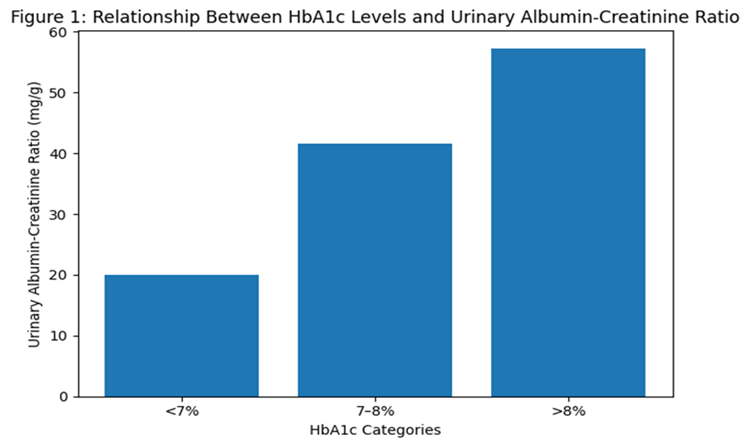
Figure 1: Relationship between HbA1c Levels and Urinary Albumin-Creatinine Ratio
The graph demonstrates a progressive rise in albuminuria with increasing HbA1c levels, indicating worsening renal
DISCUSSION :
The current paper found biochemical signs of diabetic
nephropathy early in one-third of patients with new-onset diabetes. This underscores the fact that glomerular damage, which occurs in hyperglycemia, commences much earlier than clinical manifestation and aids the idea that the hyperglycemia-induced damage to the glomeruli could already be in place by the time of diagnosis. HbA1c and albuminuria have a strong interrelationship meaning that glycemic burden is an important predictor of early renal dysfunction [10-12].
Early microalbuminuria on diagnosis of diabetes is also reported in international literature especially in populations with late diagnosis. Europe and East Asian studies indicate prevalence of between 20-40, which is similar to our study. The facts of decreasing eGFR as the levels of HbA1c increase confirm the hypothesis of hyperfiltration damage and the subsequent functional damage [13-15].
South Asian studies in the region are also reporting early nephropathy albeit with a slight higher prevalence. The difference could be attributed to genetic vulnerability, late manifestation, nutrition, and low access to preventive health. Screening practices are, however, uneven in Pakistan, and a significant proportion of patients seek care once they have had years of asymptomatic hyperglycemia, which is why they develop renal involvement early [16-18].
The correlation between serum creatinine and HbA1c
is moderate implying that conventional renal tests cannot be used to detect it early. Early indicators more sensitive should include microalbuminuria and eGFR which should be included in regular assessments. Educational interventions on primary care physicians can enhance the rate of early detection [19, 20].
Policy-wise, mandatory patient screening of nephropathy by diagnosis might ease the burden of dialysis in the long run. Lifestyle change and renoprotective drugs used early in life can have a major impact on reducing the costs of health care in the resource-limited environment.
CONCLUSION :
A considerable proportion of newly diagnosed diabetes patients already exhibit biochemical evidence of early nephropathy. Urinary albumin-creatinine ratio and eGFR are sensitive indicators and should be routinely assessed at diagnosis. Early screening and intervention may prevent progression to chronic kidney disease and reduce long-term morbidity in the diabetic population.
BIBLIOGRAPHY:
1. circulating stress markers, inflammatory cytokines and decreased antioxidant level in diabetic nephropathy. 2022. 58(11): p. 1604.
2. Noor, T., et al., Relation of copeptin with diabetic and renal function markers among patients with diabetes mellitus progressing towards diabetic nephropathy. 2020. 51(6): p. 548-555.
3. Irfan, M., et al., Evaluation of Heat Shock Protein-27 levels as a predictor of diabetic nephropathy in early diabetics. 2021. 26(3): p. 121-126.
4. Mansoor, G., et al., Deranged haematological profile and dyslipidaemiain diabetes induced nephropathy. 2022. 34: p. 64-72.
5. Mehmood, H.R., et al., Assessment of serum biochemical derangements and associated risk factors of chronic kidney disease. 2022. 17(3): p. 376-383.
6. Younas, H., T. Ijaz, and N. Choudhry, Investigation of angiotensin-1 converting enzyme 2 gene (G8790A) polymorphism in patients of type 2 diabetes mellitus with diabetic nephropathy in Pakistani population. PLOS ONE, 2022. 17(2): p. e0264038 DOI: 10.1371/journal.pone.0264038.
7. Haroon, M.A., et al., Utility of albumin creatinine ratio (Acr) in monitoring diabetic retinopathy and nephropathy. 2021(4): p. 1147.
8. Shah, F.U., et al., Biochemical assessment of uric acid and magnesium in prediabetic patients in Peshawar-KP: A case-control study. 2022.
9. Rahim, M.A., et al., Risk factors for diabetic nephropathy among newly detected type 2 diabetic patients attending a tertiary care hospital of Bangladesh. 2023. 41(1): p. 15-21.
10. Mehreen, R., et al., To Evaluate the Level of Serum Cholesterol, Uric Acid, Urea, Creatinine and Urine Albumin in Diabetic Patients from Peshawar. 2022. 16(09): p. 630-630.
11. Shi, R., et al., Nomogram for the risk of diabetic nephropathy or diabetic retinopathy among patients with type 2 diabetes mellitus based on questionnaire and biochemical indicators: a cross-sectional study. 2020: p. 1215-1229.
12. Majeed, A.M.H., O.R.J.S.J.o.P. Hameed, and A. Science, Effect of endothelin-1, Vimentin and some biochemical variables on men with type 2 diabetes mellitus, diabetic patients with hypertension, and diabetic patients with renal impairment. 2022. 4(3): p. 61-78.
13. Sadaf, S., et al., Correlation of Demographic and Biochemical Features with Histological Classification of Diabetic Nephropathy. Annals of King Edward Medical University, 2022. 27(4): p. 535-540 DOI: 10.21649/akemu.v27i4.4887.
14. Tahir, F.N., et al., Biochemical Evaluation of the Effectiveness of Salivary Urea and Creatinine Levels and Their Relationship with Serum Urea and Creatinine Levels in Patients with Chronic Kidney Disease. 2023. 17(1): p. 75-79.
15. Umar, S., et al., Association of SNP (RS4880) in SOD-2 Gene with Diabetic Nephropathy.
16. Anwar, A., et al., Thiamine level in type I and type II diabetes mellitus patients: a comparative study focusing on hematological and biochemical evaluations. 2020. 12(5).
17. Rafaqat, S., et al., Role of liver parameters in diabetes mellitus–a narrative review. 2023. 57(1): p. 200-220.
18. Ahmad, S., et al., Diabetes mellitus and urinary tract infection: Causative uropathogens, their antibiotic susceptibility pattern and the effects of glycemic status. 2020. 36(7): p. 1550.
19. Alam, S., et al., Diabetes Mellitus: insights from epidemiology, biochemistry, risk factors, diagnosis, complications and comprehensive management. 2021. 2(2): p. 36-50.
20. Sharif, S., et al., Assessment of TNF-α Gene Expression in Type 2 Diabetes Patients with Nephropathy: Type 2 Diabetes Patients with Nephropathy. 2022: p. 07-10.