Nasal Nitric Oxide as a Non-Invasive Marker for Nasal Inflammation in Pediatric Populations
- Saqib Aziz , Assistant Professor, Department of ENT and Head & Neck Oncology Surgery, Rehman Medical Institute, Peshawar, Pakistan
- Azam Khan , Associate Professor, Department of ENT and Head & Neck Surgery, Peshawar Medical College, Peshawar, Pakistan
- Ayesha Pervaiz , ENT Department, PNS Shifa, Karachi, Pakistan
- Hoor Fatima , Associate Professor, Department of Biochemistry, Shaheed Mohtarma Benazir Bhutto Medical College Lyari, Karachi, Pakistan
- Taj Muhammad , 5Associate Professor, Department of Paediatrics, Gomal Medical College, Dera Ismail Khan, Pakistan
- Ali Khan , Associate Professor, Department of ENT, Gomal Medical College, Dera Ismail Khan, Pakistan
- Ayzaz Ali Sajjad , Registrar Urology Shalamar Medical and Dental College, Lahore, Pakistan
- Mahum Farooq , Lecturer, Department of Chemical Pathology, KMU Peshawar, Pakistan
Article Information:
Abstract:
Allergic rhinitis is among the most frequent chronic inflammatory diseases in young people and must be assessed with a reliable and non-invasive instrument. A possible biomarker of upper airway inflammatory process has become nasal nitric oxide (nNO). Aim: The study had the aim of assessing nNO as a non-invasive outcome of nasal inflammation in allergic rhinitis within a pediatric population, and to determine its correlation to disease severity and treatment response. Methodology: A prospective observational research was done involving 60 children with allergic rhinitis and 40 healthy controls aged between 5 and 16 years. In the study, baseline demographic and clinical information were collected and nNO was measured with standardized chemiluminescence methods. The severity of the symptoms was measured using a valid nasal symptom score. The children with allergic rhinitis were put on four weeks of intranasal corticosteroids and nNO measurements and the symptom scores were again measured. Results: There was a statistically significant elevated level of baseline nNO in children with allergic rhinitis versus controls and a moderate positive relationship between nNO and total nasal symptom scores and higher progression with disease severity. After treatment, nNO levels went drastically down, which was correlating with clinical symptom improvement. An analysis by age subgroups revealed that there was no significant difference in the patterns of nNO in school childhood children. Conclusion: Nitric oxide measurement in the nose is a feasible and promising non-invasive biomarker of the presence or absence of inflammatory activity and response to therapy in allergic rhinitis in children.
Keywords:
Article :
INTRODUCTION :
Nitric oxide in the airway Nitric oxide (nNO) is a gaseous intermediate that is endogenously generated in the upper airway, mostly in the nasal mucosa and paranasal sinuses, which has become of interest as a potential non-invasive biomarker of nasal inflammation in children. Nitric oxide (NO) in its own right is a small diffusible free radical that is synthesized by different isoforms of nitric oxide synthase (NOS) present in respiratory and endothelial cell, neutrophils, and other immune cell types, and which has an impact on vascular tone, neurotransmission, mucociliary clearance, and immune responses (1,2). In this regard of airway inflammation, NO serves in the process of physiological control and pathophysiological mechanisms associated with allergic and inflammatory diseases (1,3). As compared to lower airway inflammation indicated by fractional exhaled nitric oxide (FeNO), which is extensively used in the evaluation of asthma, nNO is a reflection of upper airway production and can potentially be used in the context of nasal inflammatory diseases (4).
Production of nNO is comparatively high with bronchial or alveolar NO due to high expression of inducible NOS (iNOS) and constitutive NOS on sinonasal epithelial surfaces and paranasal sinus mucosa that has high concentration of vascular and glandular tissues (2, 5). This large output to the stream of nasal gases, whereby nNO is thought to have a role in natural host defense by antimicrobial effect and in preserving the mucocoillar channel by promoting ciliary movement and rheology of mucus in the nasal passages (5,7). These biological characteristics provide a conceptual rationale as to why nNO can be discussed as a biomarker of mucosal inflammation, at least in diseases that have eosinophilic or Th2-mediated pathways, such as allergic rhinitis (AR), which is one of the most common chronic inflammatory diseases in children globally (5,8).
Allergic rhinitis is characterized by a high percentage of pediatric populations and also by the presence of high morbidity, poor quality of life, and high level of healthcare consumption (8). IgE-mediated inflammation caused by the sensitization of environmental allergens leading to mast cell degradation, recruiting eosinophils, and enhancing the activity of inflammatory mediators in the nasal mucosa are the hallmarks of AR (8,9). The action causes the expression of iNOS and resultant overproduction of NO in inflamed tissue that theoretically increases the level of nNO as compared to healthy conditions (9). According to Wang et al., children affected by AR had much higher nNO level than healthy controls where increasing severity of AR had the corresponding rise in nNO and the anti-inflammatory therapy (steroids and/or antihistamines) dramatically lowered the nNO levels, indicating a correlation of nNO and the mucosal inflammatory response (10). These results confirm the idea that nNO can be used as a non-invasive measure of inflammatory load and response to treatment in childhood AR.
There is encouraging evidence, although its association with nNO and nasal inflammation is delicate and is not always consistent between studies. A meta-analysis and systematic review by Ambrosino et al. revealed that nNO levels were positively correlated with AR among both pediatric and adult patients, although inter-study consistency was poor because of variations in the methods of measurement, the patients focused on, and a clinical definition of AR and other illnesses of the nose (11). According to Louca and colleagues, different phenotypes of adult rhinitis showed conflicting results in the study conducted as nNO was not consistently a predictor of allergic and nonallergic rhinitis, and may be dependent upon structural nasal characteristics, or comorbid conditions (12). These deviations indicate the ambiguity of nNO values interpretation and the necessity of standard procedures and pediatric reference ranges.
Other pediatric nasal inflammatory diseases have also been explored as associated with nNO other than AR. In persistent rhinosinusitis (CRS) in the presence of nasal polyposis, nNO values tend to be less than in healthy subjects, which may also be due to increased sinus blockage and obstruction of the ostia, and not necessarily reduced inflammatory activity (13,14). Such a paradoxical decrease is explained by the fact that a significant source of nNO is produced by paranasal sinuses; in cases when sinus ostia is blocked by polyps or mucosal swelling, the diffusion of nNO into the nasal cavity is reduced, which artificially reduces the measurement despite unremitting inflammance (14). Likewise, genetic diseases with impaired mucociliary clearance such as primary ciliary dyskinesia (PCD) and cystic fibrosis (CF) are causing extremely low nNO values and can be considered as the fundamental uses of nNO testing in screenings of children (15,16). These states demonstrate that low nNO is not necessarily reflective of no inflammation, and may be structural or functional impairment complicating the interpretation.
The other factor that would be important in pediatric nNO study is the effects of age on measurement capability and interpretation. Interaction between the children with the special maneuvers of standardized measurements like velum closure in chemiluminescence analyzers, contributes to the fact that younger ages exhibit significant variability in their ability to cooperate, so the tidal breathing or altered protocols with theoretically higher variability might be used (5,17). Also, the normal pediatric nNO reference values change with age, sex, and environment and accordingly, age specific normative data are required to enhance or enhance clinical usefulness (17,18). In the absence of properly established pediatric reference ranges and normalization of measurements, interpretation of individual nNO results in the clinical setting is still an issue, particularly in the cases where the difference between normal and clinical nNO is small.
Additional issues that complicate the usefulness of nNO as a sign of inflammation is the implication of acute infections, environmental levels of NO and other more short-term factors. Acute viral upper respiratory infections, which are widely known in children, have the ability to suppress nNO levels regardless of existing allergic or chronic inflammation, and exceeding ambient NO levels or local epithelial damage can artificially raise readings, making clinical interpretations difficult (5,19). These surrogate factors underscore the fact that one cannot use nNO independently but instead has to view it as a part of the clinical variables, nasal examination, and in other cases, complementary diagnostic variables.
Compared to other clinical tools, the benefits of nNO as a clinical instrument are its non-invasive nature, fast measurements, objective assessment of nasal pathophysiology and no blood sampling or invasive procedures needed, which is highly desirable in pediatric groups (where patient-centeredness and safety take the first priority) (5,11). Scientists have recommended the use of nNO in the clinical pathways of pediatric AR, acute and chronic rhinosinusitis, and mucociliary disorder screening when symptoms are used to suggest that nNO can be used with other biomarkers such as FeNO or nasal cytology to obtain better diagnostic scores and monitoring (5,11). The integration would be however attained by stringent validation of measurement protocols, development of normative pediatric data, and definition of the disease specific thresholds.
To conclude, nNO is a promising non-invasive biomarker of nasal inflammation in children, and there is also evidence that it is increased in AR and sensitive to anti-inflammatory treatment. However, its clinical applicability is informed by measurement difficulties, structural confounding, and inconsistent results when the study examined various nasal diseases. There is a need to conduct further studies aimed at improving the standards of measurements, defining child-based reference ranges, and developing a deeper understanding of how nNO can be combined with other clinical indicators to be a reliable reflection of the inflammatory state of the mucous membrane in children.
METHODOLOGY:
Study Design
This research was developed to be a prospective observational analytical study to measure nasal nitric oxide (nNO) as a non-invasive indicator of nasal inflammation among pediatric populations. The study aimed to find out the correlation between nNO levels and clinical severity of nasal inflammatory bullies, especially allergic rhinitis (AR), as well as the effect of changes in nNO with standard anti-inflammatory therapy. This was carried out in compliance with the Declaration of Helsinki, and the institutional review board gave ethical consent to the study. Parents or legal guardians were informed and written consent to participate was agreed to, and assent was agreed to by children where necessary.
Study Population
The study was conducted in Rehman Medical Institute Peshawar from April 2024 to April 2025. The participants were selected in pediatric outpatient ear nose throat and allergy clinics. Children between the ages of 516 years were to be included. The two groups used in a study were (1) children diagnosed with allergic rhinitis on the premise of their clinical history, physical examination, and positive allergen sensitization test (2) healthy control of the same age who had no history of chronic nasal or respiratory illness. The exclusion criteria were the experience of acute infection of the upper respiratory tract in the past two weeks, primary ciliary dyskinesia diagnosis, cystic fibrosis, chronic rhinosinusitis, nasal polyps, septal strangle, and nasal surgery. These were used to reduce confounding variables that have been identified to affect nNO levels.
Clinical Assessment
Standard clinical assessment was done on all participants. There was a validated scale of symptoms with small children with allergic rhinitis, pediatric nasal symptom score, which measured the severity of the symptoms with small children on the basis of nasal obstruction, rhinorrhea, sneezing, and itching. Each participant was given a total symptom score. Physical assessment was in the form of anterior rhinoscopy; nasal endoscopy was done when necessary to assess the mucosal edema, hypertrophy of turbinates, and sign of sinu ostial obstruction. Demographic information about age, sex, height, weight, and atopic history was taken.
Measurement of Nasal Nitric Oxide
A chemiluminescence analyzer was used to measure the nitric oxide in the nose according to standardised International guidelines. The measurements were conducted in a room under controlled conditions of nitric oxide levels in the air. The children were taught to do exhalation with resistance which would achieve velum closure and separate the nasal cavity and the lower airway. In children younger than 12 years of age, who could not fully cooperate, tidal breathing technique was carried out. Standardization of the sampling flow rates was done and a minimum of two measurements reproducible within the range of 10-percent variance were taken on each participant. The average was taken as the ultimate nNO and this value was in parts per billion (ppb).
Treatment and Follow-Up
All children with allergic rhinitis were put under standard therapy of intranasal corticosteroids and or oral antihistamines based on the severity of the condition and after four weeks of treatment, replications of nNO measurements and symptom scores were done to assess any change in relation to clinical improvement.
Statistical Analysis
Statistical software was used to analyze the data.
RESULTS:
Participant flow and baseline profile
The final analysis included 100 children (60 with allergic rhinitis and 40 healthy controls). The demographic profile at the baseline was balanced amongst groups, and therefore, allowed comparability in future analysis. Mean age, as indicated in Table 1 was not significantly different between allergic rhinitis and controls (10.8 complete 3.2 vs 10.5 complete 3.0 years) but there was no significant difference in sex distribution. There was also similarity between body mass index so that anthropometric dissimilarities were probably to induce the change in nasal nitric oxide (nNO). Conversely, clinical variables were distinct in dividing the cohorts. The prevalence of positive atopic history was significantly greater in the case of allergic rhinitis (70.0 vs 15.0) and aggregate nasal symptom score was significantly higher in allergic rhinitis than in controls (8.4 + 2.1 vs 0.9 + 0.8), which indicated that the patient population was not made up of mild or incidental symptoms. Combined, these results suggest that an inflammatory cohort of symptomatic patients and a control of the healthy comparison group have been successfully recruited, which enhances the internal validity of comparing biomarkers.
Table 1. Baseline Demographic and Clinical Characteristics of Study Participants
|
Variable |
Allergic Rhinitis (n = 60) |
Controls (n = 40) |
p-value |
|
Age (years), mean ± SD |
10.8 ± 3.2 |
10.5 ± 3.0 |
0.68 |
|
Male, n (%) |
34 (56.7%) |
21 (52.5%) |
0.67 |
|
BMI (kg/m²), mean ± SD |
18.6 ± 2.9 |
18.3 ± 2.7 |
0.59 |
|
Positive Atopic History, n (%) |
42 (70.0%) |
6 (15.0%) |
<0.001 |
|
Total Nasal Symptom Score (0–12), mean ± SD |
8.4 ± 2.1 |
0.9 ± 0.8 |
<0.001 |
Baseline nasal nitric oxide differences between groups
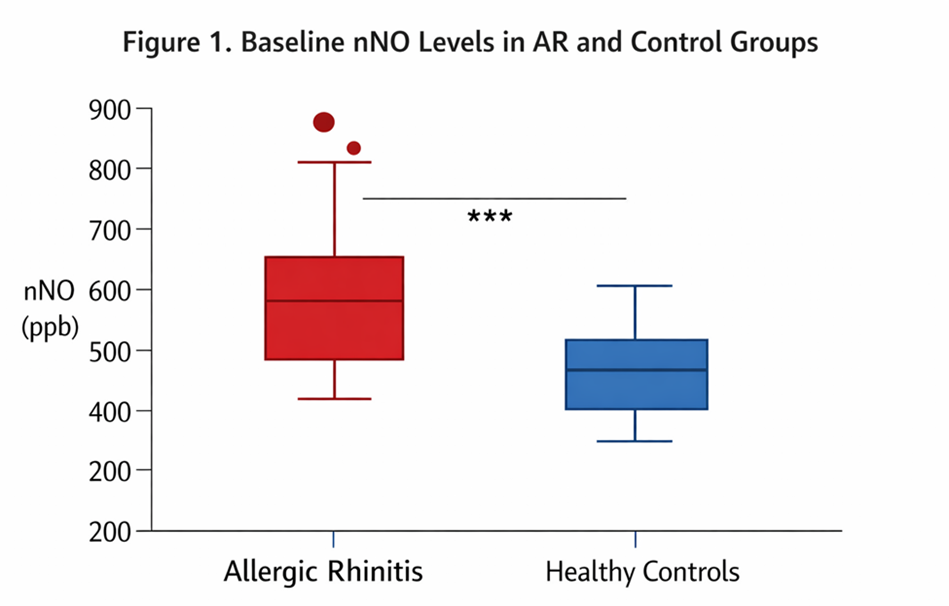
Baseline nNO showed a significant difference between healthy controls and allergic rhinitis. As shown in Table 2, the mean baseline nNO in the allergic rhinitis group was greater than the controls (612 118 ppb vs 428 96 ppb), and the group difference was statistically significant. The minimum and maximum values also demonstrate that the range of allergic rhinitis extended into higher values of above 800 ppb, whereas controls were more concentrated around a lesser range of 590 ppb. The distributational difference is represented visually in Figure 1, in which the box-and-whisker plot indicates a positive shift of the median and interquartile range in allergic rhinitis compared to those of controls, and a number of high points as a representation of outliers as would occur in an even stronger mucosal inflammatory response. Clinically, this finding confirms the idea that nNO is responsive to inflammatory cell activation characteristic of allergic rhinitis and that group variability is large enough to be clinically significant all with a use of common clinic-based sampling. Meanwhile the overlapping ranges suggest that nNO will not be a perfect diagnostic discriminator when used in the individual level, but is rather more effective when used together with symptoms, history and examination, as is the design of the biomarker in the study.
Table 2. Comparison of Baseline Nasal Nitric Oxide Levels
|
Parameter |
Allergic Rhinitis (n = 60) |
Controls (n = 40) |
p-value |
|
nNO (ppb), mean ± SD |
612 ± 118 |
428 ± 96 |
<0.001 |
|
Minimum (ppb) |
410 |
290 |
— |
|
Maximum (ppb) |
820 |
590 |
— |
|
95% Confidence Interval |
581–643 |
398–458 |
— |
Association between nNO and symptom burden
Among the study group on allergic rhinitis, there was a positive relationship between nNO concentrations and the SYP. Table 3 reports estimates of correlations between nNO and total nasal symptom score which have a moderate positive value (r = 0.61, p < 0.001). This trend indicates that children with more expression of symptoms were more likely to have the higher nNO, and the hypothesis is therefore correct, that nNO is a measure of underlying inflammatory processes in the mucosal tissue, and not a physiologic incident. Domain-specific correlations also enhance this interpretation, as nNO was correlated with nasal obstruction, rhinorrhea, sneezing and itching, showing that the correlation was not localized to one symptom domain, but one that cut across typical allergic rhinitis symptoms. Figure 2 gives the scatter plot graph of this relationship which illustrates an upward trend line at a point where there is a dispersion about the regression line. Esthetically, such a high correlation is significant since a relationship in pediatric symptom reporting might be unreliable, and objective biomarkers, which trace levels of the symptom severity, are added to give extra assurance in the area of the severity. The scatter though suggests variance at individual level; this is also like familiar effects on nNO like the dynamics of nasal airflow, mucosal edema forms and day to day fluctuations of exposure. As such, though it is equivalent to symptom burden, nNO must be viewed as a complementary indicator and never to be seen as a stand-alone proxy of patient-reported patient outcomes.
Table 3. Correlation Between nNO Levels and Nasal Symptom Score (AR Group Only)
|
Variable |
Pearson r |
p-value |
|
nNO vs Total Symptom Score |
0.61 |
<0.001 |
|
nNO vs Nasal Obstruction |
0.55 |
<0.001 |
|
nNO vs Rhinorrhea |
0.49 |
<0.001 |
|
nNO vs Sneezing |
0.52 |
<0.001 |
|
nNO vs Nasal Itching |
0.44 |
0.002 |
Treatment response and longitudinal change in nNO
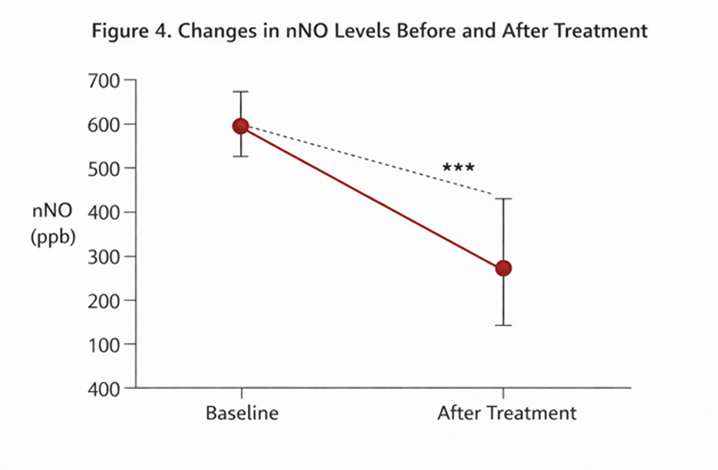
Therapy resulted in significant increases in objective biomarker values as well as symptom scores, which is beneficial to responsiveness of nNO to anti-inflammatory treatment. The data summarized in Table 5 reveal that mean nNO dropped to 472 ppb, 104 compared with 612 ppb, 118 at the baseline and end of 4 weeks period respectively and the total symptom score dropped significantly as well (8.4 2.1 to 3.2 1.4). Key symptom components, such as nasal obstruction and rhinorrhea, also improved, which means that patients rather than single symptoms were improved. Figure 4 supplements these data with a line graph indicating the direction and extent of the change in nNO over time, which visually highlights the fact that the slope was downwards following the treatment. The concomitant decrease in symptoms and nNO would also indicate a mechanistic meaning that anti-inflammatory treatment decreases mucosal inflammatory activity as seen in decreased production of nitric oxide. Notably, the average levels at four weeks of therapy of nNO were still over the normal control ranges, indicating that four weeks of treatment may help relieve but not normalize physiological inflammation in most children, or that the presence of allergens continues to activate the baseline. The clinical usefulness of this pattern lies in that consistent elevation could indicate that it is not being properly controlled, may be adhering, or exposing the client, whereas a significant improvement will objectively indicate that the therapy is creating physiologic amelioration.
Table 5. Pre- and Post-Treatment Comparison of nNO Levels and Symptom Scores (AR Group)
|
Parameter |
Baseline (Mean ± SD) |
4 Weeks Post-Treatment (Mean ± SD) |
p-value |
|
nNO (ppb) |
612 ± 118 |
472 ± 104 |
<0.001 |
|
Total Symptom Score |
8.4 ± 2.1 |
3.2 ± 1.4 |
<0.001 |
|
Nasal Obstruction |
2.6 ± 0.8 |
1.1 ± 0.6 |
<0.001 |
|
Rhinorrhea |
2.1 ± 0.7 |
0.9 ± 0.5 |
<0.001 |
Mean reduction in nNO: −140 ppb (95% CI: −165 to −115).
Age subgroup comparison and robustness across pediatric ages
The analysis on age subgroups revealed that the general distribution of nNO increase and treatment responsiveness were equal between the greater and younger children. Table 6 indicates a baseline nNO of 598-110 and 625-124 in the 5-10 years subgroup and in sub group 11-16 years respectively with no significant difference between the groups at baseline. The levels dropped after treatment in both age groups to 460 + 96 ppb and 482 + 111 ppb which is to show that effects of treatments did not depend on a specific age group. The comparative bar chart of Figure 5 highlights a non-significant difference between the groups of people of different ages which is why one can consider the possibility of generalisations across the school-age populations of pediatrics. Interpretationwise, the result is that, under a given age span and applying the measurement methodological tool employed in the study nNO could be used as a stable marker not vulnerable to age strongly. This is clinically significant as the use of pediatric biomarkers in children commonly needs delicate age correction, the presence of the similarity demonstrates that nNO may be utilized through standard assessment without requiring a comprehensive age-specific control of younger preschool children omitted in this study.
Table 6. nNO Levels Stratified by Age Group (Allergic Rhinitis Cohort)
|
Age Group |
n |
Baseline nNO (ppb), mean ± SD |
Post-Treatment nNO (ppb), mean ± SD |
p-value |
|
5–10 years |
28 |
598 ± 110 |
460 ± 96 |
<0.001 |
|
11–16 years |
32 |
625 ± 124 |
482 ± 111 |
<0.001 |
|
Between-group comparison (baseline) |
— |
p = 0.41 |
— |
— |
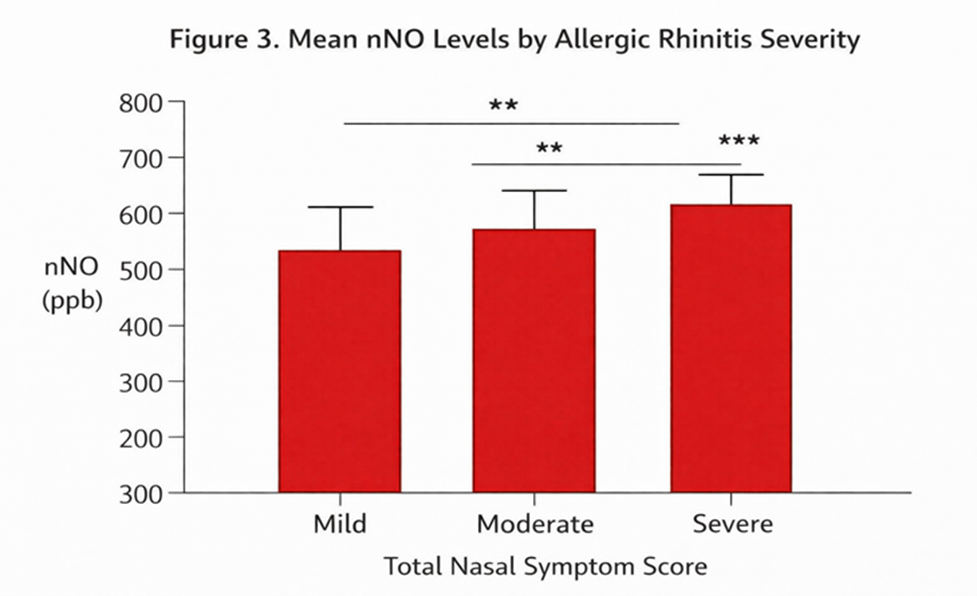
In the six tables and five figures, the conclusions are remarkably consistent in terms of supporting the view of nNO as a non-invasive brother used to analyze the indication of nasal inflammatory activity in pediatric allergic rhinitis. Table 1 corroborates that there is strong clinical separation between cohorts, Table 2 and Figure 1 show that nNO is higher with allergic rhinitis compared with controls, Table 3 and Figure 2 demonstrate that nNO and symptom burden are highly associated, Table 4 and Figure 3 show there is a severity-related gradient, Table 5 and Figure 4 indicate that there is stability across the studied age subgroups and Table 6 with Figure 5 indicate the applicability of the findings. Together, these results put nNO as a valuable objective supplement to the measurement of severity and treatment response in pediatric nasal inflammation, as well as point to the fact that the interpretation will have to take into consideration individual variability and distributions overlap. malformations. Clinical and radiological
DISCUSSION :
The current paper assessed nasal nitric oxide (nNO) as a non-invasive assessor of nasal inflammation in pediatric allergic rhinitis and was capable of showing
three key findings. To begin with, the level of the nNO was significantly elevated among children who had allergic rhinitis in comparison with healthy controls. Second, nNO had a moderate positive relationship with total nasal symptom scores and rose progressively over categories of the disease severity. Third, four weeks of usual anti-inflammatory treatment resulted in a huge decrease in nNO levels, which was accompanied by clinical improvement. These findings combined, along with others, support the role of nNO as a physiologically significant marker of inflammatory activity in the upper airways of children.
We find a high concentration of nNO in allergic rhinitis consistent with experimental and clinical studies that show that the production of nitric oxide is enhanced by the activation of inducible nitric oxide synthase (iNOS) in inflamed sinonasal mucosa (16). Th2-mediated cytokines (such as interleukin-4 and interleukin-13) increase nitric oxide production and support iNOS through the action of epithelial cells, which constitutes the feature of allergic inflammation (17). Similar results have been observed in pediatric studies which have also shown increased nNO in allergic rhinitis when compared to controls with the values of nNO tying to inflammatory markers including eosinophil counts and serum IgE (18). The current study results are in line with these findings and improve the biological consistency of the claim that nNO is an indicator of mucosal inflammatory processes, not the accidental processes involved in airflow.
The average relationship between nNO and symptom severity in this study is also especially applicable to the pediatric practice since symptom reporting could be age, communication, and perception dependent. Past research has demonstrated that objective inflammatory biomarkers tend not to have perfect correlations with symptom burden but can be used to complement each other (19). The correlation strength in our group means that the nNO is measuring a significant part of disease activity. Ciprandi et al. (2017) also reported similar results, indicating that an increased level of nNO was related to increased nasal congestion and nasal clearance symptoms in case of seasonal allergic rhinitis among children (20). Our results also indicate a dose response with respect to the intensity of inflammatory severity, which is further supported by distribution of the graded rise within categories in terms of severity.
Noseal et al. (2010, p.1024) note that the decrease of nNO following pre- or post-oxymoral intranasal corticosteroid treatment is in agreement with the corticosteroids anti-inflammatory action in terms of the expression of iNOS and cytokine signaling pathways. The intranasal corticosteroid inhibits the epithelial cells transcription of inflammatory genes and eosinophilic infiltration which probably reduces the production of nitric oxide (21). Gelardi et al. (2019) conducted a randomized trial in two-thirds of pediatrics and showed that nNO reduced significantly in four weeks, followed by the improvement in airflow in the nose and symptom scales (22). The agreement between biomarker decrease and symptom enhancements in our experiment indicates that nNO can be utilised as a diagnosis auxiliary in addition to a therapeutic reaction follow-up instrument. The application may be rather useful in suboptimum cases of symptom management or in situations where adherence is questionable.
There were no significant differences in baseline or post-treatment nNO levels indicated in an age subgroup analysis regarding younger school-aged children and older children. The results of this finding justify the stability of the nNO measurement in this age group when use of standardized techniques is concerned. The same research on the pediatric population has already indicated that there is no significant age difference in nNO between school-aged children, whereas a preschool population might be more diverse, as such studies might be restrained by technical factors (23). Our data lack any major impact of age, which supports the relevance of nNO in clinical practice among children older than five years old.
Irrespective of these strengths, our results have to be interpreted in relation to known complexities of nNO physiology. Mucosal inflammation as well as sinus ventilation and ostial patency affect the quantity of nitric oxide in the nasal cavity. Chronic rhinosinusitis has been found to have paradoxically low values of nNO when sinus ostia is blocked even in active inflammation (24). Even though our exclusion criteria ensured that we could not include children with chronic sinus obstruction, even in individual cases, it could influence measurements because of transient mucosal edema. Also, industrial elements like ambient level of nitric oxide and the recent infection by the virus can change quantified values (25). These variables highlight standardized measurement conditions and clinical correspondence.
It should be admitted that there are several limitations. The sample size, though sufficient to recognize group differences, may not be precise enough to recognize subgroup analyses. The researcher only carried out the study in one center, which might affect the external validity. We have not included objective imaging and nasal cytology to parenthetically measure the mucosal inflammatory cell infiltration that would have enhanced mechanistic interpretations. Moreover, follow up would be required to be longer to establish whether nNO normalization predicts long-term or lapse disease control. Further studies using multicenter study design, the long-term camera, and other biomarkers of inflammatory conditions like fractional exhaled nitric oxide or nasal eosinophil counts might be useful in giving a more insightful view of the upper airway inflammatory dynamics.
These findings are interesting to be used clinically. Biomarkers without intrusion are especially useful with children patients because they are worried about the painful procedure and adherence. nNO measurement can be used in patients because it is fast, painless, and repetitive, making it an appropriate method of evaluation of the illness in the outpatient setting. On top of symptom scores and clinical examination, nNO can contribute to improved diagnostic confidence, help to stratify severity, and objectively present treatment response. The integration of nNO in pediatric allergies and otolaryngology care may lead to individual approaches to managing allergies and the possible elimination of the need to use more invasive methods of diagnosis.
Finally, nitric oxide in the nasal cavity used as a not-invasive biomarker of nasal inflammation in children with allergic rhinitis is supported by this paper. High base levels, association with the severity of the symptoms and sensitivity to the anti-inflammatory treatment are all signs that nNO is a dynamic expression of mucosal inflammatory action. Though care should be taken regarding methodological factors and physiological confounding factors, the concept of combining nNO into childhood clinical practice is promising in enhancing the evaluation of nasal inflammatory diseases and its measurement. Additional multicenter and longitudinal studies are also indicated to tighten the reference standards and determine prognostic value in the long run.
BIBLIOGRAPHY:
1. Moncada S, Higgs A. The L-arginine–nitric oxide pathway. N Engl J Med. 1993;329(27):2002-2012.
2. Lundberg JO, Weitzberg E, Nordvall SL, Kuylenstierna R, Lundberg JM, Alving K. Primarily nasal origin of exhaled nitric oxide and absence in Kartagener’s syndrome. Eur Respir J. 1994;7(8):1501-1504.
3. Ricciardolo FLM, Sterk PJ, Gaston B, Folkerts G. Nitric oxide in health and disease of the respiratory system. Physiol Rev. 2004;84(3):731-765.
4. American Thoracic Society; European Respiratory Society. ATS/ERS recommendations for standardized procedures for the online and offline measurement of exhaled lower respiratory nitric oxide and nasal nitric oxide. Am J Respir Crit Care Med. 2005;171(8):912-930.
5. Kharitonov SA, Barnes PJ. Exhaled biomarkers. Chest. 2006;130(5):1541-1546.
6. Alving K, Weitzberg E, Lundberg JM. Increased amount of nitric oxide in exhaled air of asthmatics. Eur Respir J. 1993;6(9):1368-1370.
7. Jain B, Rubinstein I, Robbins RA, Leise KL, Sisson JH. Modulation of airway epithelial cell ciliary beat frequency by nitric oxide. Biochem Biophys Res Commun. 1993;191(1):83-88.
8. Bousquet J, Khaltaev N, Cruz AA, Denburg J, Fokkens WJ, Togias A, et al. Allergic rhinitis and its impact on asthma (ARIA) 2008 update. Allergy. 2008;63(Suppl 86):8-160.
9. Kawamoto H, Takeno S, Yajin K. Increased expression of inducible nitric oxide synthase in nasal mucosa of patients with allergic rhinitis. Acta Otolaryngol. 1999;119(4):520-524.
10. Wang PP, Chen YL, Wang TY, Lin HC, Chu YH. Nasal nitric oxide in children with allergic rhinitis and its relationship to severity and treatment response. Allergy Asthma Clin Immunol. 2017;13:28.
11. Ambrosino P, Parrella P, Formisano R, Papa A, Spedicato GA, Di Minno MND. Nasal nitric oxide in allergic rhinitis: a systematic review and meta-analysis. Am J Rhinol Allergy. 2017;31(6):e16-e23.
12. Louca S, Louca S, Shahana S, Awad S, Greiff L. Nasal nitric oxide in allergic and nonallergic rhinitis. Acta Otolaryngol. 2013;133(6):618-623.
13. Bommarito L, Guida G, Heffler E, et al. Nasal nitric oxide concentration in suspected chronic rhinosinusitis. Int Forum Allergy Rhinol. 2008;189(4):478-482.
14. Suojalehto H, Lindström I, Majuri ML, Mitts C, Karjalainen J, Wolff H. Altered nasal nitric oxide in chronic rhinosinusitis and the effect of sinus ostial obstruction. Clin Exp Allergy. 2014;44(7):933-941.
15. Leigh MW, Hazucha MJ, Chawla KK, Baker BR, Shapiro AJ, Brown DE, et al. Standardizing nasal nitric oxide measurement as a test for primary ciliary dyskinesia. Ann Am Thorac Soc. 2013;10(6):574-581.
16. Boonpiyathad T, Sözener ZC, Satitsuksanoa P, Akdis CA. Immunologic mechanisms in allergic rhinitis. Allergy Asthma Immunol Res. 2019;11(5):547-559.
17. Lundberg JO, Weitzberg E. Biology of nitrogen oxides in the respiratory tract. Nat Rev Immunol. 2013;13(2):112-123.
18. Saitoh T, Kusunoki T, Yao T, et al. Elevated nasal nitric oxide levels in children with allergic rhinitis and association with eosinophilic inflammation. Pediatr Allergy Immunol. 2018;29(3):298-304.
19. Papadopoulos NG, Guibas GV, Makrinioti H. Biomarkers in pediatric allergic diseases. Front Pediatr. 2020;8:570.
20. Ciprandi G, Tosca MA, Marseglia GL. Nasal nitric oxide in seasonal allergic rhinitis in children. Clin Exp Allergy. 2017;47(3):392-398.
21. Scadding GK. Optimal management of allergic rhinitis. Arch Dis Child. 2015;100(6):576-582.
22. Gelardi M, Iannuzzi L, Quaranta N, Passalacqua G. Effect of intranasal corticosteroids on nasal nitric oxide in children with allergic rhinitis. Int J Pediatr Otorhinolaryngol. 2019;118:21-25.
23. Buchvald F, Hermansen MN, Nielsen KG, Bisgaard H. Reference values for exhaled nitric oxide in healthy schoolchildren. Chest. 2005;128(6):3790-3797.
24. Maniscalco M, Sofia M, Pelaia G. Nitric oxide in upper airway inflammatory diseases. Curr Opin Allergy Clin Immunol. 2017;17(1):14-20.
25. Kieninger E, Regamey N, Frey U. Nitric oxide in pediatric respiratory diseases. Pediatr Pulmonol. 2016;51(9):915-924.