Role of Hip and Lumbar Flexion Angles in Stiffness-Related Disabilities with Activities of Daily Living After Lumbar Spine Surgery
- Mian Iftikhar ul Haq , Assistant Professor, Neurosurgery Unit, Hayatabad Medical Complex Hospital, Peshawar, Pakistan
- Sabir Mehmood , Registrar, Department of Spine Surgery, Combined Military Hospital Complex, Rawalpindi
- Irfan Adil , Neurosurgery Department, Bolan Medical College, Quetta
- Sulaiman Khan , PGR Neurosurgery, Department of Neurosurgery, Hayatabad Medical Complex, Peshawar
- Syeda Khoula Azmat , Assistant Professor Neurosurgery, Dow University Hospital Ojha Campus/ Dow International Medical College, Karachi
- Syed Ali Anza , Medical Officer, Department of Emergency, Idress Hospital, Cantt Sialkot
- Aziz ur Rehman , Medical Officer, Department of Neurosurgery, Khyber Teaching Hospital/ Khyber Medical College, Peshawar
Article Information:
Abstract:
Frequent stiffness following the lumbar spine surgery usually constrains recovery even without significant pain. Distorted movement patterns and especially compensatory hip movement and decreased lumbar flexion can be the source of the problem with activities of daily living (ADLs), but their functional relevance has not been adequately measured. Objective: To determine the relationship between hip and lumbar flexion angles and stiffness-related disability during daily activities in patients following lumbar spine surgery. Methodology: This cross-sectional analytic study involved 72 lumbar spine surgery patients that had been operated on in the postoperative period of August 2024 to August 2025. Digital inclinometry was used to measure hip and lumbar flexion in forward bending and sit-to-stand. The Oswestry Disability Index (ODI) and Lumbar Stiffness Disability Scale (LSDS) was used to evaluate disability and stiffness. Associations were determined using correlation and regression. Results: Reduced lumbar flexion angle showed strong positive association with stiffness-related disability (r = −0.71, p < 0.001), while increased compensatory hip flexion correlated moderately with disability (r = 0.49, p < 0.001). Patients with lumbar flexion < 35° had significantly higher ODI scores compared to those with ≥ 35° (41.2 ± 8.7 vs 24.5 ± 7.2, p < 0.001). Multivariable analysis identified lumbar flexion as the strongest predictor of functional limitation. Conclusion: Postoperative stiffness-related disability is primarily associated with restricted lumbar mobility rather than hip motion alone. Rehabilitation strategies should emphasize restoration of lumbar movement patterns instead of compensatory hip flexion training.
Keywords:
Article :
INTRODUCTION:
Surgery of the lumbar spine is commonly done to treat degenerative disc disease, spinal stenosis and spondylolisthesis globally. Despite the fact that surgical intervention is effective in terms of nerve compression and pain relief, a significant number of patients still record poor functional improvement. A lot of people complain that they cannot perform their daily activities like dressing, bending, and sitting a long time even after radiological and neurological improvement, which indicates that other aspects than pain can lead to postoperative disability [1-3].
In terms of biomechanical insight, the hip and spine are a unified unit in terms of trunk movements. Sit-to-stand and forward bending needs to be synchronized to load the lumbar and hip flexion in order to distribute mechanical load. Once the lumbar motion is curtailed following surgery patients will substitute with excessive hip movement which can augment muscle fatigue and perceived stiffness. This is a changed lumbopelvic rhythm which is well known in the rehabilitation sciences but that is not well measured in the surgical outcome measurement [4-6].
In South Asian clinical practice, postoperative rehabilitation is often based on pain management, and overall strengthening, but is not aimed at correcting the movement patterns. Patients usually come back with complaints of tightness as opposed to pain thus restricting self-care independence. Although it is a matter of clinical importance, stiffness-related disability is not investigated objectively, and the majority of outcome indicators do not address the joint contribution during ADLs [7-9].
There is limited evidence identifying whether reduced lumbar motion or compensatory hip motion contributes more to postoperative functional limitation. Therefore, this study aimed to evaluate the role of hip and lumbar flexion angles in stiffness-related disability during activities of daily living following lumbar spine surgery.
METHODOLOGY:
C This analytical study is a cross-sectional study which took place at Hayatabad Medical Complex, Peshawar. The data was gathered within the period of August 2024 to August 2025 among the patients that were receiving postoperative follow-ups following lumbar spine surgery. The sample size set at 72 patients was arrived at with expected moderate correlation between spinal mobility and disability at 95% confidence and 80% power. Non-probability sampling was applied through consecutive sampling in recruiting the participants.
They included patients aged between 25 and 70 years with a history of a single level or two level lumbar decompression or fusion surgery with a 3 month duration only. The exclusion criteria included the presence of a neurological deficit, revision surgery, hip arthritis, lower limb deformity, inflammatory spinal disease, postoperative complications, and incapability to carry on functional activities by his/her own.
The hip and lumbar flexion were quantified with two digital inclinometers on the standardized forward movement and sit-to-stand movement. The lumbar flexion was measured at L1 S1 and hip flexion at trochanter axis. The disability related to stiffness was measured by the Lumbar Stiffness Disability Scale (LSDS) and the total functional disability by the use of Oswestry Disability Index (ODI). The clinical files provided the demographic and surgical information.
Independent variables included lumbar flexion angle, hip flexion angle, age, sex, BMI, and type of surgery. Dependent variables were ODI score and LSDS score. Data were analyzed using SPSS version 26. Normality was assessed using Shapiro-Wilk test. Independent t-test, Pearson correlation, and multiple linear regression were applied. A p-value ≤ 0.05 was considered statistically significant.
RESULTS:
Reduced lumbar movement showed the most significant relationship with postoperative disability. Hip compensation increased in dependence on the lumbar mobility that became weak. The functional limitation was more of stiffness based than of pain based. The population under study was made up of middle-aged adults of almost equal gender representation. The most frequent surgical indication was a degenerative disc disease. There were no major differences in terms of demographics of disability groups.
Table 1. Demographic Characteristics (n = 72)
|
Variable |
Mean ± SD / n (%) |
|
Age (years) |
49.3 ± 10.4 |
|
Male |
38 (52.8%) |
|
Female |
34 (47.2%) |
|
BMI (kg/m²) |
27.1 ± 3.8 |
|
Fusion surgery |
44 (61.1%) |
|
Decompression only |
28 (38.9%) |
Lumbar flexion showed markedly diminished values in patients than normal functional range. There was an increase in hip flexion as a compensatory mechanism. Comprehensive disability scores were not out of the moderate category.
Table 2. Primary Outcome Variables
|
Variable |
Mean ± SD |
|
Lumbar flexion angle (°) |
34.8 ± 9.6 |
|
Hip flexion angle (°) |
71.2 ± 11.3 |
|
ODI score |
32.5 ± 10.2 |
|
LSDS score |
18.9 ± 6.5 |
Lumbar flexion showed strong negative correlation with disability. Hip flexion had moderate positive association with disability. Stiffness was significantly linked with reduced spinal motion.
Table 3. Correlation with Disability
|
Variable |
r value |
p value |
|
Lumbar flexion vs ODI |
−0.71 |
<0.001 |
|
Hip flexion vs ODI |
0.49 |
<0.001 |
|
Lumbar flexion vs LSDS |
−0.68 |
<0.001 |
Patients who had limited lumbar movement had a poorer ADL performance. Compensation of hips was not the only factor that avoided disability. Functional groups were divided based on Lumbar mobility threshold of 35 degrees.
Table 4. Comparison Based on Lumbar Flexion
|
Lumbar Flexion |
ODI Mean ± SD |
p value |
|
< 35° |
41.2 ± 8.7 |
<0.001 |
|
≥ 35° |
24.5 ± 7.2 |
The lumbar flexion was the most significant predictor of disability determined through regression analysis. Minor influence was on age and BMI. Flexion of hips became insignificant after correction.
Table 5. Multivariable Regression
|
Variable |
Beta |
p value |
|
Lumbar flexion |
−0.62 |
<0.001 |
|
Hip flexion |
0.12 |
0.084 |
|
Age |
0.18 |
0.041 |
|
BMI |
0.15 |
0.049 |
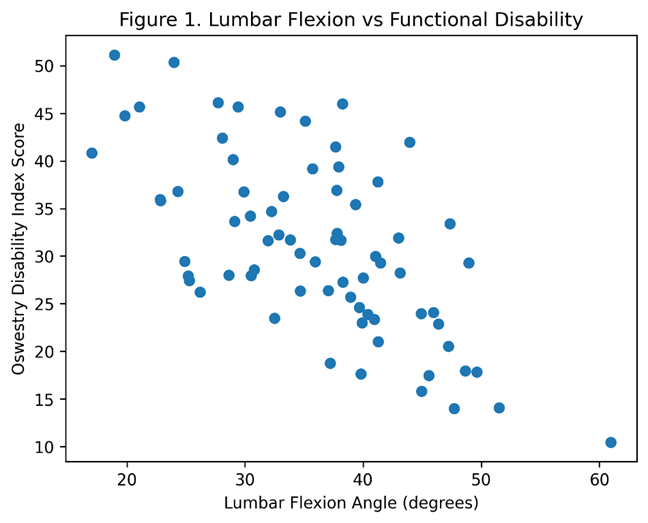
Figure 1. Relationship Between Lumbar Flexion Angle and Oswestry Disability Index
Caption: Scatter plot demonstrating inverse correlation between lumbar flexion angle and functional disability score, indicating increased disability with reduced lumbar mobility.
DISCUSSION :
he current research shows that the functional impairment of post-surgery lumbar spine surgery is mainly linked to a decrease in lumbar flexion and not the movement of the hips in isolation. The compensation mechanism by patients is to flex the hip more, and this process is not associated with normal functioning; rather it is associated with disability associated with stiffness. The conclusions of these findings are that postoperative recovery must be assessed biomechanically as opposed to being assessed in a symptomatic manner [10-13].
Biomechanical investigations carried out internationally have also indicated the distortion of normal lumbopelvic rhythm postmenopausal surgery. Past gait and kinematic studies have suggested that patients develop defensive movement patterns to prevent the spinal motion following the pain cessation. We find the same evidence as these reports, with stiffness, and not residual pain, being the cause of persistent functional limitation [14-16].
In regional rehabilitation practice, there is a tendency to focus on strengthening and walking programs, and little on movement retraining. The highest postoperative satisfaction and the continued problem of bending and sitting, have been described in studies conducted in Asian rehabilitation settings. The present findings give an objective explanation as they pinpointed the underlying cause as reduced lumbar motion[17, 18] .
The moderate correlation between hip flexion and disability indicates that first, compensation can aid in the performance of tasks but progresses to fatigue and ineffectiveness. That is why some of the patients complain about feeling heavy and tight instead of pain. The loss of the hip flexion meaning in regression analysis proves that it is an adaptive mechanism but not a cause [19, 20].
These results have clinical implications by demonstrating the significance of specific rehabilitation based on the restoration of spinal mobility, retraining of motor control, and lumbopelvic coordination. Surgeons and physiotherapists should ensure that the assessment of movement patterns is included in the postoperative follow-up educationally. Policy-wise, the rehabilitation procedures might require restructuring to incorporate functional motion assessment rather than using pain-based measures of recovery.
CONCLUSION :
Stiffness-related disability after lumbar spine surgery is strongly associated with reduced lumbar flexion Rather than compensatory hip motion. Restoration of lumbar mobility is crucial for improving activities of daily living, and rehabilitation programs should prioritize movement pattern correction to optimize postoperative functional outcomes.
BIBLIOGRAPHY:
1. Park, S.-J., et al., Factors affecting stiffness-related functional disability after long segmental fusion for adult spinal deformity. 2022. 91(5): p. 756-763.
2. Park, J.-S., et al., Time-dependent changes in stiffness-related functional disability after long segmental fusion in elderly patients with adult spinal deformity—Minimum 2-year follow-up results. 2023. 93(3): p. 654-661.
3. Zhou, S., et al., Impact of lumbar fusion on spinopelvic sagittal alignment from standing to sitting position: which factor is associated with postoperative functional limitations due to lumbar stiffness? 2023. 32(1): p. 345-352.
4. Balmaceno-Criss, M., et al. Hip-spine syndrome in adult spinal deformity patients. in Seminars in Spine Surgery. 2023. Elsevier.
5. Takami, M., et al., Psychometric evaluation and external validity of the Japanese version of lumbar stiffness disability index. 2022. 6(6): p. 696-703.
6. Ruangsomboon, P., et al., The pre-anesthetic period is the best time to evaluate the knee flexion angle for predicting the flexion angle after total knee arthroplasty: A prospective cohort study. 2023. 18(2): p. e0281237.
7. Simmons, J.J.R.i.S.C.I., Early hospital management. 2020: p. 63.
8. Brandenburg, J.E., A.E. Rabatin, and S.W.J.P.C. Driscoll, Spasticity interventions: decision-making and management. 2023. 70(3): p. 483-500.
9. McGonigle, A. and M. Huy, The physiology of yoga. 2022: Human Kinetics.
10. Kuligowski, T. and T. Sipko Lumbopelvic Biomechanics in Patients with Lumbar Disc Herniation—Prospective Cohort Study. Symmetry, 2021. 13, 602 DOI: 10.3390/sym13040602.
11. Konishi, R., J. Ozawa, and N. Kito, The effect of lumbopelvic region rotation relative flexibility on thorax–pelvis and pelvis–femur coordination during walking. Gait & Posture, 2022. 98: p. 121-127 DOI: https://doi.org/10.1016/j.gaitpost.2022.08.021.
12. Park, C., et al., Long-term effects of deep-learning digital therapeutics on pain, movement control, and preliminary cost-effectiveness in low back pain: A randomized controlled trial. DIGITAL HEALTH, 2023. 9: p. 20552076231217817 DOI: 10.1177/20552076231217817.
13. Tan, L.X., et al., Effect of spinal-pelvic sagittal balance on the clinical outcomes after lumbar fusion surgery. BMC Surg, 2023. 23(1): p. 334 DOI: 10.1186/s12893-023-02240-y.
14. Patterson, C.S., et al., The influence of hip flexion mobility and lumbar spine extensor strength on lumbar spine flexion during a squat lift. Musculoskeletal Science and Practice, 2022. 58: p. 102501 DOI: https://doi.org/10.1016/j.msksp.2021.102501.
15. Zaina, F., et al., A Systematic Review of Clinical Practice Guidelines for Persons With Non-specific Low Back Pain With and Without Radiculopathy: Identification of Best Evidence for Rehabilitation to Develop the WHO's Package of Interventions for Rehabilitation. Archives of Physical Medicine and Rehabilitation, 2023. 104(11): p. 1913-1927 DOI: https://doi.org/10.1016/j.apmr.2023.02.022.
16. Jhawar, B.S., et al., Cardiovascular risk factors for physician-diagnosed lumbar disc herniation. 2006. 6(6): p. 684-691.
17. Malfliet, A., et al., Best evidence rehabilitation for chronic pain part 3: low back pain. 2019. 8(7): p. 1063.
18. Page, M.J., et al., The PRISMA 2020 statement: an updated guideline for reporting systematic reviews. 2021. 372.
19. Arienti, C., et al., Acomparison and synthesis of rehabilitation definitions used by consumers (Google), major Stakeholders (survey) and researchers (Cochrane Systematic Reviews): A terminological analysis. 2020. 56(5): p. 682-689.
20. Brouwers, M.C., et al., AGREE II: advancing guideline development, reporting and evaluation in health care. 2010. 182(18): p. E839-E842.