Surviving Advanced Breast Cancer: Navigating Health Care and Non-Health Care Costs
- Urooj Tariq , Faculty of life sciences, Department of Pharmacy, Sarhad University of Science and Information Technology Peshawar, Pakistan
- Abuzar Khan , Department of Pharmacy University of Peshawar,Pakistan
- Natasha Rahim , Faculty of life sciences, Department of Pharmacy, Sarhad University of Science and Information Technology Peshawar, Pakistan
- Peer Abdul Hannan , Faculty of life sciences, Department of Pharmacy, Sarhad University of Science and Information Technology Peshawar, Pakistan
- Faiqa Falaq Naz , Faculty of life sciences, Department of Pharmacy, Sarhad University of Science and Information Technology Peshawar, Pakistan
- Kiran Firdos , Faculty of life sciences, Department of Pharmacy, Sarhad University of Science and Information Technology Peshawar, Pakistan
- Naila Shahbaz , Faculty of life sciences, Department of Pharmacy, Sarhad University of Science and Information Technology Peshawar, Pakistan
- Muhammad Jamal , Department of Pharmacy, University of Chakwal, Pakistan
- Nisar zamin shah , Faculty of life sciences, Department of Pharmacy, Sarhad University of Science and Information Technology Peshawar, Pakistan
- Sudhair Abbas Bangash , Faculty of life sciences, Department of Pharmacy, Sarhad University of Science and Information Technology Peshawar, Pakistan
Article Information:
Abstract:
Background: The commonness of breast cancer in Pakistan is on the upsurge and is one of the major causes of death. This study aims to estimate the burden of breast cancer illness and find predictors of high cost. Method: This prevalence-based single center cost of illness study was conducted using a societal perspective. Direct and indirect expenses were estimated using a detailed micro-costing and human capital method. Results: Findings indicate that the average cost per patient was approximately USD 2702, with direct medical expenses contributing 78.1% of the total. Chemotherapy emerged as the most significant cost component, making up 56%, followed by diagnostic tests at 13%. Statistical analysis identified the use of docetaxel, paclitaxel, and the number of chemotherapy sessions as major cost-driving factors (p<0.05). Conclusion: The study highlights that medical expenses form the bulk of breast cancer costs. These insights can aid policymakers in improving budget allocation for breast cancer prevention, treatment, and awareness programs.
Keywords:
Article :
INTRODUCTION:
Breast cancer is one of the most prevalent types of cancer worldwide among women, contributing to 25 % of newly diagnosed cases. It is the second major cause of death in females after lung cancers, accounting for 14.7 % of deaths worldwide (Sun, Legood et al. 2018). In the United States, the likelihood of a woman developing breast cancer is approximately1 in 8, influenced by various environmental factors and an unhealthy lifestyle. The annual total cost for breast cancer treatment was projected to be US$ 13.9 billion (Sorensen, Goh et al. 2012) . By 2050, the occurrence of breast cancer is projected to reach 3.2 million (Tao, Shi et al. 2015) The financial strain of cancer treatment is now acknowledged as a significant negative consequence of cancer care and has been correlated with a decline in quality of life noncompliance with therapy and a high risk for premature death. (Greenup, Rushing et al. 2019).
Breast cancer is now considered curable to a greater extent due to the availability of targeted therapy, increased access to cheaper alternatives and development of screening centers in low-resource settings (El Saghir, Adebamowo et al. 2011). The United Nation Sustainable development goals have also included the prevention of premature deaths from noncommunicable diseases of which breast cancer is highly noticeable (Bray, Laversanne et al. 2021). These facilitations have contributed to better management of breast cancer and improved patients’ quality of life (Wittmann, Látos et al. 2017). It has been reported that the survival rate is higher in patients diagnosed at an earlier stage (stages I & II) as compared to those diagnosed at an advanced stage (III & IV) (Barrios 2022). Despite considerable advances in breast cancer management, it has been described that the incidence and mortality rate is still increasing in low and middle-income countries affecting global healthcare costs. The mortality rate due to breast cancer is highest in Pakistan (southern Asia), the Bahamas (the Caribbean), Nigeria (sub-Saharan Africa), and Fiji (Pacific islands) (Ginsburg, Bray et al. 2017).
The prevalence of breast cancer is highly escalated and has become the leading cause of death in Pakistan. The mortality rate of patients suffering from breast cancer was reported to be as high as 16.170 deaths per annum in the country (Arshad, ur Rehman et al. 2019). The probability of developing breast cancer in Pakistani women is 1 in 9 at some stage of their life (Asif, Sultana et al. 2014). The average age for prevalence of breast cancer in Pakistani women is at a peak in their 40s, as compared to the women in the United States and Europe, where the peak incidence is in their 60s (Bano, Ismail et al. 2016). In addition to these factors, Pakistani women get affected in their prime age thus affecting their overall productivity which ultimately leads to an increased economic burden of breast cancer. Pakistan is a lower middle-income country, spending less than 5 % of its GDP on health to meet healthcare targets (Arshad, ur Rehman et al. 2019). A Major proportion of the population (73.6%) is living below the poverty line and is deprived of basic healthcare necessities and quality of life. Women are highly affected due to cultural values, insufficient literacy rates, and poor socioeconomic status (Barron, Quimbo et al. 2008). Moreover, patients often experience adverse events from chemotherapy during the cycles of treatment which can lead to an additional economic burden (Liou, Stephens et al. 2007).
Cost of illness studies plays an important role in the evaluation of economic losses to society due to breast cancer. Several studies have evaluated the cost of illness and mortality costs associated with the breast cancer. Studies based on the economic burden of this disease are rarely reported in developing areas like Pakistan (Sorensen, Goh et al. 2012). Considering the high prevalence and incidence of breast cancer and the insufficient public infrastructure for supporting diagnosis and treatment, it is crucial to understand the financial burden this condition places on patients. In light of the above-mentioned facts, this study was designed to estimate the economic burden (including the direct cost and indirect costs) and to compare cost differences among stage II and stage III breast cancer. In Pakistan, this study may help policymakers to allocate resources accordingly.
MATERIALS AND METHODS:
Study setting and sample size:
The current research was carried out at the IRNUM (Institute of Radiotherapy and Nuclear Medicine), Peshawar, KPK, Pakistan. The sample size of 300 patients was estimated using WHO formula.
n = Z2 P (1-P) / d2
Where,
n = Size of study sample, Z= Z-statistic for confidence level, P= Expected prevalence, d = Error margin.
Using 14% prevalence, error margin of 5% and with confidence level of 95%, the estimated sample size is 186. The sample size of 300 patients was selected for the present study to strengthen the results and data analysis.
Following the criteria outlined by the International Classification of Diseases-10 Ed (ICD-10), patients with breast cancer were considered for the said study. The participants with stage II and stage III breast cancer, diagnosed by an oncologist and with a complete history of chemotherapy were included in the study. Elderly patients (above 70 years) and patients with metastasis or last-stage cancer, other co-morbid illnesses, or incomplete information were excluded from the study sample.
2.2. Ethical approval
The study was approved by the ethical board of IRNUM Hospital, Peshawar, on 11th November 2019. The study was conducted in compliance with the Helsinki declaration of 1964. The data of all patients was kept confidential. Patient medical charts were selected from the record room using Convenient sampling.
2.3. Study design and data collection
Socio-demographics and information regarding various resources utilized by the patient were obtained from the medical charts. The economic burden was estimated using the micro-costing bottom-up approach.
2.4. Estimation of direct medical cost
Oncologist consultation fee is estimated to have been provided by the IRNUM hospital account books. An average monthly remuneration from the consulting oncologist has been provided by the account department of the hospital. All the parameters which would help us to estimate an average cost incurred per single consultation, number of patients seen on a particular day, time given per patient and total working days in a month are taken into account. The finance department of the hospital provided the average current monthly salaries for the head nurse and junior nurse. The cost was estimated through the time one nurse spends attending to a patient during the chemotherapy and patients attended to during each shift. Items of laboratory test ordered most frequently among the breast cancer patients were retrieved from the patient medical record. It considers the cost incurred within hospital premises. Price of hematology and radiology investigations provided to authors at 5% discount because of bulk procurement was obtained from hospital along with direct cost. Names of chemotherapy medicines prescribe to each Breast Cancer patient about all 06 or 8 cycle treatment along with name of supportive medicines' list was obtained from patient's records. Prices for all these medicinal products were sourced through Pharma Guide of Pakistan. Cost per unit for each drug was determined and then multiplied by the number of all administrations of a particular drug administered in chemotherapy cycles.
2.5. Estimation of direct non-medical cost
The food expenses were calculated using data from a pilot study involving ten patients. Transportation costs were calculated based on the Government of Pakistan's standard rate of 10 rupees per kilometer.
2.6. Estimation of Indirect cost
Indirect costs refer to loss of productivity resulting from the effects of the disease. These costs are typically calculated using two primary methods: the human capital method and the friction cost method. In this study, the indirect costs associated with the financial burden of breast cancer were calculated using the human capital approach. Overhead costs, such as building expenses, utility bills, security staff, registration staff, and housekeeping, were calculated and included in the direct costs. The expenses related to staff included in the Patients registration, housekeeping and security were assessed by a micro-costing, bottom-up method.
HCA estimates the productivity loss caused by illness or death. Using this approach, an estimate of an individual's average earnings was made. Indirect costs were calculated by determining the gross salary lost during work absenteeism. Productivity loss was estimated using the average wage from the national survey per capita.
2.7. Statistical analysis
Descriptive statistics were used to analyze the collected data regarding the demographic variables and to quantify the mean total cost, direct cost, and indirect cost. The t-test added with linear regression model was used to correlate the costs. Statistical package for social sciences (SPSS) version 23 was used to conduct all these analyses.
RESULTS:
3.1. Demographics and clinical variables
The findings of this study revealed that the average age of breast cancer patients was 46.8 years, with 58.7% patients falling within the range of 41–60 years, whereas 32.3 % and 9 % of patients belong to the age range of 20-40 and 61-80 years, respectively. Of them, 75.3 % were from urban areas of the country, while 24.7 % patients were from rural areas. In addition, most of the patients were married (97.0 %). The major population of the studied subjects was diagnosed with stage III breast cancer (53.7 %). Further details of other sociodemographic and clinical variables are presented in Table 1
TABLE.1: SOCIO-DEMOGRAPHICS AND CLINICAL VARIABLES OF PATIENTS
Here’s your data organized into a clean, professional table format:
|
Characteristics |
Frequency (n, %) |
|
Age (Years) |
|
|
20–40 |
97 (32.3%) |
|
41–60 |
176 (58.7%) |
|
61–70 |
27 (9.0%) |
|
Marital Status |
|
|
Married |
291 (97.0%) |
|
Unmarried |
7 (2.3%) |
|
Widow |
2 (0.7%) |
|
Location |
|
|
Urban |
226 (75.3%) |
|
Rural |
74 (24.7%) |
|
Stage of Cancer |
|
|
Stage 2 |
139 (46.3%) |
|
Stage 3 |
161 (53.7%) |
|
Cycles of Chemotherapy |
|
|
6 cycles |
77 (25.7%) |
|
8 cycles |
223 (74.3%) |
|
Type of Breast Cancer |
|
|
Invasive Ductal Carcinoma |
283 (94.3%) |
|
Invasive Lobular Carcinoma |
6 (2.0%) |
|
Invasive Mammary Carcinoma |
11 (3.7%) |
|
Type of Consultation |
|
|
OPD |
274 (91.3%) |
|
Private |
26 (8.7%) |
3.2. Total cost of breast cancer
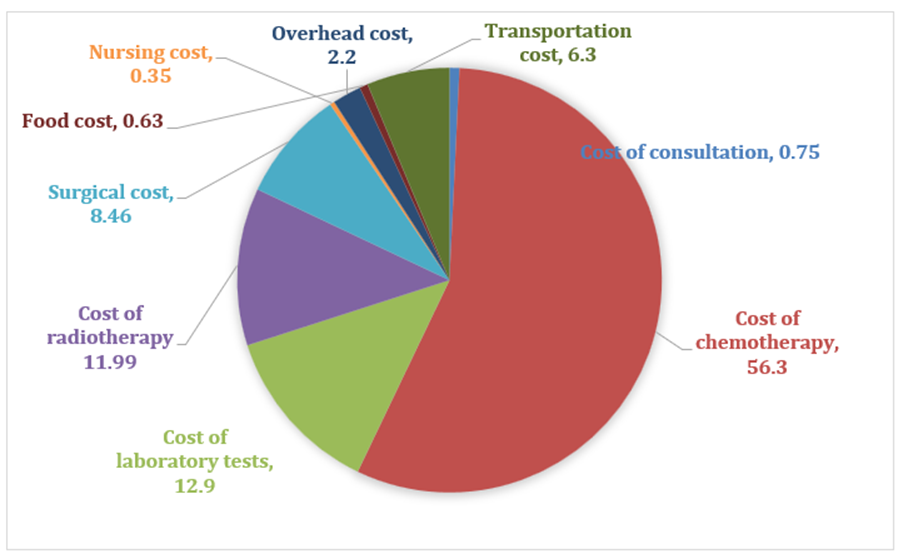
The total cost of breast cancer illness amounted to PKR 421835.30 (2702 US$). The direct medical cost was the major contributing factor to the total expenditure. Results shown in table 2 depicted that the expense related to chemotherapy was the highest, accounting for 56.3 % of the total cost.
Figure 1. Average cost as % of total direct cost
3.3 Direct non-medical cost
The main direct non-medical expenses for patients and their families were related to food and transportation. Food costs were calculated using data from a pilot study involving ten patients, with an average cost of PKR 2246 (USD 12.59) per patient across all chemotherapy cycles. Transportation costs were calculated based on the Government of Pakistan's rate of 10 rupees per kilometer. The total direct non-medical cost amounted to PKR 24,592.97, which represented 5.8% of the overall cost, as shown in Table 2.
TABLE 2: TOTAL, DIRECT AND INDIRECT COST PER PATIENT (N=300)
|
COST COMPONENTS |
COST (PKR) |
%AGE OF TOTAL COST |
|
TOTAL COST |
421835.30 (2702 US$) |
100 |
|
354455.30 (2270.6 US$) |
84.02 % |
o Cost of consultation |
329862.33 2671.0± (499.8) |
78.1 % 0.75 % of total direct cost |
|
o Cost of chemotherapy |
199821.7± (102893.3) |
56.3 % of total direct cost |
|
1. 5 fluorouracil (n=77) |
760± 567.76 |
|
|
2. Doxorubicin (n=300) |
4212.02±233.913 |
|
|
3. Cyclophosphamide (n=300) |
309.32±58.133 |
|
|
4. Docetaxel (n=212) |
28000.0±0.000 |
|
|
5. Paclitaxel (n=11) |
20325.00±0.000 |
|
|
6. Filgin (n=11) |
3900.00±0.000 |
|
|
7. Supportive drugs (n=300) |
588.00±0.000 |
|
|
o Cost of laboratory tests Haematological tests |
45758.3 ± (1093)
|
12.9 % of total direct cost
|
|
1. CBC |
2994.67± (350.019) |
|
|
2. RFTS |
2994.67±350.019 |
|
|
3. LFTS Radiological tests |
3369.00±393.771
|
|
|
1100.00±0.000 |
|
|
2500.00±0.000 |
|
|
6100.00±0.000 |
|
|
700.00±0.000 |
|
|
Histopathological tests |
13000±0.000 |
|
|
ER/PR HER2 Status |
13000±0.000 |
|
|
Cost of radiotherapy |
42500.0± (0.0) |
11.9 % of total direct cost |
|
Surgical cost |
30000± (0.0) |
8.46 % of total direct cost |
|
Nursing cost |
1250± (146.1) |
0.35 % of total direct cost |
|
24592.97 (US$ 102.59) |
5.8 % of total direct cost |
|
Overhead cost |
7861 ± (918.0) |
2.2 % of total direct cost |
|
Food cost |
2246± (262.5) |
0.63 % of total direct cost |
|
Transportation cost |
22346.97± (20974.2)
|
6.3 % of total direct cost |
|
|
67380.00 (US$431.6)
|
15.9 % |
|
|
1 US$ = 156.10 PKR |
|
The results of the study showed that docetaxel (48.19 %) contributed to the highest cost followed by paclitaxel. Laboratory investigations like Complete Blood Count, Renal Functioning Tests, and Liver Functioning Tests were performed before every chemotherapy. Mammograms and bone scans were conducted only once and a CT-Scan was done twice. The histopathological tests were expensive and cost for 28 % of the total cost.
Using the post-HOC LSD test, it was found that the cost expenses for the treatment of invasive ductal carcinoma contributed the highest.
3.4 Indirect cost
In this study, the total estimated indirect cost was PKR 67,380 (USD 377.61), accounting for 15.9% of the overall breast cancer treatment cost. The productivity loss for patients who were economically inactive was calculated using the minimum wage set by the Government of Pakistan, which is PKR 18,000 (USD 100.88). This resulted in an estimated loss of PKR 9,000 for one chemotherapy cycle. For this calculation, 15 days per month were considered as lost working days, given that women are typically able to perform household tasks after chemotherapy and are not entirely bedridden.
3.5 Comparisons of cost components among stage II and stage III breast cancer
According to the research data set, over half of the patients were with stage III breast cancer diagnosis and 46.3% presented with stage II. The independent sample t-test revealed that the direct medical, direct non-medical, and indirect costs of stage III patients with breast cancer were significantly more than those of others. The results are presented in Table 3 and Figure 2. Accordingly, the highest expenses belonged to stage III patients; thus, if the illness continued, the productivity losses would also be higher. The treatment and overall costs increased with the stage of the disease. Some of the reasons, which include illiteracy, lack of awareness, fear, and other social issues, are why, in Pakistan, women mostly hide symptoms related to the breast, which is major reason they usually present with an advanced stage of the disease. (Saeed, Asim et al.
Figure 2: Comparisons of cost components among stage 2 and stage 3 breast cancer
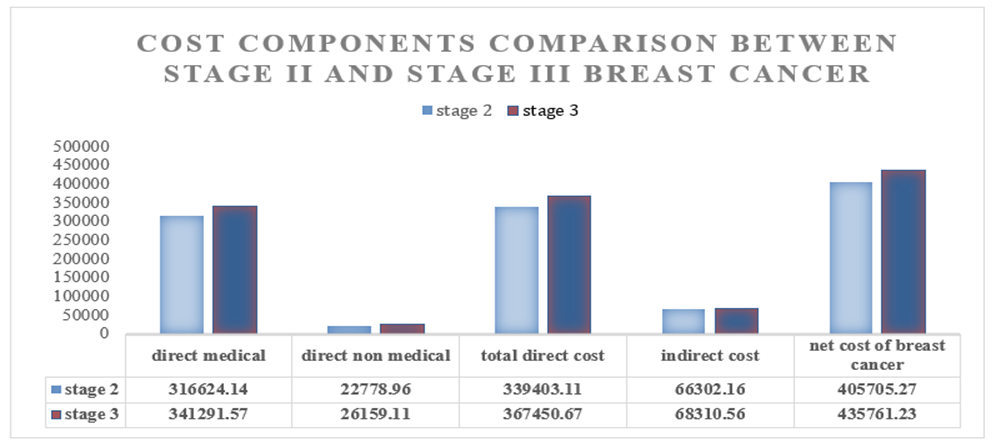
TABLE 3: COST COMPARISON AMONG STAGE 2 & STAGE 3 BREAST CANCER
|
COST COMPONENTS |
STAGE 2 |
STAGE 3 |
t-value |
P-value |
|
Direct medical cost |
316624.14± (111294.1) |
341291.57±(98566.34) |
-2.036 |
0.043 |
|
Direct non-medical cost |
22778.96± (20814.08) |
26159.11± (21117.5) |
-1.392 |
0.165 |
|
Indirect cost |
66302.16± (8402.6) |
68310.56± (7288.8) |
-2.217 |
0.027 |
|
Total direct cost |
339403.11± (115742.04) |
367450.67± (102310.2) |
-2.22 |
0.027 |
|
The total cost of breast cancer |
405705.27± (123885.06) |
435761.23± (108947.9) |
-2.236 |
0.026 |
Level of significance= P-value < 0.05
TABLE 4: LINEAR REGRESSION ANALYSES OF COST CORRELATES
|
COST COMPONENTS |
BETA value |
t-value |
P-value |
|
Patient Age |
-0.12 |
-1.159 |
0.026 |
|
Cycles of chemotherapy |
0.204 |
6.666 |
0.000 |
|
Stage of cancer |
0.010 |
0.905 |
0.366 |
|
Type of cancer |
-0.001 |
-.105 |
0.916 |
|
Docetaxel cost |
0.796 |
25.736 |
0.000 |
|
Paclitaxel cost |
0.220 |
15.818 |
0.000 |
|
Marital status |
0.007 |
0.640 |
0.523 |
|
Address of patient |
0.010 |
0.910 |
0.364 |
F =988.48, R2 =0.968, N=300
During statistical analysis of the data, it was depicted that the total cost of the disease was considered as the dependent variable, age of patient, chemotherapy cycle, cancer stage and the Cancer type, the status of prescription of docetaxel and paclitaxel, marital status, and the Patients address were independent variables as shown in table 4.
DISCUSSION :
The study was therefore carried out from a societal point of view to measure the cost of illness of breast cancer, as well as estimate costs to patients, their families, and the health system (Albrand and Terret 2008). The societal viewpoint is comprehensive and is particularly useful when cost data is limited, especially in low- and middle-income countries (Zhu, Swanson et al. 2020). The analysis found a statistically insignificant but positive correlation between the patient's age and the cost of illness. Similar studies have reported that, as patient’s age, the total treatment costs tend to rise (Albrand and Terret 2008). This is likely due to an increased risk of co-morbidities as individuals grow older, which require additional treatment alongside breast cancer therapy, thereby escalating both the financial burden and reducing survival chances (Sarfati, Koczwara et al. 2016).
The data indicated that direct costs accounted for 84.02% of the total cost of illness related to breast cancer, highlighting the high direct costs of treatment in Pakistan. Chemotherapy was found to be the highest contributor to direct medical costs, accounting for 56.3%. Early-stage breast cancer typically results in better clinical outcomes and fewer disability-adjusted life years (DALY), with oncologists often de-escalating treatment to avoid chemotherapy toxicities, thus reducing therapy (Pondé, Zardavas et al. 2019). However, as more than half of the study subjects (53.7%) were diagnosed with stage III breast cancer, the study revealed that the cost of treatment increases with the progression of the disease. This high proportion of stage III diagnoses is due to several factors, including a limited number of diagnostic centers, lack of awareness, and other social issues, which delay diagnosis and result in more complex and costly treatments. Diagnostic procedures, such as mammograms, CT scans, and biopsies, are expensive and significantly increase the overall cost of illness. Additionally, chemotherapy and radiotherapy, which are both costly treatments, are only available in major cities, necessitating travel and incurring additional out-of-pocket expenses (Sarfati, Koczwara et al. 2016).
As noted by Earle C, the cost of therapy rises with the stage of breast cancer. The study also revealed that 74.3% of patients underwent eight cycles of chemotherapy with an AC-Taxanes regimen, which contributed to the higher costs. The trastuzumab regimen, which includes docetaxel, carboplatin, and trastuzumab (TCarbTr), is considered a costly therapy. Other studies have shown that the price of one cycle of docetaxel is up to ten times more expensive than a cycle of paclitaxel (Jitawatanarat, O'connor et al. 2014). Studies have reported that the cost of 1 cycle of docetaxel is 10 times more expensive than a single cycle of paclitaxel (Burstein, Harris et al. 2003). The results from this study align with other global cost-of-illness studies where the cost of drugs was the major contributor to direct medical costs, such as one conducted in Punjab, India. In contrast, hospitalization costs are higher in many developed countries. Variations in therapy costs between studies can be attributed to differences in treatment regimens and the inclusion criteria for participants (Jain and Mukherjee 2016). In this study, the cost of consultation was estimated to be PKR 2,671 per patient. Given that a large portion of the Pakistani population lives below the poverty line, most patients (91.3%) visited the hospital's outpatient department (OPD), where subsidized healthcare is provided, compared to private hospitals, where treatment costs are significantly higher. Research by Maneeta Jain and colleagues found that hospitalization costs in the private sector are 1.86 times higher than in the public sector (Naqvi, Ali et al. 2007), (Garg, Tripathi et al. 2021).
International literature suggests that indirect costs are the major contributors to the cost of illness of disease, largely because females contribute to the workforce (Brown, Lipscomb et al. 2001) . For instance, in the state of California, the cost of breast cancer was estimated at US$1.43 billion, of which 80% of the total cost was attributed to productivity losses resulting from premature mortality among young and middle-aged women (Max, Sung et al. 2009). A study in Korea found that indirect costs accounted for the largest proportion (49.5-51.7%) of the total economic burden of breast cancer (Kim, Oh et al. 2015). However, in this study, indirect costs were relatively low (15.9%), as most female patients were homemakers and economically inactive, relying on their families to cover treatment expenses . Research also suggests that late-stage breast cancer, frequent hospitalizations, low physical ability, long hospital stays, transportation issues, and severe symptoms, such as wounds and lymphedema after mastectomy, can negatively affect the quality of life for family caregivers (Kusi, Boamah Mensah et al. 2020).
As, the majority of people were from poor socio-economic backgrounds and they could not afford to appoint house help for daily chores, therefore most of the informal care and help was provided by their relatives. The total cost of breast cancer varies greatly around the globe and depends highly on the economy of the nation and the healthcare budget.
The outcomes of this study indicated a substantial rise in the cost of breast cancer treatment as the disease progresses (p<0.05). Stage III breast cancer patients incurred higher costs (PKR 435,761.23 or USD 2,442.10) compared to stage II patients (PKR 405,705.27 or USD 2,273.66). In Pakistan, due to factors such as lack of education and awareness as well as social issues, women often conceal breast-related abnormalities, leading to late-stage diagnoses. These challenges are particularly pronounced in low- and middle-income countries, where socio-economic, lifestyle, and demographic changes make it difficult to effectively address long-term chronic diseases, which are increasingly prevalent (Miranda, Kinra et al. 2008, Haque, Islam et al. 2020).
CONCLUSION:
It was concluded that the economic burden of breast cancer among Pakistani patients is considerable enough to significantly impact both the patients and their families. All treatment expenses have to be borne by the patients and their families, and no help is sought from the government or health insurance policies.
REFERENCES:
1. Sun L, Legood R, dos-Santos-Silva I, Gaiha SM and Sadique Z. Global treatment costs of breast cancer by stage: a systematic review. PloS one. 2018; 13: e0207993. https://doi.org/10.1371/journal.pone.0207993
2. Sorensen SV, Goh JW, Pan F, et al. Incidence-based cost-of-illness model for metastatic breast cancer in the United States. International journal of technology assessment in health care. 2012; 28: 12-21. https://doi.org/10.1017/S026646231100064X
3. Tao Z, Shi A, Lu C, Song T, Zhang Z and Zhao J. Breast cancer: epidemiology and etiology. Cell biochemistry and biophysics. 2015; 72: 333-8. https://doi.org/10.1007/s12013-014-0459-6
4. Greenup RA, Rushing C, Fish L, et al. Financial costs and burden related to decisions for breast cancer surgery. Journal of oncology practice. 2019; 15: e666-e76. https://doi.org/10.1200/JOP.18.00796
5. El Saghir NS, Adebamowo CA, Anderson BO, et al. Breast cancer management in low resource countries (LRCs): consensus statement from the Breast Health Global Initiative. The Breast. 2011; 20: S3-S11. https://doi.org/10.1016/j.breast.2011.02.006
6. Bray F, Laversanne M, Cao B, et al. Comparing cancer and cardiovascular disease trends in 20 middle-or high-income countries 2000–19: A pointer to national trajectories towards achieving Sustainable Development goal target 3.4. Cancer Treatment Reviews. 2021; 100: 102290. https://doi.org/10.1016/j.ctrv.2021.102290
7. Wittmann V, Látos M, Horváth Z, et al. What contributes to long-term quality of life in breast cancer patients who are undergoing surgery? Results of a multidimensional study. Quality of Life Research. 2017; 26: 2189-99. https://doi.org/10.1007/s11136-017-1563-z
8. Barrios CH. Global challenges in breast cancer detection and treatment. The Breast. 2022; 62: S3-S6. https://doi.org/10.1016/j.breast.2022.02.003
9. Ginsburg O, Bray F, Coleman MP, et al. The global burden of women’s cancers: a grand challenge in global health. The Lancet. 2017; 389: 847-60. Arshad S, ur Rehman M, Abid F, et al. Current situation of breast cancer in Pakistan with the available interventions. International Journal of Biosciences. 2019; 11: 232-40. DOI:10.12692/ijb/14.6.232-24010.1016/S0140-6736(16)31392-7
10. Arshad S, ur Rehman M, Abid F, et al. Current situation of breast cancer in Pakistan with the available interventions. International Journal of Biosciences. 2019; 11: 232-40. DOI:10.12692/ijb/14.6.232-240
11. Asif HM, Sultana S, Akhtar N, Rehman JU and Rehman RU. Prevalence, risk factors and disease knowledge of breast cancer in Pakistan. Asian Pacific journal of cancer prevention. 2014; 15: 4411-6. https://doi.org/10.7314/apjcp.2014.15.11.4411
12. Bano R, Ismail M, Nadeem A, Khan MH and Rashid H. Potential risk factors for breast cancer in Pakistani women. Asian Pacific Journal of Cancer Prevention. 2016; 17: 4307-12. https://doi.org/10.14456/apjcp.2016.256
13. Barron JJ, Quimbo R, Nikam PT and Amonkar MM. Assessing the economic burden of breast cancer in a US managed care population. Breast cancer research and treatment. 2008; 109: 367-7, https://doi.org/10.1007/s10549-007-9650-4
14. Liou S, Stephens J, Carpiuc K, Feng W, Botteman M and Hay J. Economic burden of haematological adverse effects in cancer patients. Clinical drug investigation. 2007; 27: 381-96. https://doi.org/10.2165/00044011-200727060-00002
15. Saeed S, Asim M and Sohail MM. Fears and barriers: problems in breast cancer diagnosis and treatment in Pakistan. BMC women's health. 2021; 21: 1-10. https://doi.org/10.1186/s12905-021-01293-6
16. Zhu Y, Swanson KM, Rojas RL, et al. Systematic review of the evidence on the cost-effectiveness of pharmacogenomics-guided treatment for cardiovascular diseases. Genetics in Medicine. 2020; 22: 475-86. https://doi.org/10.1038/s41436-019-0667-y
17. Albrand G and Terret C. Early breast cancer in the elderly. Drugs & aging. 2008; 25: 35-45, https://doi.org/10.2165/00002512-200825010-00004
18. Sarfati D, Koczwara B and Jackson C. The impact of comorbidity on cancer and its treatment. CA: a cancer journal for clinicians. 2016; 66: 337 50. https://doi.org/10.3322/caac.21342
19. Pondé NF, Zardavas D and Piccart M. Progress in adjuvant systemic therapy for breast cancer. Nature reviews Clinical oncology. 2019; 16: 27-44. https://doi.org/10.1038/s41571-018-0089-9
20. Jitawatanarat P, O'connor TL, Kossoff EB, Levine EG, Chittawatanarat K and Ngamphaiboon N. Safety and tolerability of docetaxel, cyclophosphamide, and trastuzumab compared to standard trastuzumab-based chemotherapy regimens for early-stage human epidermal growth factor receptor 2-positive breast cancer. Journal of Breast Cancer. 2014; 17: 356. https://doi.org/10.4048/jbc.2014.17.4.356
21. Burstein HJ, Harris LN, Gelman R, et al. Preoperative therapy with trastuzumab and paclitaxel followed by sequential adjuvant doxorubicin/cyclophosphamide for HER2 overexpressing stage II or III breast cancer: a pilot study. Journal of Clinical Oncology. 2003; 21: 46-53. https://doi.org/10.1200/JCO.2003.03.124
22. Jain M and Mukherjee K. Economic burden of breast cancer to the households in Punjab, India. International Journal of Medicine and Public Health. 2016; 6. https://doi.org/10.4103/2230-8598.179754
23. Naqvi SAA, Ali B, Mazhar F, Zafar MN and Rizvi SAH. A socioeconomic survey of kidney vendors in Pakistan. Transplant International. 2007; 20: 934-9. https://doi.org/10.1111/j.1432-2277.2007.00529.x
24. Garg S, Tripathi N, Ranjan A and Bebarta KK. Comparing the average cost of outpatient care of public and for-profit private providers in India. BMC health services research. 2021; 21: 1-9. https://doi.org/10.1186/s12913-021-06777-7
25. Brown ML, Lipscomb J and Snyder C. The burden of illness of cancer: economic cost and quality of life. Annual review of public health. 2001; 22: 91. https://doi.org/10.1146/annurev.publhealth.22.1.91
26. Max W, Sung H-Y and Stark B. The economic burden of breast cancer in California. Breast cancer research and treatment. 2009; 116: 201-7. https://doi.org/10.1007/s10549-008-0149-4
27. Kim YA, Oh I-H, Yoon S-J, et al. The economic burden of breast cancer in Korea from 2007-2010. Cancer research and treatment: official journal of Korean Cancer Association. 2015; 47: 583. https://doi.org/10.4143/crt.2014.143
28. Kusi G, Boamah Mensah AB, Boamah Mensah K, et al. The experiences of family caregivers living with breast cancer patients in low-and middle-income countries: a systematic review. Systematic reviews. 2020; 9: 1-18. https://doi.org/10.1186/s13643-020-01408-4
29. Haque M, Islam T, Rahman NAA, McKimm J, Abdullah A and Dhingra S. Strengthening primary health-c are services to help prevent and control long-term (chronic) non-communicable diseases in low-and middle-income countries. Risk management and healthcare policy. 2020; 13: 409. https://doi.org/10.2147/RMHP.S239074
30. Miranda JJ, Kinra S, Casas JP, Davey Smith G and Ebrahim S. Non‐communicable diseases in low‐and middle‐income countries: context, determinants and health policy. Tropical Medicine & International Health. 2008; 13: 1225 34. https://doi.org/10.1111/j.1365-3156.2008.02116.x