Functional Outcome of Tibial Plateau Fractures Treated with Ilizarov Fixation: A Descriptive Study at a Tertiary Care Hospital
- Muhammad Zeeshan Iqbal , Post Graduate Resident Orthopedic Surgeon, Ayub Teaching Hospital Abbottabad, Pakistan
- Tughral Rahman , Post Graduate Resident Orthopedic Surgeon, Ayub Teaching Hospital Abbottabad, Pakistan
- Abdul Qadeer Khan , Post Graduate Resident Orthopedic Surgeon, Ayub Teaching Hospital Abbottabad, Pakistan
- Raza Shah , Post Graduate Resident Orthopedic Surgeon, Ayub Teaching Hospital Abbottabad, Pakistan
- Sajjad Ali , Post Graduate Resident Orthopedic Surgeon, Ayub Teaching Hospital Abbottabad, Pakistan
- Muhammad Shoaib Zardad , Assistant Professor, Orthopedic Surgeon, Ayub Teaching Hospital Abbottabad, Pakistan
Article Information:
Abstract:
Abstract: Background: Tibial plateau fractures are complicated intra-articular traumas that hurt knee stability and long-term functionality. Fractures of the Schatzker type V and VI are extreme bicondyls type that can be accompanied by the weakness of the soft tissue. Ilizarov circular external fixation can be used as a stable fixation with minimum soft tissue disturbance and can give a favourable functional recovery in these events. Objective: To establish if the Ilizarov fixation serves a useful purpose in the management of fractures of the tibia plateau of the fourth and sixth type of the Schatzker classification. Methodology: This cross-sectional, descriptive study was done at the department of orthopedics, Ayub Teaching Hospital Medical Complex Abbottabad, between June and October 2025. Non-probability consecutive will be used to include 168 patients between 20 and 60 years old. A functional grading system was used to measure functional outcome at 12 weeks and determine it using the Rasmussen system. The data were analyzed on the SPSS version 25, and the associations were checked by using chi-square or Fisher exact test. Findings: The average age was 39.6/+10.8years; that is, 70.2 per cent male. In general, 31.0% attained excellent results, 51.2% good results and 17.8% fair results. Functional recovery was significantly related to a younger age, closed fracture, preoperative procedure, and a higher socioeconomic status (p ≤ 0.05). Conclusion: Ilizarov fixation offers an acceptable short-term functional result in more complicated tibial plateau fractures and is an acceptable mode of treatment especially in cases where the soft tissue preservation is crucial.
Keywords:
Article :
INTRODUCTION :
Fracture of the tibial plateau is a complicated intra-articular failure of the proximal tibia and comprises around 1% 1.5% of all fractures and about 8% of fractures in older people (1,2). Such injuries damage the articular cartilage of the knee joint, interfere with lower limb positioning, and have a direct impact of weight transmission through the tibiofemoral articulation. Due to the fact that the knee is the main load bearing joint of lower extremity, instability of the tibial plateau carries great consequences to both the kinematic congruency as well as stability of the knee as well as long term functional capacity. High-energy road traffic trauma has been increasing, especially in developing societies, and this has added to a rise in the number of cases with complex bicondylar tibial plateau fracture among the young population, whereas low-energy osteoporotic fractures become more and more apparent among the elderly (3,4).
Mechanism of injury This is usually axial loading and varus or valgus stress that leads to artistic depression of the articular, condylar separation, or metaphyseal-diaphyseal dislocation (5). The comminuted bicondylar fractures have high-energy mechanisms that cause much soft tissue compromise, and the low-energy mechanisms often result in isolated lateral plateau depression fractures (6). The Schatzker classification is still popularly used to classify tibial plateau fracture into six types in terms of fracture morphology and severity (7). Schatzker type V fractures are those with bicondylar damage whereas the Schatzker type VI fractures are marked by metaphyseal-diaphyseal discontinuity on top of the involvement of the articular region. Such processes are usually unstable and linked to soft tissue injuries and require a diligent plan of surgery (7,8).
Tibial plateau is naturally complicated in its anatomy. The median plateau bears more axial load and the lateral plateau is more convex and inclined to depression fractures. The collateral ligaments, the cruciate ligaments, and the enveloping menisci make the joint stable and biomechanically intact (9). Even minimal incongruity of the articles may result in a change of contact pressures in the knee joint, speeding up cartilage degeneration and exposing patients to post-traumatic osteoarthritis (10). It has been proved by long-term research that malalignment, residual depression, and instability correlate with worse functioning outcomes and higher risks of additional reconstructive surgeries (11).
Fundamental objectives with the management of tibial plateau fracture are to restore articular congruency, to correct limb positioning, to maintain the integrity of the soft tissues, to fix it and to mobilize (12). The use of conservative treatment of the form of casting is mostly limited to minimally displaced fractures since the continuation of reduction in unstable fracture pattern cannot be easily achieved and may lead to malunion or stiffness (13). Displaced, unstable and bicondylar fractures therefore show indicators of surgical management. Nonetheless, there is disagreement as to the best surgery of complicated fractures.
Bicondylar tibial plateau fractures had long been viewed as the standard system to use for fracture repair in open reduction and internal fixation (ORIF). Even though such type allows direct visualization and anatomical reduction, it is also related to serious soft tissue dissection and the possibility of wound complications, infection, implant failure, and delayed healing, especially in high-energy injuries (14). To help minimize soft tissue complications, staged protocols with temporary spanning external fixation then definitive internal fixation has been recommended but morbidity still is high (15). These issues have led to the pursuit of different biological fixation protocols which do not further inflict further injury on non-healing soft tissues.
Ilizarov circular external fixation system is a minimally invasive system that is formed on the premise of tensioned wire and ring constructions as a means of providing a multiplanar stability (16). The technique can be used to indirectly reduce by ligamentotaxis, maintain periosteal blood supply and reduce broad areas of soft tissue stripping. Since fixation is based on a percutaneous method, there is a potential decrease in the risk of deep infection and wound necrosis in comparison with the open plating in the selected cases. Moreover, the circular frame enables early weight baring and regulated axial micromotion which could positively impact fracture healing and functional recovery (16,17).
A number of clinical works have shown good radiological and functional results in Ilizarov fixation of complex fracture of the tibia plateau, especially Schatzker type V and VI trauma (18,19). Rasmussen functional grading program typically applies in functional assessment, and it involves estimation of pain, walking range, extension lag, range of movement, and stability, all rated on a 30-point scale (20). The use of this approach has recorded a significant percentage of patients who experienced good to excellent results but complications that included pin tract infection, malalignment, and patient discomforts associated with the frame have been recorded (18,21). A normal fixation versus a dominant biological storage is also the focus on attaining the satisfactory results.
Besides the morphology of the fracture, age, bone quality, comorbidities, and the mechanism of injury also prove to be patient-related factors that determine the outcome. Higher levels of energy injury frequently depend on high degrees of the soft tissue damage that is independently relevant to predicting postoperative complications and delayed, functioning restoration (22). In addition, the socioeconomic factors and availability of formal services of rehabilitation can influence the end results, especially in the restricted resources environments. Thus, the assessment of the outcomes in a particular healthcare setting is important to produce evidence that is relevant at the local level.
Although there is international literature of using Ilizarov fixation in the complex tibial plateau fracture, less information has been provided on the local population. The variation in the pattern of traumas, in rehabilitation regimes as well as in tolerance to the drug may impact the functional recovery. At the time of 12 weeks, short-term analysis is done to detect early functional restoration and mobility, which are the key components of restoring functions and preventing joint stiffness to activate a person to return to daily performance. Nonetheless, they should be carefully evaluated using standardized scoring systems, to make sure that measurement of result(s) is objective.
Due to the clinical complexity of the Schatzker type V and VI fractures and the persistence of the discussion about the best ways to fix it, the outcome of the Ilizarov fixation is still to be assessed. The global functional recovery assessment with validated measurement instruments could help clinicians to develop efficacious treatment guidelines, educate patients on the possible consequences, and optimize postoperative recovery plans. This paper thus intends to assess the functional prognosis on tibial plateau fractures subjected to Ilizarov fixation in the functional grading system by Rasmussen in a tertiary care hospital.plex congenital cutaneous and soft-tissue lesions.
METHODOLOGY:
The current study was an investigation that was performed as a descriptive cross-sectional study to assess the functional outcome of tibial plateau fractures undergoing Ilizarov fixation. The design was chosen to ascertain how the functional outcomes are spread among a given population over a given time duration without the comparative analysis with another treatment cohort. The researchers narrowed the target population to Schatzker V and V types of fractures that are complicated and unstable injury models that need surgical intervention. The design of the methodology was such that patient selection was done in a standardized manner, there was uniformity in surgical intervention and objective outcome evaluation.
Study Setting and Duration
The research was conducted within the Department of Orthopedics in the Ayub Teaching Hospital Medical Complex, Abbottabad, which is a tertiary care teaching hospital attending to a large number of traumas. The collection of data was performed during a specific study period, being between June 2025 and October 2025. Any and every patient who came within this time frame and who fitted in the eligibility requirement were considered to be included. The institutional review board was consulted on issues related to ethical approval before the process of patient enrollment commenced.
Sample Size and Sampling Technique.
A 95-percent confidence level and a 4.5-percent absolute precision was used to calculate the sample size based on an assumed proportion of fair functional outcome of 9.8 percent reported in the previous literature and using the WHO sample size calculator. The calculated sample was 168 patients. A non-probability consecutive sampling method was employed according to which all qualified patients that were available at the period of the study were enumerated to get the desired sample size. This method was feasible due to the small time to conduct the study besides being representative of the hospital-based population.
Eligibility Criteria
They included patients aged 20-60 years of either sex who are radiographically diagnosed of a Schatzker type V or VI tibial plateau fracture. Open and closed fractures were regarded as eligible. Patients who previously had tibial surgery, bilateral tibial plateau fracture, polytrauma which was about to need multidisciplinary care and those with radiographically-diagnosed advanced osteoporosis were excluded. These criteria have been used to minimize the confounding variables that might have an independent influence on functional recovery.
Surgical Procedure
All the surgeries were done by a consultant orthopedic surgeon with a minimum of five years of post-fellowship experience in order to provide consistency in the procedure. Ilizarov circular external fixation was done with tensioned wires and half-pins under suitable anesthesia to obtain stable fixation. Proximal half-pin design involved the use of anteroposterior directed Schanz pin in each of the condylar pieces plus oblique pin running anteroinferior posterosuperior to allow triangulation and multiplanar stability. Ligamentotaxis was the principle used to make indirect reduction. Internal fixation with cancellous screws and bone grafting on a few occasions only in extreme comminution cases. Caution was observed to ensure that there was a minimum amount of soft tissue dissection and maintenance of periosteal blood supply.
Data Collection Procedure
Following the presentation of written informed consent, demographic information such as age, gender, residence, occupation, educational level, socioeconomic status, mechanism of injury, as well as duration of injury were entered on a structured proforma. The radiographic and clinical evaluation verified the classification of the fracture. In the outpatient department, a follow up on the patients was done after a month of surgery. Gradual mobilization and range-of-motion exercises were given as a standard rehabilitation recommendation. Analysis 12-week functional outcome was measured based on the Rasmussen functional grading system of assessment of pain, walking ability, knee stability on the functional assessment, range of motion, and extension lag with a maximum score of 30.
Data Analysis
The SPSS version 25 was used to enter and analyze the data. The age and the length of time of injury are quantitative and are represented as mean and standard deviation in the case of normally distributed variables and as the median and the outer quarter and third quartile as non-parametric variables evaluated by the Shapiro-Wilk test. Frequencies and percentages were the ways that categorical variables have been given. Stratification was done to estimate how the demographic and injury-related variables affect functional outcome. Where necessary, post-stratification chi-square or fisher exact test was used with a p-value of =0.05 as a statistical significant value.
RESULTS:
Demographic Characteristics of the Study Population
One hundred and sixty-eight patients in accordance with the inclusion criteria were enrolled within the timeline of the study. The average age of the patients was 39.6 10.8 years, meaning that the majority of the participants were in the economically productive age bracket. The patients aged between 31-40 years (32.1), 41-50 years (27.4), 20-30 years (22.6) and 51-60 years were found to have the highest, middle and lowest percentage, respectively, as obtained in Table 1 and as shown in Figure 1. The distribution indicates that the tibial plateau fracture necessitating Ilizarov repair was more common among middle-aged adults, which agrees with the pattern of high-energy trauma among active persons.mass was noted over the right lower lateral abdominal wall and back.
Table 1: Baseline Demographic Characteristics of Patients (n = 168)
|
Variable |
Category |
Frequency (n) |
Percentage (%) |
|
Age (Mean ± SD) |
39.6 ± 10.8 years |
— |
— |
|
Age Group |
20–30 |
38 |
22.6 |
|
|
31–40 |
54 |
32.1 |
|
|
41–50 |
46 |
27.4 |
|
|
51–60 |
30 |
17.9 |
|
Gender |
Male |
118 |
70.2 |
|
|
Female |
50 |
29.8 |
|
Residence |
Urban |
97 |
57.7 |
|
|
Rural |
71 |
42.3 |
|
Occupation |
Job |
72 |
42.9 |
|
|
Business |
41 |
24.4 |
|
|
Unemployed |
55 |
32.7 |
|
Education |
Illiterate |
36 |
21.4 |
|
|
Primary |
44 |
26.2 |
|
|
Secondary |
52 |
31.0 |
|
|
Matric & above |
36 |
21.4 |
|
Socioeconomic Status |
Low |
62 |
36.9 |
|
|
Middle |
83 |
49.4 |
|
|
|
|
|
|
|
High |
23 |
13.7 |
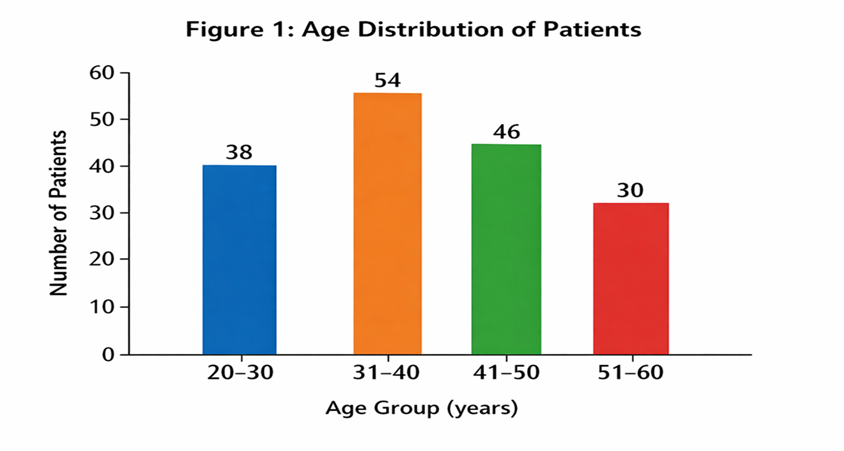
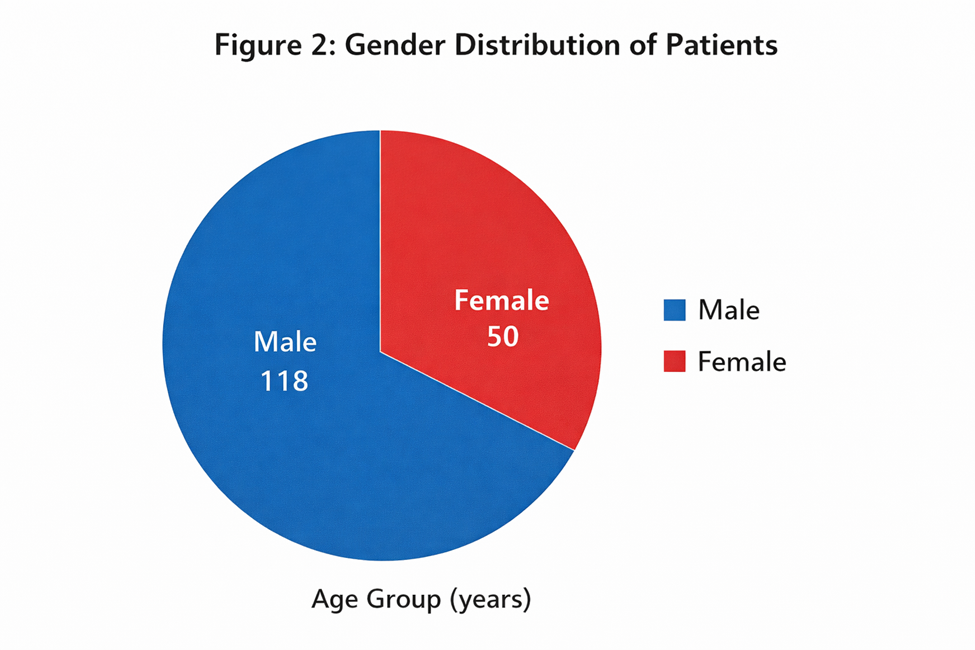
Table 1 and Figure 2 show that there is a bias of the male patients (70.2) over females (29.8). Such disparity is probably an indication of greater male exposure to accidents on the road and work occupational hazards. The percentage of the urban population (57.7 ten percent) was slightly more than that of rural communities (42.3 ten percent). Regarding socioeconomic status, the proportion of patients, who were in the middle socioeconomic class, was 49.4% and the low-income and the high-income classes were 36.9% and 13.7% respectively. The education was used to indicate that 31.0% had secondary school education, and 21.4% were illiterate, with the rest with matriculation and above education.
Injury Characteristics
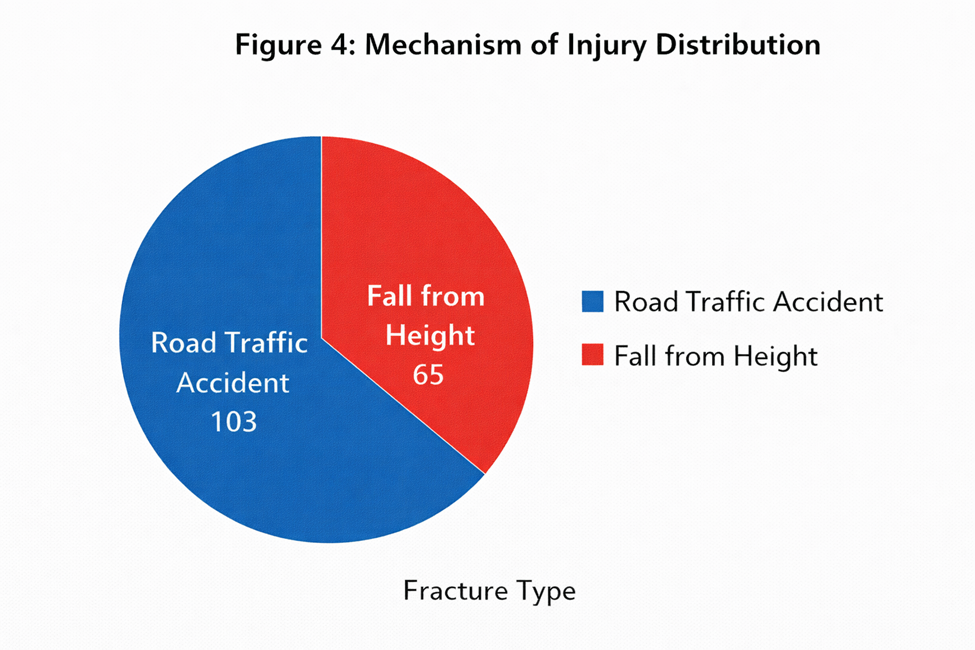
Table 2 summarizes the variables of injury-related data, and these are graphically illustrated in Figure 3 and Figure 4. The cases were 61.3 percent and 38.7 percent road traffic accidents and falls of height respectively. High-energy fracture pattern is in agreement with the preponderance of vehicular trauma. The median period between injury prior to surgery was 8.9 and 4.6 days and almost half of the patients (48.8) surgeries were done within 7 days after injury. The delay was noted to be more than two weeks in 13.7 per cent cases.
Table 2: Injury Characteristics (n = 168)
|
Variable |
Category |
Frequency (n) |
Percentage (%) |
|
Mechanism of Injury |
Road Traffic Accident |
103 |
61.3 |
|
|
Fall from Height |
65 |
38.7 |
|
Duration Before Surgery (Mean ± SD) |
8.9 ± 4.6 days |
— |
— |
|
Duration Category |
≤7 days |
82 |
48.8 |
|
|
8–14 days |
63 |
37.5 |
|
|
>14 days |
23 |
13.7 |
|
Fracture Type |
Schatzker V |
94 |
56.0 |
|
|
Schatzker VI |
74 |
44.0 |
|
Fracture Nature |
Closed |
126 |
75.0 |
|
|
Open |
42 |
25.0 |
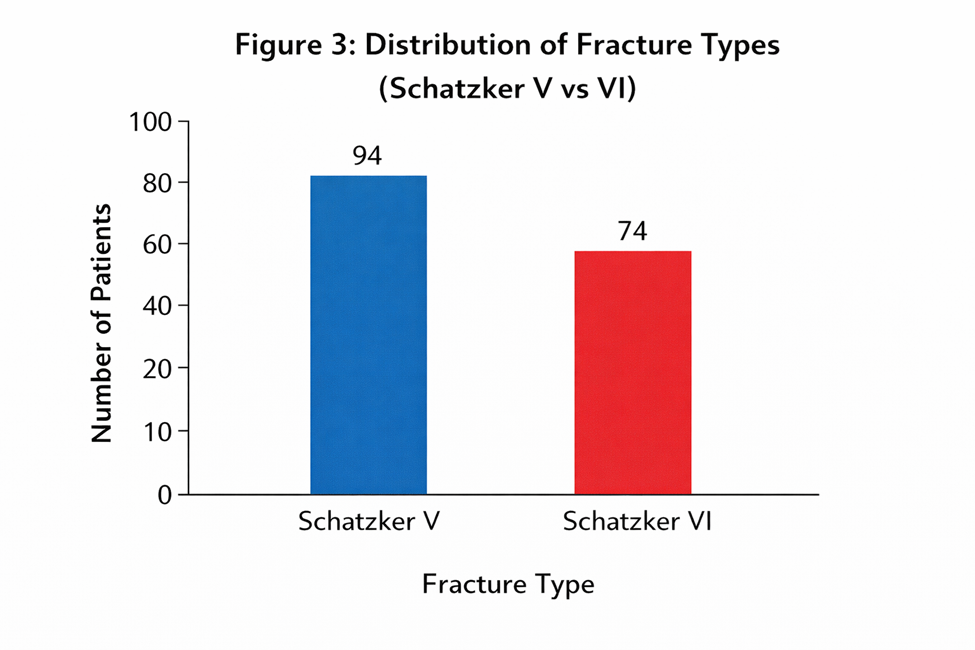
In terms of fracture classification, Type V fractures had marginally higher occurrence (56.0) than the occurrence of Type VI fracture (44.0), depicted in Table 2 and Figure 3. There were errors which formed 75.0 percent and 25.0 percent close and open wounds respectively. As shown in the distribution, the majority of injuries were closed, but a significant percentage of compromise of the soft tissue was found, which highlights the importance of less invasive fixation methods.
Functional Outcome at 12 Weeks
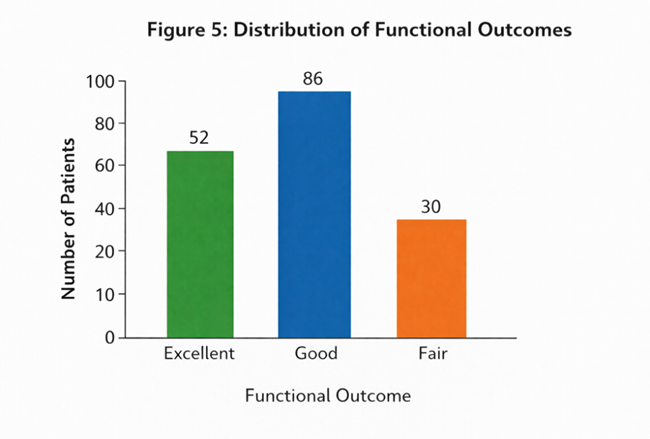
Functional outcome on 12 weeks was measured through the functional grading system by Rasmussen and it is summed up in Table 3 and represented in Figure 5. Comprehensively, 31.0% of the patients had excellent outcomes, 51.2% had good recovery and 17.8% had fair results. Most of all the patients thus recorded good to excellent results (82.2), indicating satisfactory functional short term recovery after Ilizarov fixation.
Table 3: Functional Outcome at 12 Weeks (Rasmussen Grading)
|
Outcome Category |
Frequency (n) |
Percentage (%) |
|
Excellent (27–30) |
52 |
31.0 |
|
Good (20–26) |
86 |
51.2 |
|
Fair (10–19) |
30 |
17.8 |
|
Total |
168 |
100 |
Association Between Demographic Variables and Functional Outcome
Table 4 illustrates the correlation between the age and functional outcome. Any younger age group showed more favorable results with the most significant proportion of excellent results shown on patients aged 20-30. On the contrary, patients aged between 51 and 60 years reported higher shares of fair outcomes. This was statistically significant (p = 0.041) thus indicating that age had an effect on early functional recovery.
Table 4: Association of Age Group with Functional Outcome
|
Age Group |
Excellent |
Good |
Fair |
Total |
p-value |
|
20–30 |
16 |
18 |
4 |
38 |
|
|
31–40 |
18 |
30 |
6 |
54 |
|
|
41–50 |
12 |
24 |
10 |
46 |
|
|
51–60 |
6 |
14 |
10 |
30 |
0.041 |
The comparison gender-wise (Table 5) demonstrated that the male population was characterized by a higher percentage of excellent outcomes (33.1) than the female population (26.0) and the percentage of fair outcomes was higher in females. This correlation was significantly significant (p = 0.048) and it is possible that biological or social considerations might have played a role in the rehabilitation and recovery patterns.
Table 5: Association of Gender with Functional Outcome
|
Gender |
Excellent |
Good |
Fair |
Total |
p-value |
|
Male |
39 |
62 |
17 |
118 |
|
|
Female |
13 |
24 |
13 |
50 |
0.048 |
Functional outcome was significantly associated with socioeconomic status (Table 6, p = 0.012). The proportion of excellent and good outcomes was higher among the patients with high and middle socioeconomic status than the proportion of fair outcomes of the patients in the low-income group. Equally, patient education level was found to be linked with outcome significantly (Table 7, p = 0.009), with the secondary or higher education level showing the best recovery of patients. The findings can be due to the variations in health awareness, adherence to rehabilitation and receipt of postoperative care.
Table 6: Association of Socioeconomic Status with Functional Outcome
|
SES |
Excellent |
Good |
Fair |
Total |
p-value |
|
Low |
14 |
28 |
20 |
62 |
|
|
Middle |
28 |
46 |
9 |
83 |
|
|
High |
10 |
12 |
1 |
23 |
0.012 |
Table 7: Association of Education Level with Functional Outcome
|
Education |
Excellent |
Good |
Fair |
Total |
p-value |
|
Illiterate |
8 |
16 |
12 |
36 |
|
|
Primary |
10 |
22 |
12 |
44 |
|
|
Secondary |
20 |
26 |
6 |
52 |
|
|
Matric & above |
14 |
22 |
0 |
36 |
0.009 |
Association Between Injury Variables and Functional Outcome
The type of fracture was statistically significant related to the functional recovery (Table 8, p = 0.021). The patients who obtained a Schatzker type V fracture had a higher number of excellent results than patients with type VI fractures, who in comparatively larger numbers attained fair results. This implies that metaphyseal-diaphyseal dissociation can have a negative influence on short-term recovery.
Table 8: Association of Fracture Type with Functional Outcome
|
Fracture Type |
Excellent |
Good |
Fair |
Total |
p-value |
|
Schatzker V |
36 |
46 |
12 |
94 |
|
|
Schatzker VI |
16 |
40 |
18 |
74 |
0.021 |
Open fractures were associated with worse outcomes as compared to closed fractures (Table 9, p = 0.006). Open injuries were more likely to give fair results, probably because of compromising soft tissues and higher chances of complications.
Table 9: Association of Fracture Nature with Functional Outcome
|
Fracture Nature |
Excellent |
Good |
Fair |
Total |
p-value |
|
Closed |
46 |
64 |
16 |
126 |
|
|
Open |
6 |
22 |
14 |
42 |
0.006 |
An outcome was also not statistically significantly associated with the mechanism of injury (Table 10, p = 0.327). Compared to trauma mechanisms, functional recovery felt similar although an accident of road traffic was a majority of cases.
Table 10: Association of Mechanism of Injury with Functional Outcome
|
Mechanism |
Excellent |
Good |
Fair |
Total |
p-value |
|
RTA |
30 |
56 |
17 |
103 |
|
|
Fall |
22 |
30 |
13 |
65 |
0.327 |
There was a significant relationship between duration of injury before surgery and functional outcome (Table 11, p = 0.038). A proportion of excellent outcomes was found to be greater in patients being operated during seven days and proportion of fair results during a delay beyond two weeks. The implication of this finding is the need to consider surgery at the appropriate time.
Table 11: Association of Duration of Injury with Functional Outcome
|
Duration |
Excellent |
Good |
Fair |
Total |
p-value |
|
≤7 days |
32 |
40 |
10 |
82 |
|
|
8–14 days |
16 |
34 |
13 |
63 |
|
|
>14 days |
4 |
12 |
7 |
23 |
0.038 |
The current investigation reveals that Ilizarov fixation can give positive functional results in terms of short-term functionality among patients with the tibia plateau fractures of the Schatzker type V and VI. Over four-fifths of the patients had good to excellent outcomes at 12 weeks, which signified satisfactory knee functioning restoration.
The fact is that age, socioeconomic status, educational level, type of fracture, open or closed injury, and delay in surgery had a significant effect on recovery. Patients with less advanced socioeconomic and educational levels and younger tended to perform better, which might indicate increased biological capacity of healing and adherence to the rehabilitation process. The results were worse in case of complex fracture morphology and open injuries, which is also consistent with the supposed extent of tissue damages.
All in all, the outcome justifies the use of Ilizarov fixation as a form of treatment to complex tibial plateau fractures especially where soft tissue viability is a significant factor.
DISCUSSION :
This current study assessed the short-term functional outcome of the tibial plateau fracture, whether of the Schatzker type V and VI, which was treated with Ilizarov circular external fixation and indicated that 82.2% of patients would obtain good to excellent functional outcome at 12-weeks. These results are consistent with the efficacy of minimal invasive circular fixation in treating complicated injuries with a bicondylar either way without causing tissue irritation. Such preponderance of good results is consistent with the biomechanical principle according to which such a combination of fixation during stabilization and early mobilization are conducive to recovery of knee functions and decreases joint stiffness.
The average age of patients in this study was 39.6 and 70.2 were predominantly male. This population data is in line with the epidemiology of mishaps as quoted by Prat-Fabregat and Camacho-Carrasco that indicated that high-energy tibial plateau injuries are prevalent among active and middle-aged males as a result of road accidents and occupational risk (23). Equally, Albuquerque et al. had a bicondylar plateau fracture surgical treatment predominance of more than 65% in male (24). The fact that the road traffic accidents are a leading cause of trauma in our cohort (61.3 percent) is a regional pattern of trauma and similar to the Gosling et al. report that showed vehicular trauma to be a leading cause of the complex plateau fractures in more than half (25).
In the present report, the type V type of fracture was a little higher when compared to type VI fractures. The patient who had type V injury showed a significant functional outcome in comparison to type VI fracture.
This distinction might be attributed to the metaphyseal-diaphyseal dissociation of injuries type VI can cause, concluding in the increased instability and soft tissue destruction most of the time. This observation can be also repeated with Yu et al. who stated worse functional scores in patients with type VI
fractures than with type V injuries after surgical fixation (26). Fracture morphology is a complicated factor that has a direct influence on the quality of reduction and rehabilitation.
The general proportion of the high-quality and usual outcomes in our study is similar to the reports provided by Kocaoglu et al., who have reported 78 percent good-to-excellent functional outcomes with circular external fixation of the bicondylar tibial plateau fractures (27). Similarly, El Barbary et al. revealed that Ilizarov fixation resulted in satisfactory early functional recovery with more than 80% of patients, which is very important to maintain periosteal blood stream and avoid excessive dissection of soft tissues (28). Such similar results confirm the effectiveness of circular fixation as a replacement of dual plating in the environment with suboptimal conditions in soft tissues.
The proportion of open fractures in this study was 25 percent and seriously correlated with inferior functional outcomes. It is not the first time this observation was provided since Stannard et al. have reported open injury as a predictor of postoperative complications and delayed rehabilitation in isolation (29). The cases of soft tissue compromise also lead to high chances of infection, prolonged inflammation, and limited mobility; hence, affecting short-term scores of functionality. The Ilizarov method can help to counter some of these hazards since there is no big surgical exposure; nevertheless, the severity of the initial trauma is one of the key factors defining recovery.
The preoperative period of injury also showed a statistically significant relationship with outcome. Patients that were operated on for seven days had better functional recovery than patients that experienced late intervention. Early stabilization can help alleviate pain, ease the mobilization, and avoid joint stiffness. Papagelopoulos et al. equally found that there were enhanced functional outcomes of patients who received early definitive fixation of complex plateau fractures (30). Earlier intervention seems to be key to the optimization of recovery patterns.
The correlation of socioeconomic status to functional outcome that was observed in this study sets emphasis on the influence of patient factors that are not related to the method of surgery. People of higher socioeconomic status showed more successful recovery, which might have been caused by the enhanced adherence to follow-up visits and physiotherapy. In a study by Manidakis et al., the adherence to rehabilitation was critical in determining long-term functional outcomes following the fracture of the tibial plateau (31). It is also possible that educational level plays a role in the level of knowledge about the instructions on postoperative care and adherence to rehabilitation instructions.
Circular fixation, compared to dual plating methods, has been linked with fewer cases of wound complications in a number of studies. Biggi et al. described a similar level of functional results when striking with plating and circular fixation and the significantly more frequent incidences of soft tissue complications in the plating group (32). On the same note, the researchers concluded that Ilizarov fixation results in permanent fixation and less deep-seated infections in high-energy fractures (33). In this respect, the present study findings are congruent with this evidence which shows good short-term recovery without much surgery morbidity.
Although positive results have been achieved, there are some limitations that should be considered. To begin with, the research was descriptive which did not have a comparative control group subjected to other fixation treatment methods thus restricting comparative superiority that could be developed between plating and fixation methods. Second, the post-discharge period was short (12 weeks), this is mainly an indicator of early functional recovery and not long-term results such as post-traumatic osteoarthritis or complications secondary to the implants. Third, the standardized rehabilitation protocols were not objectively tracked, and this could also add variability to the functional scoring. Also, it is a single-center study, which might not be that valid externally.
This study has implications in clinical practice. These findings indicate that Ilizarov fixation can be used as a good alternative in treating complex tibial plateau fractures, especially where soft tissue control is an issue, such as resource-limited conditions. The method offers stable fixation, early mobilization and satisfactory early functional results. Surgeons must take into consideration the fracture morphology, soft tissue condition and factors related to the patients when choosing the fixation mode. The surgical investigation and the systematic rehabilitation seem to be essential to the best recovery.
Prospective comparative trials with more extended follow-ups should be conducted in the future to determine the long-term outcome of joint preservation and quality of life. The inclusion of radiological assessment with functional grading could give a more detailed examination of success of treatment. In addition, cost-effectiveness studies can be used to inform decisions in low-resource healthcare systems.
CONCLUSION :
The current research has revealed that Ilizarov circular external fixation offers good short-effective functional results in patients with Schatzker type V and VI tibial plateau fracture. Most patients had attained good to excellent recovery at 12 weeks. There were better results that were attributed to younger age, early surgical intervention, closed fracture, and high socioeconomic status. Despite the above-mentioned limitations, the results indicate that Ilizarov fixation is a sound and reliable treatment modality since the fixation is biologically sound and finds its application in complex tibial plateau fractures. It is suggested that further long-term and comparative research will be needed to enhance the evidence base.
BIBLIOGRAPHY:
1. Court-Brown CM, Caesar B. Epidemiology of adult fractures. Injury. 2006;37(8):691–697.
2. Elsoe R, Larsen P, Nielsen NP, Swenne J, Rasmussen S, Ostgaard SE. Population-based epidemiology of tibial plateau fractures. Orthopedics. 2015;38(9):e780–e786.
3. Barei DP, Nork SE, Mills WJ, Henley MB, Benirschke SK. Functional outcomes of severe bicondylar tibial plateau fractures treated with dual plating. J Bone Joint Surg Am. 2006;88(8):1713–1721.
4. Higgins TF. Tibial plateau fractures. Orthop Clin North Am. 2013;44(3):375–386.
5. Lansinger O, Bergman B, Körner L, Andersson GB. Tibial condylar fractures: a long-term follow-up study. J Bone Joint Surg Am. 1986;68(1):13–19.
6. Marsh JL, Buckwalter J, Gelberman R, et al. Articular fractures and their management. J Bone Joint Surg Am. 2002;84(7):1259–1271.
7. Schatzker J, McBroom R, Bruce D. The tibial plateau fracture. Clin Orthop Relat Res. 1979;(138):94–104.
8. Luo CF, Jiang R, Hu CF, et al. Medial-lateral dual plating for bicondylar tibial plateau fractures. J Orthop Trauma. 2006;20(5):331–336.
9. Markhardt BK, Gross JM, Monu JU. Schatzker classification of tibial plateau fractures: CT and MR evaluation. Radiographics. 2009;29(2):585–597.
10. Wasserstein D, Henry P, Paterson JM, et al. Risk of total knee arthroplasty after tibial plateau fracture. J Bone Joint Surg Am. 2014;96(2):144–150.
11. Rademakers MV, Kerkhoffs GM, Sierevelt IN, et al. Operative treatment of 109 tibial plateau fractures. J Orthop Trauma. 2007;21(1):5–10.
12. Egol KA, Tejwani NC, Capla EL, Wolinsky PL, Stuchin SA, Koval KJ. Staged management of high-energy proximal tibia fractures. J Orthop Trauma. 2005;19(7):448–455.
13. Young MJ, Barrack RL. Complications of internal fixation of tibial plateau fractures. Orthop Rev. 1994;23(2):149–154.
14. Canadian Orthopaedic Trauma Society. ORIF versus circular fixation for bicondylar fractures. J Bone Joint Surg Am. 2006;88(12):2613–2623.
15. Barei DP, Nork SE. High-energy tibial plateau fractures. J Am Acad Orthop Surg. 2011;19(10):605–613.
16. Ilizarov GA. The tension-stress effect in bone and soft tissue regeneration. Clin Orthop Relat Res. 1989;(238):249–281.
17. Catagni MA, Ottaviani G, Maggioni M. Treatment of tibial plateau fractures with Ilizarov fixation. Clin Orthop Relat Res. 2003;(415):158–163.
18. Ali AM, Burton M, Hashmi M, Saleh M. Outcome of bicondylar fractures treated with the Ilizarov frame. J Bone Joint Surg Br. 2003;85(5):691–699.
19. Subramanyam KN, Tammanaiah M, Mundargi AV, et al. Outcome of complex tibial plateau fractures treated with Ilizarov fixation. Injury. 2019;50(1):146–152.
20. Rasmussen PS. Tibial condylar fractures: functional grading system. J Bone Joint Surg Am. 1973;55(7):1331–1350.
21. Papadakis SA, Pallis D, Ampadiotaki MM, et al. Ilizarov fixation for Schatzker type II–VI fractures. Cureus. 2021;13(1):e12680.
22. Liu H, Liu J, Wu Y, et al. Risk factors for complications in lower limb reconstruction. Orthop Surg. 2023;15(6):1534–1540.
23. Prat-Fabregat S, Camacho-Carrasco P. Treatment strategy for tibial plateau fractures. EFORT Open Rev. 2016;1(5):225–232.
24. Albuquerque RP, Hara R, Prado J, et al. Epidemiological study of tibial plateau fractures. Acta Ortop Bras. 2013;21(2):109–115.
25. Gosling T, Schandelmaier P, Marti A, et al. Less invasive stabilization of complex tibial plateau fractures. J Orthop Trauma. 2004;18(8):546–551.
26. Yu Z, Zheng L, Zhang Y, Li J, Ma B. Functional and radiological evaluation of complex tibial plateau fractures. Int Orthop. 2009;33(3):785–790.
27. Kocaoglu M, Eralp L, Burc H, et al. Treatment of complex tibial plateau fractures using circular external fixation. Clin Orthop Relat Res. 2006;451:192–199.
28. El Barbary H, Abdel Ghani H, Misbah H, Salem K. Complex tibial plateau fractures treated by Ilizarov external fixation. Injury. 2005;36(3):443–450.
29. Stannard JP, Wilson TC, Volgas DA, Alonso JE. The less invasive stabilization system in proximal tibia fractures. J Orthop Trauma. 2004;18(8):552–558.
30. Papagelopoulos PJ, Partsinevelos AA, Themistocleous GS, et al. Complications after tibial plateau fracture surgery. Injury. 2006;37(6):475–484.
31. Manidakis N, Dosani A, Dimitriou R, et al. Tibial plateau fractures: functional outcome and incidence of osteoarthritis. J Bone Joint Surg Br. 2010;92(3):385–389.
32. Biggi F, Di Fabio S, D’Antimo C, Trevisani S. Tibial plateau fractures treated with dual plating. Injury. 2010;41(11):1182–1187.
33. Kapoor P, Tiwari A, Kapoor A. Outcome of complex tibial plateau fractures managed with circular external fixation. J Clin Orthop Trauma. 2016;7(1):32–37.