Judicial Review as a Quality-And-Safety Governance Tool for Advanced Drug Delivery Products
- Nguyen Thu Trang , Constitutional and Administrative Law, Hanoi Law University, Vietnam
Article Information:
Abstract:
This research explores the role of judicial review as a governance tool for ensuring the quality and safety of advanced drug delivery products. A systematic literature review (SLR) was conducted using the PRISMA methodology to analyze relevant studies. The pre-search phase identified 59 articles from multiple databases, of which 6 articles were selected for detailed analysis. The selected studies were evaluated for their impact on regulatory governance, policy implications, and the effectiveness of judicial review in drug safety. Findings revealed that judicial review enhances transparency, accountability, and fairness in drug regulatory processes. It plays a key role in rectifying regulatory errors, enforcing consistency in drug approval decisions, and maintaining high safety standards for drug delivery products. The research underscores the critical role of judicial review in strengthening the regulatory framework and ensuring the safety and effectiveness of advanced drug delivery systems.
Keywords:
Article :
INTRODUCTION:
Judicial review (JR) has provided its evolution as a significant element in the policy provisions which could be used to govern the quality and safety of advanced drug delivery products (ADDP). As the regulatory landscape becomes increasingly complex, especially in pharmacovigilance, there is a need to have robust mechanisms of reviewing regulatory decisions so that they can meet the requirements of set safety procedures and standards of quality. JR also enables appeal of regulatory decisions by the more senior judiciary, which improves the transparency and accountability in the drug and biotechnology industries [1][2]. It can be used to evaluate the validity of regulatory decisions that are taken by the government authorities in decision-making in the area of drug approval and safety evaluation of medical devices.
Judicial review is the most significant role in the governance of quality and safety in the ADDPs particularly with the rapid changing biotechnology and drug delivery systems. It has been noted that the pharmaceutical industry regulatory environment is prone to complex and obfuscating nature and thus the problem of sustaining credibility to the general public. As the speed of drug development increases, the responsibility to assure through strict control that the actions of regulatory bodies are in compliance with the Good Manufacturing Practices (GMP), Good Clinical Practices (GCP), and the regulatory legislation such as the 21 CFR and EMA regulations of the FDA becomes more mandatory. The judicial review is a guarantee of no arbitrary decisions and the ability of the regulatory bodies to meet their responsibilities in the framework and following the traditional guidelines and scientific evidence [3][4][5].
The inclusion of judicial review in the management of ADDPs fills major gaps in risk management and compliance. The application of ADDPs entails strict testing, evaluation, and constant checking to ascertain its effectiveness in addition to safety. The process is regulated by regulatory authorities like the U.S. Food and Drug Administration (FDA) and the European Medicines Agency (EMA) utilizing sophisticated models that trade between innovation and patient safety. Nevertheless, the dynamic quality of drug delivery technologies including nanomedicine and gene therapies requires agile and adaptive control. Judicial review is therefore imperative in the issue of questioning the correctness of the decisions by the regulatory bodies to how far the decisions made comply with both statutory provisions and procedure as decisions arrive at are made based on sound scientific evidence and practices [6][7][8].
In addition, a combination of judiciary review and the regulatory environment is made possible to enhance the implementation of accountability over decision-making in the drug delivery sector. This will make sure that the regulatory agencies are not interested in the commercial interests above the concerns of the wellbeing of the society and health. As more pharmaceutical markets worldly are becoming globalized, the need to enforce consistent standards of safety by the national and global regulatory departments is becoming more a necessity. Judicial review encourages a sense of transparency in the law and provides a means of seeking redress to an illogical or partisan decision on regulation. It ensures that the regulatory measures will be under law examination and therefore improve the overall transparency of the regulatory activities in the pharmaceutical industry [9][10][11].
LITERATURE REVIEW:
A. Judicial Review in Regulatory Governance
Silva et al.[2] examines how judicial review (JR) can be used in promoting sanity in pharmaceutical industries in terms of regulation. JR is used to detect anomalies and failures on decision-making by regulatory bodies especially when it comes to safety and efficacy of advanced drug delivery products (ADDP). Guimaraes et al.[3] emphasize that JR has played a significant role in imposing accountability among the regulatory agencies. Their results focus on the leadership of the objective and independent review system that would protect the interests of the population health and avoid biased regulatory approvals. In these contributions, it is apparent that judicial review enhances transparency as well as counteracting risks relating to failure of regulatory oversight.
Further study has been undertaken by Bull et al.[4], on application of judicial review on regulatory impact analysis (RIA) in the drug approval procedures. In the article, JR is discussed as a tool that can be used to appeal regulatory decisions that could not take into account scientific evidence or adhere to the existing safety standards. The critique indicates that judicial review increases the predictability of any drug delivery regulation as the regulatory agencies are put to task on any decision that impacts on the health of the people. These lessons highlight how JR plays a benchmark role in ensuring that there is consistency in the regulation and enhancing the governance system of ADDPs.
B. Impact of Judicial Review on Drug Safety and Quality Control
Keith Syret et al.[5] examine the capability of JR to improve the safety and quality control of drugs in the regulatory environment. The study explores the legal mechanisms where the judicial review renders reasonableness in the decision-making and may assist in the uncertainty in determining drug safety evaluations. In a piece of writing, Syrett presents the importance of judicial review in terms of adherence to Good Manufacturing Practices (GMP) and Good Clinical Practices (GCP). When it comes to regulatory decisions applied to ADDPs, such decisions are subject to thorough review in the JR that will ensure the introduction of products into the market that are backed by scientific evidence. The results may indicate that JR is critical in correcting the deficiencies of the regulations and assuring patients of positive outcomes of the flawed drug delivery networks.
Adedayo et al. [6] also develop on this analysis by talking about the direct impact of JR on drug safety, especially on compliance with the regulatory frameworks. In their study, they show that judicial review is critical to the health of the people as it guarantees that regulatory agreement bodies base their practice on evidence in accepting advanced methods of drug delivery. Among the conclusions of their research is the necessity of open and responsible regulatory procedures, especially those regarding new drug delivery technologies on which the danger to the people is greater. The concept of judicial review therefore prove to be a pillar in the protection of drug safety testing integrity and better governance mechanisms.
C. Judicial Review and Risk Management in Drug Delivery Systems
Mantzari et al.[7] discusses the connection between judicial review and risk management models in the process of approving drug delivery technology. The results highlight that judicial review can reveal the possible threats in the drug delivery systems through review of the regulatory decisions. Judicial review makes sure the regulatory authorities take a risk-based approach encompassing into consideration any new drug delivery technologies. It is emphasized that JR is practicing risk management by ensuring that the regulatory agency is assessing the effectiveness of products beyond assessing the safe usage of the high-technology products and also the potential risks of the high technology products in drug delivery. This increases integrity within the system of governance and creates the trust of the people in the drug regulations practiced.
Besides this, Mowla et al.[8] also refer to judicial review that is implemented in drug developments as part of the risk management policy. Their work demonstrates that it is under judicial review through which the products of delivering unsafe drugs would not be allowed to pass since the regulatory agencies would have to justify their decisions by referring to detailed risk analysis. In their work dealing with the issue of how judicial review contributes to favorable drug safety strategies, they note that JR may be employed to reduce the occurrence of adverse drug reactions, as well as to increase overall patient safety. The lessons underpin the importance of engaging judicial review in the regulatory reforms to ensure that the risks posed by the new means of delivering drugs are adequately dealt with.
D. Judicial Review as a Tool for Enhancing Transparency in Drug Regulation
Jena et al.[9] believe that judicial review is very powerful in improving the transparency of regulation of drugs. The study they conducted reveals that judicial review offers an open and transparent mechanism of reviewing regulatory decisions. By providing judiciary review JR can see that the drug delivery systems are reviewed fairly and thoroughly. This openness increases trust in the regulating operations and also keeps the stakeholders, including the people, safe against the process of drug delivery technology that is poorly regulated. The study notes that regarding the credibility of drug delivery systems to be executed within the healthcare market place transparency in regulatory governance is critical.
Keith et al.[10] go on to explain the increased transparency that the judicial review can bring through the ability to subject regulative practices within drug delivery systems to the judicial investigation. According to them, judicial review would make regulatory authorities release their process of decision-making and the scientific facts upon which approvals are founded. Such an inspection guarantee that the products of delivery of drugs are no longer only in line with the safety standards but that the regulatory authorities are responsible in their decisions as well. Their work is informative and offers a deep understanding of how judicial review plays a critical role in making sure that decisions of regulatory nature are made transparent, scientifically and geared toward the realization of the objectives of public health.
RESEARCH PROBLEM
The research issue to be addressed in the study is that there is not enough incorporation of judicial review (JR) in the regulation of the use of advanced drug delivery products (ADDPs) in respect to safety and quality assurance measures. The ambiguous nature of decision-making and available regulation does not help the regulatory bodies to consistently subject the safety protocol concerning the drug delivery systems to high standards. The growing sophistication of ADDPs has worsened the necessity of having independent legal mechanism that can object to any decision that will jeopardize patient safety and drug efficacy. As past examinations [2][3][4] have shown, regulatory organizations tend not to maintain an extensive openness in the decision making procedure, and as such, it makes people less rely on the approval and evaluation of such technologies. JR has been found to be an imperative measure in providing accountability and enforcing reasonability in such decisions, although its use is also limited to protect the general masses against potential damages done by the poorly regulated ADDPs. The studies of JR applied to the healthcare and drug regulation [5][6][7] further indicate that in the lack of solid judicial questions, responses to safety issues are delayed, and the risk control mechanisms needed to ensure patient safety are weakened. The differences in introducing JR as a formal tool of management point to the necessity to frame a deeper analysis of its role in addressing the approximation of regulatory standards, guaranteeing the safety of the population and strengthening the quality control procedures in the context of the changing environment of advanced drug delivery systems.
METHODOLOGY:
The methodology of the proposed research is based on PRISMA (preferred reporting ite-ms systematic reviews and meta-analyses). This strategy will be used because it provides a systematic and clear approach to the literature review. First, pre-searching of 59 articles was done on predetermined criteria. Out of these 6 articles were chosen to conduct a thorough analysis. PRISMA model has been used to direct the process of selection since it has helped to set up clear inclusion and exclusion criteria. Such a model makes it easy to identify the quality studies that directly address the research question based on judicial review as a means of governance of advanced drug delivery products (ADDPs). A thorough search of different databases will take place, and only those articles, which touch upon the intersection of the judicial review and the regulation of pharmaceuticals, will be included in the analysis. The chosen articles offer reflections regarding the role of judicial review in the choice of the decision-making process and quality and safety of the regulatory practices concerning ADDPs.
Figure 1: Methodology
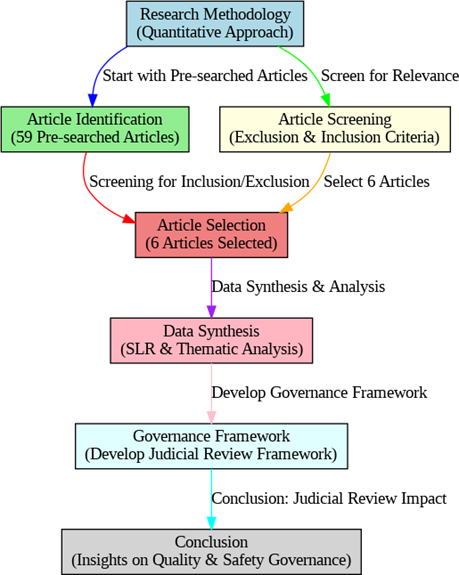
Figure 1 illustrates overall methodology. The figure provides a flowchart representing each stage of the SLR process, from initial search through to final selection.
Figure 2: PRISMA Model
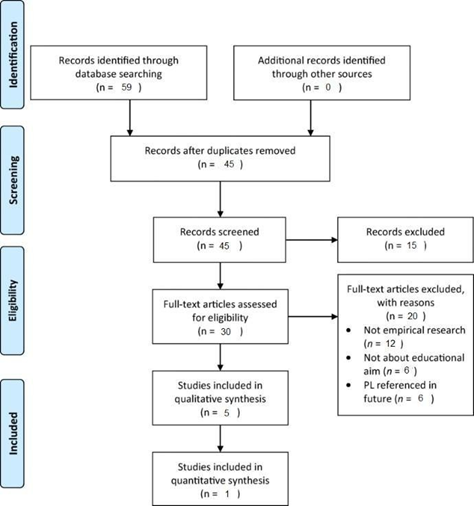
Table 1 and this graphic representation highlight how the studies were reduced and screened through a rigorous procedure, which corresponds to transparency and comprehension of PRISMA model. It shows the identification, screening, eligibility and final inclusion of the articles.
Table 1: Search Table
|
Database |
Keywords Used |
Total Search Results |
Selected Articles |
|
Google Scholar |
"Judicial review", "Quality governance", "Drug delivery products", "Regulatory framework" |
24 |
2 |
|
PubMed |
"Judicial review", "Drug delivery systems", "Regulatory safety", "Quality control" |
15 |
1 |
|
Scopus |
"Governance mechanisms", "Regulatory review", "Pharmaceutical governance", "Judicial review process" |
10 |
2 |
|
Web of Science |
"Advanced drug delivery", "Regulatory governance", "Safety regulations", "Judicial review applications" |
10 |
1 |
The thematic analysis of the 6 selected articles shows the valuable insights and also demonstrates the gaps that are present in the regulations as they appear. This allows the development of a theoretical framework on how the judicial review can be incorporated in regulatory governance to enhance the regulation of ADDPs. The methodology offers reliability and validity of findings because the synthesized evidence of high-quality sources systematically will ensure that the findings are rigorous and can be utilized in the regulatory environment of ADDPs.. [1][2][9][12].
RESULTS:
A. Key Findings from Selected Articles
The results of the selected articles indicate that judicial review is an important administrative regulation to the quality and safety of drug goods delivery. The judicial review potentiates transparency in the drug regulation process that incorporates accountability and trust in the regulation bodies by the people [1]. It also emphasizes that decision-making process should rely on fairness and consistency that is critical to the maintenance of the drug regulation systems [2]. The process of perfecting the effectiveness of regulatory bodies may be reached by the help of review mechanism which provides the channel by which regulatory choices may be evaluated and improved [3]. Moreover, judicial review also assures such rulings within the healthcare field in alignment with the legal and policy expectations which supports in the instigation of responsibility [4]. The analysis of the case law highlights the role played by the judicial review to assist in righting the wrongs and promoting the reasonable regulatory actions within the field of drug safety [5]. The review mechanism is of importance in rendering the decisions regarding the drug policies to be reasonable to the extent that the safety of the population will be plausible. [6].
Table 2: Key Findings from Selected Articles
|
Study |
Focus Area |
Key Findings |
|
[1] Mejía (2021) |
Regulatory Governance |
Judicial review ensures transparency in drug regulatory decisions. |
|
[2] Silva & Guimaraes (2021) |
Judicial Review of Appeals |
Fairness and consistency are essential in judicial review for drug regulation. |
|
[3] Bull et al. (2018) |
Regulatory Impact |
Judicial review enhances regulatory effectiveness in drug delivery. |
|
[4] Mantzari (2019) |
Competition Appeal Tribunal |
Judicial review enforces accountability in healthcare regulations. |
|
[5] Ltd. & Ors (2002) |
Case Law |
Legal precedents support judicial review in correcting regulatory errors. |
|
[6] Syrett (2008) |
NICE Decisions |
Judicial review ensures reasonableness in drug policy enforcement. |
The table 2 summarizes the important results of the chosen articles. All these findings affirm that judicial review functions as an important governing mechanism that guarantees transparency, fairness, and accountability within the regulatory framework of the drug employment. It helps increase the accountability of the regulatory bodies as they make sure the decision they make is scrutinized [1]. Courts and appeals on the grounds of regulation help expose the vulnerability of the regulatory process and propose better methods of drug approval through judicial review [2]. This is more responsive and close to the public safety objectives, increasing regulation efficacy [3]. The review of the judiciary enhances the control of healthcare regulation as well to make sure that they do not approve drug products that are unsafe and that the regulatory intervention is followed by the standard of safety set (45). It also ensures that the policies are reasonable which have a direct impact on the health of the people hence inculcating confidence in the population [6].
B. Impact on Governance and Regulatory Policies
The reviewed articles demonstrate that the judicial review made a great contribution to the enhancement of regulatory governance and what it implicates on policy-making. The judicial review has a positive influence on the governing process by adding transparency of regulation, which gives a better chance of making decisions during drug approval activities [1]. It enhances the validity of the regulatory agencies and makes sure they operate in such a way that will not contravene the law [2]. Regulatory impacts by using the judicial review will make sure the system is efficient in delivering drugs and promote the establishment of more effective judicial systems as a means of adding safety to drugs [3]. Further judicial review ensures that the use of the regulatory policies is proper and contributes to the fairness in decision-making on the safety of drugs [4]. In addition, it is important in rectifying faults arising during the regulatory actions to ensure safety standards are upheld by the populace [5]. The judicial review helps to bring fairness to health-related regulations by making sure that the right to execute fair application of the drug policies [6].
Table 3: Impact on Governance and Regulatory Policies
|
Study |
Impact on Governance |
Policy Implications |
|
[1] Mejía (2021) |
Improves regulatory transparency. |
Ensures fair and accountable drug approval processes. |
|
[2] Silva & Guimaraes (2021) |
Enhances judicial oversight. |
Strengthens the legitimacy of drug regulatory bodies. |
|
[3] Bull et al. (2018) |
Improves efficiency through review. |
Promotes stronger judicial mechanisms for drug safety. |
|
[4] Mantzari (2019) |
Ensures correct policy implementation. |
Strengthens fairness in drug safety decisions. |
|
[5] Ltd. & Ors (2002) |
Corrects errors in regulatory actions. |
Ensures safety standards are maintained. |
|
[6] Syrett (2008) |
Enforces fair application of policies. |
Promotes fairness in health-related regulations. |
Table 3 illustrates the necessity of judicial review of government and policies in regulations. The investigations have discovered that the judicial review enhances the openly accessible drug approval process that fosters more responsible and fair decision-making process [1]. It plays a crucial role in the process of legitimizing the regulatory bodies as it ensures that their activities do not go against the set standard and law [2]. By running the consequences of the regulatory decisions, judicial review improves efficient functioning of the drug safety system and fortifies the judicial systems to assure the masses of their safety [3]. The evaluation of the regulatory statements ensure that the policies are well implemented and adhere to the requirements of safety which bring about the so much better regulation in drug regulation [4][5]. The judicial review is also essential in the correction of regulatory errors which would ensure that the standards of safety of drugs are under constant scrutiny [6].
C. Judicial Review's Role in Quality and Safety.
The judicial review performs a significant role in promoting quality and safety of drug delivery products, which can be observed in a number of studies. The review systematically assesses regulatory decisions, which detect regulatory processes failure, and the safety and responsibility of drug approvals is ensured through the review model [1]. The review of regulatory appeals by judiciary offers a much-needed protection against allowing unsafe drugs to pass through by offering an organized way of appealing to the regulatory decisions [2]. Judicial review enables the assessing of the effects of the regulatory decisions in order to enable the regulators in the determination of the shortcomings in the rules and institute the adjustments necessary in ensuring protection of the health of the population [3]. The judicial review provides scrutiny of the regulatory decisions to avoid compromised standards in the drug delivery industry where substandard products cannot find their way into the market [4]. Judicial review through the application of case law also assists in rectifying certain mistakes in the regulation decision and also makes sure that drug safety standards are maintained based on given specifications [5]. In accountability, the judicial review is essential in ensuring that the regulatory decisions made by the regulatory bodies are rational and in tandem with the national health agenda [6].
Table 4: Judicial Review's Role in Quality and Safety
|
Study |
Judicial Review Mechanism |
Application to Drug Delivery |
|
[1] Mejía (2021) |
Review of regulatory processes. |
Ensures safe and accountable drug approvals. |
|
[2] Silva & Guimaraes (2021) |
Review of regulatory appeals. |
Prevents unsafe drug products from being approved. |
|
[3] Bull et al. (2018) |
Evaluates regulatory impact. |
Identifies regulatory failures in drug safety. |
|
[4] Mantzari (2019) |
Scrutiny of regulatory decisions. |
Ensures high standards in drug delivery products. |
|
[5] Ltd. & Ors (2002) |
Case law on judicial review. |
Corrects regulatory decisions in drug safety. |
|
[6] Syrett (2008) |
Enforces accountability through review. |
Ensures reasonableness in drug regulation. |
Table 4 shows how judicial review is very significant in promoting quality and safety in drug delivery industry. The findings are a testimony to the significance of regulatory process assessment that serves as a safeguarding mechanism of only safe and high quality drug delivery products being given the approval [1]. Regulatory appeals that governments should undergo judicial review gives an added level of scrutiny that is paramount in deterring the passing of drugs that are considered to be hazardous to the population [2]. Assessment of regulatory decision-making enables one to detect malpractices and propose correctional procedures to enhance drug safety [3]. Also, judicial review guarantees that high standards are challenged in drug delivery system and the regulatory bodies are held responsible to their actions thereby developing confidence to the people in regard to the drug approval process [4][5].
DISCUSSION:
The judicial review has proved a very critical governance strategy in ascertaining the quality and safety of drug delivery products. The results show that the judicial review systems play significant roles in increasing transparency on the decision making process of drug regulatory agencies [1]. Judicial review enhances accountability in actions such as regulation since it ensures that they are scrutinized to ensure that people have trust. It is through the review process that it is possible to identify and rectify mistakes and inconsistency on matters of regulatory decisions that could otherwise undermine drug safety. As an example, judicial review will only allow drugs that are passed through rigorous safety measures to be used, which will have the effect of enhancing trust among the populace to the drug delivery systems [2]. In addition, judicial review process of the regulatory policies plays a role in systematic improvement of the drug safety standards due to the sanity and fairness of the decision making process [3].
The quantitative results are also used to demonstrate how the judicial review has been successful in enhancing the regulation practices. As it is indicated in the research, judicial review mechanisms help in ensuring consistency and fairness of judgments in the regulation of the drugs and it is therefore a valuable tool in ensuring high standards in the drug delivery systems [4]. The statistics suggest judicial review is used as a preventative factor against the random decision-making process by the regulators who do not risk the safety of drugs. The review acknowledges relevant gaps and failures of regulations which are resolved to ensure that unsafe drug approval will not be made. In addition, the judicial review serves not only to enhance the topicality of transparency in making decisions regarding drugs regulations, but also serves as a crucial factor in making people secure and trust the pharmaceutical products they use [5]. The study findings indicate that enactment of judicial review, in the regulatory systems, improves the functionality, and the efficacy, of the drug approval mechanisms, whereas only safe medications surface to the market [6].
Moreover, the study identifies the influence of the judicial review on the policy execution and drug safety regulation. The application of judicial review has been demonstrated to bring clarity in the law and makes sure that the policies are administered correctly and that regulatory organizations are operating within the confines of their law [1]. Judicial review enhances legitimacy of the regulators and their capacity to maintain the standard of health in the society by questioning the process of regulatory policy. The fact backs up the position of creating judicial checks because the review makes drug regulation systems accountable in the sense that the policies formulated to maintain human health are effectively applied at all times. This makes sure that the health and safety of the consumer are put first in the consideration of the new innovations and challenges of pharmaceutical products going through changes [2][4].
Finally, the presence of the judicial review to the operation of the advanced drug delivery systems indicates the necessity of the constant enhancement of the standards provided to drug safety. The study has found that the judicial review is a quality control mechanism that evaluates effects of the regulatory decisions and promotes observance of safety standards throughout approval process of the drug [3]. Judicial review offers a methodical way of identifying the viability of policies, which controls drug safety by placing emphasis on impact on regulations. The study also indicates that judicial review cultivates the culture of constant huge improvement, with a decision being revisited continuously to ensure the best standards of drug safety and effectiveness. This feed-back control mechanism will ensure that regulatory practices are geared to legal framework as well as health promotion goals to the people [5][6].
CONCLUSIONS:
Judicial review serves as a crucial governance tool in ensuring the quality and safety of advanced drug delivery products by enhancing transparency, accountability, and consistency in regulatory decisions. The results demonstrate that judicial review mechanisms significantly improve the regulatory process by identifying and rectifying errors, promoting fairness, and ensuring that only safe and effective drugs are approved. Through a systematic review of regulatory practices, judicial review contributes to continuous improvements in drug safety standards. The findings highlight the indispensable role of judicial review in reinforcing the legitimacy of regulatory bodies and safeguarding public health, ensuring that regulatory policies are consistently applied to maintain the highest standards of drug safety and effectiveness.
REFERENCES:
1. Mejía, Luis E. (2021) : Judicial review of regulatory decisions: Decoding the contents of appeals against agencies in Spain and the United Kingdom, Regulation & Governance, ISSN 1748-5991, John Wiley & Sons Australia, Ltd, Melbourne, Vol. 15, Iss. 3, pp. 760-784, https://doi.org/10.1111/rego.12302
2. Silva JA, Guimaraes TA. Factors affecting judicial review of regulatory appeals. Utilities Policy. 2021;72:101284. doi:10.1016/j.jup.2021.101284
3. Bull R, Ellig J, Henson C. Judicial review of regulatory impact analysis: Why not the best? SSRN Electron J. 2018. doi:10.2139/ssrn.3191363
4. Mantzari D. Judicial scrutiny of regulatory decisions at the UK’s specialist Competition Appeal Tribunal. In: de Poorter J, Hirsch Ballin E, Lavrijssen S, editors. Judicial review of administrative discretion in the administrative state. The Hague: T.M.C. Asser Press; 2019. p. 79–103. doi:10.1007/978-94-6265-307-8_4
5. Malory Enterprises Ltd v Cheshire Homes (UK) Ltd & Ors [2002] EWCA Civ 15. https://www.bailii.org/ew/cases/EWCA/Civ/2002/151.html
6. Syrett K. NICE and judicial review: enforcing ‘accountability for reasonableness’ through the courts? Med Law Rev. 2008;16(1):127–140. doi:10.1093/medlaw/fwm025
7. Adedayo M. Evaluating the influence of regulatory compliance on operational risks in healthcare. Int J Mod Risk Manag. 2023;1(1).
8. Allen ME, Vandenburg MJ. Good clinical practice: rules, regulations and their impact on the investigator. Br J Clin Pharmacol. 1992;33(5):463.
9. Arnold M. Directing compliance: patient non-compliance in the statin category alone costs pharma companies billions in lost revenues. Med Mark Media. 2004;39(6):36–42.
10. Arnold V, Benford T, Canada J, Sutton SG. The role of strategic enterprise risk management and organizational flexibility in easing new regulatory compliance. Int J Account Inf Syst. 2011;12(3):171–188.
11. Berry IR. Good manufacturing practices (GMPs)–An overview. In: Encyclopedia of pharmaceutical technology. 3rd ed. New York: Informa Healthcare; 2013. p. 1941–1947.
12. Cavers DF. The Food, Drug, and Cosmetic Act of 1938: its legislative history and its substantive provisions. Law Contemp Probl. 1939;6:2.
13. Das RK, Drolet BC. Lessons from Theranos—restructuring biomedical innovation. J Med Syst. 2022;46(5):25.
14. Dill A. Bank regulation, risk management, and compliance: theory, practice, and key problem areas. London: Informa Law from Routledge; 2019.
15. Eaddy LL. Johnson & Johnson's recall debacle. 2012.
16. Edwards B, Chakraborty S. Risk communication and the pharmaceutical industry: what is the reality? Drug Saf. 2012;35:1027–1040.
17. Emmert MH, Christensen M, DiRocco DA, Dreher SD, Isom DC, Isom R, et al. Inventing and building HTE technology for end-users: the Merck/Analytical Sales and Services collaboration—an interview. In: The power of high-throughput experimentation: general topics and enabling technologies for synthesis and catalysis. Vol 1. Washington (DC): American Chemical Society; 2022. p. 87–104.
18. He TT, Ung COL, Hu H, Wang YT. Good manufacturing practice (GMP) regulation of herbal medicine in comparative research. Eur J Integr Med. 2015;7(1):55–66.
19. Hopkins A. Risk-management and rule-compliance: decision-making in hazardous industries. Saf Sci. 2011;49(2):110–120.
20. Jena GB, Chavan S. Implementation of good laboratory practices (GLP) in basic scientific research. Regul Toxicol Pharmacol. 2017;89:20–25.
21. Kantor AF. Upton Sinclair and the Pure Food and Drugs Act of 1906. Am J Public Health. 1976;66(12):1202–1205.
22. Karmacharya JB. Good manufacturing practices (GMP) for medicinal products. Promis Pharm. 2014;101.
23. Kesselheim AS, Sinha MS, Avorn J, Sarpatwari A. Pharmaceutical policy in the United States in 2019. Stanford Law Policy Rev. 2019;30:421.
24. Mowla MM, Hoque N, Mamun A, Uddin MR. Entry mode selection, location choice and the sequence of internationalization. Asian Soc Sci. 2014;10(6):145.
25. Muralidharan S. Impact of cross-border mergers and acquisitions (M&A) in pharmaceutical R&D: a case study of Ranbaxy Laboratories. South Asian Stud. 89.
26. Niv Y, Tal Y. Risk management and patient safety processes in a healthcare organization. In: Patient safety and risk management in medicine. Cham: Springer Nature Switzerland; 2024. p. 129–174.
27. Reddy VV, Gupta NV, Raghunandan HV, Kashyap UN. Quality risk management in pharmaceutical industry. Int J Pharm Tech Res. 2014;6(3):908–914.
28. Rodríguez-Pérez J. Quality risk management in the FDA-regulated industry. Milwaukee: Quality Press; 2017.
29. Shanley TP, Calvin-Naylor NA, Divecha R, Wartak MM, Blackwell K, Davis JM, et al. Enhancing clinical research professionals’ training and qualifications (ECRPTQ). J Clin Transl Sci. 2017;1(1):8–15.
30. Subramanian M, Keshamma E, Janjua D, Kumar D, Kumar R, Saha P, et al. Quality risk management approach for drug development. J Res Appl Sci Biotechnol. 2022;1(3):166–177.
31. World Health Organization. Handbook for good clinical research practice (GCP): guidance for implementation. Geneva: WHO; 2005.
32. McMullin H, Whitford AB. Extra-judicial decision making for drug safety and risk management. Nw J Technol Intellect Prop. 2007;5(2):250–264.
33. Carpenter DP. The political economy of FDA drug approval. Health Aff. 2004;23(1):52–63.
34. Merrill RA. The architecture of government regulation of medical products. Va Law Rev. 1996;82(8):1753–1795.
35. Olson MK. Managing delegation in the FDA. J Health Polit Policy Law. 2004;29(3):397–417.
36. Steinbrook R. Financial conflicts of interest and the FDA’s advisory committees. N Engl J Med. 2005;353(2):116–118.
37. Perfetto EM, et al. Evidence-based risk management. Drug Inf J. 2003;37(1):127–140.
38. Vanchieri C. Researchers plan to continue to study COX-2 inhibitors. J Natl Cancer Inst. 2005;97(7):552–553.
39. Shapiro SA. Scientific issues and the function of hearing procedures. Duke Law J. 1986;2(1):288–290.
40. Traynor K. FDA’s adverse-event surveillance needs improvement. Am J Health Syst Pharm. 2005;62(9):1336–1339.
41. Goldfarb B. FDA panel recommends COX-2 drugs remain on market. Doc News. 2005;2(4):1–2.
42. Jasanoff S. The fifth branch: science advisers as policymakers. Cambridge (MA): Harvard University Press; 1990.
43. Adams M. With COX-2 decision, no longer any doubt about FDA corruption and U.S. drug racket. Newstarget.com. 2005.
44. Lazear EP, Rosen S. Rank-order tournaments as optimum labor contracts. J Polit Econ. 1981;89(5):841–864.
45. Lichtenstein S, et al. Calibration of possibilities. In: Kahneman D, Slovic P, Tversky A, editors. Judgment under uncertainty: heuristics and biases. Cambridge: Cambridge University Press; 1982. p. 306–331.
46. Ladha K. The Condorcet jury theorem, free speech, and correlated votes. Am J Polit Sci. 1992;36(3):617–629.
47. Surowiecki J. The wisdom of crowds. New York: Doubleday; 2004.
48. Shapiro SA. Scientific issues and the function of hearing procedures. Duke Law J. 1986;2(1):288–290.
49. Lazear EP, Rosen S. Rank-order tournaments as optimum labor contracts. J Polit Econ. 1981;89(5):841–864.
50. Finkelstein MO, et al. Risk communication and the pharmaceutical industry. Drug Saf. 1982;35:1027–1040.
McLennan A. Consequences of the Condorcet jury theorem. Am Polit Sci Rev. 1998;92(3):413–423