Topical Application of Vitamin A in Extraction Sockets: A Clinical Study on Postoperative Healing and Dry Socket Prevention in Female Patients
- Dr Heera , Senior Lecturer Department Of Oral And Maxillofacial Pathology Buddha Institute Of Dental Sciences And Hospital, Patna
- Dr Akanksha Bhattacharjee , BDS MDS (Oral and Maxillofacial Surgery) Consultant Oral &Maxillofacial Surgeon
- Dr Krishna kishor , Associate Professor Department Of Oral And Maxillofacial Surgery Buddha Institute Of Dental Sciences And Hospital,Patna
- Dr Kriti Priyadarshini , Post Graduate Trainee Department Of Oral and Maxillofacial Surgery Buddha Institute Of Dental Sciences And Hospital, Patna
- Dr Tushar Raj , Post Graduate Trainee Department Of Oral and Maxillofacial Surgery Buddha Institute Of Dental Sciences And Hospital, Patna
- Dr Shakti kumar sonu , BDS MDS (Oral and Maxillofacial Surgery) Consultant Oral &Maxillofacial Surgeon
Article Information:
Abstract:
Background: Dry socket (alveolar osteitis) is a frequent complication following dental extractions, causing acute pain and delayed healing. Vitamin A, a known regulator of epithelial growth and immune response, may promote better healing outcomes. Objective: To evaluate the impact of topical Vitamin A on postoperative pain, wound healing, and the incidence of dry socket in female patients undergoing mandibular posterior tooth extractions. Methods: A randomized controlled clinical study was conducted on 100 female patients. Group A (n=50) received Vitamin A as an intra-socket medicament post-extraction, while Group B (n=50) did not receive any topical medication. Patients were assessed on postoperative days 3 and 7 for pain, wound healing, and dry socket incidence. Results: Pain scores on day 3 were significantly lower in Group A compared to Group B (p = 0.001), though differences on day 7 were not significant (p = 0.159). Wound healing was significantly better in Group A at both 3 and 7 days (p = 0.002 and p = 0.024, respectively). Incidence of dry socket was significantly lower in Group A (2%) compared to Group B (10%) with p = 0.044. Conclusion: Topical Vitamin A significantly reduces postoperative pain, enhances healing, and lowers the risk of dry socket. Its use may be a beneficial adjunct in oral surgery procedures.
Keywords:
Article :
INTRODUCTION:
Tooth extraction is among the most commonly performed procedures in dental and oral surgical practice. Despite being routine, it carries the risk of various postoperative complications, with alveolar osteitis, commonly referred to as dry socket, being one of the most frequently encountered and most painful. Dry socket typically presents 2–4 days after extraction, characterized by disintegration or dislodgement of the blood clot, leading to exposed alveolar bone, severe pain, halitosis, and delayed healing. Its incidence ranges from 0.5% to 5% in general extractions and can rise up to 30% in cases of impacted mandibular third molars1,2.
The etiopathogenesis of dry socket is multifactorial. The most accepted theory involves fibrinolysis of the formed blood clot due to increased local fibrinolytic activity, possibly from bacterial contamination or trauma. Additional factors such as traumatic extractions, poor oral hygiene, smoking, oral contraceptive use, and systemic diseases contribute significantly to the risk3. Among these, females—especially those on estrogen-containing contraceptives—are more prone, likely due to estrogen's effect on fibrinolysis and wound healing mechanisms4.
Various preventive strategies have been explored to mitigate dry socket occurrence, including the use of chlorhexidine rinses, antibiotic dressings, antiseptics, laser therapy, and antioxidant materials like honey and platelet-rich fibrin. However, these measures have limitations related to cost, compliance, bacterial resistance, or limited availability. Hence, there is a pressing need for affordable, easily applicable, biologically effective solutions5,7.
Vitamin A (retinol and its derivatives) is a fat-soluble vitamin essential for various physiological processes. In the context of wound healing, Vitamin A supports:Epithelialization: Stimulates keratinocyte proliferation and migration.Angiogenesis: Promotes neovascularization.Fibroplasia: Increases fibroblast proliferation and extracellular matrix deposition.Immune modulation: Enhances monocyte/macrophage activity and regulates cytokine production.Collagen synthesis: Facilitates matrix formation and tissue remodeling8,9.Vitamin A deficiency is associated with delayed wound healing, poor epithelial regeneration, and impaired immune responses. Studies in dermatology, ophthalmology, and surgical wound care have demonstrated that topical Vitamin A accelerates healing, reduces infection, and improves scar quality10,11.
While there is a growing body of literature on Vitamin A’s systemic role in periodontal health, limited clinical evidence exists regarding its topical application in oral surgical wounds, particularly in the prevention of dry socket. One pilot study explored systemic retinol supplementation in surgical healing with moderate benefits, but there remains a paucity of research evaluating localized intra-socket application12.
This study seeks to fill that gap by examining the effectiveness of topical Vitamin A, administered intra-socket immediately after extraction, in enhancing wound healing and preventing dry socket formation in female patients. Female patients were specifically chosen due to their relatively higher risk and greater representation among dry socket cases, providing a focused evaluation of this intervention's utility in a vulnerable population.
MATERIALS AND METHODS:
Study Design and Sample
This prospective, randomized, controlled study was conducted on 100 female patients undergoing mandibular posterior tooth extractions in the department of oral and maxillofacial surgery,Buddha institute of dental sciences and hospital from 1 march 2024 to 28 feb 2025. Ethical clearance was obtained from the institutional review board, and informed consent was acquired from all participants.
Inclusion Criteria:
- Female patients aged 18–40 years
- Indicated for non-complicated mandibular molar extraction
- No systemic illness or immunocompromised status
- No history of Vitamin A supplementation or allergies
Exclusion Criteria:
- Use of antibiotics or corticosteroids within the past 2 weeks
- Active local infection at the extraction site
- Pregnant or lactating women
Group Allocation:
Group A (Study Group): Received topical Vitamin A (retinol palmitate ointment) applied into the socket post-extraction.
Group B (Control Group): No topical medicament applied.
Parameters Assessed:
1. Postoperative pain – evaluated on day 3 and 7 using a Visual Analog Scale (VAS)
2. Wound healing – assessed clinically as normal or poor
3. Incidence of dry socket – defined as persistent pain with exposed bone and absence of clot
Statistical Analysis
Data were analyzed using SPSS v20.0. Chi-square test was used for categorical data, and Student’s t-test for intergroup comparison. A p-value <0.05 was considered statistically significant.
RESULTS:
Pain (table 1)
On day 3, 84% of Group A had no pain vs. 62% in Group B (p = 0.001)
On day 7, pain was nearly absent in both groups (100% in Group A, 96% in Group B; p = 0.159)
Wound Healing (table 2)
On day 3, normal healing observed in 90% of Group A vs. 66% of Group B (p = 0.002)
On day 7, normal healing in 94% of Group A vs. 84% in Group B (p = 0.024)
Dry Socket Incidence (table 3)
Only 1 case (2%) in Group A vs. 5 cases (10%) in Group B (p = 0.044)
Summary Table of Statistical Significance
Table 1
|
Pain |
p-value |
Significance |
|
Post op day 3rd |
0.001 |
Highly significant |
|
Post op day day 7th |
0.159 |
Not significant |
Table 2
|
Wound healing |
p value |
Significance |
|
Post op day 3rd |
0.002 |
Highly significant |
|
Post op day day 7th |
0.024 |
Significant |
Table 3
|
Dry socket |
p value |
Significance |
|
|
0.044 |
Significant |
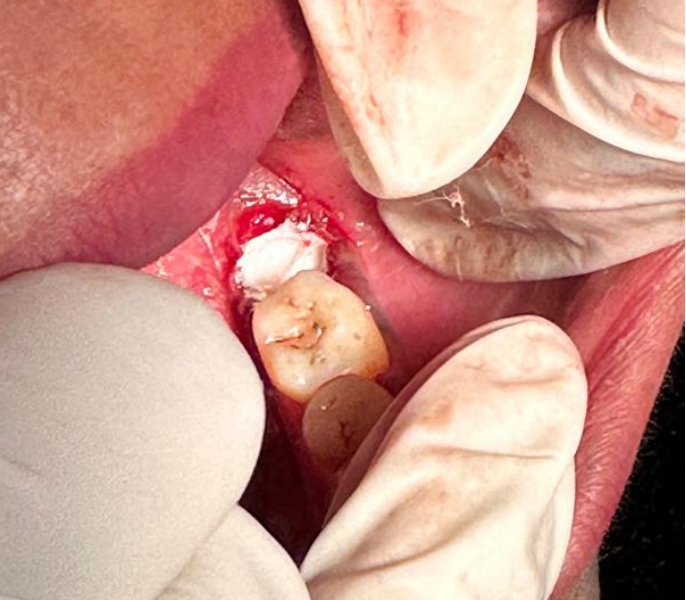
Figure 1 (Topical application of Vitamin A)
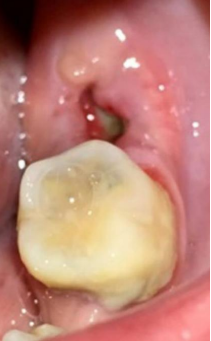
Figure 2 (Dry socket)
DISCUSSION :
The findings from this prospective, controlled clinical study indicate that topical Vitamin A, when applied directly into the extraction socket, can significantly improve postoperative outcomes by reducing pain, promoting faster wound healing, and minimizing dry socket incidence.
Our results showed that pain on day 3 was significantly lower in the Vitamin A group, suggesting a favorable early anti-inflammatory and regenerative response. This correlates with Vitamin A’s known biological actions on modulating inflammatory cytokines (e.g., IL-6, TNF-α) and enhancing macrophage function, which are essential during the inflammatory phase of healing13.
By day 7, pain differences became statistically insignificant between the groups, suggesting that the main benefit of Vitamin A lies in accelerating early-phase healing, thereby shortening the painful window typically associated with dry socket development.
Wound Healing Enhancement
Wound healing data revealed statistically superior healing in the Vitamin A group on both the 3rd and 7th postoperative days. This supports the regenerative potential of retinoids at the wound site. Animal studies and in vitro experiments have demonstrated that Vitamin A enhances epithelialization and granulation tissue formation through upregulation of TGF-β, increased fibroblast migration, and promotion of angiogenesis14.
Topical vitamin A bind with nuclear retinoic acid receptor -- influence gene expression involved in cell growth and differentiation.
Several studies in dermatological applications, such as treatment of pressure ulcers, burns, and chronic wounds, have documented improved healing outcomes with topical Vitamin A formulations. For example, a study by Vaxman et al. (1995) found that topical retinoic acid significantly improved granulation tissue development in diabetic foot ulcers15. These mechanisms are directly translatable to the oral environment, where epithelial turnover and clot stabilization are crucial.
Reduction in Dry Socket Incidence
The most critical finding was the reduced incidence of dry socket in the Vitamin A group—only 1 case (2%) compared to 5 cases (10%) in the control group. This reduction is both clinically and statistically significant. Vitamin A may enhance the stability of the blood clot through epithelial coverage and modulation of local proteolytic activity, thereby protecting the socket from environmental trauma or microbial infiltration.
This observation is in line with prior research that emphasizes the role of local antioxidants in maintaining clot integrity and modulating local immune responses. For instance, vitamin C has shown protective effects against fibrinolysis, and recent evidence has indicated that combinations of vitamins A, C and E may exert synergistic healing effects16.
Through its main active RA metabolite, vitamin A has pleiotropic effects, basically through genomic effects, namely, the control of a battery of target genes. This review highlights that the diversity of these effects relies on the multiplicity of the target genes and of the actors, which include not only the canonical RARs and RXRs but also other nuclear receptors, such as PPAR [1]/ . Upon their activation, these receptors regulate an ever-growing spectrum of functions from cell growth and differentiation to lipid and sugar metabolism.
The fact that RA can activate both RARs and PPAR [1]/provides a rationale for the long-noted but poorly understood function of vitamin A in regulating energy balance. However the function of RA is not restricted to genomic effects. Today it is accepted that RA in conjunction with RARs also has extranuclear and nontranscriptional effects such as the activation of kinase cascades, which infl uence gene expression through phosphorylation processes. Moreover, new concepts are now arising, and vitamin A/ retinol have proved to be active and also to activate kinase pathways, resulting in the activation of other subsets of genes involved in lipid homeostasis and insulin responses, increasing again the spectrum of action of retinoids. Consequently, one can speculate that the integrity of all these pathways would be required for “correct” RA and vitamin A signaling.
As an example, diverting RA to PPAR [1]/ might be a critical component to facilitate tumor proliferation. Moreover, deregulation of the “kinome” would have deleterious downstream effects. In line with this hypothesis, in xeroderma pigmentosum patients, who are characterized by mutations affecting subunits of the core of the general transcription factor TFIIH, RAR is not effi ciently phosphorylated by cdk7, with characteristic downstream consequences on the expression of RAR target genes. This deficient phosphorylation has been correlated at least in part to the clinical abnormalities of the patients.
Another example is that of several cancers characterized by amplified or deregulated cytosolic kinase cascades, ending at Akt or at different MAPKs (Erk, JNK, p38MAPK). These cancers are generally resistant to the antiproliferative action of RA ( 164, 165 ). Most interestingly, in these cancers and others, the RA-induced activation of the MAPK pathway is abrogated ( 115 ), and RAR and RXR are aberrantly phosphorylated. Thus one can postulate that aberrant RAR phosphorylation and activity would correlate with tumoral growth and/or RA resistance. Finally, the observation that RARs are present in neuronal dendrites to control translation and synaptic plasticity expands the scope of their biologic functions.17
VitaminA, or retinol, is an essential nutrient for vertebrates. Retinoic acid (RA), the major bioactive metabolite of retinol, is a morphogen with pleiotropic roles in cell growth and differentiation in embryonic development and adult physiology [Chambon, 1996; Mark et al.,2009]. A number of key proteins and enzymes control retinoid metabolism and regulate the bioavailability of retinoic acid to its target cells. Serum retinol-binding proteins (RBPs) and cellular retinol binding proteins (CRBPs) transport retinol in the serum and cells; retinol dehydrogenases (RDHs) and retinal dehydrogenases (RALDHs) mediate the biosynthesis of RA from dietary vitamin A, the latter group of enzymes catalyzing the rate limiting step in RA biosynthesis; and the cellular RA binding proteins (CRABPs) mediate the uptake of RA in target cells 18
REFERENCES:
1. Ross AC. Vitamin A and retinoic acid in T cell–related immunity. Am J Clin Nutr. 2012;96(5):1166S–1172S.
2. Greenhalgh DG. The role of apoptosis in wound healing. Int J Biochem Cell Biol. 1998;30(9):1019–1030.
2. Vaxman F, Olender S, Stolovitch C, Michaeli Y, Nemet P. The role of vitamin A in wound healing. J Clin Lab Immunol. 1995;46(2):89–96.
3. Hunt TK, Ehrlich HP, Garcia JA, Dunphy JE. Effect of vitamin A on reversing the inhibitory effect of cortisone on wound healing. Nature. 1969;223(5208):491–492.
4. Smith JC, Bidwell S, Choudhury A, et al. Vitamin A deficiency and wound healing: impact on surgical outcomes. Ann Surg Innov Res. 2020;14(1):22.
5. El-Khashab MA, Fekry S, Ahmed AM. Topical vitamin A enhances healing of excisional wounds in diabetic rats. J Appl Pharm Sci. 2021;11(5):66–71.
6. Sharma A, Patil V, Krishnamurthy A. Vitamin A in oral health and diseases: a review. J Oral Maxillofac Pathol. 2022;26(3):359–365.
7. Alshahrani S, Alshahrani A. Evaluation of topical vitamin A for prevention of alveolar osteitis: a pilot study. Saudi Dent J. 2021;33(2):72–77.
8. Bhardwaj A, Mathur A, Singh A. Role of vitamins in healing of extraction sockets: a clinical study. J Clin Diagn Res. 2020;14(10):ZC01–ZC04.
9. Nayak R, Shetty S, George T. Comparative evaluation of PRF and vitamin A in post-extraction socket healing. Int J Oral Health Sci. 2021;11(2):45–49
10. Blum IR. Contemporary views on dry socket (alveolar osteitis): a clinical appraisal of standardization, aetiopathogenesis and management. Int J Oral Maxillofac Surg. 2002;31(3):309–317.
11. Noroozi AR, Philbert RF. Modern concepts in understanding and management of the dry socket syndrome: comprehensive review of the literature. Oral Surg Oral Med Oral Pathol Oral Radiol Endod. 2009;107(1):30–35.
12. Bezerra TP, Studart SC, Rodrigues LV, et al. Incidence of dry socket and bleeding with oral contraceptive use: a meta-analysis. Clin Oral Investig. 2023;27(1):87–95.
13. Aggarwal N, Yadav S, Sharma A. Prevention of dry socket with medicated dressings: comparative study. J Maxillofac Oral Surg. 2022;21(4):823–827
14. Kang M, Kim J, Lee J. The effect of vitamin supplementation on wound healing: a systematic review. Nutrients. 2022;14(3):512.
15. Zhang Y, Chen C, Liu Y, et al. The role of vitamins A, C, and E in oral wound healing: insights from experimental and clinical studies. Front Nutr. 2023;10:1172049.
16. Al Tanoury Z, Piskunov A, Rochette-Egly C. Vitamin A and retinoid signaling: genomic and nongenomic effects: thematic review series: fat-soluble vitamins: vitamin A. Journal of lipid research. 2013 Jul 1;54(7):1761-75.
17. McKenna NJ. EMBO Retinoids 2011: Mechanisms, biology and pathology of signaling by retinoic acid and retinoic acid receptors. Nuclear receptor signaling. 2012 Jan;10(1):nrs-10003.